Assumpção Teresa C, Ma Dongying, Mizurini Daniella M, Kini R Manjunatha, Ribeiro José M C, Kotsyfakis Michail, Monteiro Robson Q, Francischetti Ivo M B
Vector Biology Section, Laboratory of Malaria and Vector Research (LMVR), National Institute of Allergy and Infectious Diseases (NIAID), National Institutes of Health (NIH), Bethesda, Maryland, United States of America.
Instituto de Bioquímica Médica Leopoldo de Meis, Universidade Federal do Rio de Janeiro, Rio de Janeiro, Brazil.
PLoS Negl Trop Dis. 2016 Jan 8;10(1):e0004298. doi: 10.1371/journal.pntd.0004298. eCollection 2016 Jan.
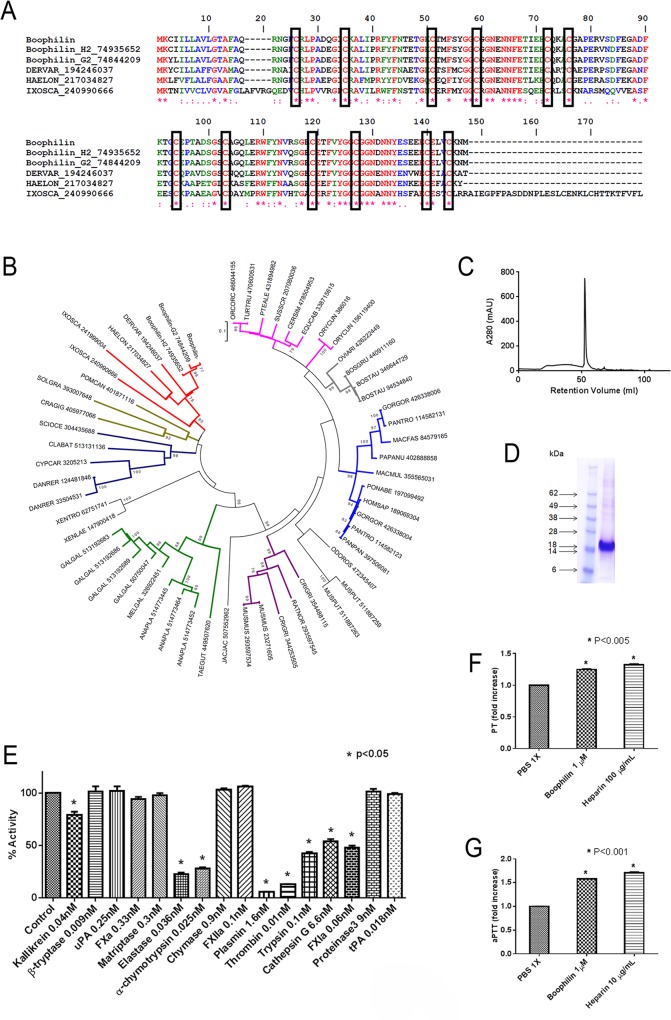
Hematophagous mosquitos and ticks avoid host hemostatic system through expression of enzyme inhibitors targeting proteolytic reactions of the coagulation and complement cascades. While most inhibitors characterized to date were found in the salivary glands, relatively few others have been identified in the midgut. Among those, Boophilin is a 2-Kunitz multifunctional inhibitor targeting thrombin, elastase, and kallikrein. However, the kinetics of Boophilin interaction with these enzymes, how it modulates platelet function, and whether it inhibits thrombosis in vivo have not been determined.
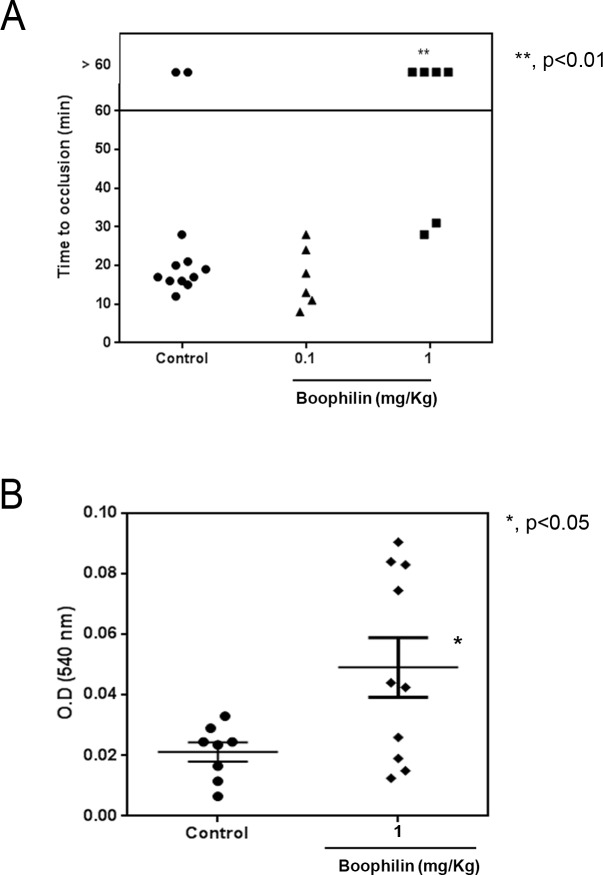
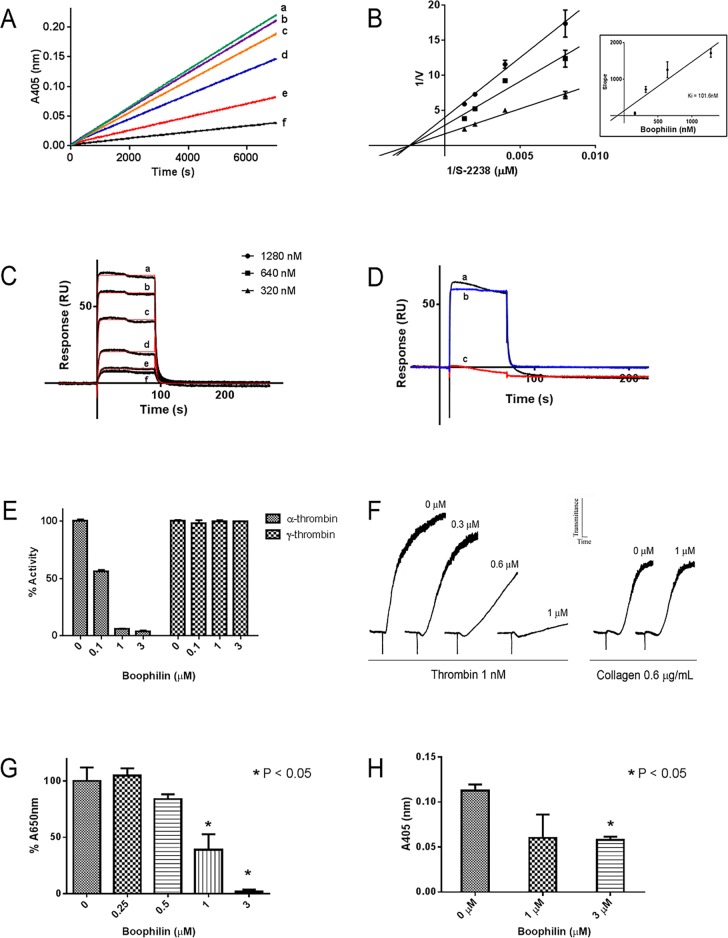
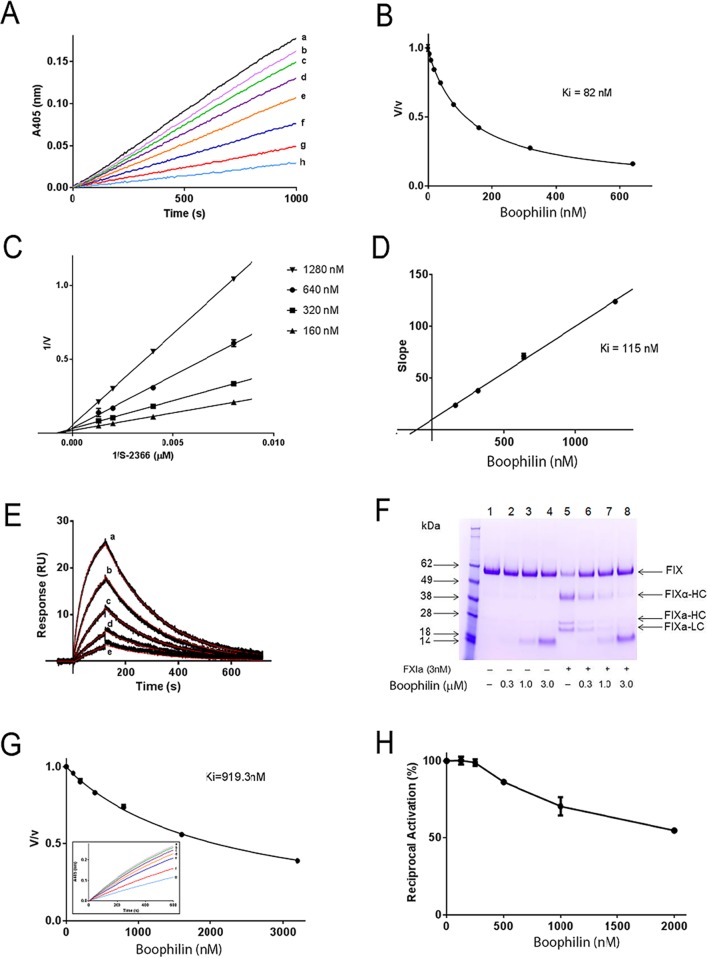
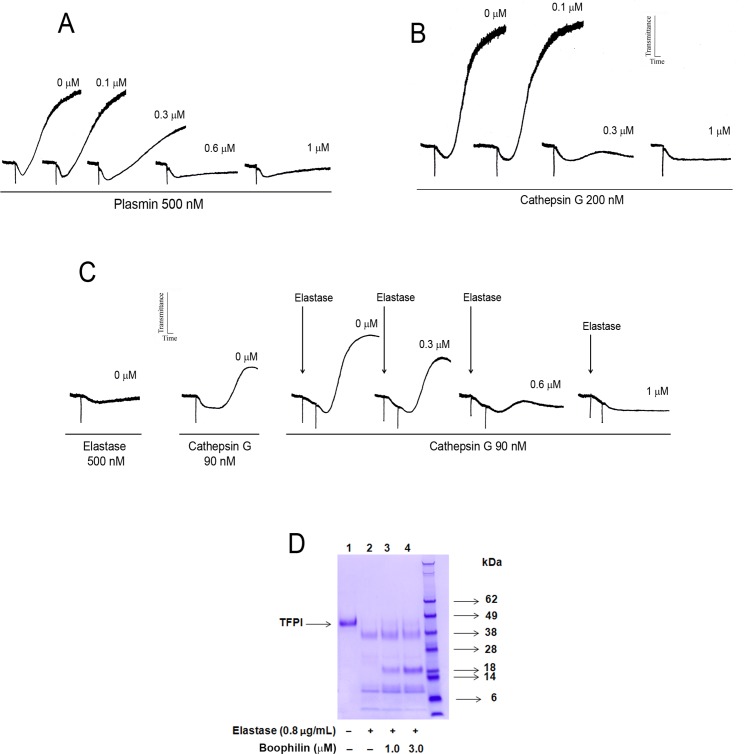
METHODOLOGY/PRINCIPAL FINDINGS: Boophilin was expressed in HEK293 cells and purified to homogeneity. Using amidolytic assays and surface plasmon resonance experiments, we have demonstrated that Boophilin behaves as a classical, non-competitive inhibitor of thrombin with respect to small chromogenic substrates by a mechanism dependent on both exosite-1 and catalytic site. Inhibition is accompanied by blockade of platelet aggregation, fibrin formation, and clot-bound thrombin in vitro. Notably, we also identified Boophilin as a non-competitive inhibitor of FXIa, preventing FIX activation. In addition, Boophilin inhibits kallikrein activity and the reciprocal activation, indicating that it targets the contact pathway. Furthermore, Boophilin abrogates cathepsin G- and plasmin-induced platelet aggregation and partially affects elastase-mediated cleavage of Tissue Factor Pathway Inhibitor (TFPI). Finally, Boophilin inhibits carotid artery occlusion in vivo triggered by FeCl3, and promotes bleeding according to the mice tail transection method.
CONCLUSION/SIGNIFICANCE: Through inhibition of several enzymes involved in proteolytic cascades and cell activation, Boophilin plays a major role in keeping the midgut microenvironment at low hemostatic and inflammatory tonus. This response allows ticks to successfully digest a blood meal which is critical for metabolism and egg development. Boophilin is the first tick midgut FXIa anticoagulant also found to inhibit thrombosis.
吸血蚊子和蜱虫通过表达针对凝血和补体级联反应蛋白水解反应的酶抑制剂来避开宿主的止血系统。虽然迄今为止发现的大多数抑制剂存在于唾液腺中,但在中肠中鉴定出的相对较少。其中,Boophilin是一种靶向凝血酶、弹性蛋白酶和激肽释放酶的双Kunitz多功能抑制剂。然而,Boophilin与这些酶相互作用的动力学、它如何调节血小板功能以及它是否在体内抑制血栓形成尚未确定。
方法/主要发现:Boophilin在HEK293细胞中表达并纯化至同质。使用酰胺水解测定和表面等离子体共振实验,我们已经证明,Boophilin通过依赖于1号外位点和催化位点的机制,对小的生色底物而言,表现为凝血酶的经典非竞争性抑制剂。抑制伴随着体外血小板聚集、纤维蛋白形成和凝块结合凝血酶的阻断。值得注意的是,我们还将Boophilin鉴定为FXIa的非竞争性抑制剂,可防止FIX激活。此外,Boophilin抑制激肽释放酶活性及其相互激活,表明它靶向接触途径。此外,Boophilin消除组织蛋白酶G和纤溶酶诱导的血小板聚集,并部分影响弹性蛋白酶介导的组织因子途径抑制剂(TFPI)的裂解。最后,Boophilin抑制体内由FeCl3触发的颈动脉闭塞,并根据小鼠尾部横断法促进出血。
结论/意义:通过抑制参与蛋白水解级联反应和细胞激活的几种酶,Boophilin在使中肠微环境保持低止血和炎症张力方面发挥主要作用。这种反应使蜱虫能够成功消化对新陈代谢和卵子发育至关重要的血餐。Boophilin是首个被发现也能抑制血栓形成的蜱虫中肠FXIa抗凝剂。