University of California, Los Angeles David Geffen School of Medicine.
University of California, Riverside.
Arthritis Rheumatol. 2016 Jun;68(6):1483-92. doi: 10.1002/art.39572.
To compare colonic microbial composition in systemic sclerosis (SSc) patients and healthy controls and to determine whether certain microbial genera are associated with gastrointestinal (GI) tract symptoms in patients with SSc.
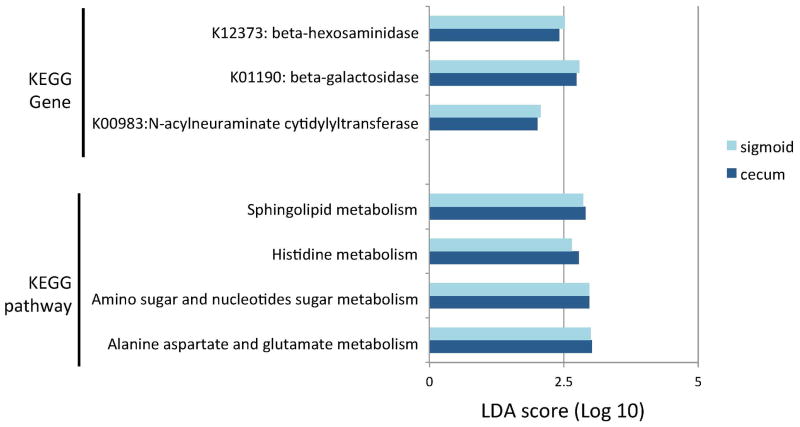
Healthy controls were age- and sex-matched (1:1) with adult SSc patients. Cecum and sigmoid mucosal lavage samples were obtained during colonoscopy. The microbiota in these samples were determined by Illumina HiSeq 2000 16S sequencing, and operational taxonomic units were selected. Linear discriminant analysis effect size was used to identify the genera that showed differential expression in SSc patients versus controls. Differential expression analysis for sequence count data was used to identify specific genera associated with GI tract symptoms.
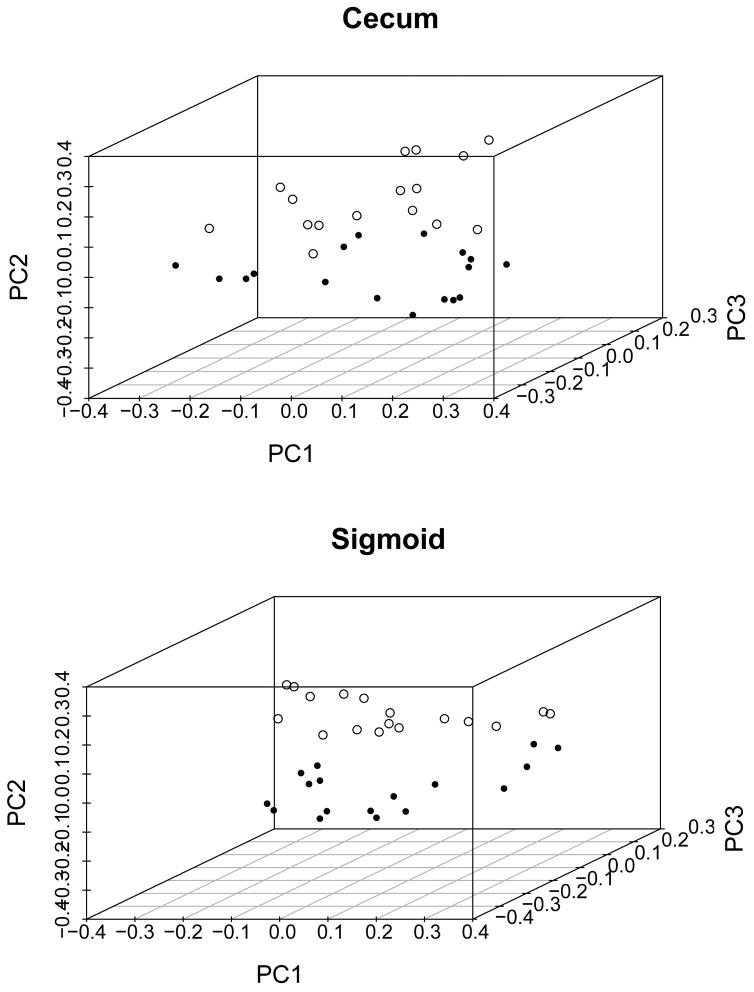
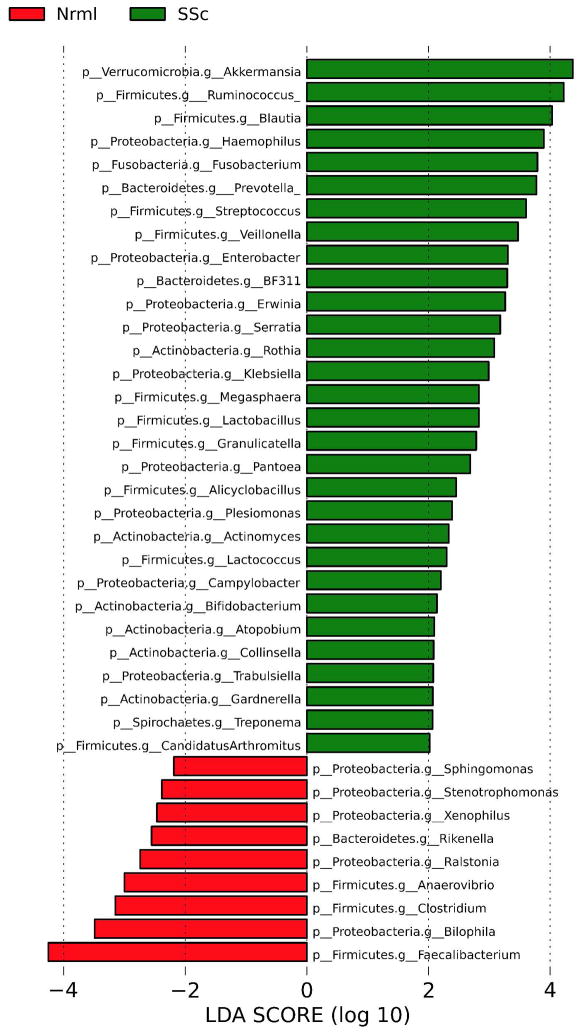
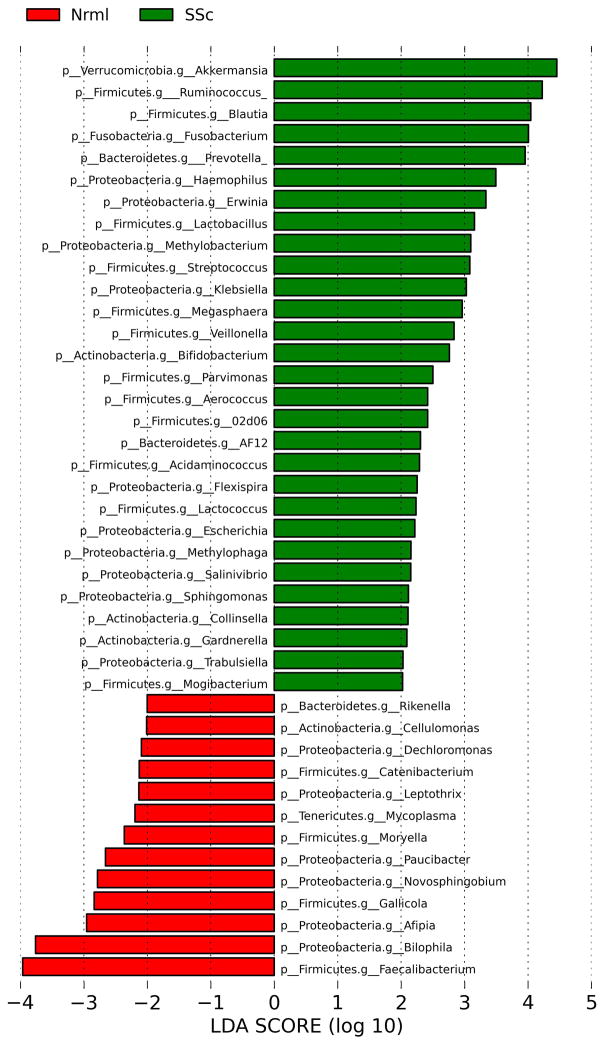
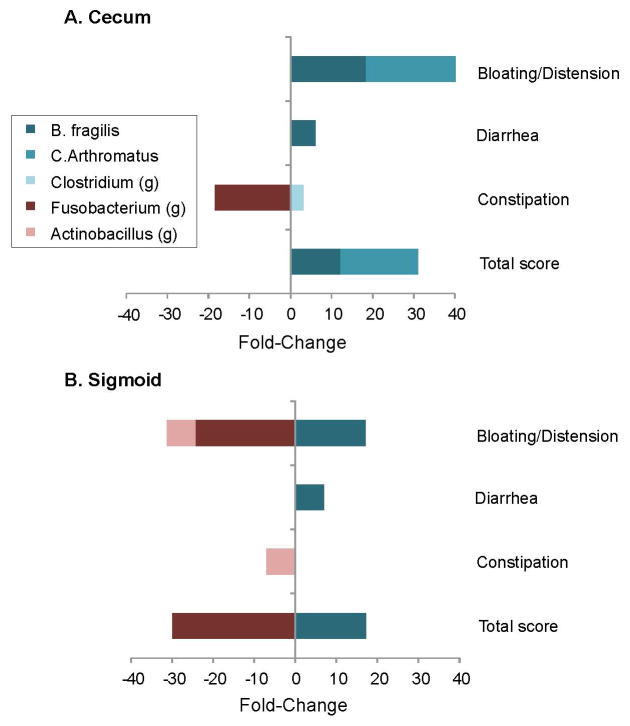
Among 17 patients with SSc (88% female; median age 52.1 years), the mean ± SD total GI Tract 2.0 score was 0.7 ± 0.6. Principal coordinate analysis illustrated significant differences in microbial communities in the cecum and sigmoid regions in SSc patients versus healthy controls (both P = 0.001). Similar to the findings in inflammatory disease states, SSc patients had decreased levels of commensal bacteria, such as Faecalibacterium and Clostridium, and increased levels of pathobiont bacteria, such as Fusobacterium and γ-Proteobacteria, compared with healthy controls. Bifidobacterium and Lactobacillus, which are typically reduced under conditions of inflammation, were also increased in abundance in patients with SSc. In SSc patients with moderate/severe GI tract symptoms, the abundance of Bacteroides fragilis was decreased, and that of Fusobacterium was increased, compared with patients who had no or mild symptoms.
This study demonstrates a distinct colonic microbial signature in SSc patients compared with healthy controls. This unique ecologic change may perpetuate immunologic aberrations and contribute to clinical manifestations of SSc.
比较系统性硬化症(SSc)患者和健康对照者的结肠微生物组成,并确定某些微生物属是否与 SSc 患者的胃肠道(GI)症状相关。
将健康对照者与成年 SSc 患者按年龄和性别(1:1)匹配。在结肠镜检查时获取盲肠和乙状结肠黏膜灌洗样本。使用 Illumina HiSeq 2000 16S 测序确定这些样本中的微生物群,选择操作分类单元。使用线性判别分析效应大小来识别在 SSc 患者与对照组中差异表达的属。使用序列计数数据的差异表达分析来识别与 GI 症状相关的特定属。
在 17 名 SSc 患者(88%为女性;中位年龄 52.1 岁)中,总胃肠道 2.0 评分的平均值±标准差为 0.7±0.6。主坐标分析表明 SSc 患者与健康对照者的盲肠和乙状结肠区域微生物群落存在显著差异(均 P=0.001)。与炎症性疾病状态的发现类似,SSc 患者的共生菌(如 Faecalibacterium 和 Clostridium)水平降低,而条件致病菌(如 Fusobacterium 和γ-变形菌)水平升高,与健康对照者相比。双歧杆菌和乳杆菌通常在炎症条件下减少,而在 SSc 患者中也增加了丰度。在胃肠道症状中度/重度的 SSc 患者中,与无或轻度症状的患者相比,脆弱拟杆菌的丰度降低,而梭杆菌的丰度增加。
本研究表明 SSc 患者的结肠微生物特征与健康对照者明显不同。这种独特的生态变化可能会延续免疫异常,并导致 SSc 的临床表现。