Calderan-Rodrigues Maria Juliana, Jamet Elisabeth, Douché Thibaut, Bonassi Maria Beatriz Rodrigues, Cataldi Thaís Regiani, Fonseca Juliana Guimarães, San Clemente Hélène, Pont-Lezica Rafael, Labate Carlos Alberto
Departamento de Genética, Laboratório Max Feffer de Genética de Plantas, Escola Superior de Agricultura "Luiz de Queiroz", Universidade de São Paulo, Av. Pádua Dias 11, CP 83, 13400-970, Piracicaba, SP, Brazil.
Université de Toulouse; UPS; UMR 5546, Laboratoire de Recherche en Sciences Végétales, BP 42617, F-31326, Castanet-Tolosan, France.
BMC Plant Biol. 2016 Jan 11;16:14. doi: 10.1186/s12870-015-0677-0.
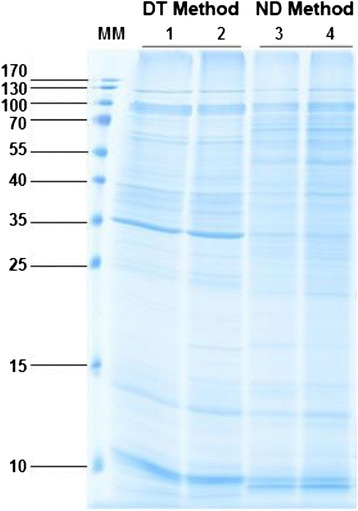
Sugarcane has been used as the main crop for ethanol production for more than 40 years in Brazil. Recently, the production of bioethanol from bagasse and straw, also called second generation (2G) ethanol, became a reality with the first commercial plants started in the USA and Brazil. However, the industrial processes still need to be improved to generate a low cost fuel. One possibility is the remodeling of cell walls, by means of genetic improvement or transgenesis, in order to make the bagasse more accessible to hydrolytic enzymes. We aimed at characterizing the cell wall proteome of young sugarcane culms, to identify proteins involved in cell wall biogenesis. Proteins were extracted from the cell walls of 2-month-old culms using two protocols, non-destructive by vacuum infiltration vs destructive. The proteins were identified by mass spectrometry and bioinformatics.
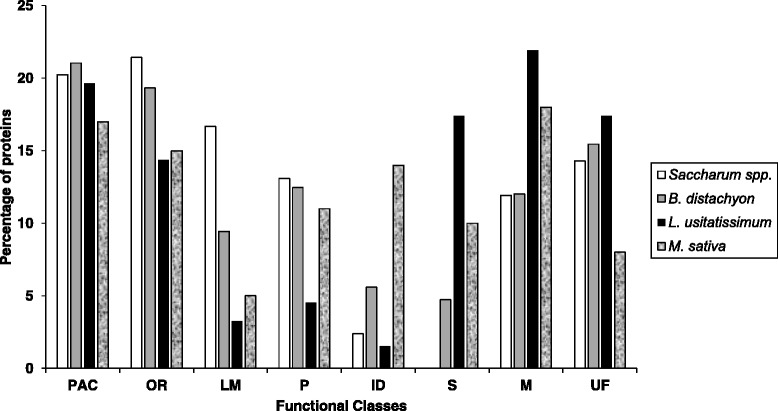
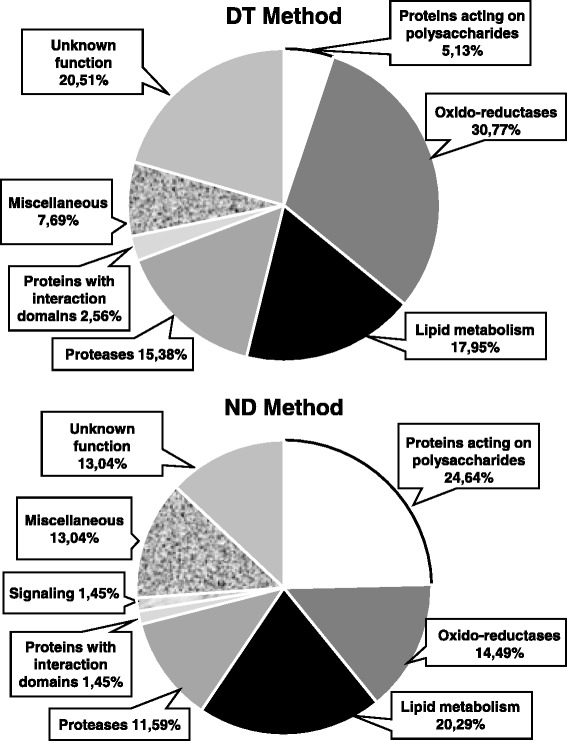
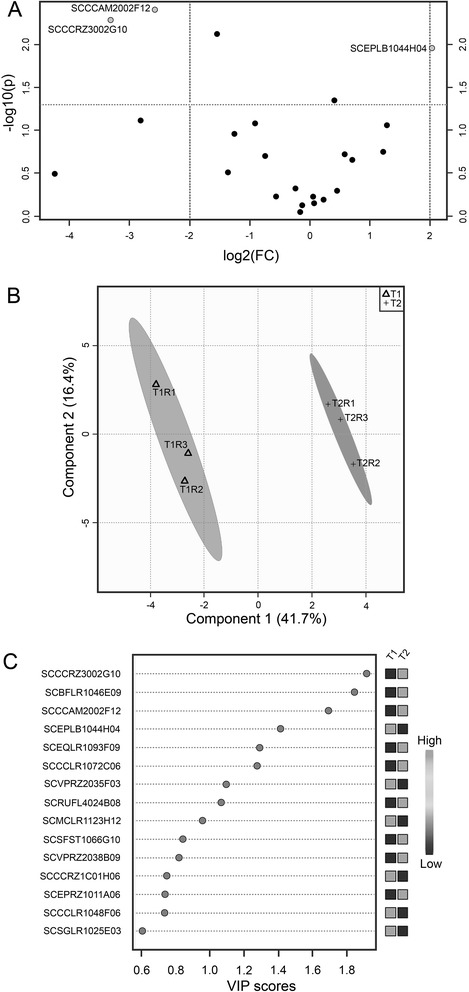
A predicted signal peptide was found in 84 different proteins, called cell wall proteins (CWPs). As expected, the non-destructive method showed a lower percentage of proteins predicted to be intracellular than the destructive one (33% vs 44%). About 19% of CWPs were identified with both methods, whilst the infiltration protocol could lead to the identification of 75% more CWPs. In both cases, the most populated protein functional classes were those of proteins related to lipid metabolism and oxido-reductases. Curiously, a single glycoside hydrolase (GH) was identified using the non-destructive method whereas 10 GHs were found with the destructive one. Quantitative data analysis allowed the identification of the most abundant proteins.
The results highlighted the importance of using different protocols to extract proteins from cell walls to expand the coverage of the cell wall proteome. Ten GHs were indicated as possible targets for further studies in order to obtain cell walls less recalcitrant to deconstruction. Therefore, this work contributed to two goals: enlarge the coverage of the sugarcane cell wall proteome, and provide target proteins that could be used in future research to facilitate 2G ethanol production.
在巴西,甘蔗作为乙醇生产的主要作物已有40多年历史。最近,利用甘蔗渣和秸秆生产生物乙醇,即所谓的第二代(2G)乙醇,随着美国和巴西首批商业工厂的投产而成为现实。然而,工业生产工艺仍需改进以生产低成本燃料。一种可能性是通过基因改良或转基因对细胞壁进行重塑,以使甘蔗渣更易被水解酶作用。我们旨在对幼嫩甘蔗茎的细胞壁蛋白质组进行表征,以鉴定参与细胞壁生物合成的蛋白质。使用两种方法从2个月大的茎的细胞壁中提取蛋白质,一种是真空渗透的非破坏性方法,另一种是破坏性方法。通过质谱和生物信息学对蛋白质进行鉴定。
在84种不同蛋白质中发现了预测的信号肽,这些蛋白质被称为细胞壁蛋白(CWP)。正如预期的那样,非破坏性方法显示预测为细胞内蛋白的比例低于破坏性方法(33%对44%)。两种方法鉴定出约19%的CWP,而渗透方法能多鉴定出75%的CWP。在两种情况下,蛋白质功能类别中数量最多的是与脂质代谢和氧化还原酶相关的蛋白质。奇怪的是,使用非破坏性方法仅鉴定出一种糖苷水解酶(GH),而使用破坏性方法则发现了10种GH。定量数据分析使我们能够鉴定出最丰富的蛋白质。
结果突出了使用不同方法从细胞壁中提取蛋白质以扩大细胞壁蛋白质组覆盖范围的重要性。10种GH被指出可能是进一步研究的目标,以便获得更易解构的细胞壁。因此,这项工作有助于实现两个目标:扩大甘蔗细胞壁蛋白质组的覆盖范围,并提供可用于未来研究以促进2G乙醇生产的目标蛋白质。