Lautner Gergely, Meyerhoff Mark E, Schwendeman Steven P
Department of Chemistry, The University of Michigan, 930 N. University, Ann Arbor, MI 48109, USA; Department of Pharmaceutical Sciences, The Biointerfaces Institute, University of Michigan, 2800 Plymouth Rd., Ann Arbor, MI 48109, USA.
Department of Chemistry, The University of Michigan, 930 N. University, Ann Arbor, MI 48109, USA.
J Control Release. 2016 Mar 10;225:133-9. doi: 10.1016/j.jconrel.2015.12.056. Epub 2016 Jan 5.
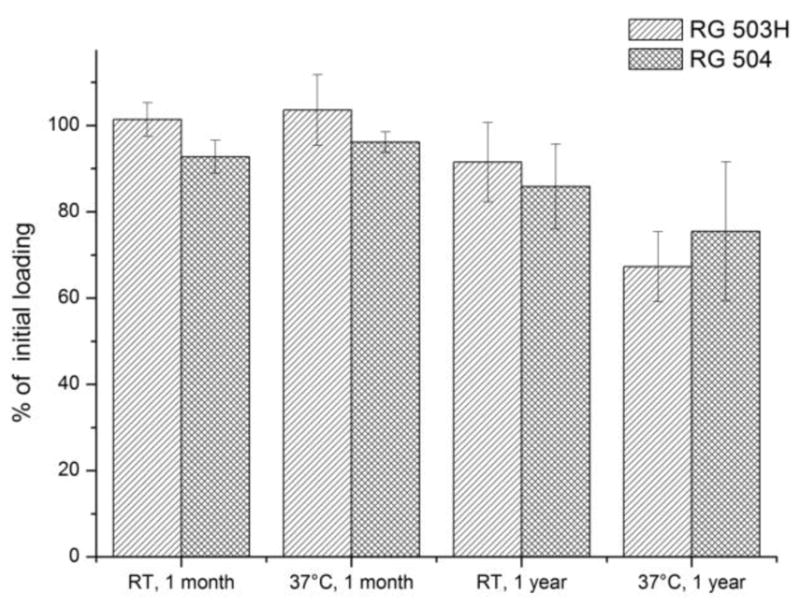
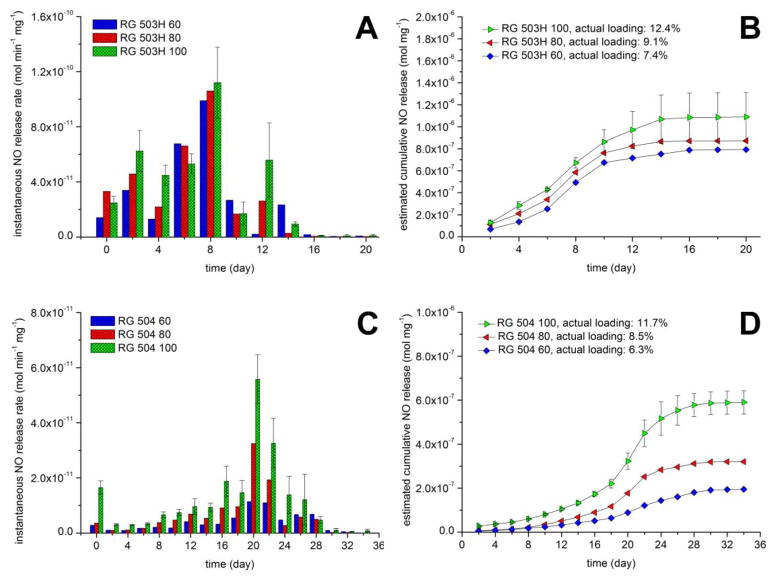
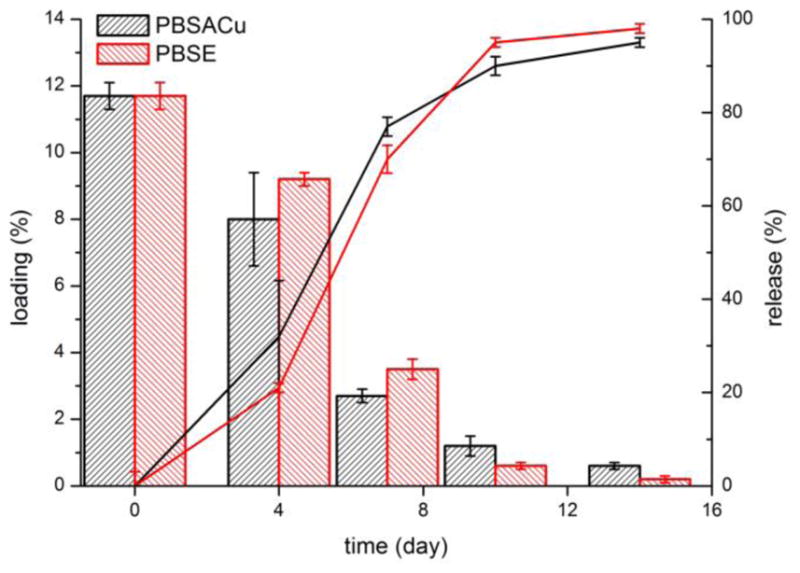
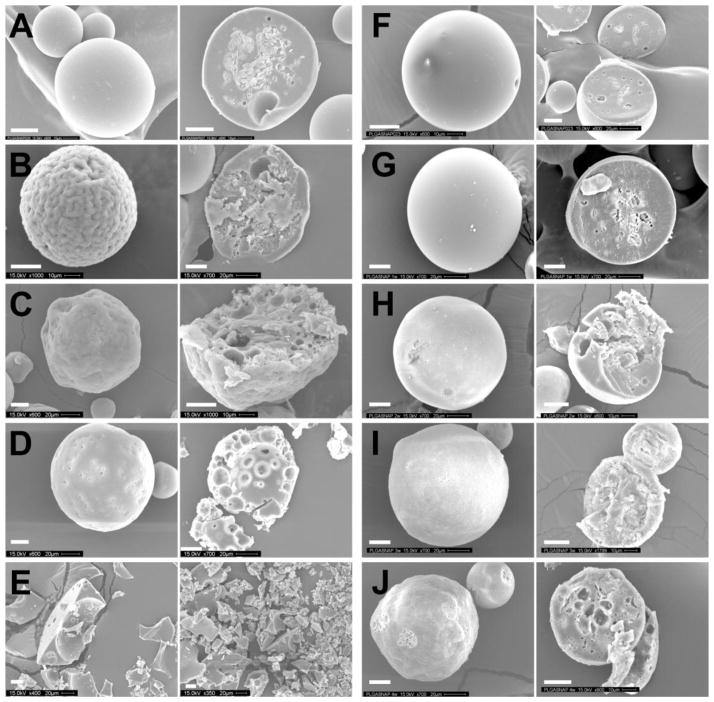
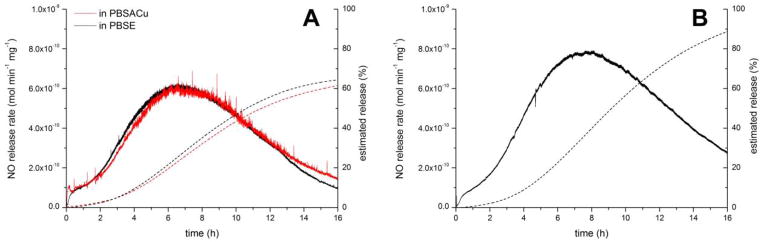
Nitric oxide (NO) is a fascinating and important endogenous free-radical gas with potent antimicrobial, vasodilating, smooth muscle relaxant, and growth factor stimulating effects. However, its wider biomedical applicability is hindered by its cumbersome administration, since NO is unstable especially in biological environments. In this work, to ultimately develop site-specific controlled release vehicles for NO, the NO donor S-nitroso-N-acetyl-D-penicillamine (SNAP) was encapsulated within poly(lactic-co-glycolic acid) 50:50 (PLGA) microspheres by using a solid-in-oil-in-water emulsion solvent evaporation method. The highest payload was 0.56(±0.01) μmol SNAP/mg microspheres. The in vitro release kinetics of the donor were controlled by the bioerosion of the PLGA microspheres. By using an uncapped PLGA (Mw=24,000-38,000) SNAP was slowly released for over 10days, whereas by using the ester capped PLGA (Mw=38,000-54,000) the release lasted for over 4weeks. The presence of copper ions and/or ascorbate in solution was necessary to efficiently decompose the released NO donor and obtain sustained NO release. It was also demonstrated that light can be used to induce rapid NO release from the microspheres over several hours. SNAP exhibited excellent storage stability when encapsulated in the PLGA microspheres. These new microsphere formulations may be useful for site-specific administration and treatment of pathologies associated with dysfunction in endogenous NO production, e.g. treatment of diabetic wounds, or in diseases involving other biological functions of NO including vasodilation, antimicrobial, anticancer, and neurotransmission.
一氧化氮(NO)是一种迷人且重要的内源性自由基气体,具有强大的抗菌、血管舒张、平滑肌松弛和生长因子刺激作用。然而,由于NO不稳定,尤其是在生物环境中,其给药方式繁琐,这阻碍了它在生物医学领域更广泛的应用。在这项工作中,为了最终开发用于NO的位点特异性控释载体,通过水包油包固乳液溶剂蒸发法将NO供体S-亚硝基-N-乙酰-D-青霉胺(SNAP)包裹在聚乳酸-乙醇酸共聚物50:50(PLGA)微球中。最高载药量为0.56(±0.01)μmol SNAP/毫克微球。供体的体外释放动力学受PLGA微球的生物侵蚀控制。使用未封端的PLGA(Mw = 24,000 - 38,000)时,SNAP缓慢释放超过10天,而使用酯封端的PLGA(Mw = 38,000 - 54,000)时,释放持续超过4周。溶液中铜离子和/或抗坏血酸的存在对于有效分解释放的NO供体并实现持续的NO释放是必要的。还证明了光可用于在数小时内诱导微球快速释放NO。当包裹在PLGA微球中时,SNAP表现出优异的储存稳定性。这些新的微球制剂可能有助于位点特异性给药和治疗与内源性NO产生功能障碍相关的病症,例如治疗糖尿病伤口,或涉及NO其他生物学功能的疾病包括血管舒张、抗菌、抗癌和神经传递。