Young T Kue, Kelly Janet J, Friborg Jeppe, Soininen Leena, Wong Kai O
School of Public Health, University of Alberta, Edmonton, Alberta, Canada;
Alaska Native Epidemiology Center, Alaska Native Tribal Health Consortium, Anchorage, AK, USA.
Int J Circumpolar Health. 2016 Jan 12;75:29787. doi: 10.3402/ijch.v75.29787. eCollection 2016.
To determine and compare the incidence of cancer among the 8 Arctic States and their northern regions, with special focus on 3 cross-national indigenous groups--Inuit, Athabaskan Indians and Sami.
Data were extracted from national and regional statistical agencies and cancer registries, with direct age-standardization of rates to the world standard population. For comparison, the "world average" rates as reported in the GLOBOCAN database were used.
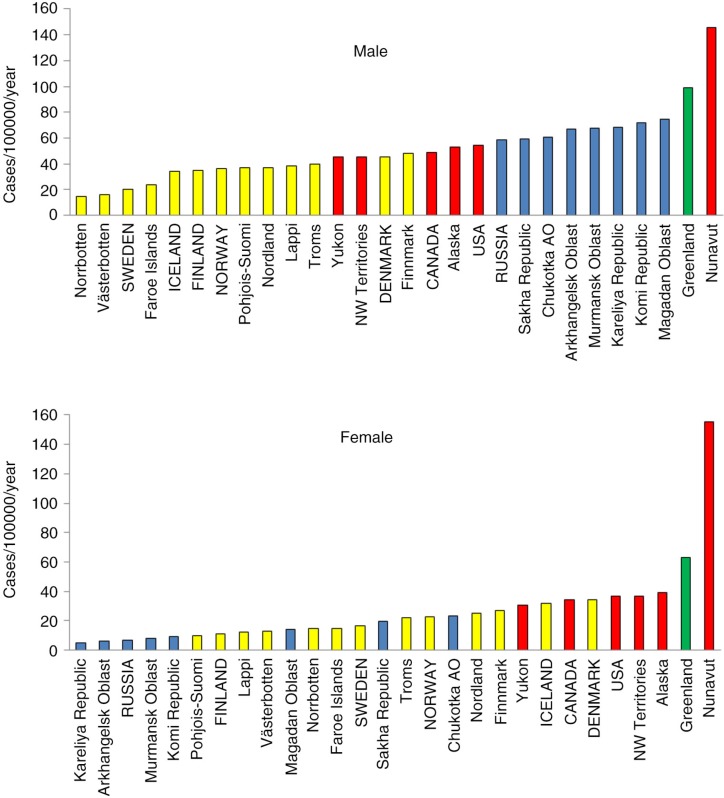
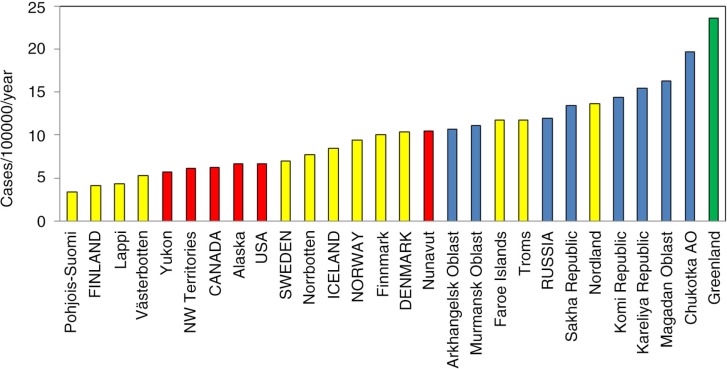
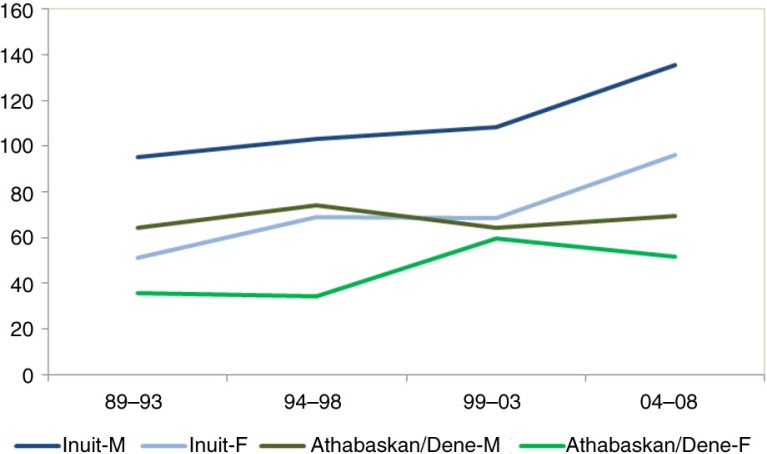
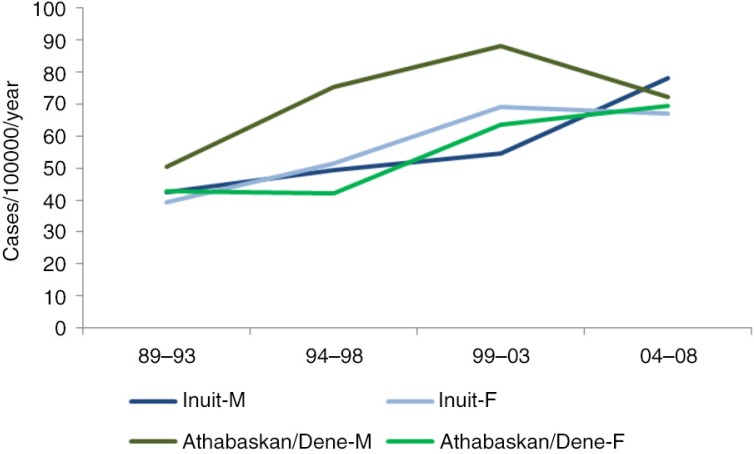
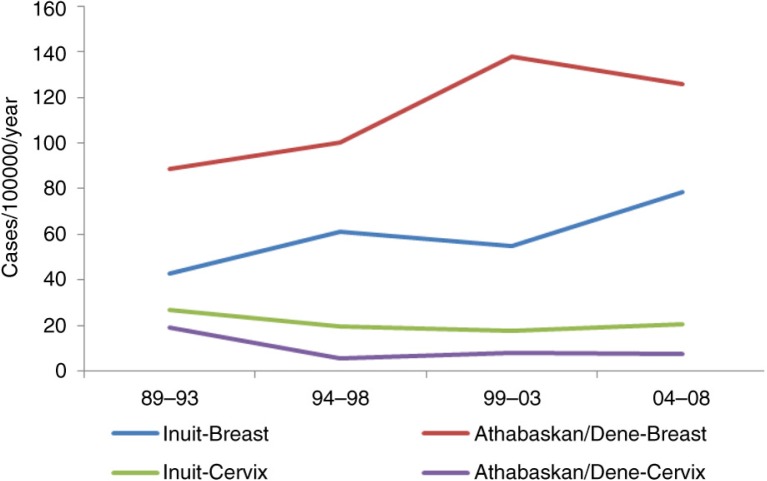
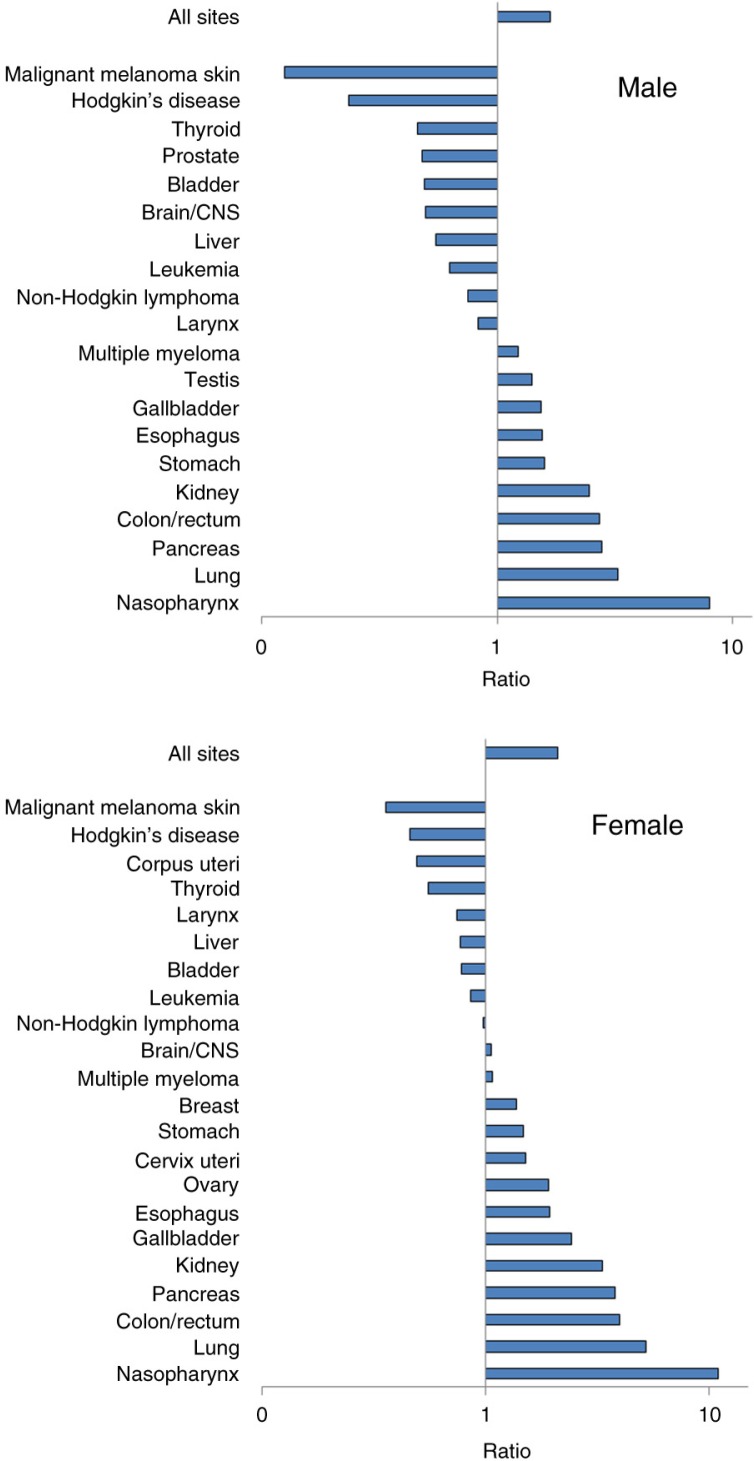
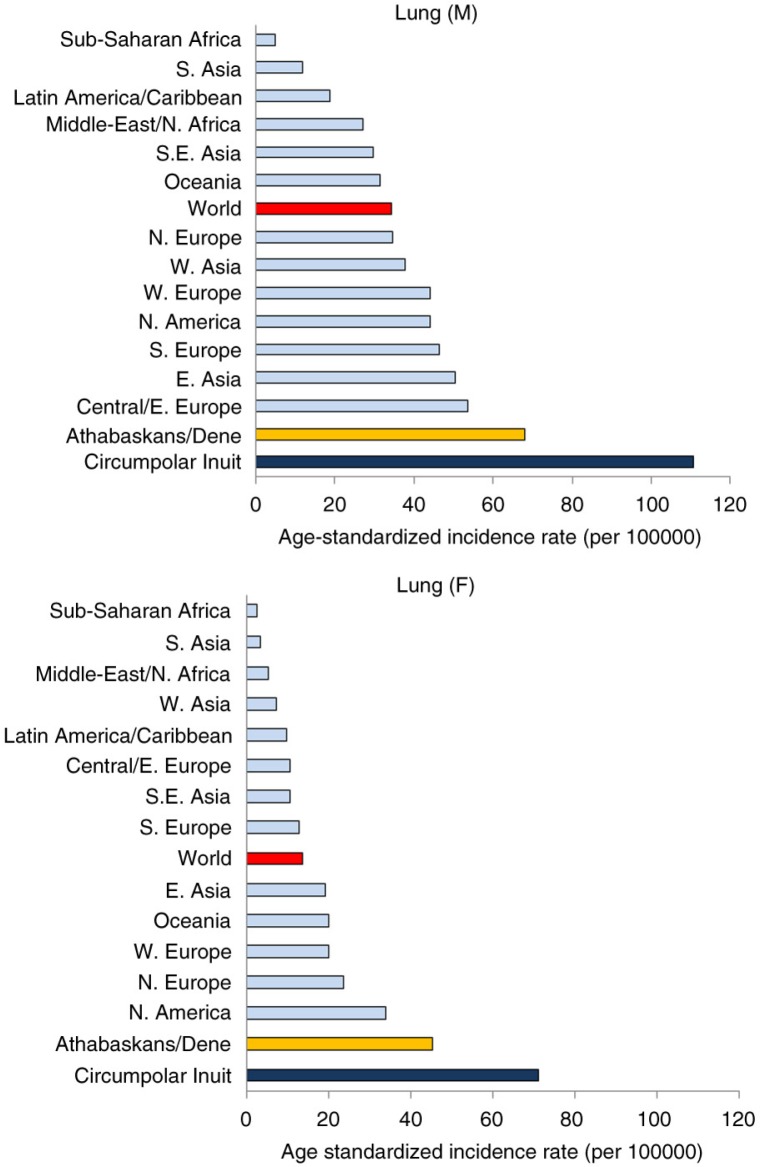
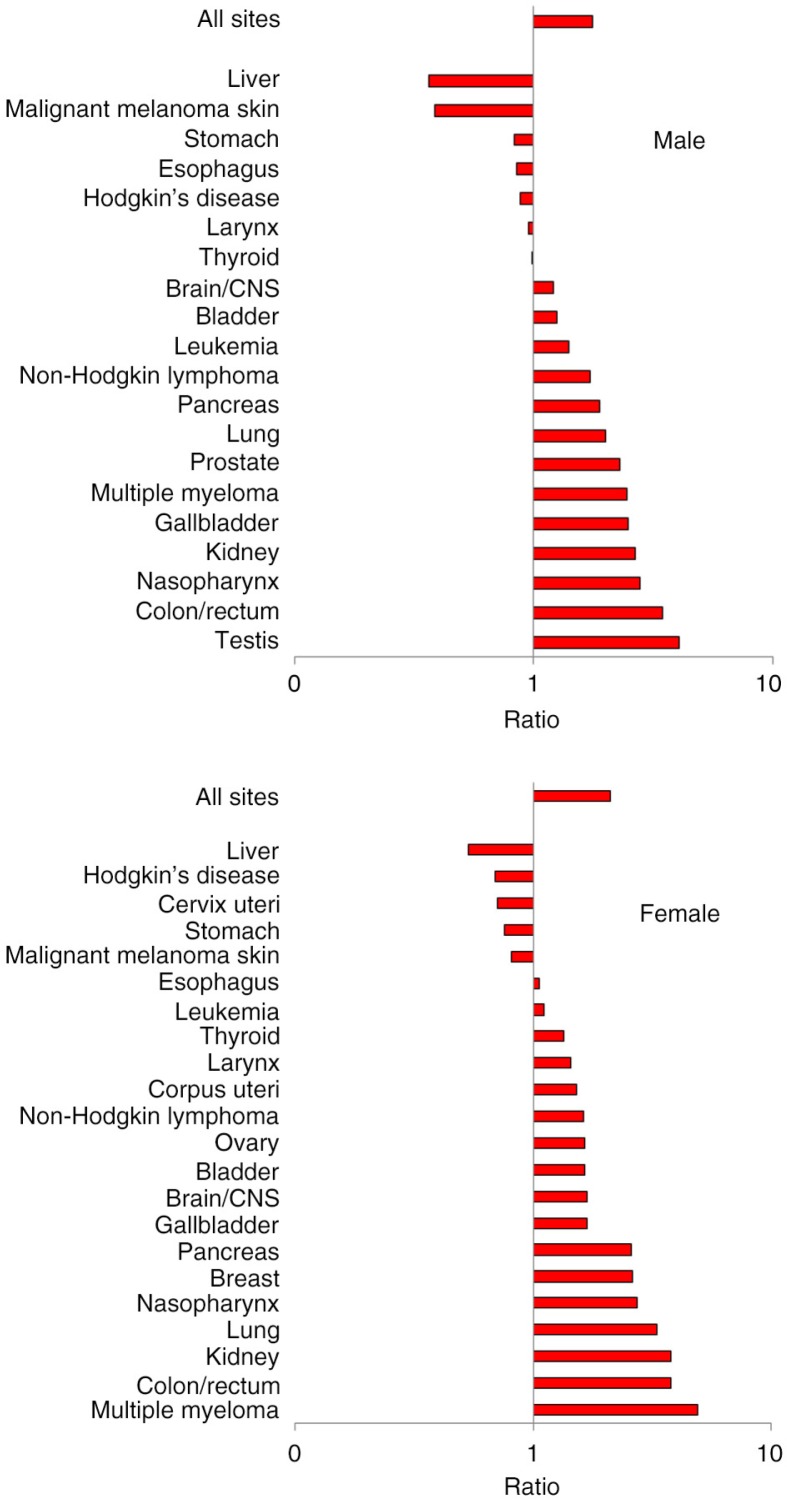
Age-standardized incidence rates by cancer sites were computed for the 8 Arctic States and 20 of their northern regions, averaged over the decade 2000-2009. Cancer of the lung and colon/rectum in both sexes are the commonest in most populations. We combined the Inuit from Alaska, Northwest Territories, Nunavut and Greenland into a "Circumpolar Inuit" group and tracked cancer trends over four 5-year periods from 1989 to 2008. There has been marked increase in lung, colorectal and female breast cancers, while cervical cancer has declined. Compared to the GLOBOCAN world average, Inuit are at extreme high risk for lung and colorectal cancer, and also certain rare cancers such as nasopharyngeal cancer. Athabaskans (from Alaska and Northwest Territories) share some similarities with the Inuit but they are at higher risk for prostate and breast cancer relative to the world average. Among the Sami, published data from 3 cohorts in Norway, Sweden and Finland show generally lower risk of cancer than non-Sami.
Cancer among certain indigenous people in the Arctic is an increasing public health concern, especially lung and colorectal cancer.
确定并比较8个北极国家及其北部地区的癌症发病率,特别关注3个跨国原住民群体——因纽特人、阿萨巴斯卡印第安人和萨米人。
数据取自国家和地区统计机构以及癌症登记处,并将发病率直接按世界标准人口进行年龄标准化。为作比较,使用了GLOBOCAN数据库中报告的“世界平均”发病率。
计算了8个北极国家及其20个北部地区2000 - 2009年这十年间按癌症部位划分的年龄标准化发病率。在大多数人群中,男女的肺癌和结肠/直肠癌最为常见。我们将来自阿拉斯加、西北地区、努纳武特和格陵兰的因纽特人合并为一个“环北极因纽特人”群体,并追踪了1989年至2008年四个5年期间的癌症趋势。肺癌、结直肠癌和女性乳腺癌显著增加,而宫颈癌有所下降。与GLOBOCAN世界平均水平相比,因纽特人患肺癌和结直肠癌以及某些罕见癌症(如鼻咽癌)的风险极高。阿萨巴斯卡人(来自阿拉斯加和西北地区)与因纽特人有一些相似之处,但相对于世界平均水平,他们患前列腺癌和乳腺癌的风险更高。在萨米人中,挪威、瑞典和芬兰3个队列公布的数据显示,他们患癌症的风险总体上低于非萨米人。
北极地区某些原住民的癌症问题日益引起公共卫生关注,尤其是肺癌和结直肠癌。