Chen Xiao, Wei Shi-Yao, Li Jian-Si, Zhang Qing-Fang, Wang Yu-Xiao, Zhao Shi-Lei, Yu Jing, Wang Chang, Qin Ying, Wei Qiu-Ju, Lv Gui-Xiang, Li Bing
Department of Nephrology, 2nd Affiliated Hospital of Harbin Medical University, Harbin, China.
Department of Biochemistry and Molecular Biology, Harbin Medical University, Harbin, China.
PLoS One. 2016 Jan 14;11(1):e0147084. doi: 10.1371/journal.pone.0147084. eCollection 2016.
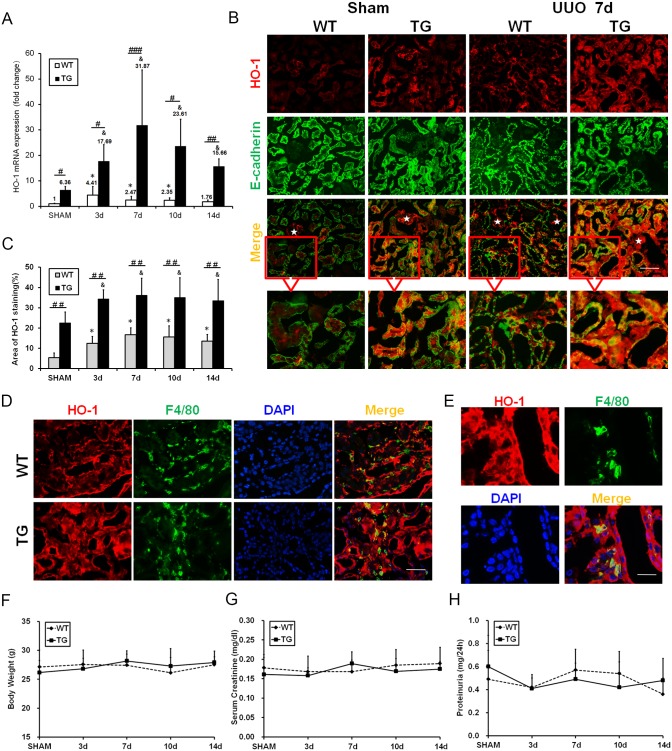
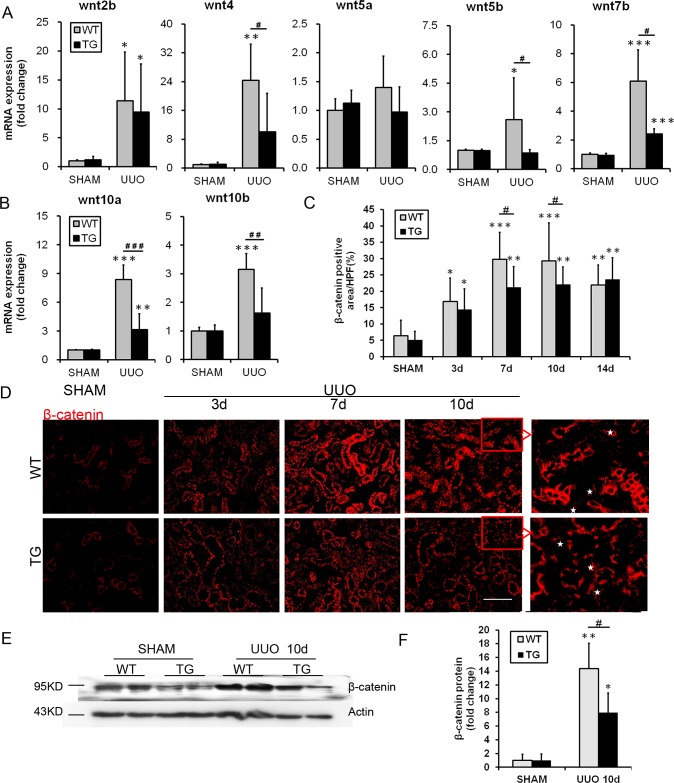
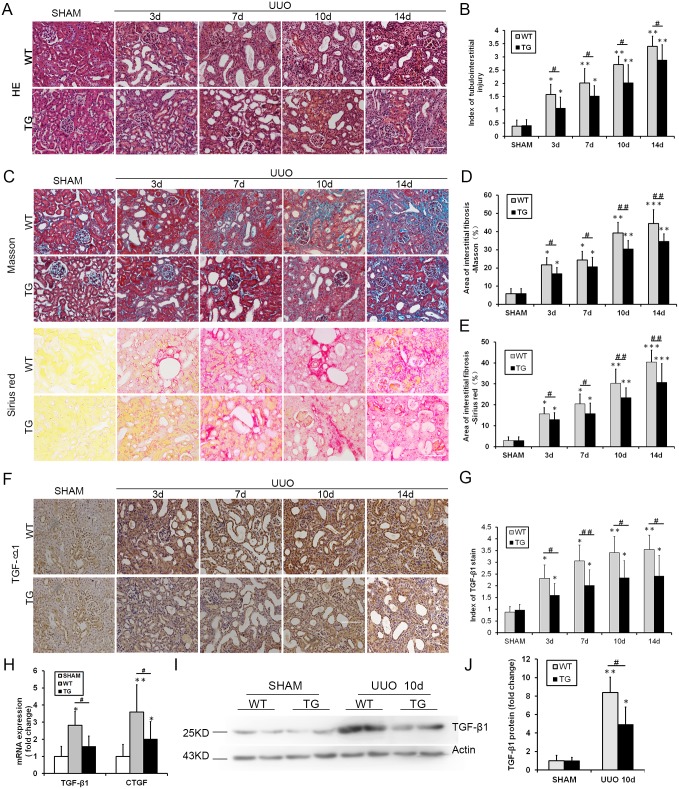
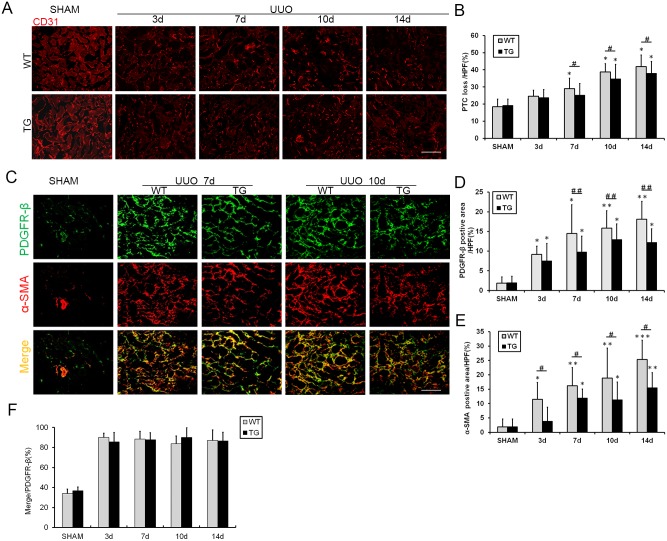
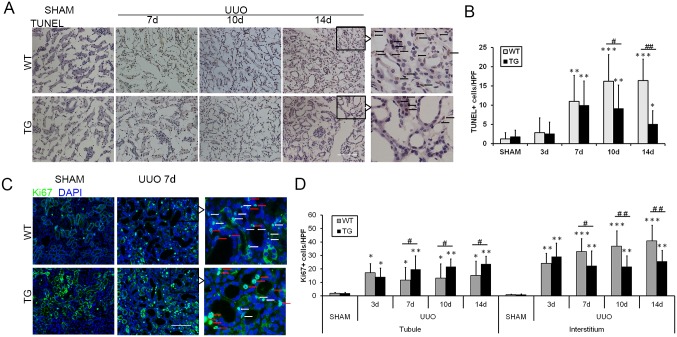
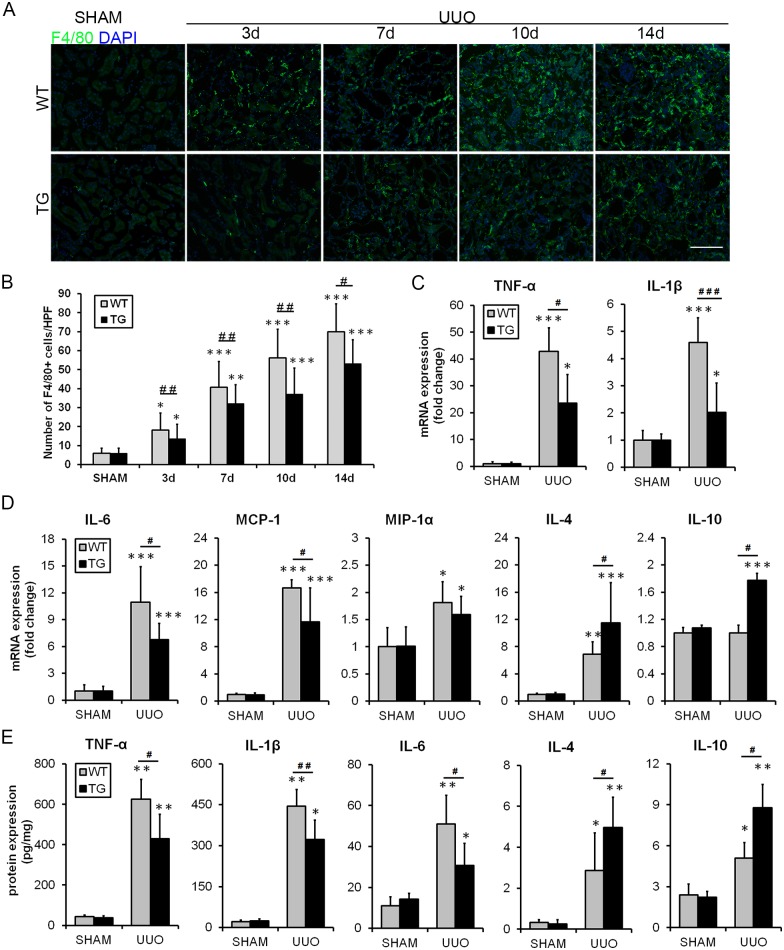
Renal fibrosis plays an important role in the onset and progression of chronic kidney diseases. Many studies have demonstrated that heme oxygenase-1 (HO-1) is involved in diverse biological processes as a cytoprotective molecule, including anti-inflammatory, anti-oxidant, anti-apoptotic, antiproliferative, and immunomodulatory effects. However, the mechanisms of HO-1 prevention in renal interstitial fibrosis remain unknown. In this study, HO-1 transgenic (TG) mice were employed to investigate the effect of HO-1 on renal fibrosis using a unilateral ureter obstruction (UUO) model and to explore the potential mechanisms. We found that HO-1 was adaptively upregulated in kidneys of both TG and wild type (WT) mice after UUO. The levels of HO-1 mRNA and protein were increased in TG mice compared with WT mice under normal conditions. HO-1 expression was further enhanced after UUO and remained high during the entire experimental process. Renal interstitial fibrosis in the TG group was significantly attenuated compared with that in the WT group after UUO. Moreover, overexpression of HO-1 inhibited the loss of peritubular capillaries. In addition, UUO-induced activation and proliferation of myofibroblasts were suppressed by HO-1 overexpression. Furthermore, HO-1 restrained tubulointerstitial infiltration of macrophages and regulated the secretion of inflammatory cytokines in UUO mice. We also found that high expression of HO-1 inhibited reactivation of Wnt/β-catenin signaling, which could play a crucial role in attenuating renal fibrosis. In conclusion, these data suggest that HO-1 prevents renal tubulointerstitial fibrosis possibly by regulating the inflammatory response and Wnt/β-catenin signaling. This study provides evidence that augmentation of HO-1 levels may be a therapeutic strategy against renal interstitial fibrosis.
肾纤维化在慢性肾脏病的发生和发展中起重要作用。许多研究表明,血红素加氧酶-1(HO-1)作为一种细胞保护分子参与多种生物学过程,包括抗炎、抗氧化、抗凋亡、抗增殖和免疫调节作用。然而,HO-1预防肾间质纤维化的机制仍不清楚。在本研究中,采用HO-1转基因(TG)小鼠,利用单侧输尿管梗阻(UUO)模型研究HO-1对肾纤维化的影响,并探讨其潜在机制。我们发现,UUO后TG小鼠和野生型(WT)小鼠肾脏中HO-1均适应性上调。在正常条件下,与WT小鼠相比,TG小鼠中HO-1 mRNA和蛋白水平升高。UUO后HO-1表达进一步增强,并在整个实验过程中保持高水平。UUO后,TG组肾间质纤维化较WT组明显减轻。此外,HO-1过表达抑制了肾小管周围毛细血管的丢失。此外,HO-1过表达抑制了UUO诱导的肌成纤维细胞活化和增殖。此外,HO-1抑制了UUO小鼠巨噬细胞的肾小管间质浸润并调节了炎性细胞因子的分泌。我们还发现,HO-1的高表达抑制了Wnt/β-连环蛋白信号通路的重新激活,这可能在减轻肾纤维化中起关键作用。总之,这些数据表明,HO-1可能通过调节炎症反应和Wnt/β-连环蛋白信号通路来预防肾小管间质纤维化。本研究提供了证据表明,提高HO-1水平可能是一种抗肾间质纤维化的治疗策略。