Cheng Yuliang, Liu Chang, Cui Yan, Lv Tianqi, Guo Yahui, Liang Jun, Qian He
School of Food Science and Technology, Jiangnan University 1800 Lihu Avenue Wuxi Jiangsu Province P. R. China
Synergetic Innovation Center for Food Safety and Nutrition, Jiangnan University Wuxi 214122 China.
RSC Adv. 2019 Mar 14;9(15):8394-8403. doi: 10.1039/c8ra10484k. eCollection 2019 Mar 12.
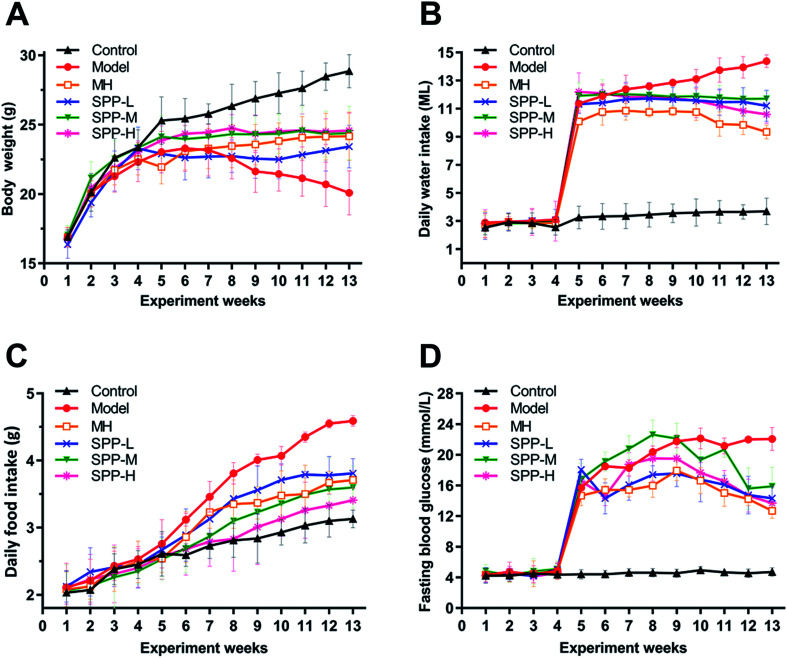
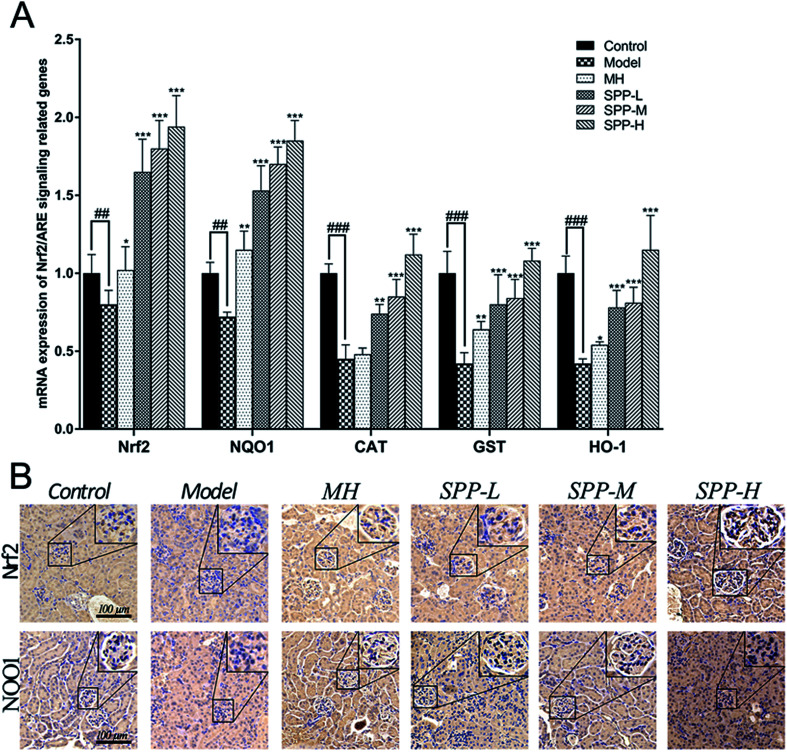
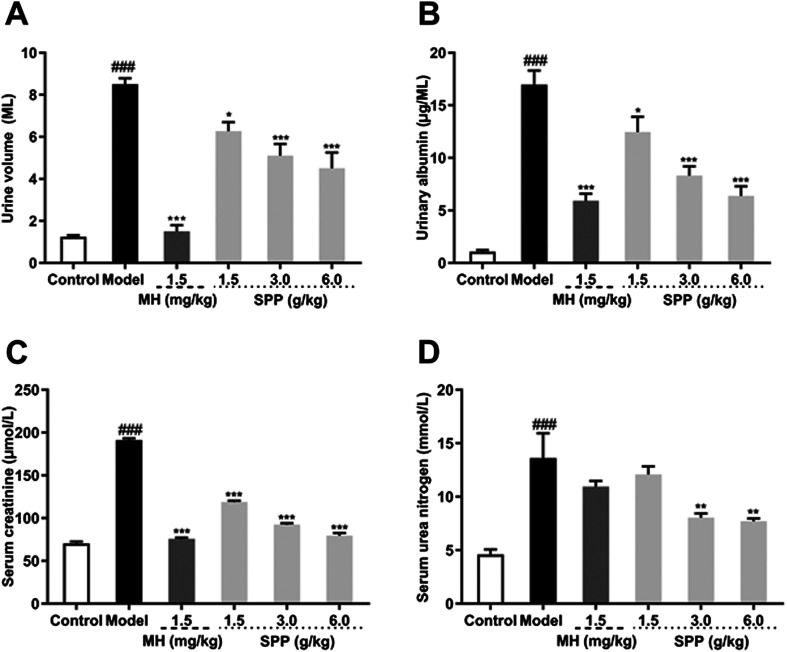
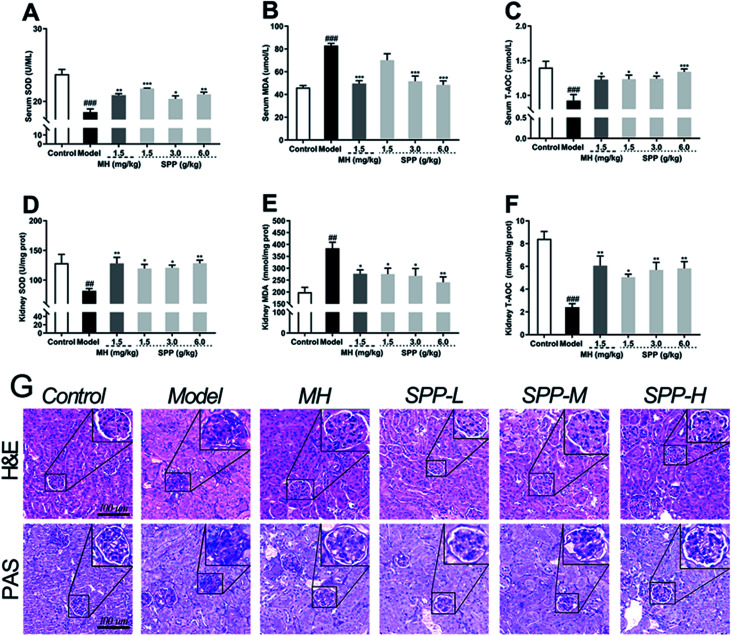
In type 2 diabetes mellitus (T2DM), hyperglycemia promotes oxidative stress and eventually leads to diabetic nephropathy (DN). is reported to exhibit enhanced anti-oxidation properties. However, its role in DN remains obscure. This study aimed to determine the antioxidative effects of a wall-broken powder (SPP) supplement on DN and investigate the possible underlying mechanisms. A model of T2DM was successfully established, and C57BL/6J male mice were fed a high-fat diet for 4 weeks and then injected with streptozotocin (100 mg per kg per day) for three consecutive days. After eight weeks of intervention, SPP strongly lowered fasting glucose levels, serum creatinine, serum urea nitrogen, urinary albumin and reduced glomerular hypertrophy and mesangial matrix expansion. In addition, SPP increased the activities of SOD, T-AOC, CAT, and GST and decreased the amount of MDA. Furthermore, it was revealed that SPP significantly abrogated oxidative stress not only by activating the Nrf2 gene but also by activating two Nrf2-targeted antioxidative genes (NQO-1 and HO-1) compared with metformin hydrochloride, which is widely accepted as a diabetes drug. Our study showed that SPP has antioxidant properties and delays the progression of DN; the underlying mechanism may be associated with activation of the Nrf2/ARE pathway.
在2型糖尿病(T2DM)中,高血糖会促进氧化应激并最终导致糖尿病肾病(DN)。据报道具有增强的抗氧化特性。然而,其在DN中的作用仍不清楚。本研究旨在确定破壁粉(SPP)补充剂对DN的抗氧化作用,并探讨可能的潜在机制。成功建立了T2DM模型,对C57BL/6J雄性小鼠给予高脂饮食4周,然后连续三天注射链脲佐菌素(每天每千克100毫克)。干预八周后,SPP显著降低空腹血糖水平、血清肌酐、血清尿素氮、尿白蛋白,并减少肾小球肥大和系膜基质扩张。此外,SPP增加了超氧化物歧化酶(SOD)、总抗氧化能力(T-AOC)、过氧化氢酶(CAT)和谷胱甘肽-S-转移酶(GST)的活性,并减少了丙二醛(MDA)的量。此外,与被广泛认可为糖尿病药物的盐酸二甲双胍相比,研究发现SPP不仅通过激活Nrf2基因,还通过激活两个Nrf2靶向的抗氧化基因(NQO-1和HO-1)来显著消除氧化应激。我们的研究表明,SPP具有抗氧化特性并延缓DN的进展;潜在机制可能与Nrf2/ARE途径的激活有关。