Lai Chih-Cheng, Ko Shian-Chin, Chen Chin-Ming, Weng Shih-Feng, Tseng Kuei-Ling, Cheng Kuo-Chen
From the Department of Intensive Care Medicine, Chi Mei Medical Center, Liouying (C-CL); Department of Internal Medicine (S-CK, K-LT, K-CC); Intensive Care Medicine (C-MC); Medical research, Chi Mei Medical Center, Tainan(C-MC); Department of Healthcare Administration and Medical Informatics, Kaohsiung Medical University, Kaohsiung (S-FW); and Department of Safety Health and Environmental Engineering, Chung Hwa University of Medical Technology, Tainan, Taiwan (K-CC).
Medicine (Baltimore). 2016 Jan;95(2):e2479. doi: 10.1097/MD.0000000000002479.
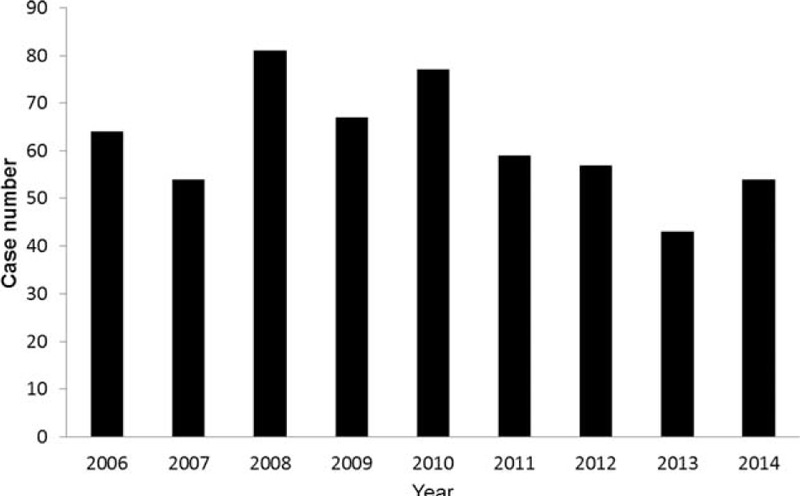
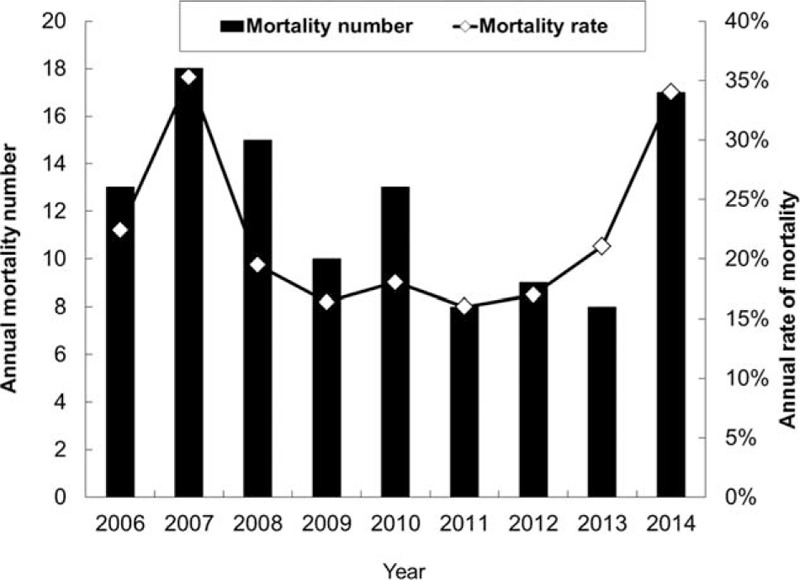
This study investigated the outcomes and the prognostic factors among the very elderly (patients ≥80 years old) requiring prolonged mechanical ventilation (PMV).Between 2006 and 2014, all of the very elderly patients of age 80 or more transferred to respiratory care center (RCC) of a tertiary medical center were retrospectively identified, and only patients who used mechanical ventilation (MV) for >3 weeks were included in this study.A total of 510 very elderly patients undergoing PMV were identified. The mean age of the patients was 84.3 ± 3.3 years, and it ranged from 80 to 96 years. Male comprised most of the patients (n = 269, 52.7%), and most of the patients were transferred to RCC from medical ICU (n = 357, 70.0%). The APACHE II scores on RCC admission was 17.6 ± 6.0. At least 1 comorbidity was found in 419 (82.2%) patients. No significant differences of gender, disease severity, diagnosis, dialysis, laboratory examinations, comorbidities, and outcome were found between octogenarians (aged 80-89) and nonagenarians (aged ≥ 90). The overall in-hospital mortality rate was 21.8%. In the multivariate analysis, patients who had APACHE II score ≥ 15(odds ratio [OR], 2.30, 95% confidence interval [CI], 1.36-3.90), or albumin ≤ 2 g/dL (OR, 3.92, 95% CI, 2.17-7.01) were more likely to have significant in-hospital mortality (P < 0.05).The in-hospital mortality rate of the very elderly PMV patients in our RCC is 21.8%, and poor outcomes in this specific population were found to be associated with a higher APACHE II score and lower albumin level.
本研究调查了需要长期机械通气(PMV)的高龄(≥80岁)患者的预后及预后因素。2006年至2014年期间,对所有转诊至某三级医疗中心呼吸护理中心(RCC)的80岁及以上高龄患者进行了回顾性识别,本研究仅纳入使用机械通气(MV)超过3周的患者。共识别出510例接受PMV的高龄患者。患者的平均年龄为84.3±3.3岁,年龄范围为80至96岁。大多数患者为男性(n = 269,52.7%),大多数患者从内科重症监护病房(ICU)转诊至RCC(n = 357,70.0%)。RCC入院时的急性生理与慢性健康状况评分系统(APACHE)II评分为17.6±6.0。419例(82.2%)患者至少有一种合并症。在八旬老人(80 - 89岁)和九旬老人(≥90岁)之间,性别、疾病严重程度、诊断、透析、实验室检查、合并症及预后方面未发现显著差异。总体院内死亡率为21.8%。多因素分析显示,APACHE II评分≥15的患者(比值比[OR],2.30,95%置信区间[CI],1.36 - 3.90)或白蛋白≤2 g/dL的患者(OR,3.92,95% CI,2.17 - 7.01)院内死亡风险更高(P < 0.05)。我们RCC中高龄PMV患者的院内死亡率为21.8%,且发现这一特定人群的不良预后与较高的APACHE II评分和较低的白蛋白水平相关。