Park Jong-Il, Kim Gwang-Won, Jeong Gwang-Woo, Chung Gyung Ho, Yang Jong-Chul
Department of Psychiatry, Chonbuk National University Medical School, Jeonju, Republic of Korea.; Research Institute of Clinical Medicine of Chonbuk National University-Biomedical Research Institute of Chonbuk National University Hospital, Jeonju, Republic of Korea.
Research Institute for Medical Imaging, Chonnam National University Hospital, Gwangju, Republic of Korea.
Psychiatry Investig. 2016 Jan;13(1):152-6. doi: 10.4306/pi.2016.13.1.152. Epub 2015 Nov 20.
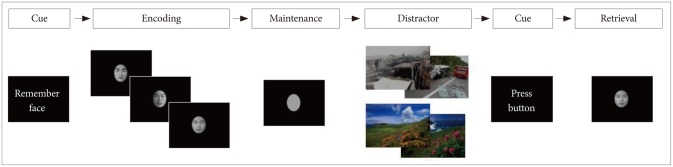
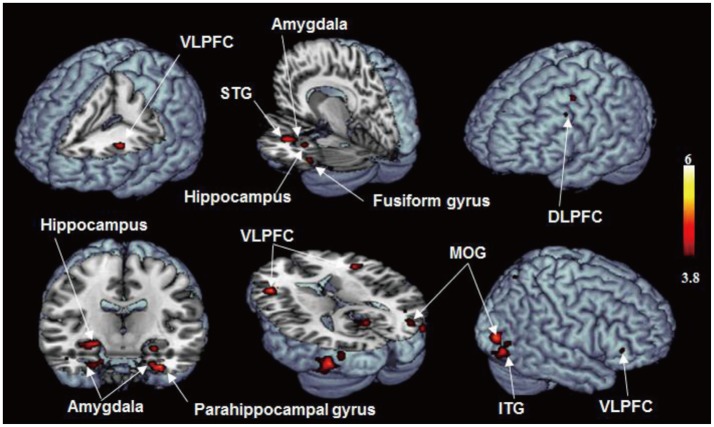
Few studies have assessed the neural mechanisms of the effects of emotion on cognition in generalized anxiety disorder (GAD) patients. In this functional MRI (fMRI), we investigated the effects of emotional interference on working memory (WM) maintenance in GAD patients. Fifteen patients with GAD participated in this study. Event-related fMRI data were obtained while the participants performed a WM task (face recognition) with neutral and anxiety-provoking distracters. The GAD patients showed impaired performance in WM task during emotional distracters and showed greater activation on brain regions such as DLPFC, VLPFC, amygdala, hippocampus which are responsible for the active maintenance of goal relevant information in WM and emotional processing. Although our results are not conclusive, our finding cautiously suggests the cognitive-affective interaction in GAD patients which shown interfering effect of emotional distracters on WM maintenance.
很少有研究评估广泛性焦虑症(GAD)患者中情绪对认知影响的神经机制。在这项功能磁共振成像(fMRI)研究中,我们调查了情绪干扰对GAD患者工作记忆(WM)维持的影响。15名GAD患者参与了本研究。在参与者执行带有中性和引发焦虑的干扰物的WM任务(面部识别)时,获取了事件相关的fMRI数据。GAD患者在情绪干扰物存在时的WM任务中表现受损,并且在诸如背外侧前额叶皮质(DLPFC)、腹外侧前额叶皮质(VLPFC)、杏仁核、海马体等负责在WM中积极维持与目标相关信息以及情绪处理的脑区表现出更强的激活。尽管我们的结果尚无定论,但我们的发现谨慎地表明了GAD患者中的认知-情感相互作用,即情绪干扰物对WM维持具有干扰作用。