Coyne Michael J, Roelofs Kevin G, Comstock Laurie E
Division of Infectious Diseases, Brigham and Women's Hospital, Harvard Medical School, 181 Longwood Avenue, Boston, MA, 02115, USA.
BMC Genomics. 2016 Jan 15;17:58. doi: 10.1186/s12864-016-2377-z.
Type VI secretion systems (T6SSs) are contact-dependent antagonistic systems employed by Gram negative bacteria to intoxicate other bacteria or eukaryotic cells. T6SSs were recently discovered in a few Bacteroidetes strains, thereby extending the presence of these systems beyond Proteobacteria. The present study was designed to analyze in a global nature the diversity, abundance, and properties of T6SSs in the Bacteroidales, the most predominant Gram negative bacterial order of the human gut.
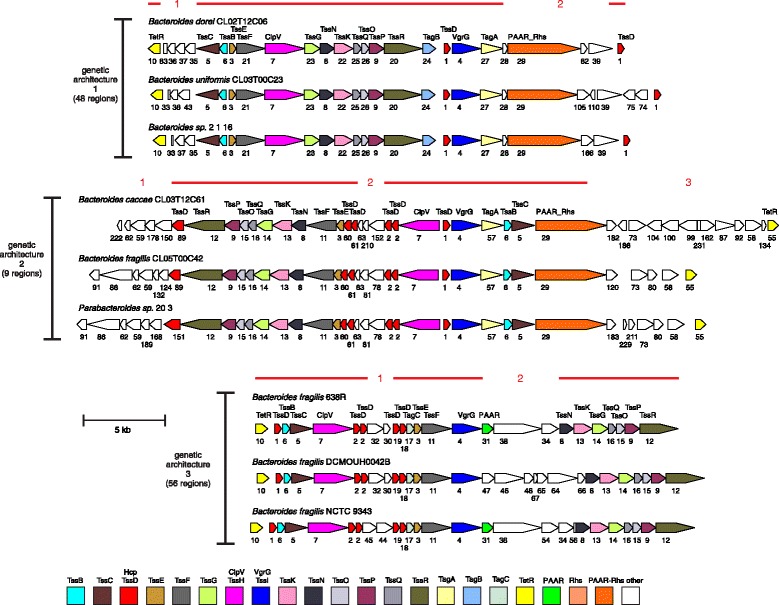
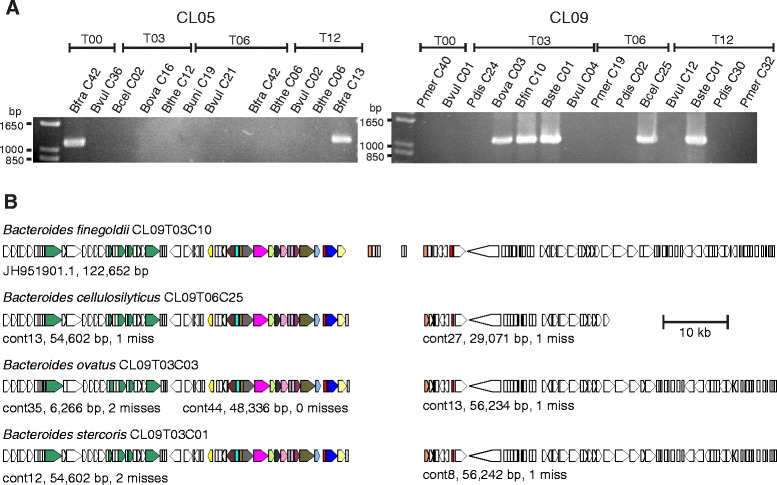
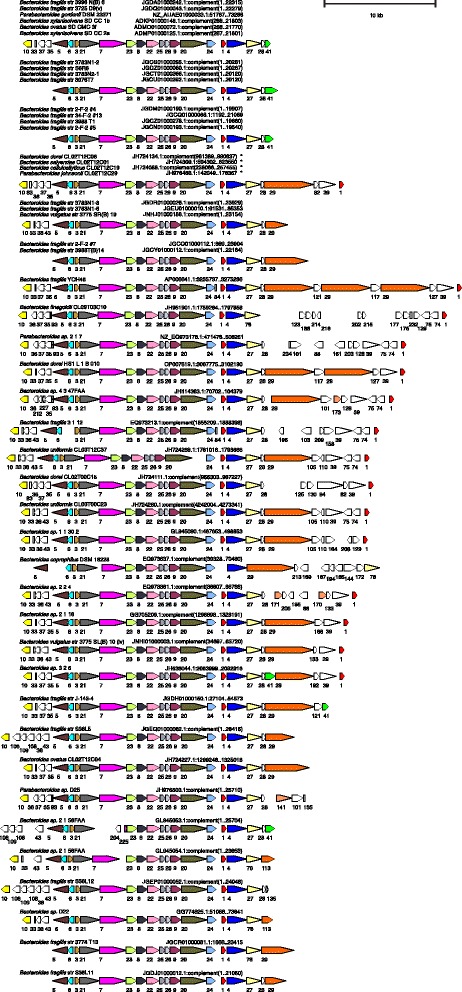
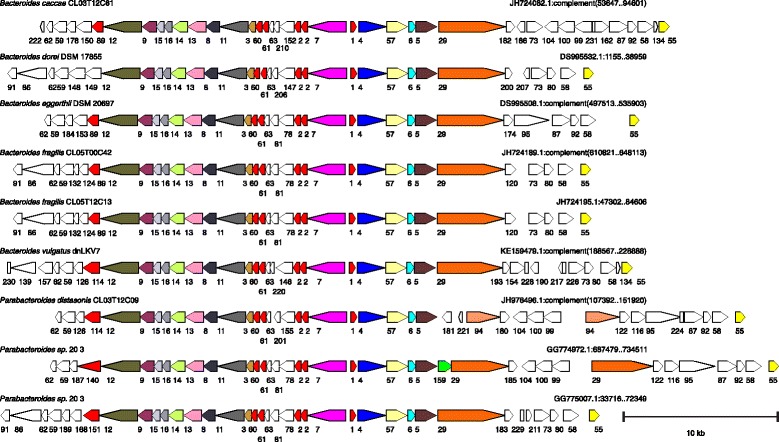
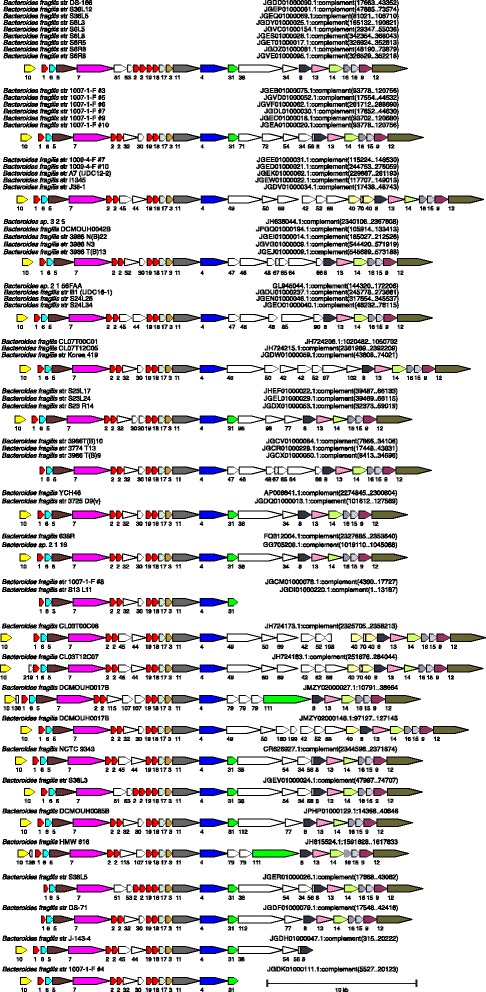
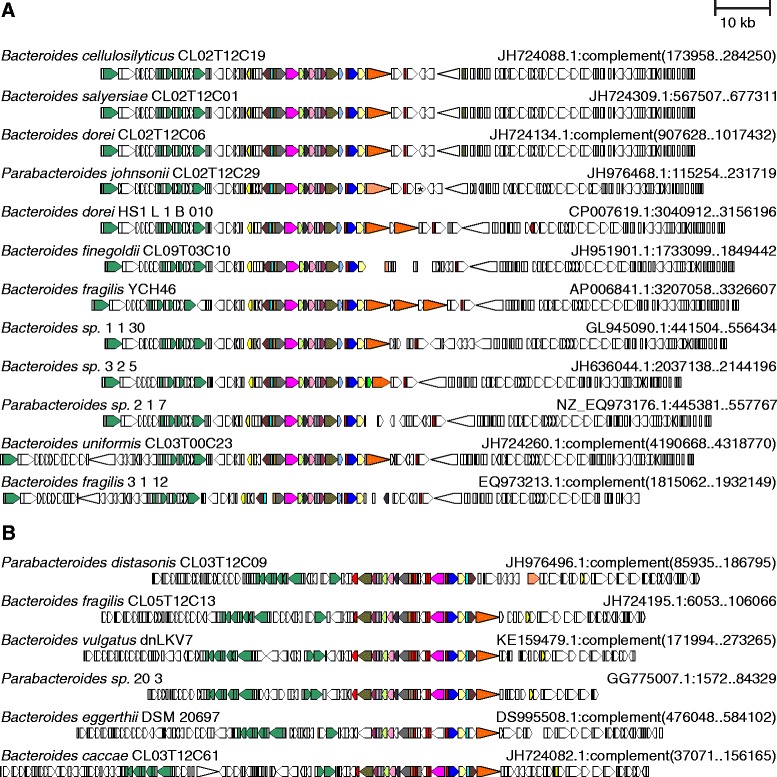
By performing extensive bioinformatics analyses and creating hidden Markov models for Bacteroidales Tss proteins, we identified 130 T6SS loci in 205 human gut Bacteroidales genomes. Of the 13 core T6SS proteins of Proteobacteria, human gut Bacteroidales T6SS loci encode orthologs of nine, and an additional five other core proteins not present in Proteobacterial T6SSs. The Bacteroidales T6SS loci segregate into three distinct genetic architectures with extensive DNA identity between loci of a given genetic architecture. We found that divergent DNA regions of a genetic architecture encode numerous types of effector and immunity proteins and likely include new classes of these proteins. TheT6SS loci of genetic architecture 1 are contained on highly similar integrative conjugative elements (ICEs), as are the T6SS loci of genetic architecture 2, whereas the T6SS loci of genetic architecture 3 are not and are confined to Bacteroides fragilis. Using collections of co-resident Bacteroidales strains from human subjects, we provide evidence for the transfer of genetic architecture 1 T6SS loci among co-resident Bacteroidales species in the human gut. However, we also found that established ecosystems can harbor strains with distinct T6SS of all genetic architectures.
This is the first study to comprehensively analyze of the presence and diversity of T6SS loci within an order of bacteria and to analyze T6SSs of bacteria from a natural community. These studies demonstrate that more than half of our gut Bacteroidales, equivalent to about ¼ of the bacteria of this ecosystem, encode T6SSs. The data reveal several novel properties of these systems and suggest that antagonism between or distributed defense among these abundant intestinal bacteria may be common in established human gut communities.
VI型分泌系统(T6SSs)是革兰氏阴性菌用于毒害其他细菌或真核细胞的接触依赖性拮抗系统。T6SSs最近在一些拟杆菌属菌株中被发现,从而将这些系统的存在范围扩展到了变形菌门之外。本研究旨在全面分析拟杆菌目中T6SSs的多样性、丰度和特性,拟杆菌目是人类肠道中最主要的革兰氏阴性菌目。
通过进行广泛的生物信息学分析并为拟杆菌属Tss蛋白创建隐马尔可夫模型,我们在205个人类肠道拟杆菌属基因组中鉴定出130个T6SS基因座。在变形菌门的13种核心T6SS蛋白中,人类肠道拟杆菌属T6SS基因座编码其中9种的直系同源物,另外还有5种变形菌门T6SS中不存在的核心蛋白。拟杆菌属T6SS基因座分为三种不同的遗传结构,同一遗传结构的基因座之间具有广泛的DNA同一性。我们发现,一种遗传结构的不同DNA区域编码多种类型的效应蛋白和免疫蛋白,并且可能包括这些蛋白的新类别。遗传结构1的T6SS基因座位于高度相似的整合性接合元件(ICEs)上,遗传结构2的T6SS基因座也是如此,而遗传结构3的T6SS基因座则不然,它们局限于脆弱拟杆菌。利用来自人类受试者的共居拟杆菌属菌株集合,我们提供了证据表明遗传结构1的T6SS基因座在人类肠道中共居的拟杆菌属物种之间发生转移。然而,我们还发现,已建立的生态系统中可能存在具有所有遗传结构的不同T6SS的菌株。
这是首次对一个细菌目中T6SS基因座的存在和多样性进行全面分析,并对来自自然群落的细菌的T6SS进行分析的研究。这些研究表明,我们肠道中超过一半的拟杆菌属,相当于该生态系统中约四分之一的细菌,编码T6SS。数据揭示了这些系统的几个新特性,并表明这些丰富的肠道细菌之间的拮抗作用或分布式防御在已建立的人类肠道群落中可能很常见。