Ye Xuan-Yi, Ling Qing-Zhi, Chen Shao-Jun
College of Ecology, Lishui University, Lishui, Zhejiang 323000, China.
Department of Traditional Chinese Medicine, Zhejiang Pharmaceutical College, Ningbo 315100, China.
Evid Based Complement Alternat Med. 2015;2015:983951. doi: 10.1155/2015/983951. Epub 2015 Dec 3.
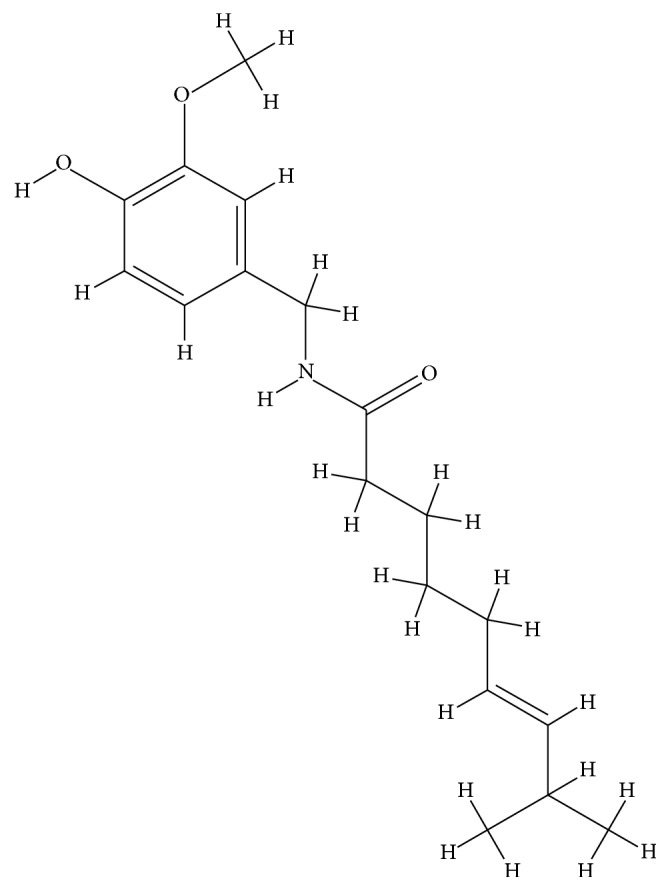
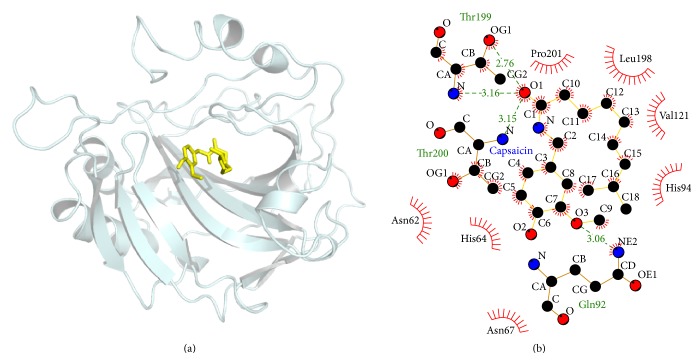
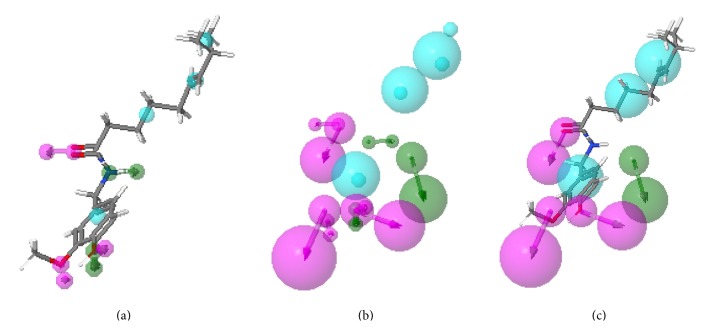
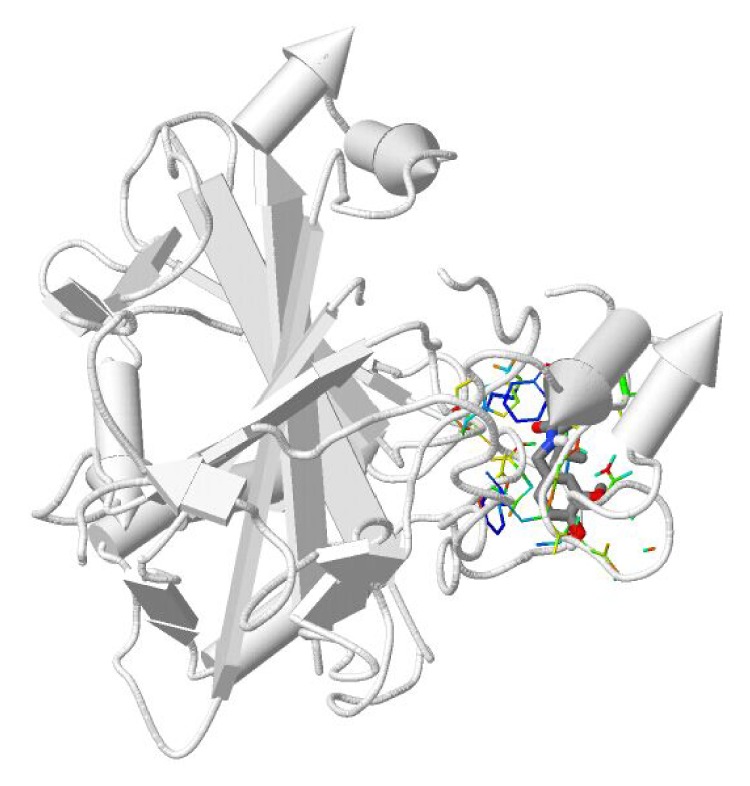
Capsaicin, the component responsible for the pungency of chili peppers, shows beneficial effects in many diseases, although the underlying mechanisms remain unclear. In the present study, the potential targets of capsaicin were predicted using PharmMapper and confirmed via chemical-protein interactome (CPI) and molecular docking. Carbonic anhydrase 2 was identified as the main disease-related target, with the pharmacophore model matching well with the molecular features of capsaicin. The relation was confirmed by CPI and molecular docking and supported by previous research showing that capsaicin is a potent inhibitor of carbonic anhydrase isoenzymes. The present study provides a basis for understanding the mechanisms of action of capsaicin or those of other natural compounds.
辣椒素是使辣椒产生辣味的成分,尽管其潜在机制尚不清楚,但在许多疾病中都显示出有益作用。在本研究中,使用PharmMapper预测了辣椒素的潜在靶点,并通过化学-蛋白质相互作用组(CPI)和分子对接进行了确认。碳酸酐酶2被确定为主要的疾病相关靶点,其药效团模型与辣椒素的分子特征匹配良好。通过CPI和分子对接证实了这种关系,并且先前的研究表明辣椒素是碳酸酐酶同工酶的有效抑制剂,这也支持了该关系。本研究为理解辣椒素或其他天然化合物的作用机制提供了依据。