Wang Xiao-Jian, Huang Bi, Yang Yan-Min, Zhang Liang, Su Wen-Jun, Tian Li, Lu Tian-Yi, Zhang Shu, Fan Xiao-Han, Hui Ru-Tai
State Key Laboratory of Cardiovascular Disease, Sino-German Laboratory for Molecular Medicine, Fuwai Hospital, National Center for Cardiovascular Diseases, Chinese Academy of Medical Sciences & Peking Union Medical College, Beijing, China.
State Key Laboratory of Cardiovascular Disease, Department of Cardiology, Fuwai Hospital, National Center for Cardiovascular Diseases, Chinese Academy of Medical Sciences & Peking Union Medical College, Beijing, China.
J Geriatr Cardiol. 2015 Nov;12(6):655-61. doi: 10.11909/j.issn.1671-5411.2015.06.013.
Biomarker-assisted diagnosis of acute aortic dissection (AAD) is important for diagnosis and treatment. However, identification of biomarkers for AAD in blood is a challenging task. The aim of this study is to search for new potentially microRNA (miRNAs) biomarkers in AAD.
The miRNAs expression profiles in ascending aortic tissue and plasma were examined by microarray analysis in two sets or groups. The tissue group was composed of four patients with AAD and four controls of healthy male organ donors. The plasma group included 20 patients with AAD and 20 controls without cardiovascular disease. Bioinformatics was used to analyze the potential targets of the differentially expressed miRNAs.
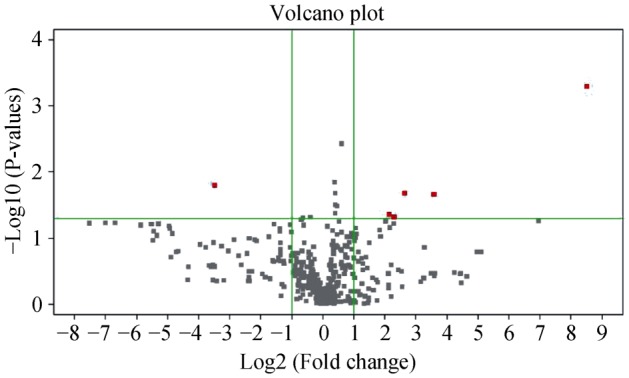
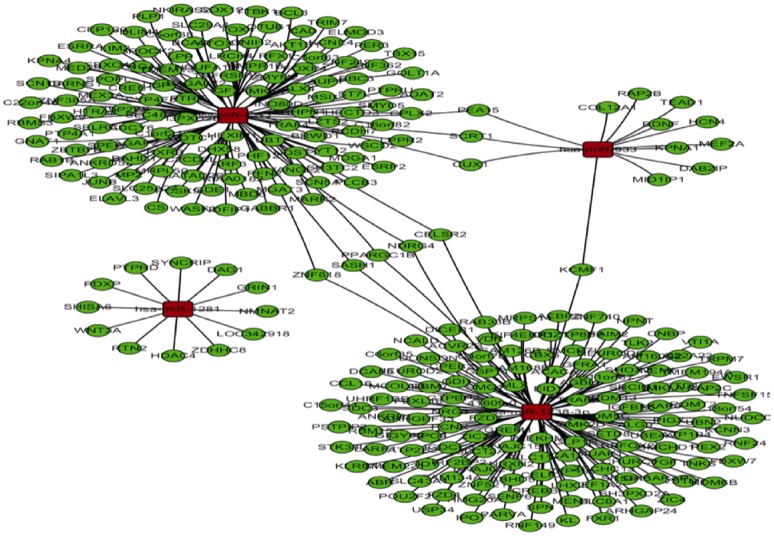
Our study revealed that in AAD patients, the aortic tissue had 30 differentially expressed miRNAs with 13 up-regulated and 17 down-regulated, and plasma had 93 differentially expressed miRNAs, of which 33 were up-regulated and 60 were down-regulated. Four miRNAs were found to be up-regulated in both aortic tissue and plasma in AAD patients. The predicted miRNA targets indicated the four dysregulated miRNAs mainly targeted genes that were associated with cell-cell adhesion, extracellular matrix metabolism, cytoskeleton organization, inflammation, and multiple signaling pathways related to cellular cycles.
Four miRNAs, which are up-regulated both in aortic tissue and in plasma in AAD patients, have been identified in this study. These miRNAs might be potential diagnostic biomarkers for AAD. Larger sample investigations are needed for further verification.
生物标志物辅助诊断急性主动脉夹层(AAD)对诊断和治疗至关重要。然而,在血液中识别AAD的生物标志物是一项具有挑战性的任务。本研究的目的是寻找AAD中新的潜在微小RNA(miRNA)生物标志物。
通过微阵列分析检测两组升主动脉组织和血浆中的miRNA表达谱。组织组由4例AAD患者和4例健康男性器官供体对照组成。血浆组包括20例AAD患者和20例无心血管疾病的对照。采用生物信息学分析差异表达miRNA的潜在靶标。
我们的研究显示,在AAD患者中,主动脉组织有30个差异表达的miRNA,其中13个上调,17个下调,血浆中有93个差异表达的miRNA,其中33个上调,60个下调。发现4个miRNA在AAD患者的主动脉组织和血浆中均上调。预测的miRNA靶标表明,这4个失调的miRNA主要靶向与细胞间粘附、细胞外基质代谢、细胞骨架组织、炎症以及与细胞周期相关的多个信号通路相关的基因。
本研究鉴定出4个在AAD患者的主动脉组织和血浆中均上调的miRNA。这些miRNA可能是AAD的潜在诊断生物标志物。需要更大规模的样本研究进行进一步验证。