Phan Binh, Majid Shahana, Ursu Sarah, de Semir David, Nosrati Mehdi, Bezrookove Vladimir, Kashani-Sabet Mohammed, Dar Altaf A
California Pacific Medical Center Research Institute, San Francisco, CA 94107, USA.
Department of Urology, Veterans Affairs Medical Center and University of California San Francisco, San Francisco, CA 94121, USA.
Oncotarget. 2016 Apr 12;7(15):19519-30. doi: 10.18632/oncotarget.6961.
Triple negative breast cancer (TNBC) is an aggressive subtype of breast cancer with a poor prognosis, which lacks effective targeted therapies. There is an urgent need to better understand the underlying molecular mechanisms of TNBC aggressiveness and identify novel, efficient targets for therapeutic intervention.
miRNA qRT-PCR was used to determine the expression of miR-1296 in cell lines. The miR-1296 overexpression effects in TNBC cell lines were investigated using assays of colony formation, cell cycle and apoptosis. Immunoblotting was performed to determine the expression of the miR-1296 target protein, and luciferase assays were performed to confirm the target of miR-1296 action.
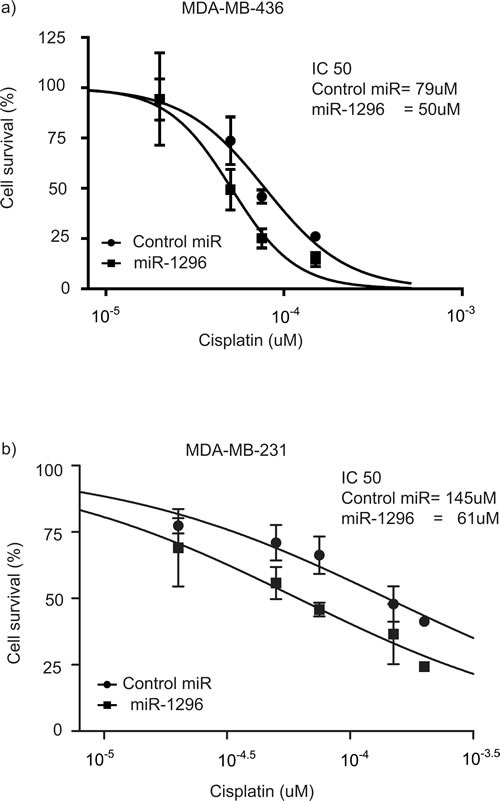
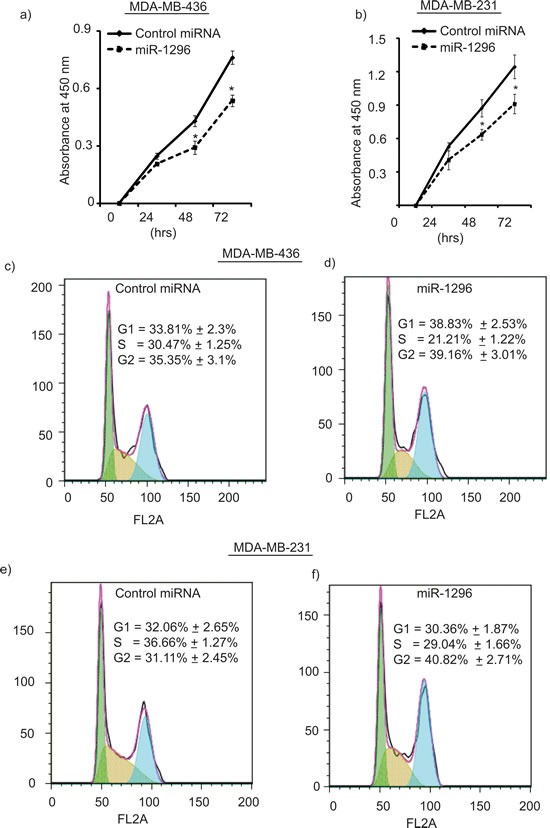
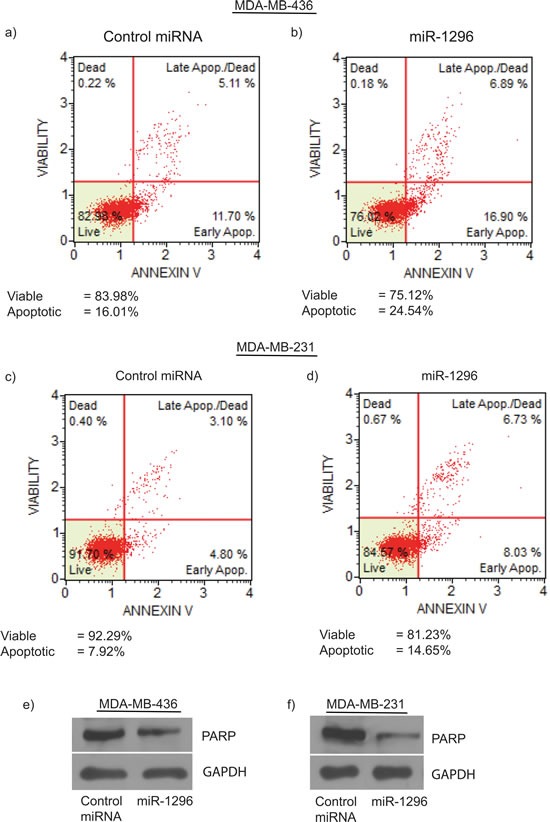
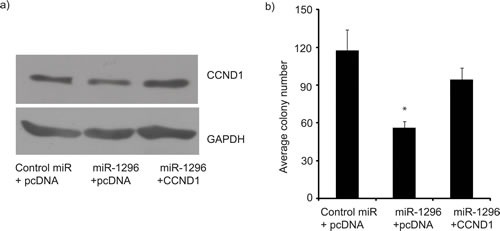
miR-1296 expression was significantly suppressed in TNBC cell lines and tissues samples. Overexpression of miR-1296 significantly suppressed cell proliferation of two TNBC cell lines when compared to control miRNA-expressing cells. A significant decrease in the S-phase of the cell cycle was observed following miR-1296 overexpression, accompanied by induction of apoptosis in TNBC cells. Cyclin D1 (CCND1) was identified as a target of miR-1296 action. miR-1296 overexpression significantly suppressed the luciferase activity of reporter plasmid containing the 3'UTR of CCND1 and protein expression levels of CCND1 in TNBC cells. The effects of miR-1296 overexpression on TNBC cell growth were reversed by CCND1 overexpression. miR-1296 expression sensitized TNBC cells to cisplatin treatment.
Our results demonstrate a novel tumor suppressor role for miR-1296 in triple-negative breast cancer cell lines, identify CCND1 as its target of action, and demonstrate a potential role for miR-1296 in sensitizing breast cancer cells to cisplatin.
三阴性乳腺癌(TNBC)是一种侵袭性乳腺癌亚型,预后较差,缺乏有效的靶向治疗方法。迫切需要更好地了解TNBC侵袭性的潜在分子机制,并确定新的、有效的治疗干预靶点。
采用miRNA qRT-PCR法测定细胞系中miR-1296的表达。通过集落形成、细胞周期和凋亡检测,研究miR-1296在TNBC细胞系中的过表达效应。进行免疫印迹以确定miR-1296靶蛋白的表达,并进行荧光素酶检测以确认miR-1296的作用靶点。
miR-1296在TNBC细胞系和组织样本中的表达显著下调。与表达对照miRNA的细胞相比,miR-1296过表达显著抑制了两种TNBC细胞系的细胞增殖。miR-1296过表达后,细胞周期的S期显著减少,同时TNBC细胞发生凋亡。细胞周期蛋白D1(CCND1)被确定为miR-1296的作用靶点。miR-1296过表达显著抑制了含有CCND1 3'UTR的报告质粒的荧光素酶活性以及TNBC细胞中CCND1的蛋白表达水平。CCND1过表达逆转了miR-1296过表达对TNBC细胞生长的影响。miR-1296表达使TNBC细胞对顺铂治疗敏感。
我们的结果证明了miR-1296在三阴性乳腺癌细胞系中具有新的肿瘤抑制作用,确定CCND1为其作用靶点,并证明了miR-1296在使乳腺癌细胞对顺铂敏感方面的潜在作用。