Zhang Yiting, Hodgson Nathaniel W, Trivedi Malav S, Abdolmaleky Hamid M, Fournier Margot, Cuenod Michel, Do Kim Quang, Deth Richard C
Department of Pharmaceutical Sciences, Northeastern University, Boston, MA, 02115, United States of America.
Department of Surgery, Laboratory of Nutrition and Metabolism at BIDMC, Harvard Medical School, Boston, MA, 02215, United States of America.
PLoS One. 2016 Jan 22;11(1):e0146797. doi: 10.1371/journal.pone.0146797. eCollection 2016.
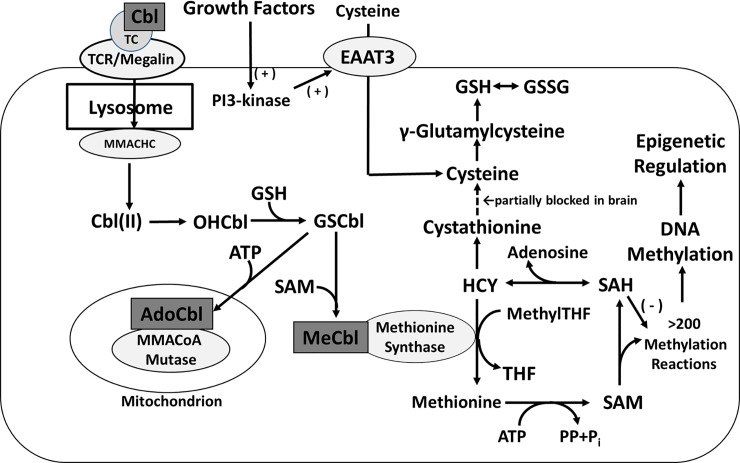
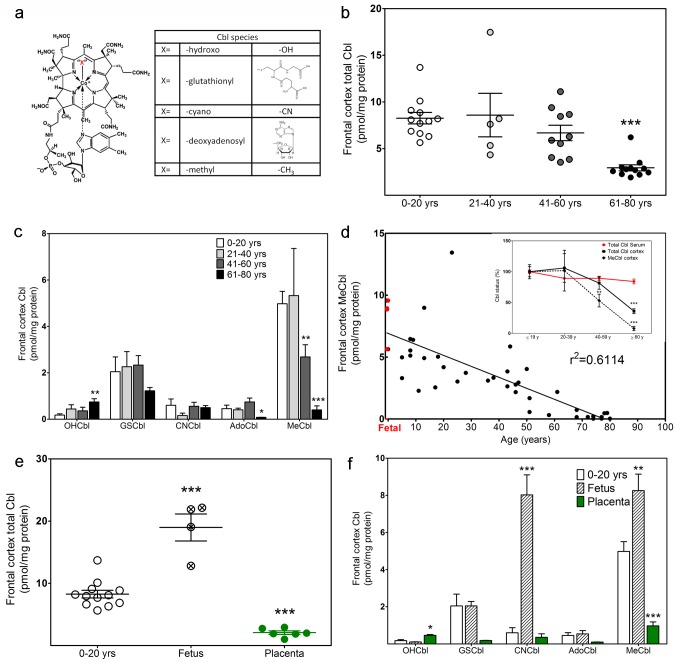
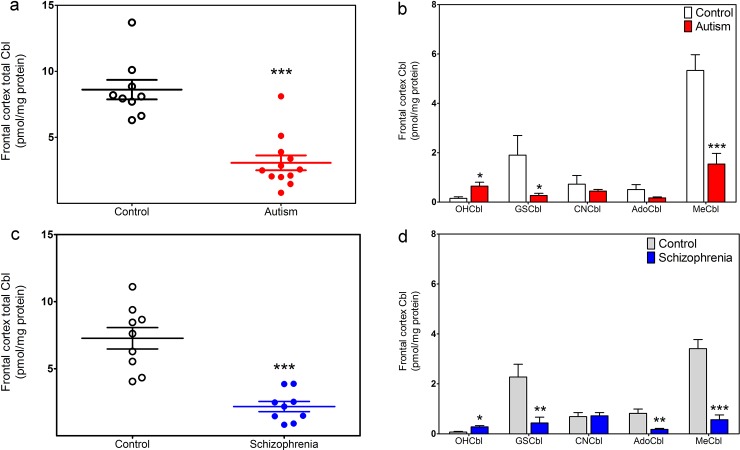
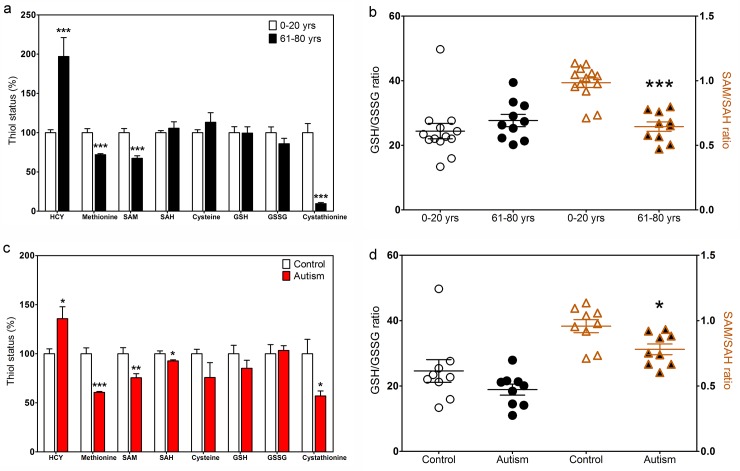
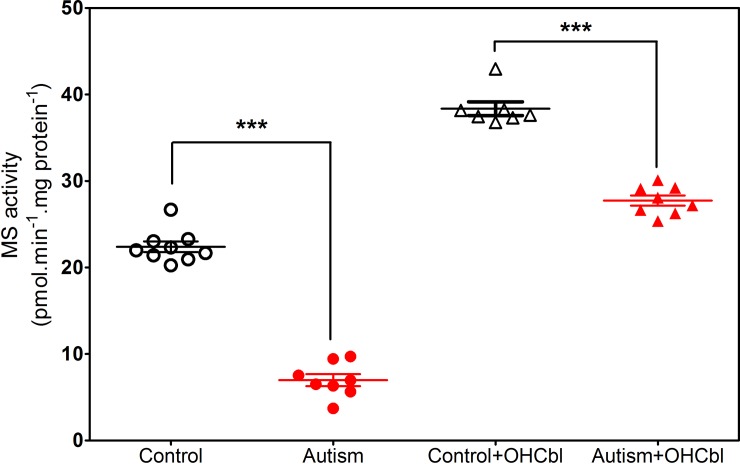
Many studies indicate a crucial role for the vitamin B12 and folate-dependent enzyme methionine synthase (MS) in brain development and function, but vitamin B12 status in the brain across the lifespan has not been previously investigated. Vitamin B12 (cobalamin, Cbl) exists in multiple forms, including methylcobalamin (MeCbl) and adenosylcobalamin (AdoCbl), serving as cofactors for MS and methylmalonylCoA mutase, respectively. We measured levels of five Cbl species in postmortem human frontal cortex of 43 control subjects, from 19 weeks of fetal development through 80 years of age, and 12 autistic and 9 schizophrenic subjects. Total Cbl was significantly lower in older control subjects (> 60 yrs of age), primarily reflecting a >10-fold age-dependent decline in the level of MeCbl. Levels of inactive cyanocobalamin (CNCbl) were remarkably higher in fetal brain samples. In both autistic and schizophrenic subjects MeCbl and AdoCbl levels were more than 3-fold lower than age-matched controls. In autistic subjects lower MeCbl was associated with decreased MS activity and elevated levels of its substrate homocysteine (HCY). Low levels of the antioxidant glutathione (GSH) have been linked to both autism and schizophrenia, and both total Cbl and MeCbl levels were decreased in glutamate-cysteine ligase modulatory subunit knockout (GCLM-KO) mice, which exhibit low GSH levels. Thus our findings reveal a previously unrecognized decrease in brain vitamin B12 status across the lifespan that may reflect an adaptation to increasing antioxidant demand, while accelerated deficits due to GSH deficiency may contribute to neurodevelopmental and neuropsychiatric disorders.
许多研究表明,维生素B12和叶酸依赖性酶甲硫氨酸合成酶(MS)在大脑发育和功能中起关键作用,但此前尚未对一生中大脑中的维生素B12状态进行过研究。维生素B12(钴胺素,Cbl)以多种形式存在,包括甲基钴胺素(MeCbl)和腺苷钴胺素(AdoCbl),分别作为MS和甲基丙二酰辅酶A变位酶的辅因子。我们测量了43名对照受试者死后人类额叶皮质中五种Cbl物种的水平,这些受试者的年龄从胎儿发育19周至80岁,另外还有12名自闭症患者和9名精神分裂症患者。老年对照受试者(>60岁)的总Cbl显著降低,主要反映出MeCbl水平随年龄增长下降了10倍以上。胎儿脑样本中无活性氰钴胺素(CNCbl)的水平明显更高。在自闭症和精神分裂症患者中,MeCbl和AdoCbl水平均比年龄匹配的对照者低3倍以上。在自闭症患者中,较低的MeCbl与MS活性降低及其底物同型半胱氨酸(HCY)水平升高有关。低水平的抗氧化剂谷胱甘肽(GSH)与自闭症和精神分裂症都有关联,在谷氨酸-半胱氨酸连接酶调节亚基敲除(GCLM-KO)小鼠中,总Cbl和MeCbl水平均降低,这些小鼠表现出低GSH水平。因此,我们的研究结果揭示了一生中大脑维生素B12状态此前未被认识到的下降,这可能反映了对不断增加的抗氧化需求的一种适应,而由于GSH缺乏导致的加速缺乏可能导致神经发育和神经精神疾病。