Lo U-Ging, Yang Diane, Hsieh Jer-Tsong
Departments of Urology, University of Texas Southwestern Medical Center, Dallas, TX 75390, USA.
Transl Androl Urol. 2013 Sep;2(3):228-41. doi: 10.3978/j.issn.2223-4683.2013.08.01.
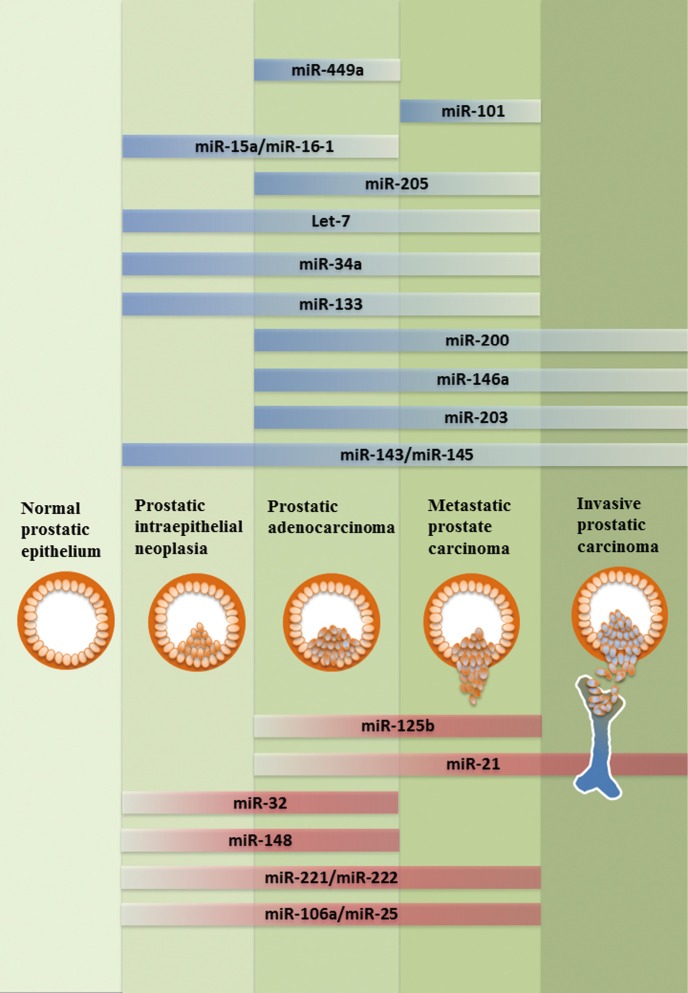
Prostate cancer (PCa) is the most common male malignancy and the second highest cause of cancer-related mortality in United States. MicroRNAs (miRNAs) are small non-coding RNAs that represent a new mechanism to regulate mRNA post-transcriptionally. It is involved in diverse physiological and pathophysiological process. Dysregulation of miRNAs has been associated with the multistep progression of PCa from prostatic intraepithelial neoplasia (PIN), localized adenocarcinoma to metastatic castration-resistance PCa (CRPC). Identification of unique miRNA could provide new biomarkers for PCa and develop into therapeutic strategies. In this review, we will summarize a broad spectrum of both tumor suppressive and oncogenic miRNAs, and their mechanisms contribute to prostate carcinogenesis.
前列腺癌(PCa)是美国最常见的男性恶性肿瘤,也是癌症相关死亡的第二大原因。微小RNA(miRNAs)是一类小的非编码RNA,代表了一种转录后调节mRNA的新机制。它参与多种生理和病理生理过程。miRNAs的失调与前列腺癌从前列腺上皮内瘤变(PIN)、局限性腺癌到转移性去势抵抗性前列腺癌(CRPC)的多步骤进展有关。鉴定独特的miRNA可为前列腺癌提供新的生物标志物,并发展成为治疗策略。在本综述中,我们将总结广泛的肿瘤抑制性和致癌性miRNAs,以及它们在前列腺癌发生中的作用机制。