Sekhon Kirandeep, Bucay Nathan, Majid Shahana, Dahiya Rajvir, Saini Sharanjot
Department of Urology, Veterans Affairs Medical Center, San Francisco and University of California San Francisco, CA, USA.
Oncotarget. 2016 Oct 11;7(41):67597-67611. doi: 10.18632/oncotarget.11708.
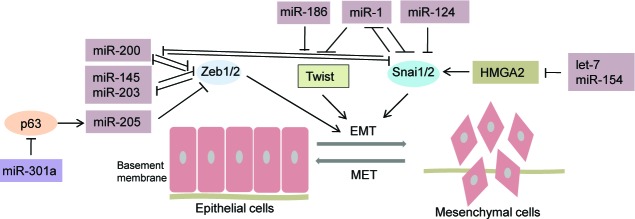
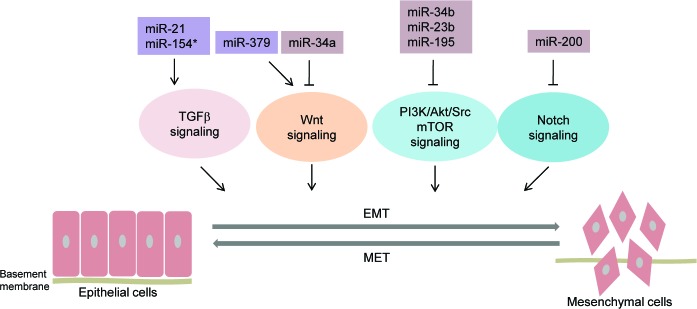
Prostate cancer (PCa) is a leading cause of male cancer-related deaths. A significant fraction of prostate tumors are very aggressive, often metastasizing to bone, causing significant morbidity and mortality. Also, PCa is associated with high rates of recurrence, often attributed to the existence of cancer stem cells. Epithelial-mesenchymal transition (EMT), a process characterized by decreased expression of epithelial genes and increased expression of mesenchymal genes, plays a critical role in tumor invasion, metastasis and recurrence. In PCa, EMT has been implicated particularly in the context of metastatic disease and microRNAs have emerged as critical post-transcriptional regulators of PCa EMT. In this review, we summarize the role of miRNAs in PCa EMT that play a role in progression, metastasis and recurrence. Studies till date suggest that microRNAs mediate efficient and reversible control of PCa EMT via multiple mechanisms including either by (i) directly repressing single or multiple EMT-TFs or regulating cytoskeletal components (epithelial/mesenchymal genes) or (ii) regulating key signaling pathways involved in EMT. Oncogenic microRNAs often act as EMT promoters by repressing epithelial characteristics and tumor suppressive miRNAs act by inhibiting mesenchymal progression. Further, EMT is mechanistically linked to stem cell signatures in PCa and several miRNAs implicated in EMT have been reported to influence PCa stem cells. Loss of EMT-inhibiting miRNAs and/or gain of EMT promoting miRNAs lead to induction of PCa EMT, leading to tumor progression, metastasis and recurrence. Restoring expression of tumor suppressive miRNAs and inhibiting oncogenic miRNAs represent potential therapeutic opportunities to prevent disease metastasis and recurrence.
前列腺癌(PCa)是男性癌症相关死亡的主要原因。很大一部分前列腺肿瘤具有很强的侵袭性,常常转移至骨骼,导致严重的发病率和死亡率。此外,PCa的复发率很高,这通常归因于癌症干细胞的存在。上皮-间质转化(EMT)是一个以上皮基因表达降低和间质基因表达增加为特征的过程,在肿瘤侵袭、转移和复发中起关键作用。在PCa中,EMT尤其与转移性疾病相关,并且微小RNA已成为PCa EMT的关键转录后调节因子。在本综述中,我们总结了在PCa EMT中发挥作用、与进展、转移和复发相关的微小RNA的作用。迄今为止的研究表明,微小RNA通过多种机制介导对PCa EMT的有效且可逆的调控,这些机制包括:(i)直接抑制单个或多个EMT转录因子或调节细胞骨架成分(上皮/间质基因),或(ii)调节参与EMT的关键信号通路。致癌性微小RNA通常通过抑制上皮特征而充当EMT启动子,而肿瘤抑制性微小RNA则通过抑制间质进展发挥作用。此外,EMT在机制上与PCa中的干细胞特征相关联,并且据报道,一些与EMT相关的微小RNA会影响PCa干细胞。EMT抑制性微小RNA的缺失和/或EMT促进性微小RNA的增加会导致PCa EMT的诱导,进而导致肿瘤进展、转移和复发。恢复肿瘤抑制性微小RNA的表达并抑制致癌性微小RNA代表了预防疾病转移和复发的潜在治疗机会。