NIHR Manchester Musculoskeletal Biomedical Research Unit, Manchester Academy of Health Sciences, and Central Manchester NHS Trust, Manchester, UK.
Arthritis Research UK Centre for Genetics and Genomics, University of Manchester, Manchester, UK.
Arthritis Rheumatol. 2016 Jun;68(6):1353-60. doi: 10.1002/art.39590. Epub 2016 Apr 21.
Biologic drug therapies represent a huge advance in the treatment of rheumatoid arthritis (RA). However, very good disease control is achieved in only 30% of patients, making identification of biomarkers of response a research priority. We undertook this study to test our hypothesis that differential DNA methylation patterns may provide biomarkers predictive of response to tumor necrosis factor inhibitor (TNFi) therapy in patients with RA.
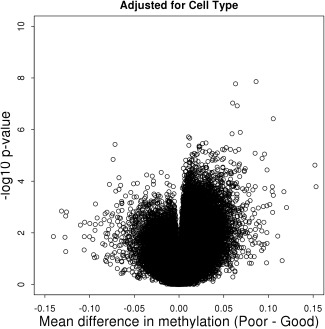
An epigenome-wide association study was performed on pretreatment whole blood DNA from patients with RA. Patients who displayed good response (n = 36) or no response (n = 36) to etanercept therapy at 3 months were selected. Differentially methylated positions were identified using linear regression. Variance of methylation at differentially methylated positions was assessed for correlation with cis-acting single-nucleotide polymorphisms (SNPs). A replication experiment for prioritized SNPs was performed in an independent cohort of 1,204 RA patients.
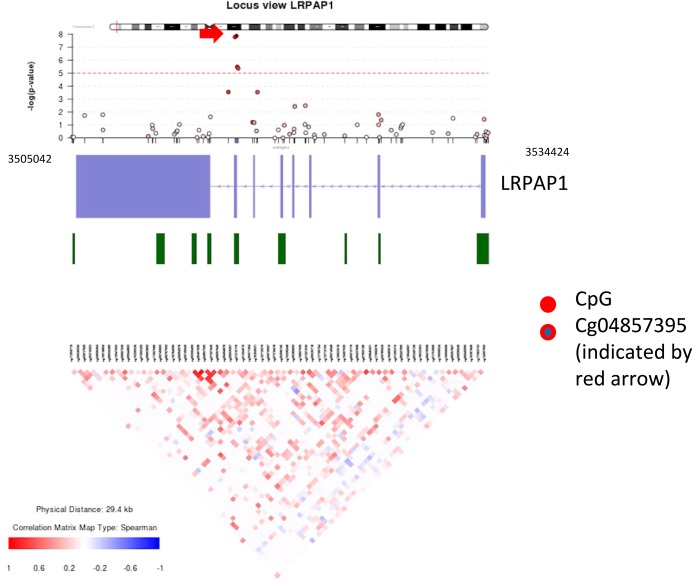
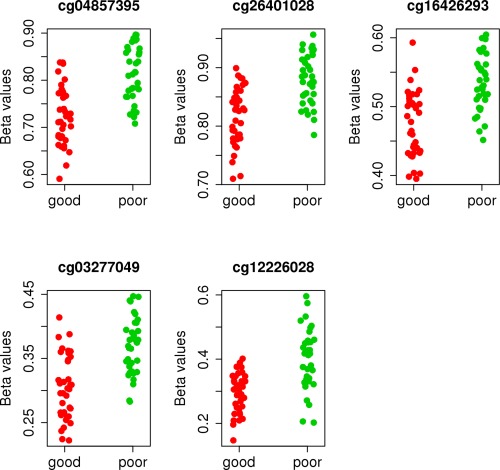
Five positions that were differentially methylated between responder groups were identified, with a false discovery rate of <5%. The top 2 differentially methylated positions mapped to exon 7 of the LRPAP1 gene on chromosome 4 (cg04857395, P = 1.39 × 10(-8) and cg26401028, P = 1.69 × 10(-8) ). The A allele of the SNP rs3468 was correlated with higher levels of methylation for both of the top 2 differentially methylated positions (P = 2.63 × 10(-7) and P = 1.05 × 10(-6) , respectively). Furthermore, the A allele of rs3468 was correlated with European League Against Rheumatism nonresponse in the discovery cohort (P = 0.03; n = 56) and in the independent replication cohort (P = 0.003; n = 1,204).
We identify DNA methylation as a potential biomarker of response to TNFi therapy, and we report the association between response and the LRPAP1 gene, which encodes a chaperone of low-density lipoprotein receptor-related protein 1. Additional replication experiments in independent sample collections are now needed.
生物药物疗法代表了类风湿关节炎(RA)治疗的巨大进步。然而,只有 30%的患者获得了非常好的疾病控制,这使得识别反应的生物标志物成为研究的重点。我们进行了这项研究,以验证我们的假设,即差异 DNA 甲基化模式可能为 RA 患者对肿瘤坏死因子抑制剂(TNFi)治疗的反应提供生物标志物。
对接受依那西普治疗 3 个月后表现出良好反应(n=36)或无反应(n=36)的 RA 患者的预处理全血 DNA 进行全基因组关联研究。使用线性回归鉴定差异甲基化位置。评估差异甲基化位置的甲基化方差与顺式作用单核苷酸多态性(SNP)的相关性。在 1204 名 RA 患者的独立队列中进行了优先 SNP 的复制实验。
在反应组之间鉴定出 5 个差异甲基化的位置,假发现率<5%。前 2 个差异甲基化位置映射到 4 号染色体 LRPAP1 基因的外显子 7(cg04857395,P=1.39×10(-8)和 cg26401028,P=1.69×10(-8))。SNP rs3468 的 A 等位基因与前 2 个差异甲基化位置的甲基化水平升高相关(P=2.63×10(-7)和 P=1.05×10(-6),分别)。此外,rs3468 的 A 等位基因与发现队列中的欧洲抗风湿病联盟无反应相关(P=0.03;n=56)和独立复制队列相关(P=0.003;n=1204)。
我们将 DNA 甲基化为 TNFi 治疗反应的潜在生物标志物,并报告了反应与 LRPAP1 基因之间的关联,该基因编码 LDL 受体相关蛋白 1 的伴侣。现在需要在独立的样本集中进行更多的复制实验。