Krupka Jennifer, May Frauke, Weimer Thomas, Pragst Ingo, Kleinschnitz Christoph, Stoll Guido, Panousis Con, Dickneite Gerhard, Nolte Marc W
CSL Behring GmbH, Marburg, Germany.
University of Würzburg, Department of Neurology, Würzburg, Germany.
PLoS One. 2016 Jan 27;11(1):e0146783. doi: 10.1371/journal.pone.0146783. eCollection 2016.
Ischemic stroke provokes severe brain damage and remains a predominant disease in industrialized countries. The coagulation factor XII (FXII)-driven contact activation system plays a central, but not yet fully defined pathogenic role in stroke development. Here, we investigated the efficacy of the FXIIa inhibitor rHA-Infestin-4 in a rat model of ischemic stroke using both a prophylactic and a therapeutic approach.
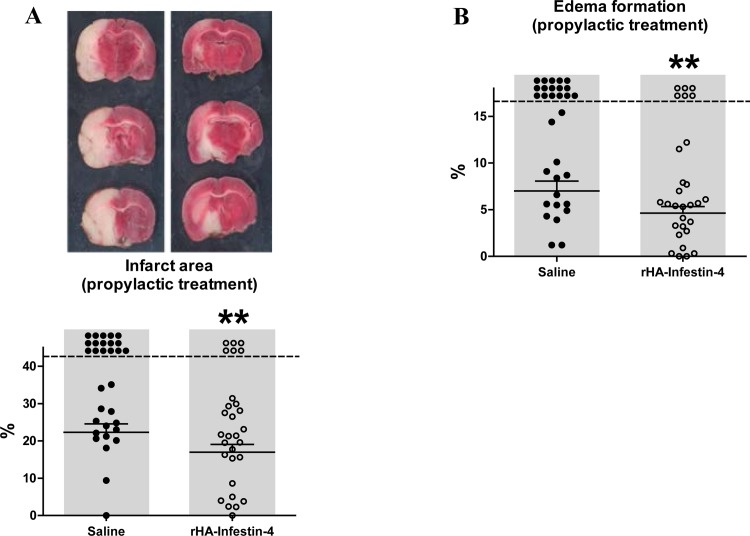
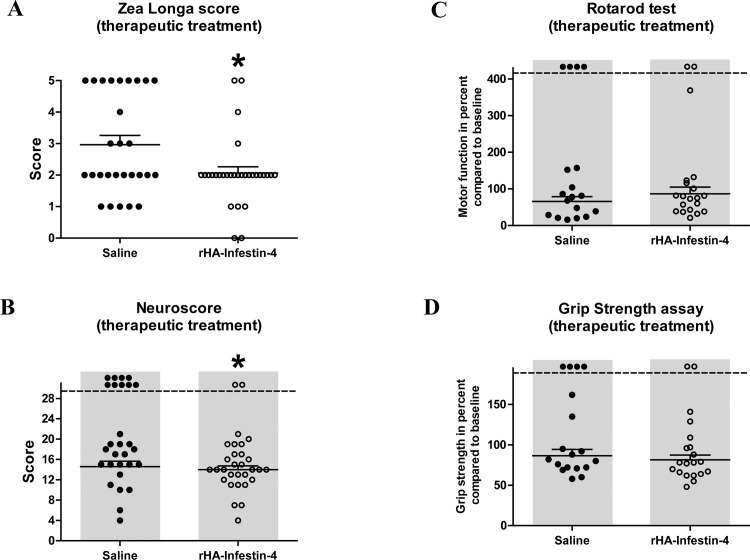
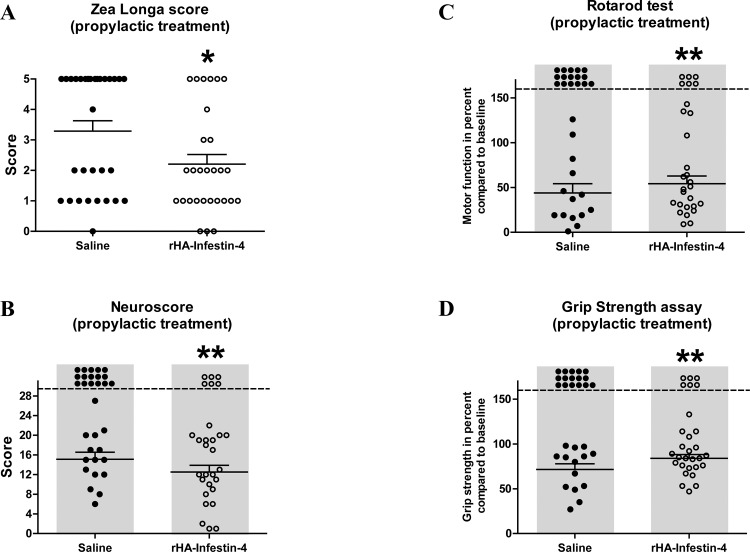
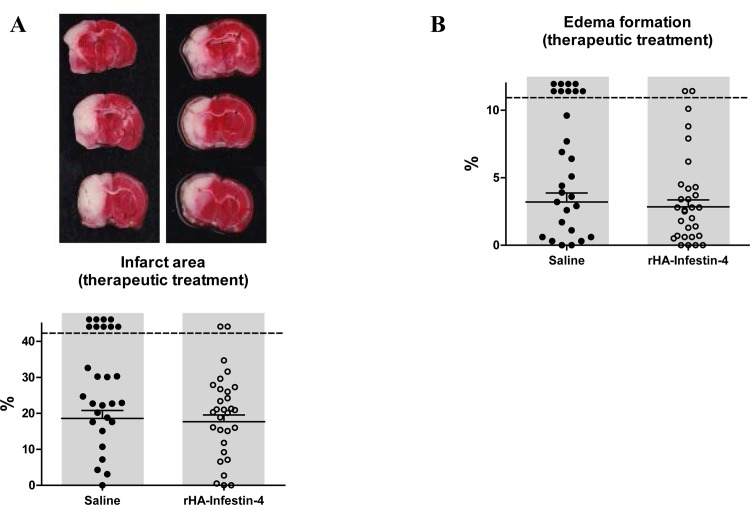
For prophylactic treatment, animals were treated intravenously with 100 mg/kg rHA-Infestin-4 or an equal volume of saline 15 min prior to transient middle cerebral artery occlusion (tMCAO) of 90 min. For therapeutic treatment, 100 mg/kg rHA-Infestin-4, or an equal volume of saline, was administered directly after the start of reperfusion. At 24 h after tMCAO, rats were tested for neurological deficits and blood was drawn for coagulation assays. Finally, brains were removed and analyzed for infarct area and edema formation.
Within prophylactic rHA-Infestin-4 treatment, infarct areas and brain edema formation were reduced accompanied by better neurological scores and survival compared to controls. Following therapeutic treatment, neurological outcome and survival were still improved although overall effects were less pronounced compared to prophylaxis.
With regard to the central role of the FXII-driven contact activation system in ischemic stroke, inhibition of FXIIa may represent a new and promising treatment approach to prevent cerebral ischemia/reperfusion injury.
缺血性中风会引发严重的脑损伤,在工业化国家仍然是一种主要疾病。凝血因子 XII(FXII)驱动的接触激活系统在中风发展中起着核心但尚未完全明确的致病作用。在此,我们采用预防性和治疗性方法,研究了 FXIIa 抑制剂 rHA-Infestin-4 在大鼠缺血性中风模型中的疗效。
对于预防性治疗,在短暂性大脑中动脉闭塞(tMCAO)90 分钟前 15 分钟,给动物静脉注射 100mg/kg 的 rHA-Infestin-4 或等体积的生理盐水。对于治疗性治疗,在再灌注开始后立即给予 100mg/kg 的 rHA-Infestin-4 或等体积的生理盐水。在 tMCAO 后 24 小时,对大鼠进行神经功能缺损测试,并采集血液进行凝血测定。最后,取出大脑并分析梗死面积和水肿形成情况。
在预防性 rHA-Infestin-4 治疗中,与对照组相比,梗死面积和脑水肿形成减少,神经功能评分更好,存活率更高。治疗性治疗后,神经功能结果和存活率仍有所改善,尽管总体效果与预防性治疗相比不太明显。
鉴于 FXII 驱动的接触激活系统在缺血性中风中的核心作用,抑制 FXIIa 可能代表一种预防脑缺血/再灌注损伤的新的有前景的治疗方法。