Pulido Pablo, Llamas Ernesto, Llorente Briardo, Ventura Salvador, Wright Louwrance P, Rodríguez-Concepción Manuel
Centre for Research in Agricultural Genomics (CRAG) CSIC-IRTA-UAB-UB, Campus UAB Bellaterra, Barcelona, Spain.
Institut de Biotecnologia i Biomedicina and Departament de Bioquímica i Biologia Molecular, Universitat Autònoma de Barcelona, Campus UAB Bellaterra, Barcelona, Spain.
PLoS Genet. 2016 Jan 27;12(1):e1005824. doi: 10.1371/journal.pgen.1005824. eCollection 2016 Jan.
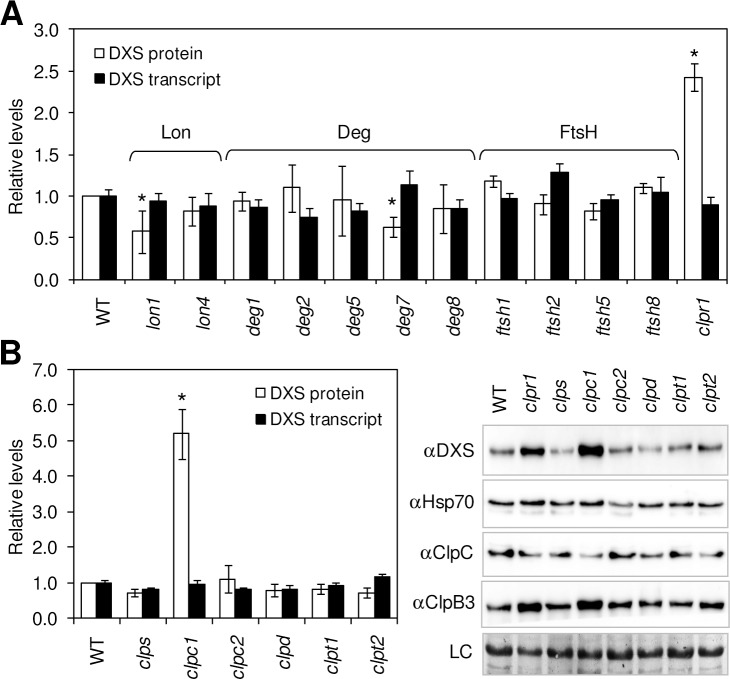
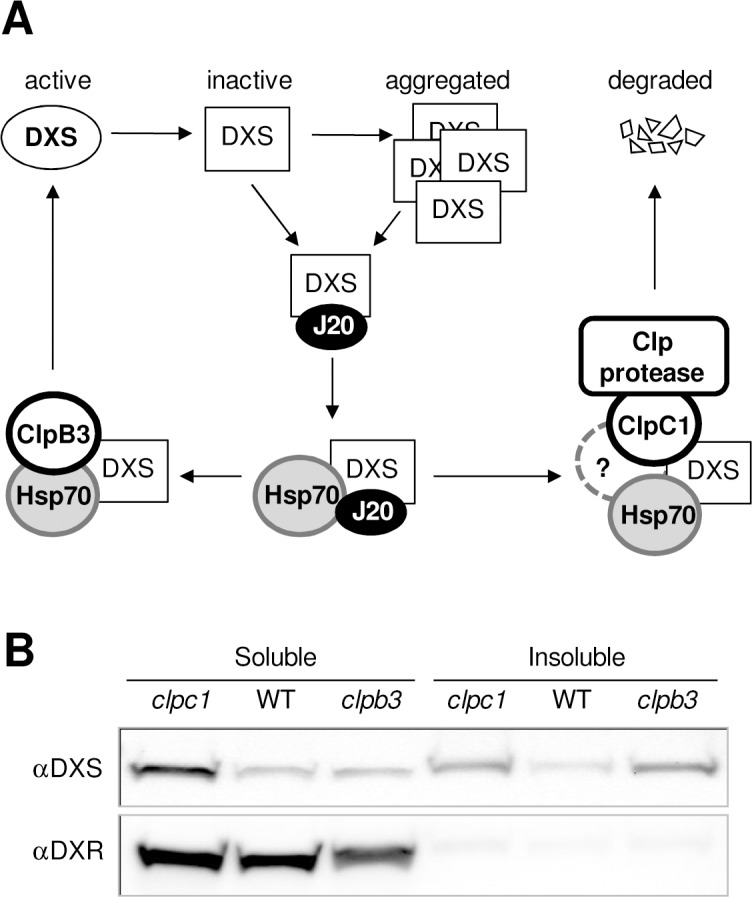
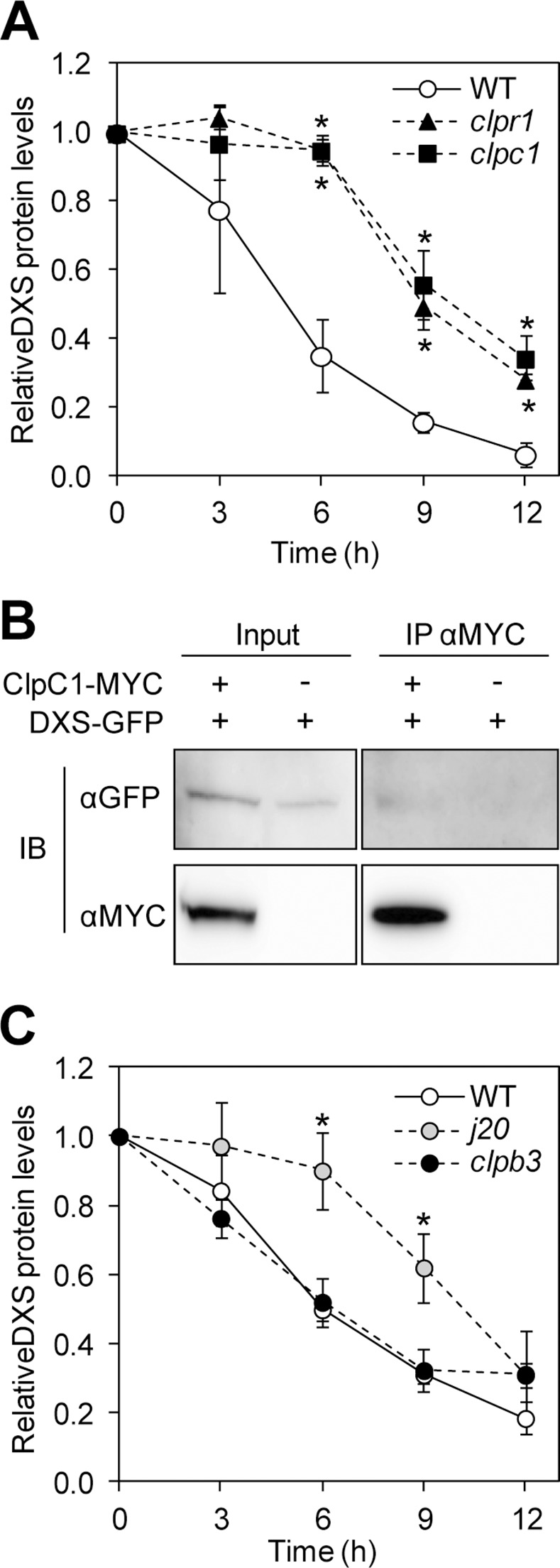
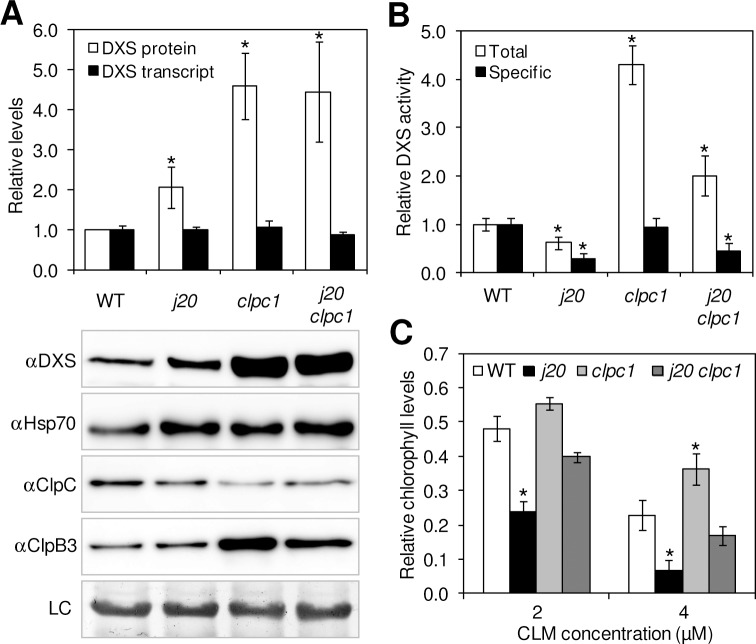
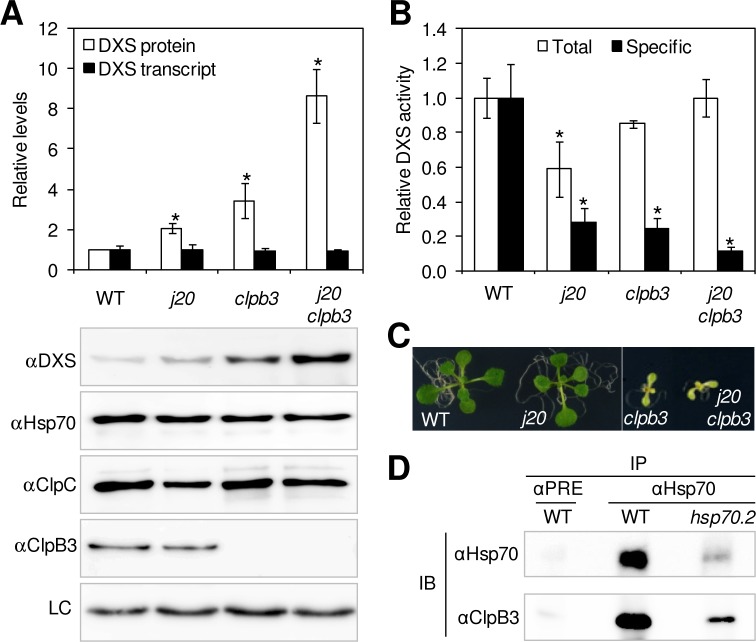
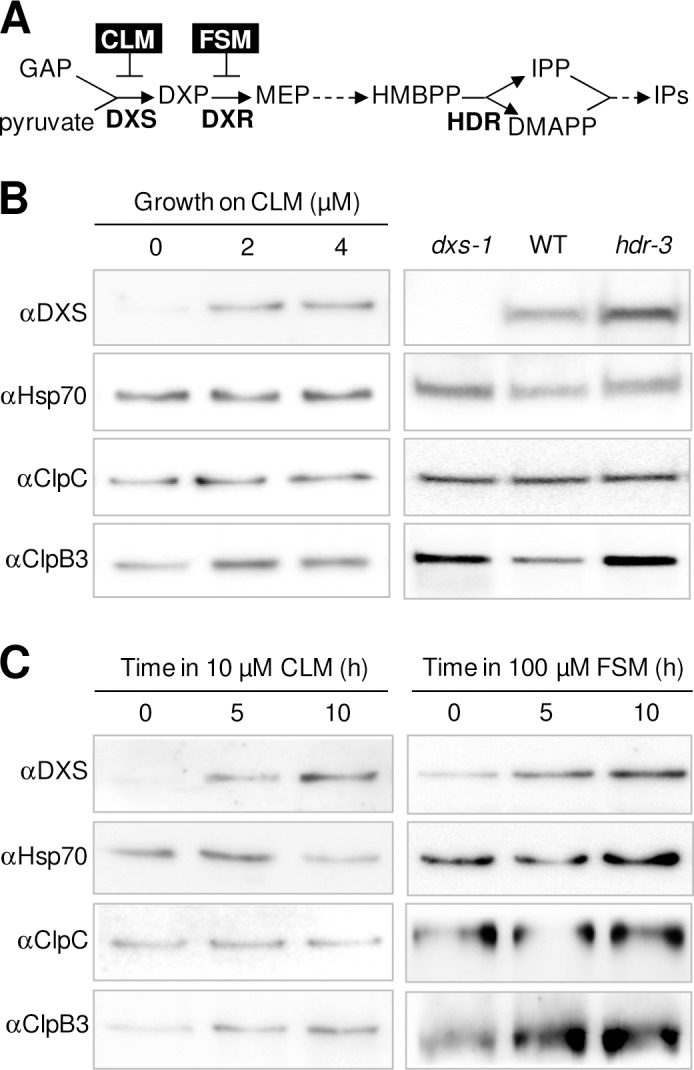
The lifespan and activity of proteins depend on protein quality control systems formed by chaperones and proteases that ensure correct protein folding and prevent the formation of toxic aggregates. We previously found that the Arabidopsis thaliana J-protein J20 delivers inactive (misfolded) forms of the plastidial enzyme deoxyxylulose 5-phosphate synthase (DXS) to the Hsp70 chaperone for either proper folding or degradation. Here we show that the fate of Hsp70-bound DXS depends on pathways involving specific Hsp100 chaperones. Analysis of individual mutants for the four Hsp100 chaperones present in Arabidopsis chloroplasts showed increased levels of DXS proteins (but not transcripts) only in those defective in ClpC1 or ClpB3. However, the accumulated enzyme was active in the clpc1 mutant but inactive in clpb3 plants. Genetic evidence indicated that ClpC chaperones might be required for the unfolding of J20-delivered DXS protein coupled to degradation by the Clp protease. By contrast, biochemical and genetic approaches confirmed that Hsp70 and ClpB3 chaperones interact to collaborate in the refolding and activation of DXS. We conclude that specific J-proteins and Hsp100 chaperones act together with Hsp70 to recognize and deliver DXS to either reactivation (via ClpB3) or removal (via ClpC1) depending on the physiological status of the plastid.
蛋白质的寿命和活性取决于由伴侣蛋白和蛋白酶形成的蛋白质质量控制系统,这些系统可确保蛋白质正确折叠并防止有毒聚集体的形成。我们先前发现,拟南芥J蛋白J20将质体酶1-脱氧-D-木酮糖-5-磷酸合酶(DXS)的无活性(错误折叠)形式传递给Hsp70伴侣蛋白,以便进行正确折叠或降解。在这里,我们表明与Hsp70结合的DXS的命运取决于涉及特定Hsp100伴侣蛋白的途径。对拟南芥叶绿体中存在的四种Hsp100伴侣蛋白的单个突变体进行分析发现,只有在ClpC1或ClpB3有缺陷的突变体中,DXS蛋白(而非转录本)的水平才会升高。然而,积累的酶在clpc1突变体中具有活性,但在clpb3植物中无活性。遗传证据表明,ClpC伴侣蛋白可能是J20传递的DXS蛋白解折叠所必需的,该解折叠过程与Clp蛋白酶介导的降解过程相关。相比之下,生化和遗传方法证实,Hsp70和ClpB3伴侣蛋白相互作用,共同参与DXS的重新折叠和激活。我们得出结论,特定的J蛋白和Hsp100伴侣蛋白与Hsp70一起发挥作用,根据质体的生理状态识别并将DXS传递至重新激活(通过ClpB3)或去除(通过ClpC1)。