• 文献检索
  • 文档翻译
  • 深度研究
  • 学术资讯
  • Suppr Zotero 插件Zotero 插件
  • 邀请有礼
  • 套餐&价格
  • 历史记录
应用&插件
Suppr Zotero 插件Zotero 插件浏览器插件Mac 客户端Windows 客户端微信小程序
定价
高级版会员购买积分包购买API积分包
服务
文献检索文档翻译深度研究API 文档MCP 服务
关于我们
关于 Suppr公司介绍联系我们用户协议隐私条款
关注我们

Suppr 超能文献

核心技术专利:CN118964589B侵权必究
粤ICP备2023148730 号-1Suppr @ 2026

文献检索

告别复杂PubMed语法,用中文像聊天一样搜索,搜遍4000万医学文献。AI智能推荐,让科研检索更轻松。

立即免费搜索

文件翻译

保留排版,准确专业,支持PDF/Word/PPT等文件格式,支持 12+语言互译。

免费翻译文档

深度研究

AI帮你快速写综述,25分钟生成高质量综述,智能提取关键信息,辅助科研写作。

立即免费体验

被动热应激期间人体腿部的温度和血流分布

Temperature and blood flow distribution in the human leg during passive heat stress.

作者信息

Chiesa Scott T, Trangmar Steven J, González-Alonso José

机构信息

Centre for Human Performance, Exercise and Rehabilitation, Brunel University London, Uxbridge, United Kingdom.

Centre for Human Performance, Exercise and Rehabilitation, Brunel University London, Uxbridge, United Kingdom

出版信息

J Appl Physiol (1985). 2016 May 1;120(9):1047-58. doi: 10.1152/japplphysiol.00965.2015. Epub 2016 Jan 28.

DOI:10.1152/japplphysiol.00965.2015
PMID:26823344
原文链接:https://pmc.ncbi.nlm.nih.gov/articles/PMC4894946/
Abstract

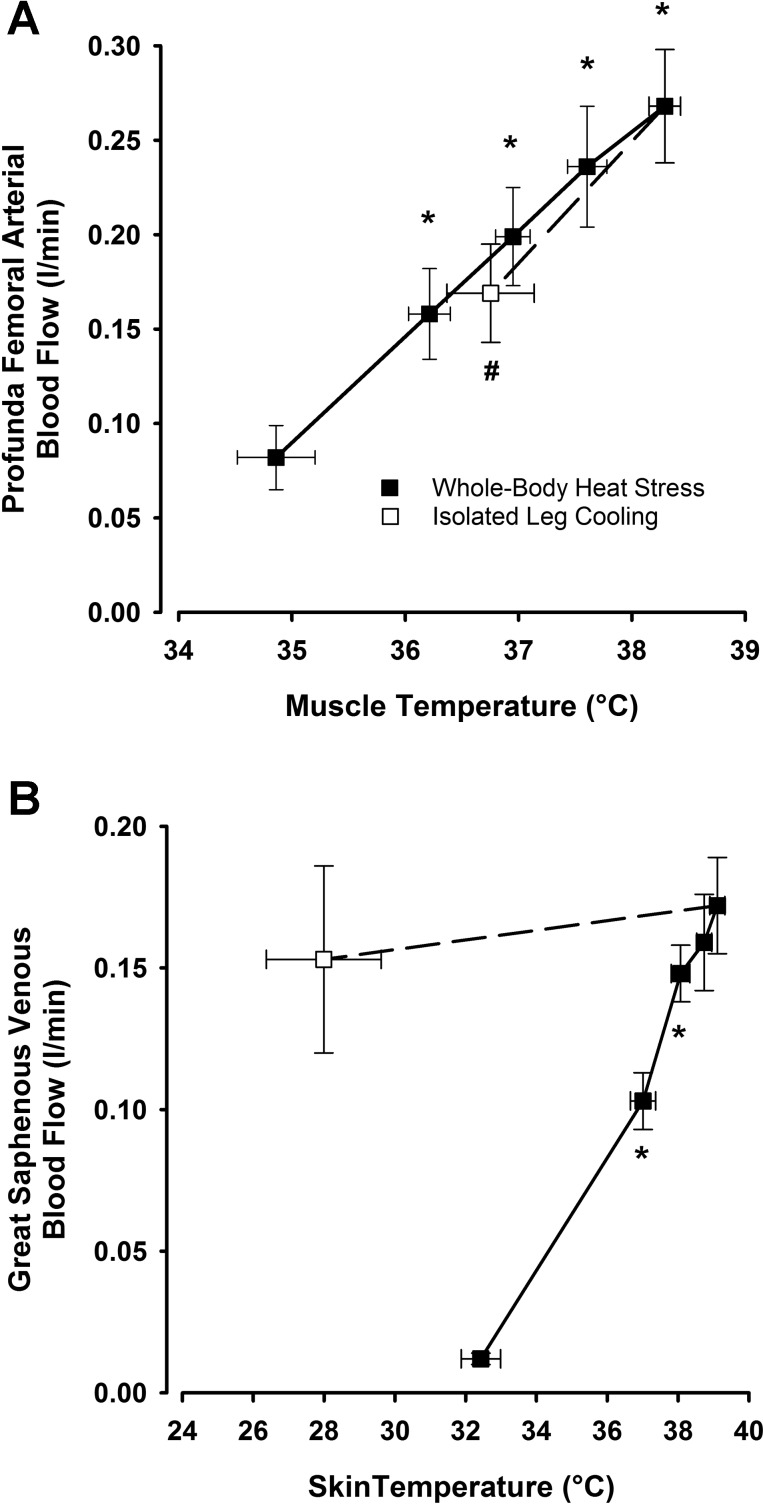
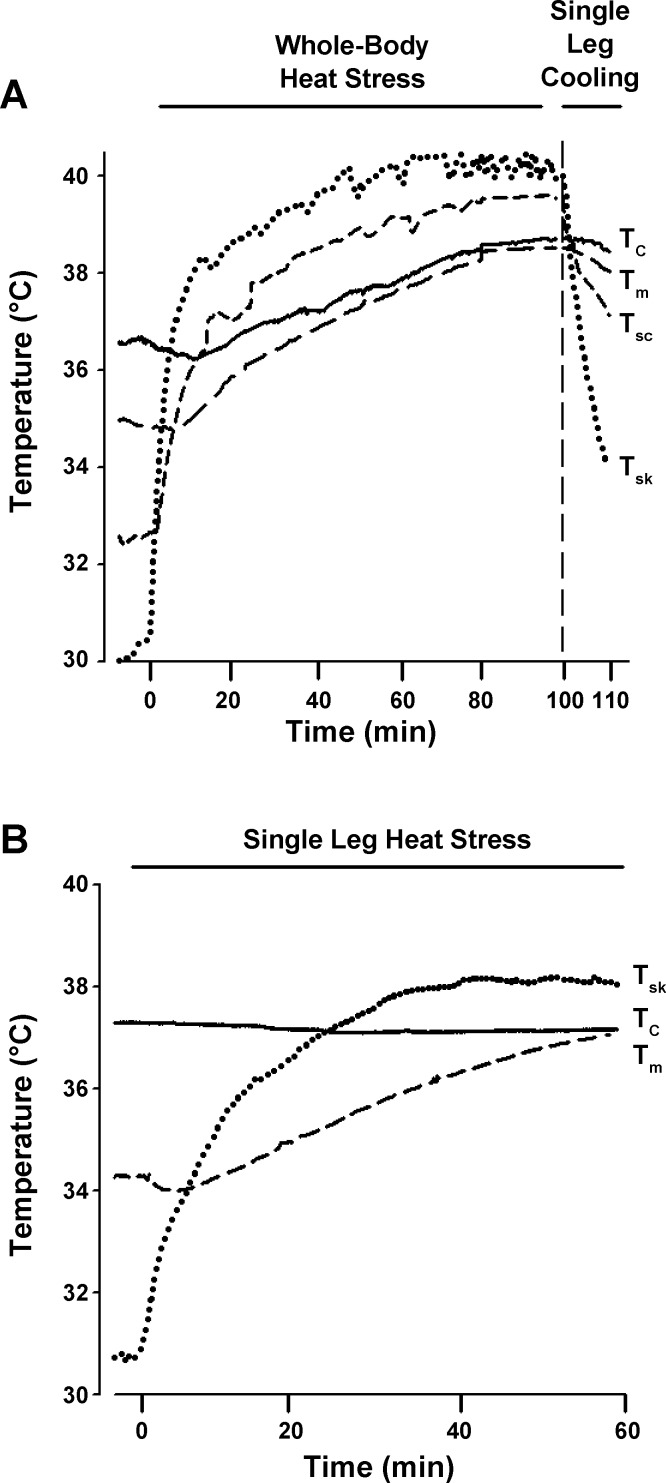
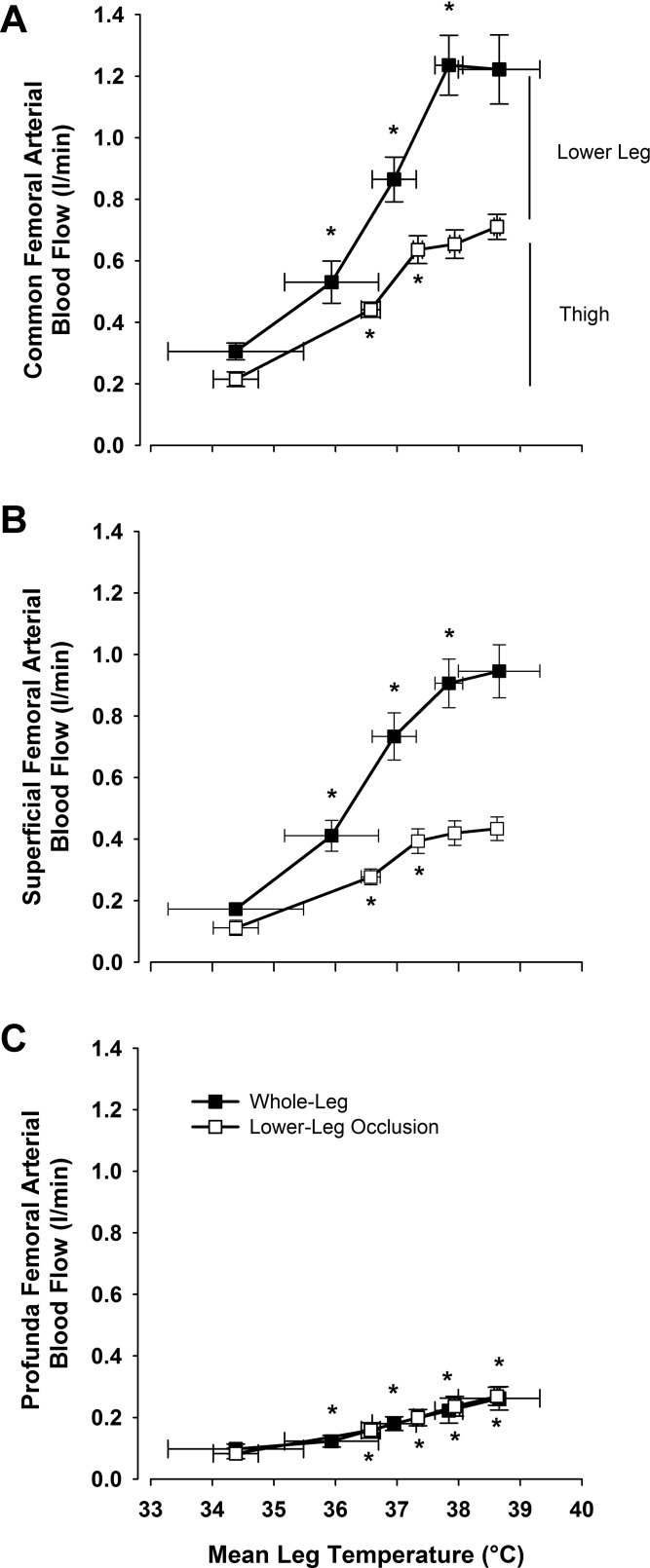
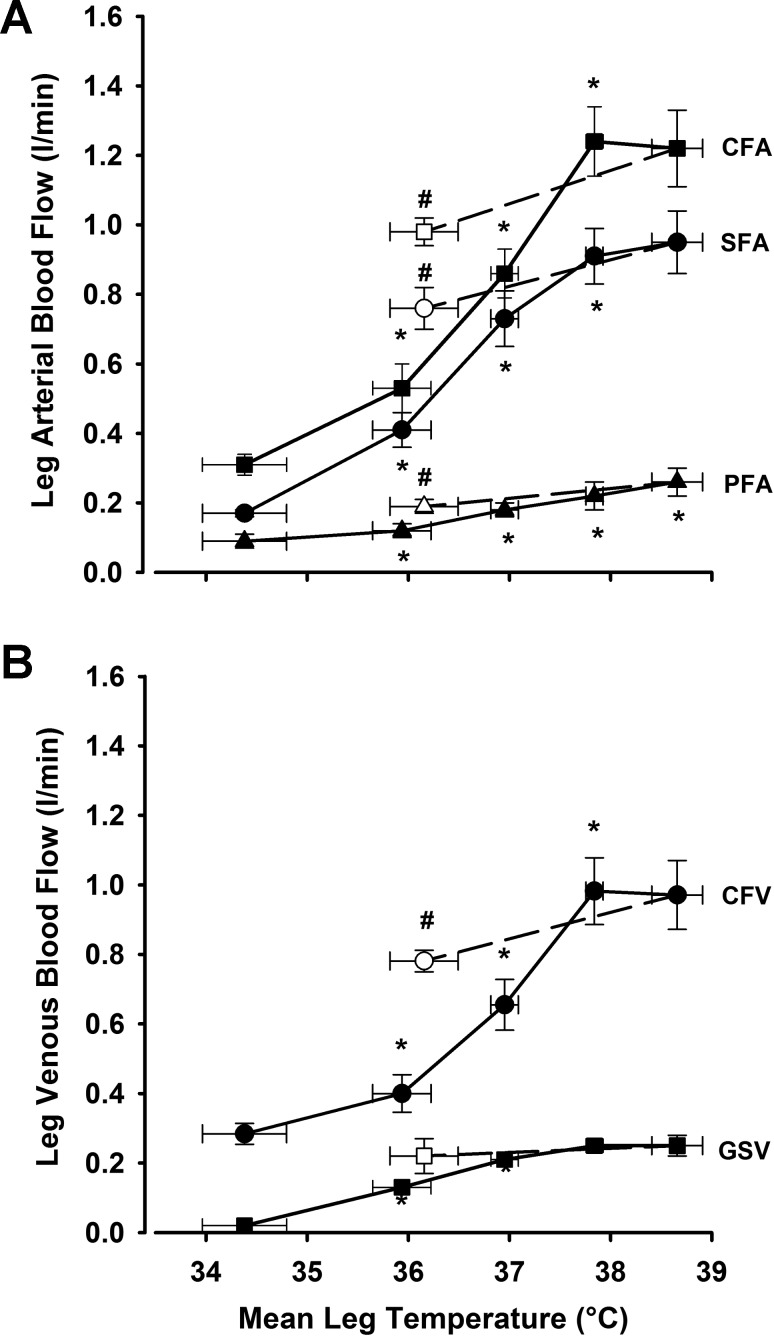
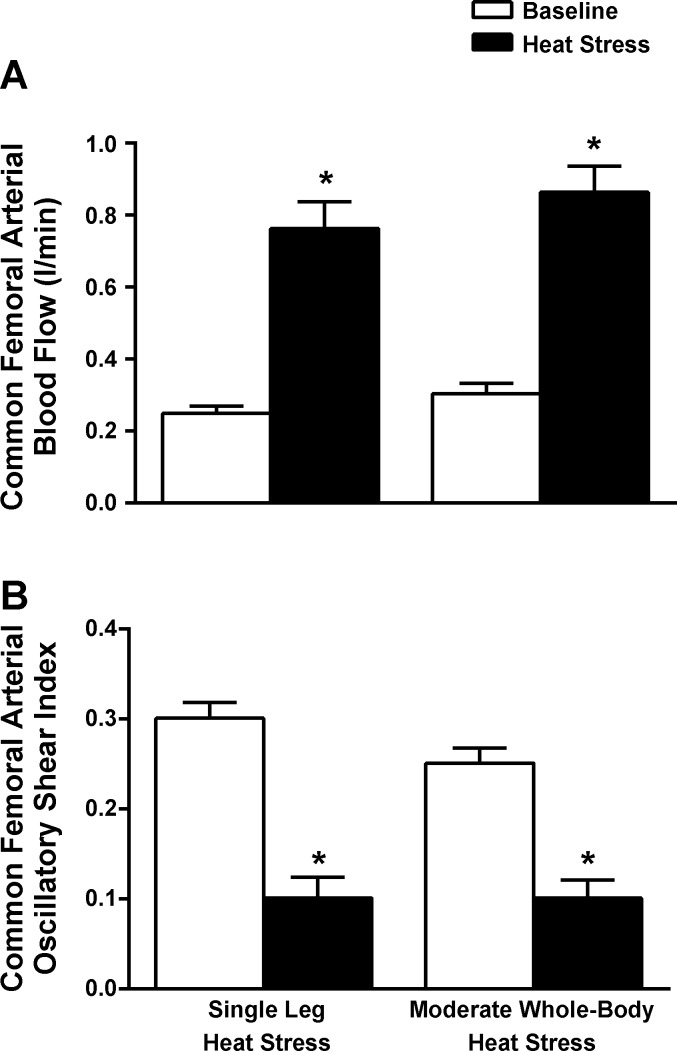
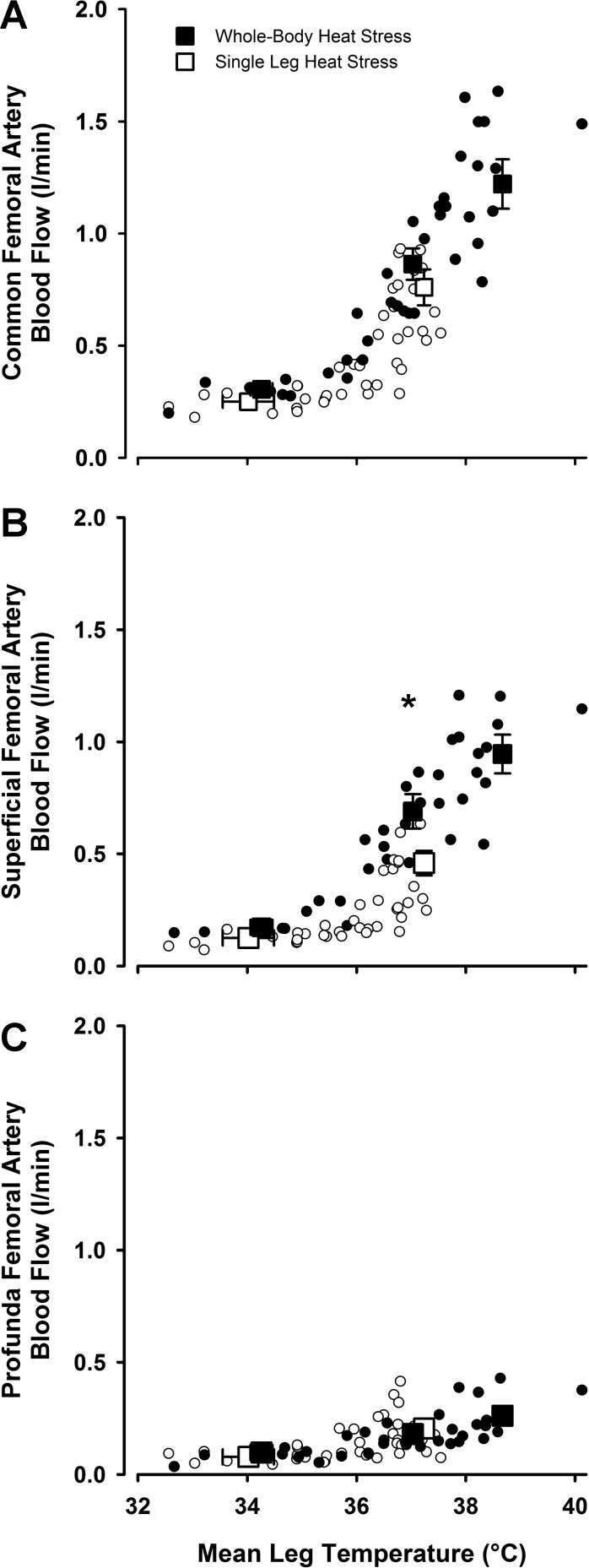
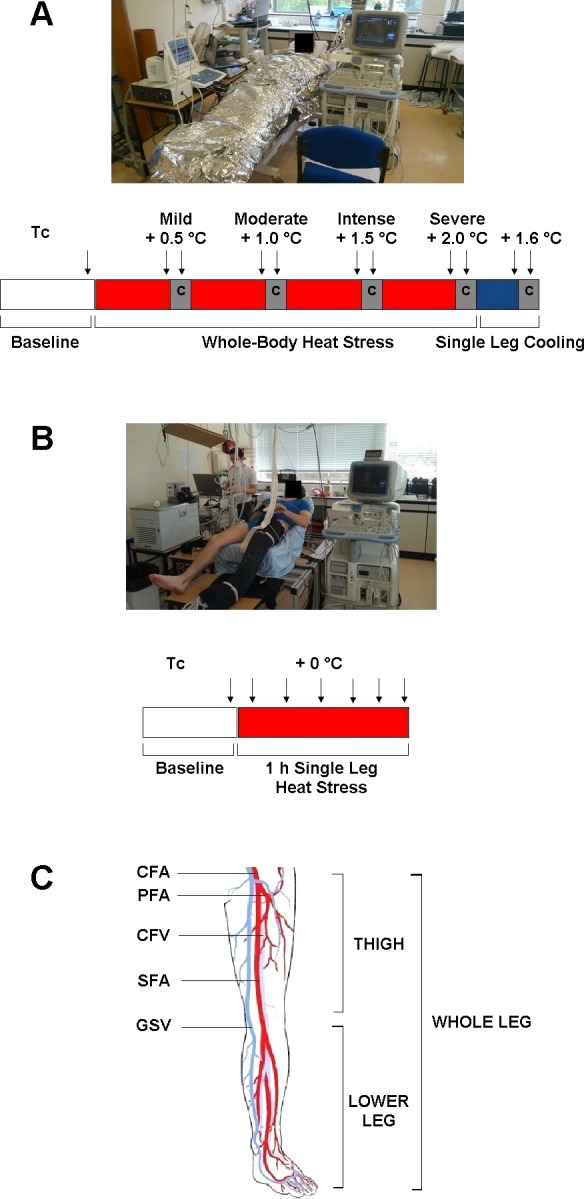
The influence of temperature on the hemodynamic adjustments to direct passive heat stress within the leg's major arterial and venous vessels and compartments remains unclear. Fifteen healthy young males were tested during exposure to either passive whole body heat stress to levels approaching thermal tolerance [core temperature (Tc) + 2°C; study 1; n = 8] or single leg heat stress (Tc + 0°C; study 2; n = 7). Whole body heat stress increased perfusion and decreased oscillatory shear index in relation to the rise in leg temperature (Tleg) in all three major arteries supplying the leg, plateauing in the common and superficial femoral arteries before reaching severe heat stress levels. Isolated leg heat stress increased arterial blood flows and shear patterns to a level similar to that obtained during moderate core hyperthermia (Tc + 1°C). Despite modest increases in great saphenous venous (GSV) blood flow (0.2 l/min), the deep venous system accounted for the majority of returning flow (common femoral vein 0.7 l/min) during intense to severe levels of heat stress. Rapid cooling of a single leg during severe whole body heat stress resulted in an equivalent blood flow reduction in the major artery supplying the thigh deep tissues only, suggesting central temperature-sensitive mechanisms contribute to skin blood flow alone. These findings further our knowledge of leg hemodynamic responses during direct heat stress and provide evidence of potentially beneficial vascular alterations during isolated limb heat stress that are equivalent to those experienced during exposure to moderate levels of whole body hyperthermia.

摘要

温度对腿部主要动脉、静脉血管及腔室针对直接被动热应激的血流动力学调节的影响仍不明确。15名健康年轻男性参与了测试,他们分别暴露于接近热耐受水平的被动全身热应激环境下[核心温度(Tc)+2°C;研究1;n = 8],或单腿热应激环境下(Tc + 0°C;研究2;n = 7)。全身热应激使供应腿部的所有三条主要动脉的灌注增加,且随着腿部温度(Tleg)升高,振荡剪切指数降低,在股总动脉和股浅动脉中,该指数在达到严重热应激水平之前趋于平稳。孤立的腿部热应激使动脉血流和剪切模式增加至与中度核心体温过高(Tc + 1°C)时相似的水平。尽管大隐静脉(GSV)血流有适度增加(0.2升/分钟),但在高强度至严重热应激水平下,深部静脉系统占回流的大部分(股总静脉0.7升/分钟)。在严重全身热应激期间对单腿进行快速冷却,仅导致供应大腿深部组织的主要动脉中的血流等量减少,这表明中枢温度敏感机制仅对皮肤血流有影响。这些发现增进了我们对直接热应激期间腿部血流动力学反应的了解,并提供了证据,表明孤立肢体热应激期间可能存在有益的血管改变,这些改变与暴露于中度全身体温过高时所经历的改变相当。
https://cdn.ncbi.nlm.nih.gov/pmc/blobs/384b/4894946/a7143fc37085/zdg0061617610007.jpg
https://cdn.ncbi.nlm.nih.gov/pmc/blobs/384b/4894946/e956d6717e84/zdg0061617610001.jpg
https://cdn.ncbi.nlm.nih.gov/pmc/blobs/384b/4894946/d27ed0317f64/zdg0061617610002.jpg
https://cdn.ncbi.nlm.nih.gov/pmc/blobs/384b/4894946/caede87fbac0/zdg0061617610003.jpg
https://cdn.ncbi.nlm.nih.gov/pmc/blobs/384b/4894946/5311229be637/zdg0061617610004.jpg
https://cdn.ncbi.nlm.nih.gov/pmc/blobs/384b/4894946/a01ddcebdac9/zdg0061617610005.jpg
https://cdn.ncbi.nlm.nih.gov/pmc/blobs/384b/4894946/cb3a31594259/zdg0061617610006.jpg
https://cdn.ncbi.nlm.nih.gov/pmc/blobs/384b/4894946/a7143fc37085/zdg0061617610007.jpg
https://cdn.ncbi.nlm.nih.gov/pmc/blobs/384b/4894946/e956d6717e84/zdg0061617610001.jpg
https://cdn.ncbi.nlm.nih.gov/pmc/blobs/384b/4894946/d27ed0317f64/zdg0061617610002.jpg
https://cdn.ncbi.nlm.nih.gov/pmc/blobs/384b/4894946/caede87fbac0/zdg0061617610003.jpg
https://cdn.ncbi.nlm.nih.gov/pmc/blobs/384b/4894946/5311229be637/zdg0061617610004.jpg
https://cdn.ncbi.nlm.nih.gov/pmc/blobs/384b/4894946/a01ddcebdac9/zdg0061617610005.jpg
https://cdn.ncbi.nlm.nih.gov/pmc/blobs/384b/4894946/cb3a31594259/zdg0061617610006.jpg
https://cdn.ncbi.nlm.nih.gov/pmc/blobs/384b/4894946/a7143fc37085/zdg0061617610007.jpg

相似文献

1
Temperature and blood flow distribution in the human leg during passive heat stress.被动热应激期间人体腿部的温度和血流分布
J Appl Physiol (1985). 2016 May 1;120(9):1047-58. doi: 10.1152/japplphysiol.00965.2015. Epub 2016 Jan 28.
2
Hemodynamic responses to heat stress in the resting and exercising human leg: insight into the effect of temperature on skeletal muscle blood flow.静息和运动状态下人腿对热应激的血液动力学反应:温度对骨骼肌血流影响的深入了解。
Am J Physiol Regul Integr Comp Physiol. 2011 Mar;300(3):R663-73. doi: 10.1152/ajpregu.00662.2010. Epub 2010 Dec 22.
3
Local temperature-sensitive mechanisms are important mediators of limb tissue hyperemia in the heat-stressed human at rest and during small muscle mass exercise.局部温度敏感机制是热应激状态下静息和小肌肉群运动的人体肢体组织充血的重要调节因素。
Am J Physiol Heart Circ Physiol. 2015 Jul 15;309(2):H369-80. doi: 10.1152/ajpheart.00078.2015. Epub 2015 May 1.
4
Regional thermal hyperemia in the human leg: Evidence of the importance of thermosensitive mechanisms in the control of the peripheral circulation.人体腿部区域性热充血:热敏感机制在控制外周循环中的重要性证据。
Physiol Rep. 2021 Aug;9(15):e14953. doi: 10.14814/phy2.14953.
5
Heat-related changes in the velocity and kinetic energy of flowing blood influence the human heart's output during hyperthermia.热相关的血流速度和动能变化会影响人体在发热时的心脏输出量。
J Physiol. 2024 May;602(10):2227-2251. doi: 10.1113/JP285760. Epub 2024 May 1.
6
Whole-body heat stress and exercise stimulate the appearance of platelet microvesicles in plasma with limited influence of vascular shear stress.全身热应激和运动刺激血浆中血小板微囊泡的出现,而血管剪切应力的影响有限。
Physiol Rep. 2017 Nov;5(21). doi: 10.14814/phy2.13496.
7
Renal and segmental artery hemodynamics during whole body passive heating and cooling recovery.全身被动加热和冷却恢复期间的肾和节段动脉血液动力学。
J Appl Physiol (1985). 2019 Oct 1;127(4):974-983. doi: 10.1152/japplphysiol.00403.2019. Epub 2019 Aug 15.
8
Reductions in systemic and skeletal muscle blood flow and oxygen delivery limit maximal aerobic capacity in humans.全身和骨骼肌血流量及氧气输送的减少限制了人类的最大有氧能力。
Circulation. 2003 Feb 18;107(6):824-30. doi: 10.1161/01.cir.0000049746.29175.3f.
9
Venous return in lower limb during heat stress.热应激期间下肢的静脉回流
Am J Physiol. 1994 Oct;267(4 Pt 2):H1337-40. doi: 10.1152/ajpheart.1994.267.4.H1337.
10
Local heating, but not indirect whole body heating, increases human skeletal muscle blood flow.局部加热,但不是间接全身加热,可增加人体骨骼肌血流量。
J Appl Physiol (1985). 2011 Sep;111(3):818-24. doi: 10.1152/japplphysiol.00269.2011. Epub 2011 Jun 16.

引用本文的文献

1
Does Kinesio Taping Enhance Exercise Performance and Recovery in Healthy Males Under Heat Stress?肌内效贴布能否提高热应激下健康男性的运动表现并促进恢复?
J Clin Med. 2025 Apr 11;14(8):2631. doi: 10.3390/jcm14082631.
2
Meta-analysis of heat-induced changes in cardiac function from over 400 laboratory-based heat exposure studies.对400多项基于实验室的热暴露研究中热诱导的心脏功能变化进行的荟萃分析。
Nat Commun. 2025 Mar 14;16(1):2543. doi: 10.1038/s41467-025-57868-6.
3
Efficacy analysis of intermittent pneumatic compression combined with hyperthermia at different temperatures for prevention of deep vein thrombosis after simulated orthopaedic surgery in male rabbits.

本文引用的文献

1
Local temperature-sensitive mechanisms are important mediators of limb tissue hyperemia in the heat-stressed human at rest and during small muscle mass exercise.局部温度敏感机制是热应激状态下静息和小肌肉群运动的人体肢体组织充血的重要调节因素。
Am J Physiol Heart Circ Physiol. 2015 Jul 15;309(2):H369-80. doi: 10.1152/ajpheart.00078.2015. Epub 2015 May 1.
2
α1- and α2-adrenergic responsiveness in human skeletal muscle feed arteries: the role of TRPV ion channels in heat-induced sympatholysis.人类骨骼肌供血动脉中的α1和α2肾上腺素能反应性:瞬时受体电位香草酸(TRPV)离子通道在热诱导交感神经抑制中的作用
Am J Physiol Heart Circ Physiol. 2014 Nov 1;307(9):H1288-97. doi: 10.1152/ajpheart.00068.2014.
3
间歇性气动压迫联合不同温度热疗对雄性兔模拟骨科手术后预防深静脉血栓形成的疗效分析
Am J Transl Res. 2024 Oct 15;16(10):5337-5346. doi: 10.62347/OXES9217. eCollection 2024.
4
The effect of a 4-week, remotely administered, post-exercise passive leg heating intervention on determinants of endurance performance.为期 4 周的远程运动后被动腿部加热干预对耐力表现决定因素的影响。
Eur J Appl Physiol. 2024 Dec;124(12):3631-3647. doi: 10.1007/s00421-024-05558-4. Epub 2024 Jul 25.
5
Thermo-haemodynamic coupling during regional thigh heating: Insight into the importance of local thermosensitive mechanisms in blood circulation.区域大腿加热过程中的温热-血液动力学耦合:局部热敏机制对血液循环重要性的深入了解。
Exp Physiol. 2024 Apr;109(4):600-613. doi: 10.1113/EP091556. Epub 2024 Jan 17.
6
Cardiovascular responses to hot skin at rest and during exercise.静息和运动时皮肤受热的心血管反应。
Temperature (Austin). 2022 Aug 17;10(3):326-357. doi: 10.1080/23328940.2022.2109931. eCollection 2023.
7
Lower limb hyperthermia augments functional hyperaemia during small muscle mass exercise similarly in trained elderly and young humans.下肢热疗可增强小肌肉量运动时的功能性充血,在训练有素的老年和年轻人群中相似。
Exp Physiol. 2023 Sep;108(9):1154-1171. doi: 10.1113/EP091275. Epub 2023 Jul 6.
8
Non-pharmacological interventions for vascular health and the role of the endothelium.非药物干预对血管健康和内皮功能的作用。
Eur J Appl Physiol. 2022 Dec;122(12):2493-2514. doi: 10.1007/s00421-022-05041-y. Epub 2022 Sep 23.
9
Seven days of ischemic preconditioning augments hypoxic exercise ventilation and muscle oxygenation in recreationally trained males.7 天的缺血预处理可增强业余训练男性的低氧运动通气和肌肉氧合作用。
Am J Physiol Regul Integr Comp Physiol. 2022 Oct 1;323(4):R457-R466. doi: 10.1152/ajpregu.00335.2021. Epub 2022 Aug 15.
10
Hemodynamic analysis of intermittent pneumatic compression combined with hyperthermia after total hip arthroplasty: an experiment on male rabbits.全髋关节置换术后间歇性气动压迫联合热疗的血流动力学分析:一项对雄性兔子的实验
Am J Transl Res. 2022 May 15;14(5):3344-3359. eCollection 2022.
Acute impact of retrograde shear rate on brachial and superficial femoral artery flow-mediated dilation in humans.
逆行剪切率对人体肱动脉和股浅动脉血流介导的扩张的急性影响。
Physiol Rep. 2014 Jan 6;2(1):e00193. doi: 10.1002/phy2.193. eCollection 2014 Jan 1.
4
Repeated core temperature elevation induces conduit artery adaptation in humans.反复的核心体温升高可诱导人体导管动脉适应。
Eur J Appl Physiol. 2014 Apr;114(4):859-65. doi: 10.1007/s00421-013-2817-2. Epub 2014 Jan 8.
5
Temperature-dependent release of ATP from human erythrocytes: mechanism for the control of local tissue perfusion.温度依赖的人红细胞中 ATP 的释放:局部组织灌注控制的机制。
Exp Physiol. 2012 Mar;97(3):419-32. doi: 10.1113/expphysiol.2011.064238. Epub 2012 Jan 6.
6
Local heating, but not indirect whole body heating, increases human skeletal muscle blood flow.局部加热,但不是间接全身加热,可增加人体骨骼肌血流量。
J Appl Physiol (1985). 2011 Sep;111(3):818-24. doi: 10.1152/japplphysiol.00269.2011. Epub 2011 Jun 16.
7
Hemodynamic responses to heat stress in the resting and exercising human leg: insight into the effect of temperature on skeletal muscle blood flow.静息和运动状态下人腿对热应激的血液动力学反应:温度对骨骼肌血流影响的深入了解。
Am J Physiol Regul Integr Comp Physiol. 2011 Mar;300(3):R663-73. doi: 10.1152/ajpregu.00662.2010. Epub 2010 Dec 22.
8
Repeated increases in blood flow, independent of exercise, enhance conduit artery vasodilator function in humans.反复增加血流量(不依赖运动)可增强人类大血管的舒张功能。
Am J Physiol Heart Circ Physiol. 2011 Feb;300(2):H664-9. doi: 10.1152/ajpheart.00985.2010. Epub 2010 Dec 3.
9
Modelflow underestimates cardiac output in heat-stressed individuals.模型流量低估了热应激个体的心输出量。
Am J Physiol Regul Integr Comp Physiol. 2011 Feb;300(2):R486-91. doi: 10.1152/ajpregu.00505.2010. Epub 2010 Nov 17.
10
α-Adrenergic vasoconstrictor responsiveness is preserved in the heated human leg.α-肾上腺素能血管收缩反应在加热的人腿中得以保留。
J Physiol. 2010 Oct 1;588(Pt 19):3799-808. doi: 10.1113/jphysiol.2010.194506.