Amor Rumelo, McDonald Alison, Trägårdh Johanna, Robb Gillian, Wilson Louise, Abdul Rahman Nor Zaihana, Dempster John, Amos William Bradshaw, Bushell Trevor J, McConnell Gail
Centre for Biophotonics, Strathclyde Institute of Pharmacy and Biomedical Sciences, University of Strathclyde, Glasgow, United Kingdom.
Strathclyde Institute of Pharmacy and Biomedical Sciences, University of Strathclyde, Glasgow, United Kingdom.
PLoS One. 2016 Jan 29;11(1):e0147115. doi: 10.1371/journal.pone.0147115. eCollection 2016.
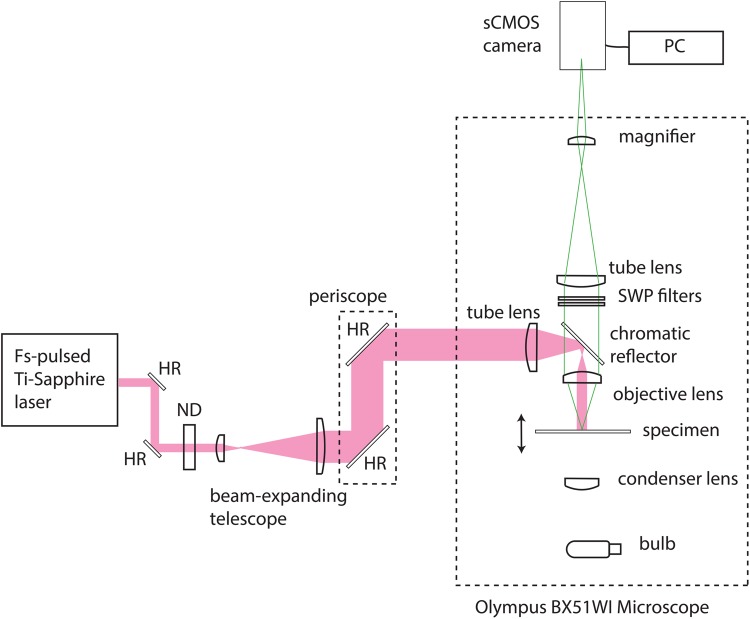
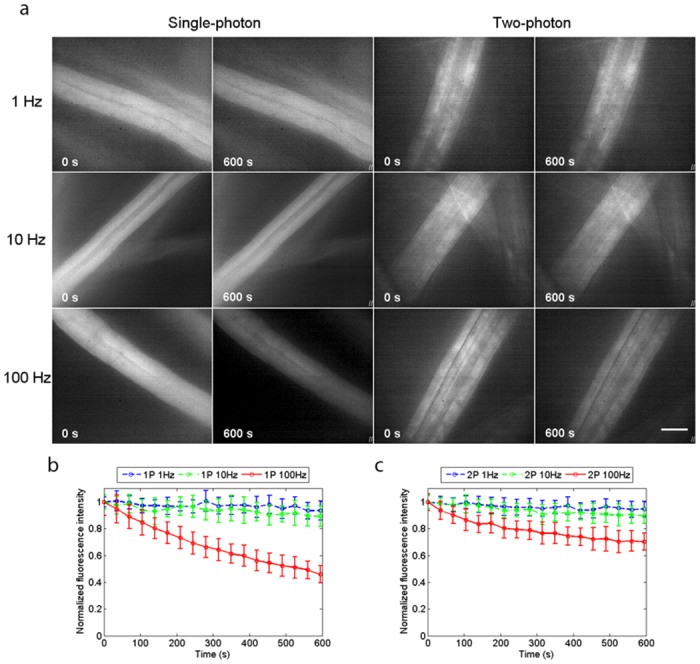
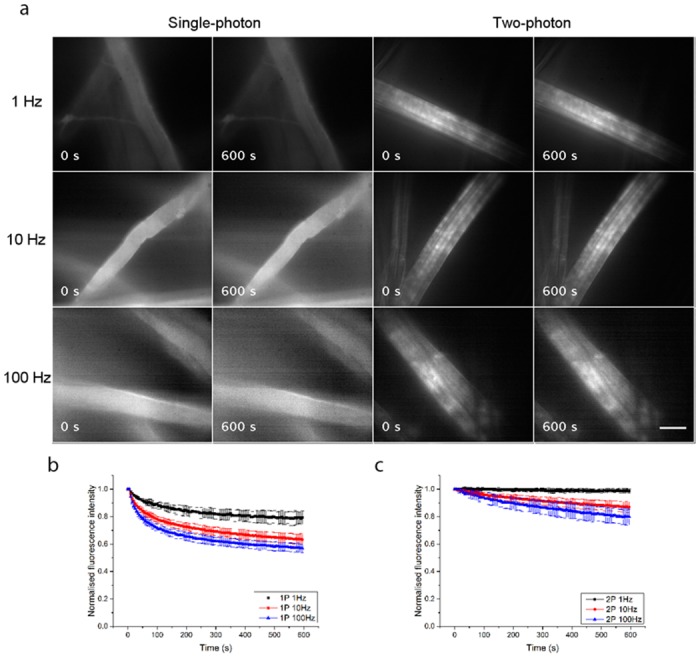
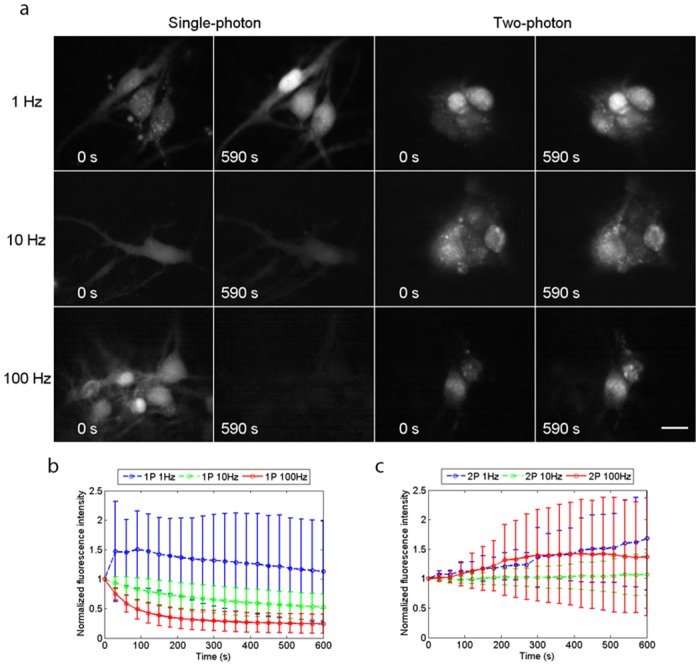
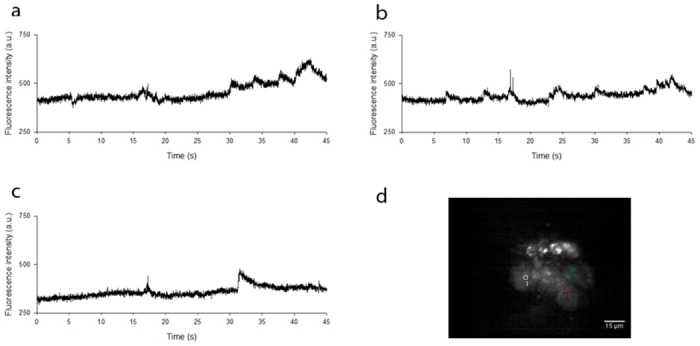
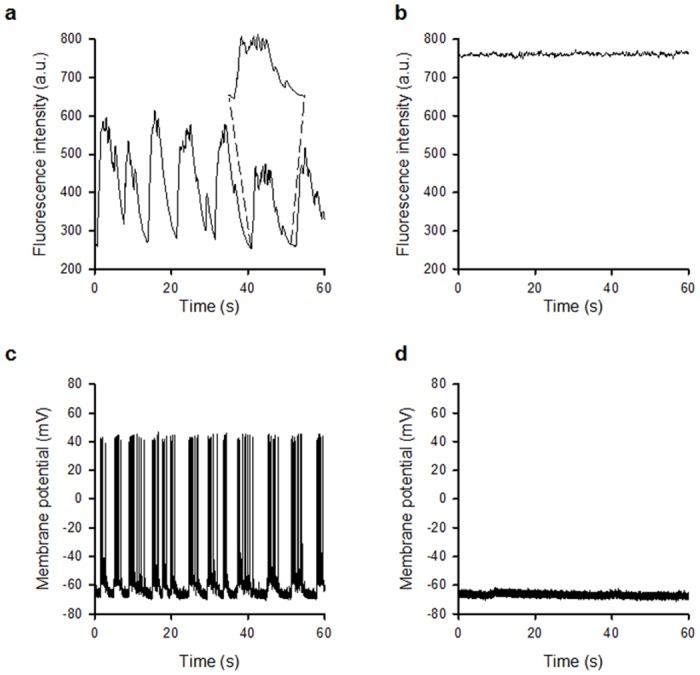
We demonstrate fluorescence imaging by two-photon excitation without scanning in biological specimens as previously described by Hwang and co-workers, but with an increased field size and with framing rates of up to 100 Hz. During recordings of synaptically-driven Ca(2+) events in primary rat hippocampal neurone cultures loaded with the fluorescent Ca(2+) indicator Fluo-4 AM, we have observed greatly reduced photo-bleaching in comparison with single-photon excitation. This method, which requires no costly additions to the microscope, promises to be useful for work where high time-resolution is required.
我们按照Hwang及其同事之前所描述的方法,在不进行扫描的情况下,通过双光子激发在生物样本中实现了荧光成像,但增大了视野尺寸,并且帧率提高到了100赫兹。在用荧光钙指示剂Fluo-4 AM加载的原代大鼠海马神经元培养物中记录突触驱动的Ca(2+)事件的过程中,我们观察到与单光子激发相比,光漂白大大减少。这种方法无需对显微镜进行昂贵的附加设备,有望用于需要高时间分辨率的工作。