Al Feghali Karine A, Traboulsi Henri, Youssef Bassem
Radiation Oncology Department, American University of Beirut Medical Center.
Pediatric Otolaryngology, Detroit Medical Center.
Cureus. 2015 Dec 21;7(12):e421. doi: 10.7759/cureus.421.
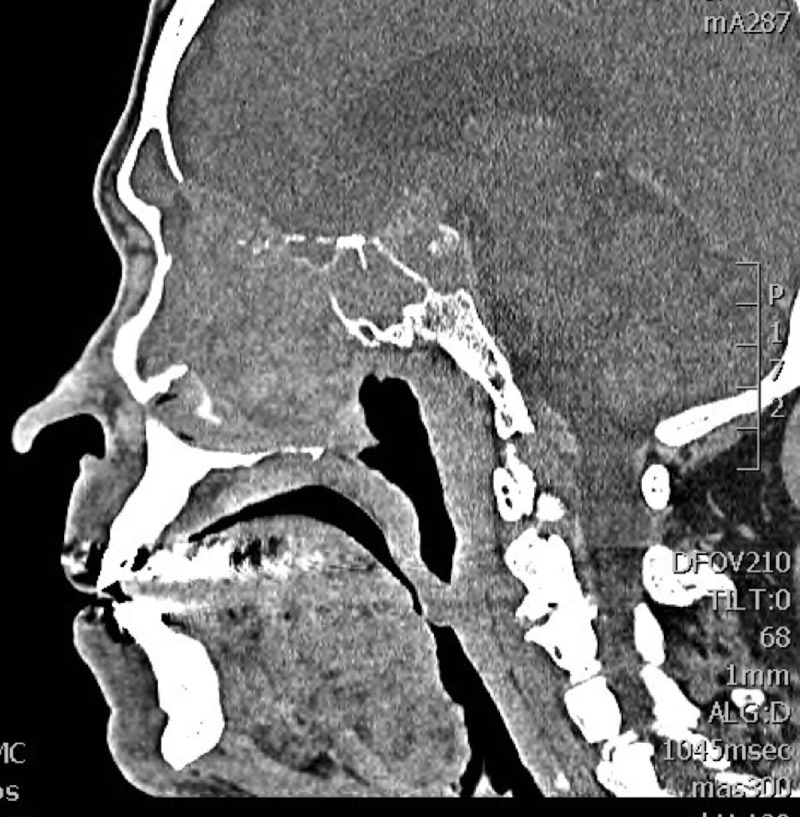
Basaloid squamous cell carcinoma (BSCC) is a rare variant of squamous cell carcinoma (SCC), which is highly aggressive, with a tendency for multifocality, local invasion, and with a high metastatic potential. Less than forty cases of BSCC of the sinonasal tract have been reported in the literature, and no reports were found on sinonasal BSCC arising from the ethmoid sinus. We report the case of a 78-year-old man who presented with BSCC arising from the ethmoid sinus with extensive bone destruction and intracranial extension. He was treated with craniofacial resection followed by adjuvant intensity-modulated radiation therapy to the tumor bed (60 Gy in 30 fractions), and the upper neck lymph nodes (50 Gy in 25 fractions). At the patient's last follow-up, four months after diagnosis, there was no evidence of disease. Aggressive management using craniofacial resection followed by adjuvant radiation therapy with or without radiosensitizing chemotherapy seems to be a reasonable approach to this challenging disease.
基底样鳞状细胞癌(BSCC)是鳞状细胞癌(SCC)的一种罕见变体,具有高度侵袭性,有多发倾向、局部浸润性,且转移潜能高。文献报道的鼻窦BSCC病例少于40例,未发现筛窦起源的鼻窦BSCC的相关报道。我们报告一例78岁男性,其患有起源于筛窦的BSCC,伴有广泛骨质破坏和颅内侵犯。他接受了颅面切除术,随后对瘤床进行辅助调强放射治疗(60 Gy,分30次),对上颈部淋巴结进行放射治疗(50 Gy,分25次)。在患者诊断后4个月的最后一次随访中,无疾病证据。采用颅面切除术并辅以有或无放射增敏化疗的辅助放疗进行积极治疗,似乎是应对这种具有挑战性疾病的合理方法。