Sokol Harry, Leducq Valentin, Aschard Hugues, Pham Hang-Phuong, Jegou Sarah, Landman Cecilia, Cohen David, Liguori Giuseppina, Bourrier Anne, Nion-Larmurier Isabelle, Cosnes Jacques, Seksik Philippe, Langella Philippe, Skurnik David, Richard Mathias L, Beaugerie Laurent
Sorbonne University-UPMC Univ Paris 06, INSERM ERL 1157, Avenir Team Gut Microbiota and Immunity, UMR 7203, Saint-Antoine Hospital, AP-HP, UPMC Univ Paris 06, Paris, France.
Micalis Institute, INRA, AgroParisTech, Université Paris-Saclay, Jouy-en-Josas, France.
Gut. 2017 Jun;66(6):1039-1048. doi: 10.1136/gutjnl-2015-310746. Epub 2016 Feb 3.
The bacterial intestinal microbiota plays major roles in human physiology and IBDs. Although some data suggest a role of the fungal microbiota in IBD pathogenesis, the available data are scarce. The aim of our study was to characterise the faecal fungal microbiota in patients with IBD.
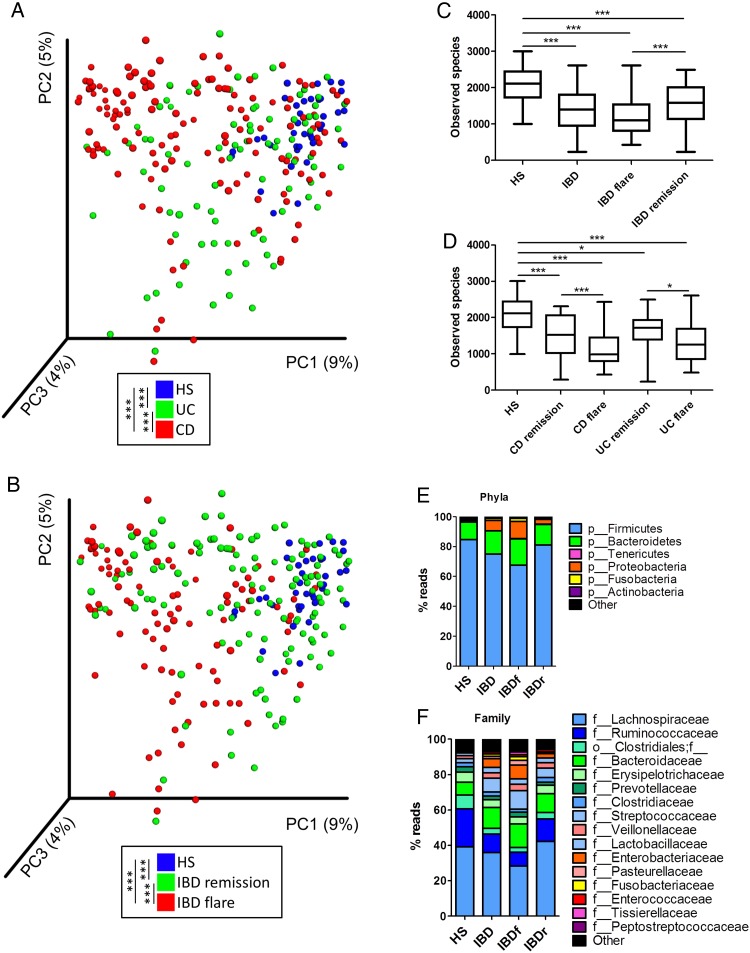
Bacterial and fungal composition of the faecal microbiota of 235 patients with IBD and 38 healthy subjects (HS) was determined using 16S and ITS2 sequencing, respectively. The obtained sequences were analysed using the Qiime pipeline to assess composition and diversity. Bacterial and fungal taxa associated with clinical parameters were identified using multivariate association with linear models. Correlation between bacterial and fungal microbiota was investigated using Spearman's test and distance correlation.
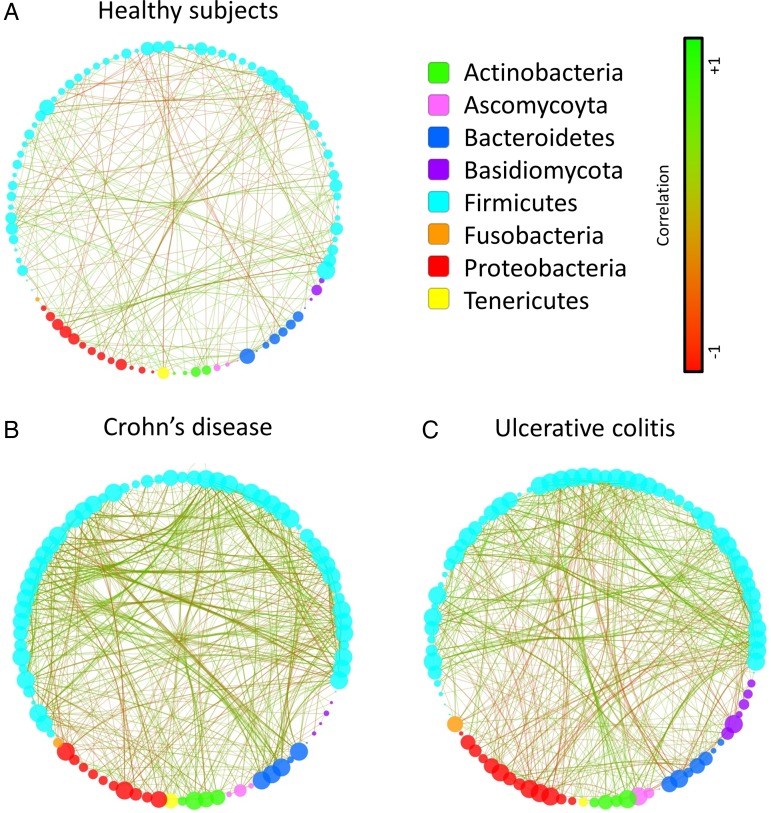
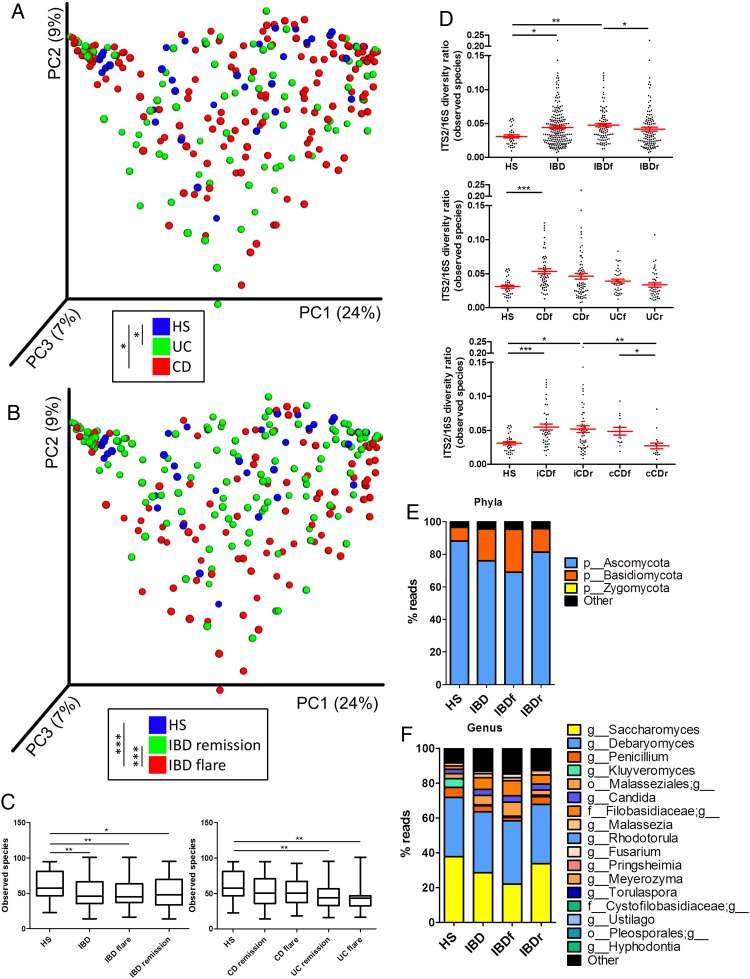
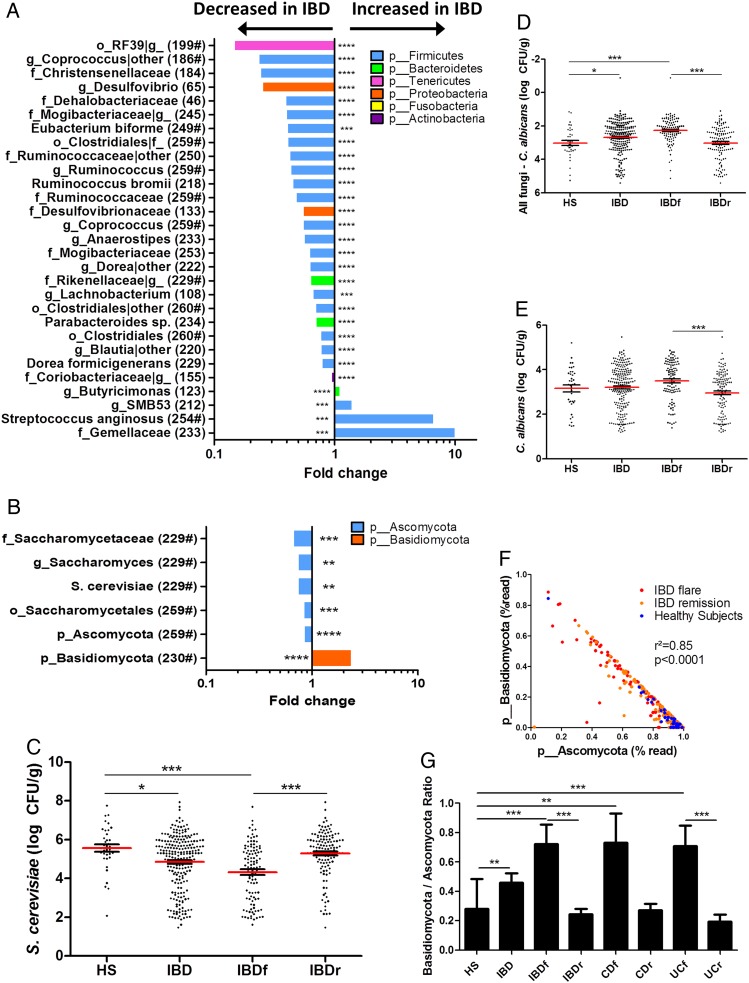
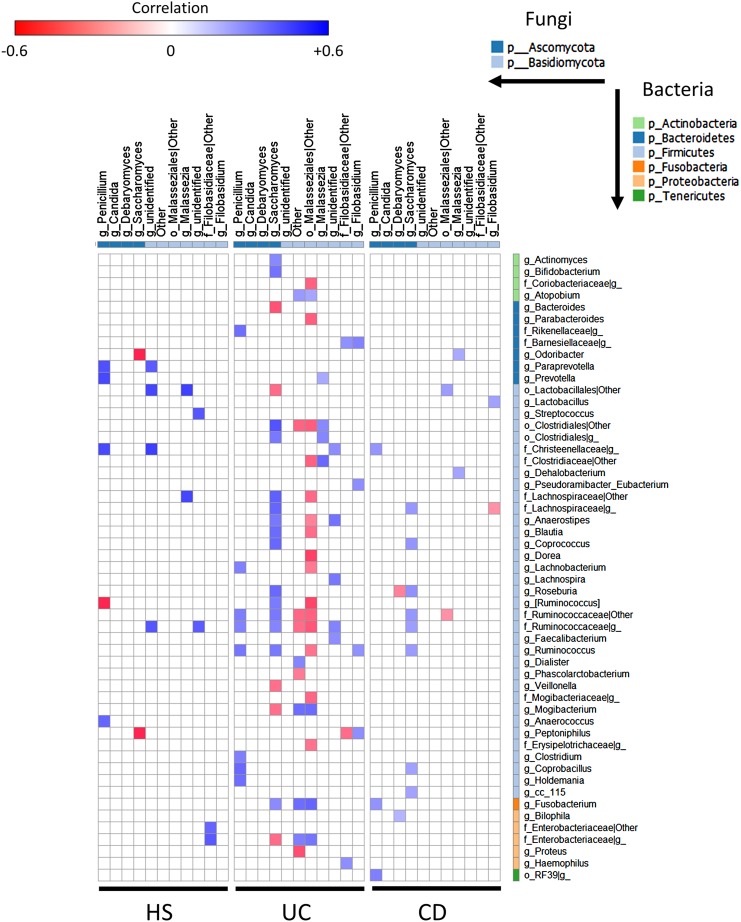
We observed that fungal microbiota is skewed in IBD, with an increased Basidiomycota/Ascomycota ratio, a decreased proportion of and an increased proportion of compared with HS. We also identified disease-specific alterations in diversity, indicating that a Crohn's disease-specific gut environment may favour fungi at the expense of bacteria. The concomitant analysis of bacterial and fungal microbiota showed a dense and homogenous correlation network in HS but a dramatically unbalanced network in IBD, suggesting the existence of disease-specific inter-kingdom alterations.
Besides bacterial dysbiosis, our study identifies a distinct fungal microbiota dysbiosis in IBD characterised by alterations in biodiversity and composition. Moreover, we unravel here disease-specific inter-kingdom network alterations in IBD, suggesting that, beyond bacteria, fungi might also play a role in IBD pathogenesis.
肠道细菌微生物群在人体生理学和炎症性肠病(IBD)中发挥着重要作用。尽管一些数据表明真菌微生物群在IBD发病机制中起作用,但现有数据稀缺。我们研究的目的是对IBD患者的粪便真菌微生物群进行特征分析。
分别使用16S和ITS2测序确定235例IBD患者和38名健康受试者(HS)粪便微生物群的细菌和真菌组成。使用Qiime管道分析获得的序列,以评估组成和多样性。使用线性模型的多变量关联来识别与临床参数相关的细菌和真菌分类群。使用Spearman检验和距离相关性研究细菌和真菌微生物群之间的相关性。
我们观察到IBD患者的真菌微生物群发生了偏差,与HS相比,担子菌门/子囊菌门的比例增加,[此处原文缺失相关菌类名称]的比例降低,[此处原文缺失相关菌类名称]的比例增加。我们还发现了多样性方面的疾病特异性改变,表明克罗恩病特异性的肠道环境可能有利于真菌生长,而不利于细菌。对细菌和真菌微生物群的同步分析显示,HS中存在密集且均匀的相关网络,但IBD中网络明显失衡,这表明存在疾病特异性的界间改变。
除了细菌失调外,我们的研究还发现IBD中存在独特的真菌微生物群失调,其特征是生物多样性和组成发生改变。此外,并揭示了IBD中疾病特异性的界间网络改变,这表明除细菌外,真菌可能在IBD发病机制中也发挥作用。