Daniyan Michael O, Boshoff Aileen, Prinsloo Earl, Pesce Eva-Rachele, Blatch Gregory L
Biomedical Biotechnology Research Unit, Department of Biochemistry and Microbiology, Rhodes University, Grahamstown, South Africa.
Department of Pharmacology, Faculty of Pharmacy, Obafemi Awolowo University, Ile-Ife, Nigeria.
PLoS One. 2016 Feb 4;11(2):e0148517. doi: 10.1371/journal.pone.0148517. eCollection 2016.
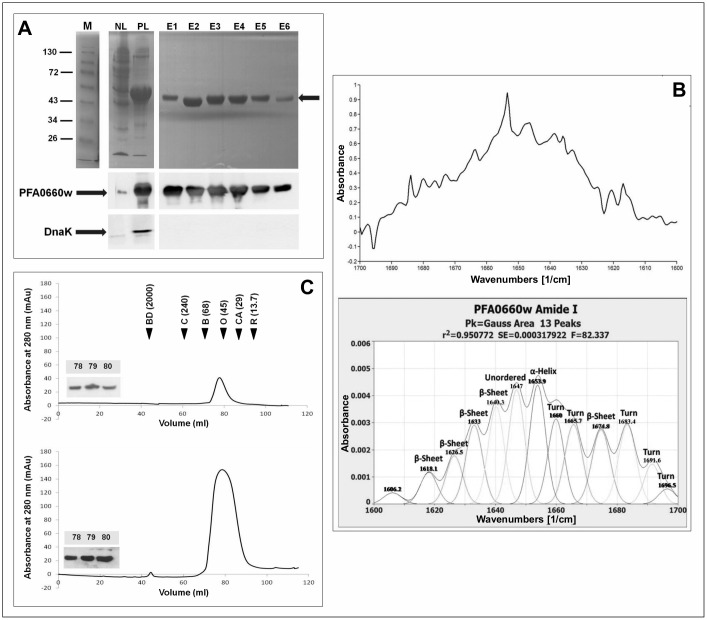
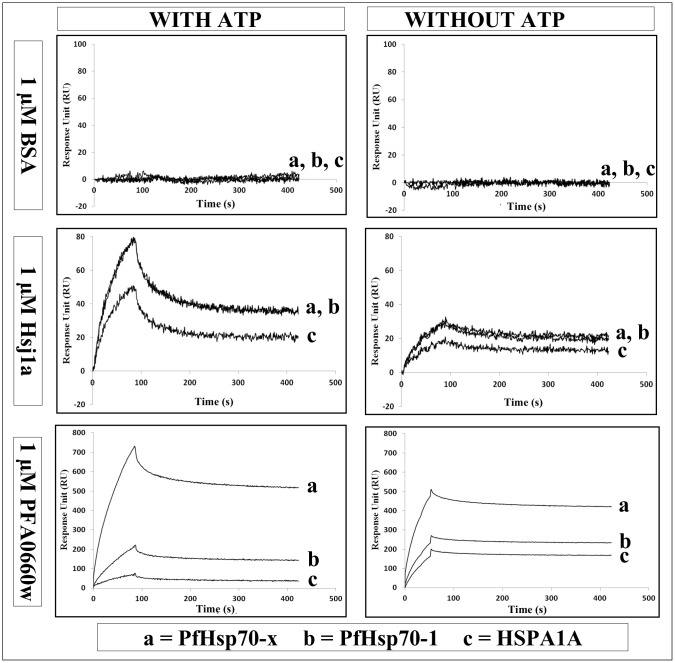
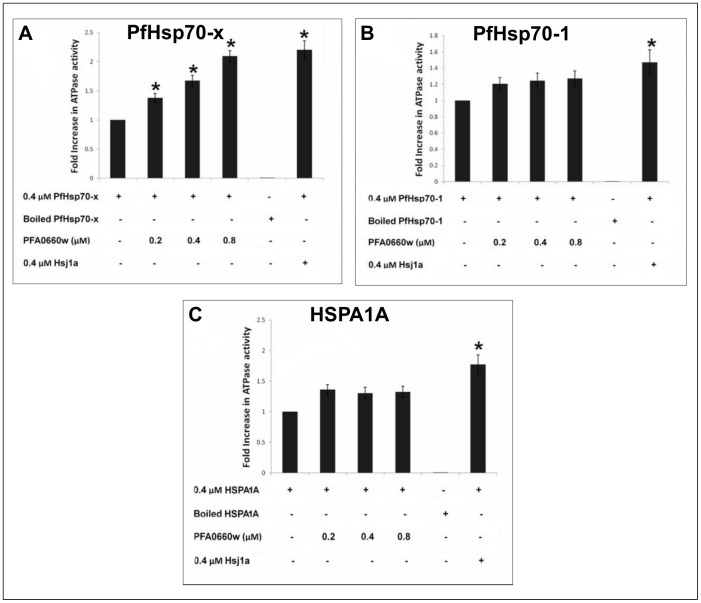
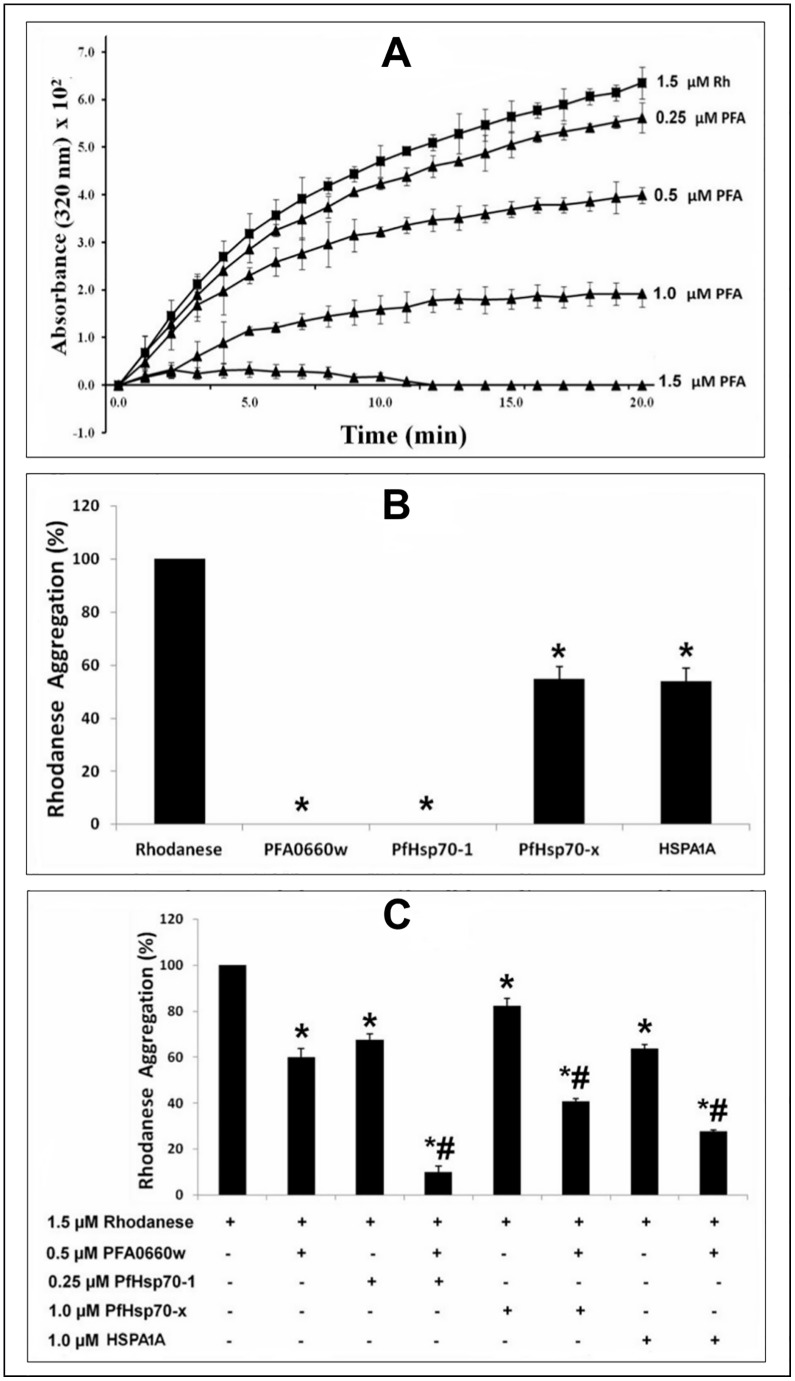
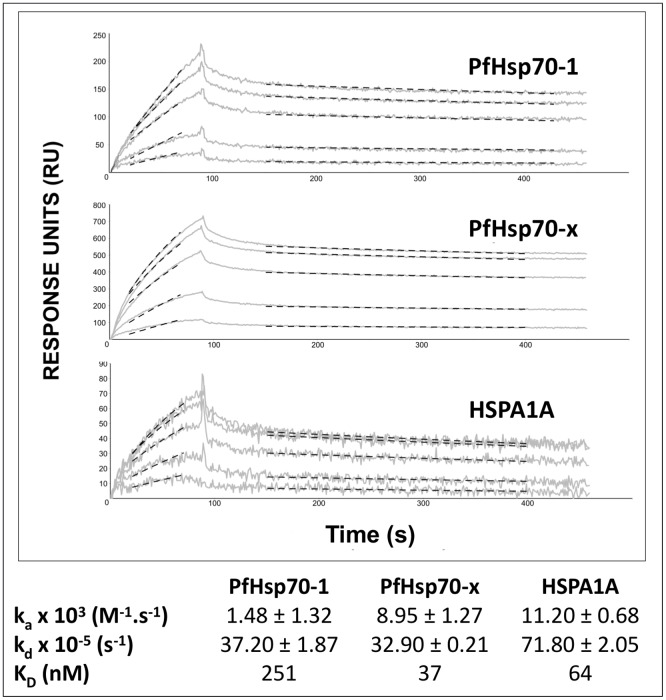
Plasmodium falciparum, the human pathogen responsible for the most dangerous malaria infection, survives and develops in mature erythrocytes through the export of proteins needed for remodelling of the host cell. Molecular chaperones of the heat shock protein (Hsp) family are prominent members of the exportome, including a number of Hsp40s and a Hsp70. PFA0660w, a type II Hsp40, has been shown to be exported and possibly form a complex with PfHsp70-x in the infected erythrocyte cytosol. However, the chaperone properties of PFA0660w and its interaction with human and parasite Hsp70s are yet to be investigated. Recombinant PFA0660w was found to exist as a monomer in solution, and was able to significantly stimulate the ATPase activity of PfHsp70-x but not that of a second plasmodial Hsp70 (PfHsp70-1) or a human Hsp70 (HSPA1A), indicating a potential specific functional partnership with PfHsp70-x. Protein binding studies in the presence and absence of ATP suggested that the interaction of PFA0660w with PfHsp70-x most likely represented a co-chaperone/chaperone interaction. Also, PFA0660w alone produced a concentration-dependent suppression of rhodanese aggregation, demonstrating its chaperone properties. Overall, we have provided the first biochemical evidence for the possible role of PFA0660w as a chaperone and as co-chaperone of PfHsp70-x. We propose that these chaperones boost the chaperone power of the infected erythrocyte, enabling successful protein trafficking and folding, and thereby making a fundamental contribution to the pathology of malaria.
恶性疟原虫是导致最危险疟疾感染的人类病原体,它通过输出宿主细胞重塑所需的蛋白质在成熟红细胞中存活和发育。热休克蛋白(Hsp)家族的分子伴侣是输出蛋白组的重要成员,包括一些Hsp40和一个Hsp70。PFA0660w是一种II型Hsp40,已被证明会被输出,并可能在受感染红细胞的胞质溶胶中与PfHsp70-x形成复合物。然而,PFA0660w的伴侣特性及其与人和寄生虫Hsp70的相互作用尚未得到研究。研究发现,重组PFA0660w在溶液中以单体形式存在,并且能够显著刺激PfHsp70-x的ATP酶活性,但不能刺激另一种疟原虫Hsp70(PfHsp70-1)或人Hsp70(HSPA1A)的ATP酶活性,这表明它与PfHsp70-x可能存在潜在的特定功能伙伴关系。在有和没有ATP的情况下进行的蛋白质结合研究表明,PFA0660w与PfHsp70-x的相互作用很可能代表了一种共伴侣/伴侣相互作用。此外,单独的PFA0660w会产生浓度依赖性的对硫氧还蛋白聚集的抑制作用,证明了其伴侣特性。总体而言,我们首次提供了生化证据,证明PFA0660w可能作为伴侣以及PfHsp70-x的共伴侣发挥作用。我们提出,这些伴侣增强了受感染红细胞的伴侣能力,使蛋白质能够成功运输和折叠,从而对疟疾的病理学做出了重要贡献。