Takemura Hiromasa, Caiafa Cesar F, Wandell Brian A, Pestilli Franco
Center for Information and Neural Networks (CiNet), National Institute of Information and Communications Technology, and Osaka University, Suita, Japan.
The Japan Society for the Promotion of Science, Tokyo, Japan.
PLoS Comput Biol. 2016 Feb 4;12(2):e1004692. doi: 10.1371/journal.pcbi.1004692. eCollection 2016 Feb.
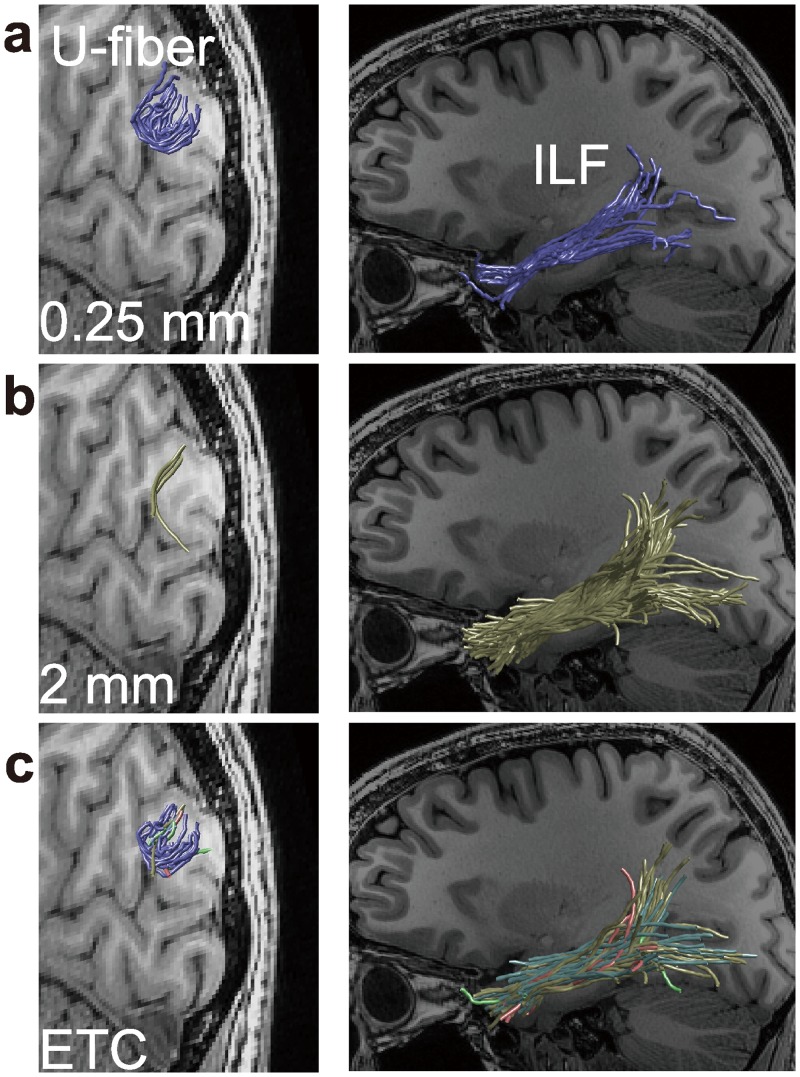
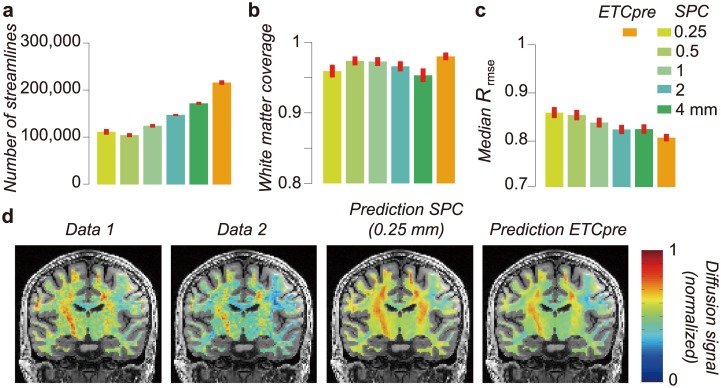
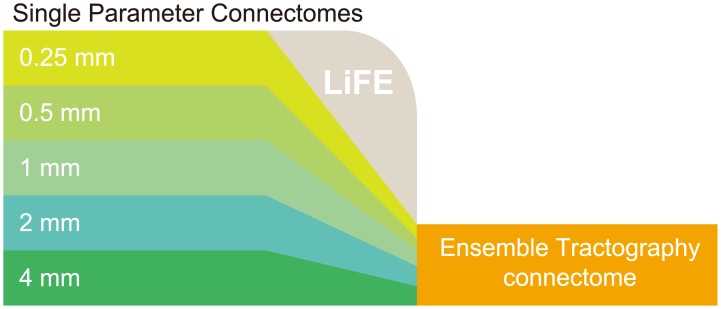
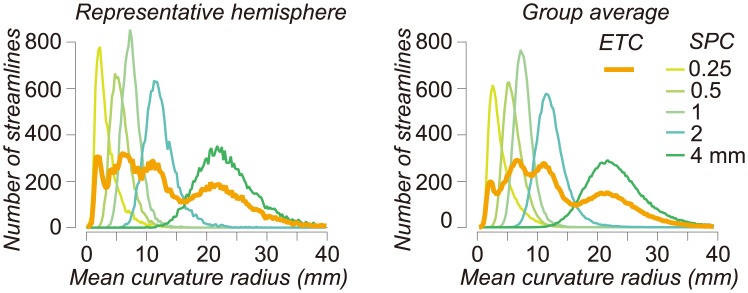
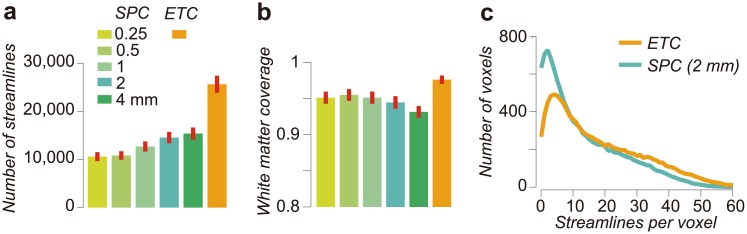
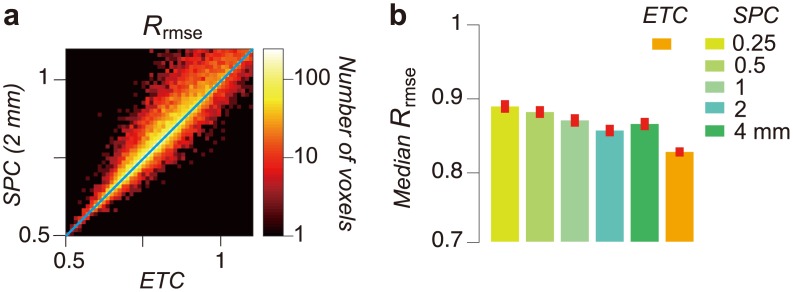
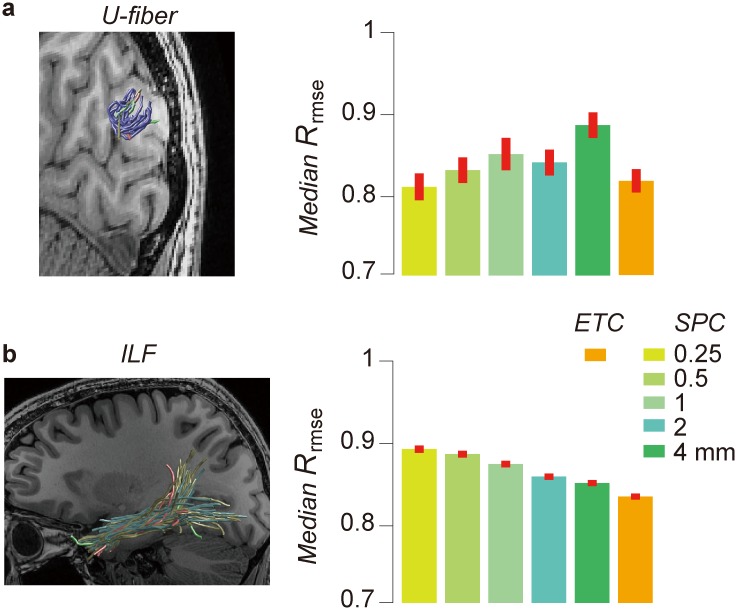
Tractography uses diffusion MRI to estimate the trajectory and cortical projection zones of white matter fascicles in the living human brain. There are many different tractography algorithms and each requires the user to set several parameters, such as curvature threshold. Choosing a single algorithm with specific parameters poses two challenges. First, different algorithms and parameter values produce different results. Second, the optimal choice of algorithm and parameter value may differ between different white matter regions or different fascicles, subjects, and acquisition parameters. We propose using ensemble methods to reduce algorithm and parameter dependencies. To do so we separate the processes of fascicle generation and evaluation. Specifically, we analyze the value of creating optimized connectomes by systematically combining candidate streamlines from an ensemble of algorithms (deterministic and probabilistic) and systematically varying parameters (curvature and stopping criterion). The ensemble approach leads to optimized connectomes that provide better cross-validated prediction error of the diffusion MRI data than optimized connectomes generated using a single-algorithm or parameter set. Furthermore, the ensemble approach produces connectomes that contain both short- and long-range fascicles, whereas single-parameter connectomes are biased towards one or the other. In summary, a systematic ensemble tractography approach can produce connectomes that are superior to standard single parameter estimates both for predicting the diffusion measurements and estimating white matter fascicles.
纤维束成像利用扩散磁共振成像来估计活体人类大脑中白质纤维束的轨迹和皮质投射区域。有许多不同的纤维束成像算法,每种算法都要求用户设置几个参数,如曲率阈值。选择具有特定参数的单一算法存在两个挑战。首先,不同的算法和参数值会产生不同的结果。其次,算法和参数值的最佳选择可能因不同的白质区域、不同的纤维束、受试者和采集参数而有所不同。我们建议使用集成方法来减少对算法和参数的依赖。为此,我们将纤维束生成和评估过程分开。具体来说,我们通过系统地组合来自一组算法(确定性和概率性)的候选流线并系统地改变参数(曲率和终止标准)来分析创建优化连接组的价值。集成方法会生成优化的连接组,与使用单一算法或参数集生成的优化连接组相比,该连接组能提供更好的扩散磁共振成像数据交叉验证预测误差。此外,集成方法产生的连接组同时包含短程和长程纤维束,而单参数连接组则偏向于其中一种。总之,一种系统的集成纤维束成像方法可以产生在预测扩散测量和估计白质纤维束方面都优于标准单参数估计的连接组。