Alera Maria Theresa, Srikiatkhachorn Anon, Velasco John Mark, Tac-An Ilya A, Lago Catherine B, Clapham Hannah E, Fernandez Stefan, Levy Jens W, Thaisomboonsuk Butsaya, Klungthong Chonticha, Macareo Louis R, Nisalak Ananda, Hermann Laura, Villa Daisy, Yoon In-Kyu
Philippines-AFRIMS Virology Research Unit, CAP Building, Cebu City, Philippines.
Division of Infectious Diseases and Immunology, Department of Medicine, University of Massachusetts Medical School, Worcester, Massachusetts, United States of America.
PLoS Negl Trop Dis. 2016 Feb 4;10(2):e0004337. doi: 10.1371/journal.pntd.0004337. eCollection 2016 Feb.
The mean age of dengue has been increasing in some but not all countries. We sought to determine the incidence of dengue virus (DENV) infection in adults and children in a prospective cohort study in the Philippines where dengue is hyperendemic.
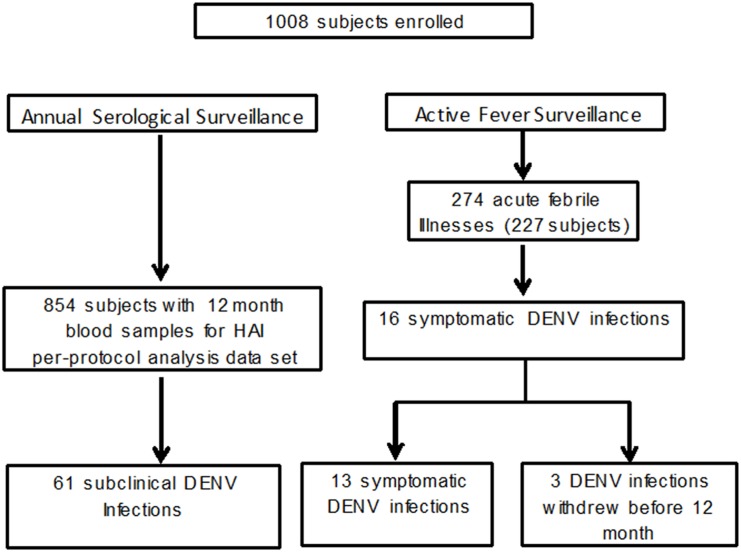
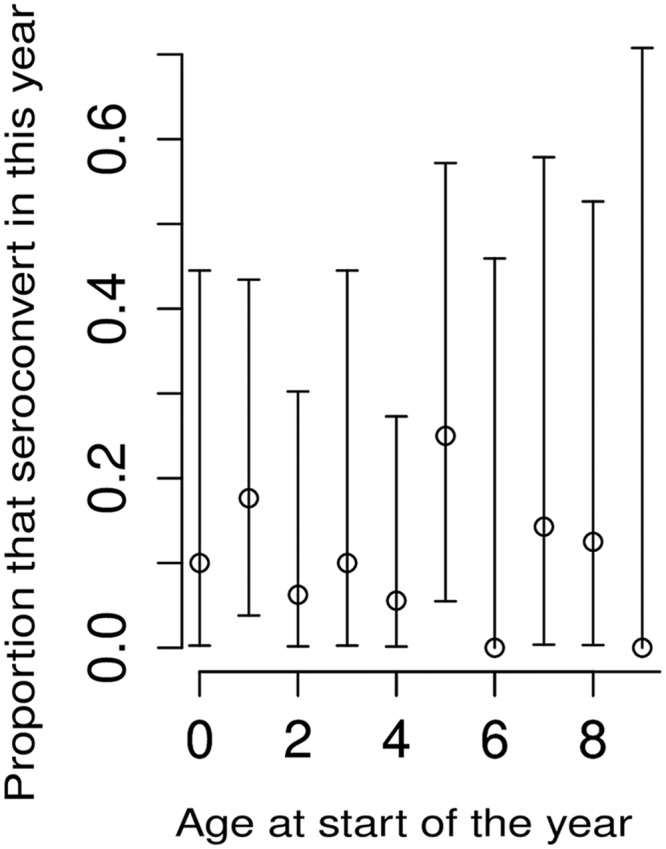
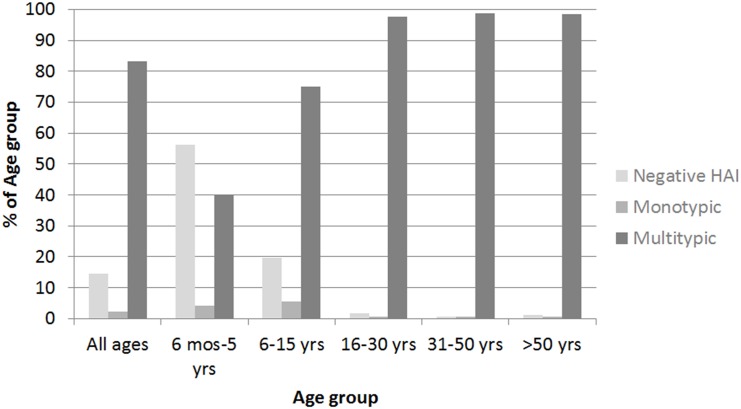
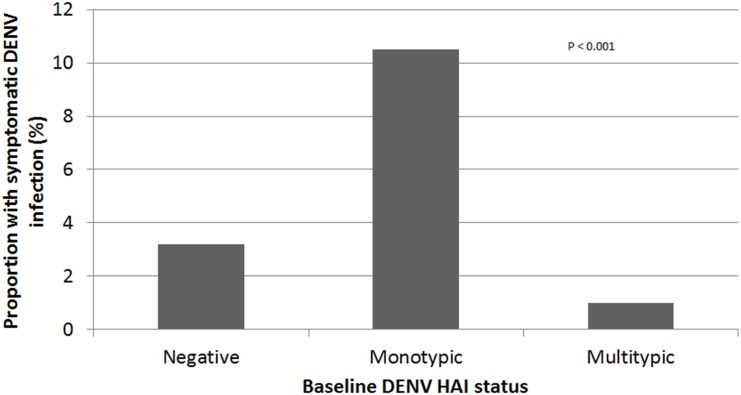
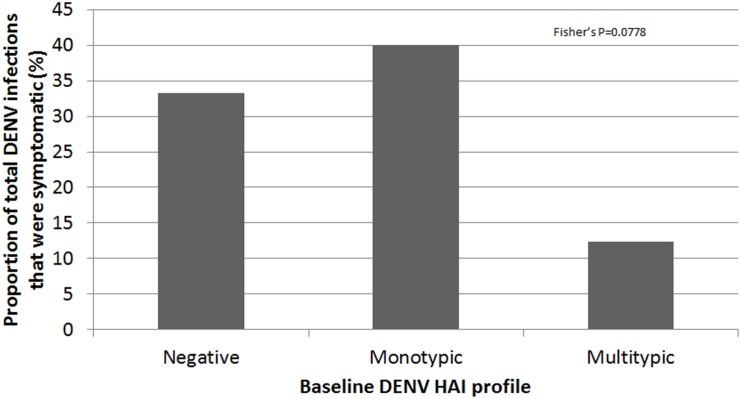
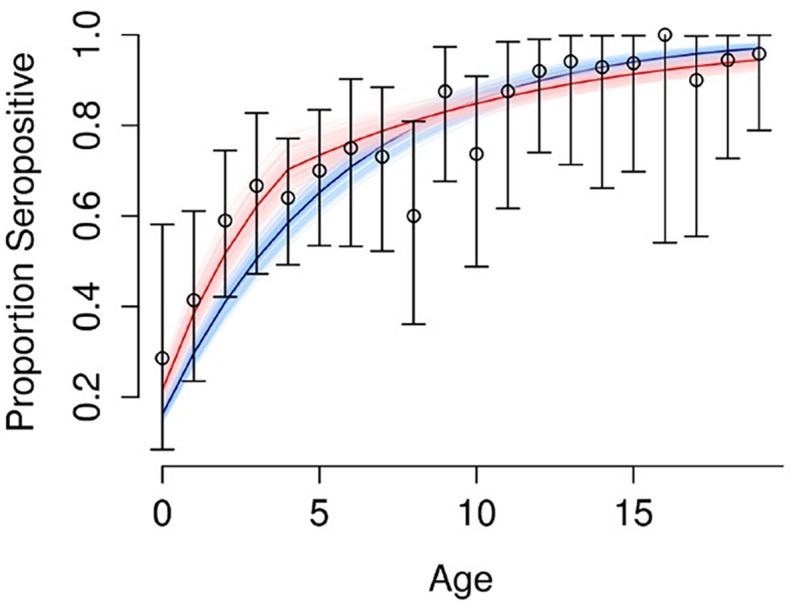
METHODOLOGY/PRINCIPAL FINDINGS: A prospective cohort of subjects ≥6 months old in Cebu City, Philippines, underwent active community-based surveillance for acute febrile illnesses by weekly contact. Fever history within the prior seven days was evaluated with an acute illness visit followed by 2, 5, and 8-day, and 3-week convalescent visits. Blood was collected at the acute and 3-week visits. Scheduled visits took place at enrolment and 12 months that included blood collections. Acute samples were tested by DENV PCR and acute/convalescent samples by DENV IgM/IgG ELISA to identify symptomatic infections. Enrolment and 12-month samples were tested by DENV hemagglutination inhibition (HAI) assay to identify subclinical infections. Of 1,008 enrolled subjects, 854 completed all study activities at 12 months per-protocol undergoing 868 person-years of surveillance. The incidence of symptomatic and subclinical infections was 1.62 and 7.03 per 100 person-years, respectively. However, in subjects >15 years old, only one symptomatic infection occurred whereas 27 subclinical infections were identified. DENV HAI seroprevalence increased sharply with age with baseline multitypic HAIs associated with fewer symptomatic infections. Using a catalytic model, the historical infection rate among dengue naïve individuals was estimated to be high at 11-22%/year.
CONCLUSIONS/SIGNIFICANCE: In this hyperendemic area with high seroprevalence of multitypic DENV HAIs in adults, symptomatic dengue rarely occurred in individuals older than 15 years. Our findings demonstrate that dengue is primarily a pediatric disease in areas with high force of infection. However, the average age of dengue could increase if force of infection decreases over time, as is occurring in some hyperendemic countries such as Thailand.
登革热的平均发病年龄在一些国家有所上升,但并非所有国家都是如此。我们试图在菲律宾这个登革热高度流行的国家进行一项前瞻性队列研究,以确定成人和儿童登革热病毒(DENV)感染的发病率。
方法/主要发现:菲律宾宿务市一个针对年龄≥6个月受试者的前瞻性队列,通过每周联系对急性发热性疾病进行基于社区的主动监测。在急性病就诊时评估前七天内的发热病史,随后在第2、5、8天以及3周恢复期就诊时再次评估。在急性病就诊时和3周就诊时采集血液。在入组时和12个月时进行预定就诊,包括采集血液。急性样本通过DENV PCR检测,急性/恢复期样本通过DENV IgM/IgG ELISA检测以识别有症状感染。入组时和12个月时的样本通过DENV血凝抑制(HAI)试验检测以识别亚临床感染。在1008名入组受试者中,854名按照方案在12个月时完成了所有研究活动,接受了868人年的监测。有症状感染和亚临床感染的发病率分别为每100人年1.62例和7.03例。然而,在年龄大于15岁的受试者中,仅发生了1例有症状感染,而识别出27例亚临床感染。DENV HAI血清阳性率随年龄急剧上升,基线多型HAI与较少的有症状感染相关。使用催化模型,估计登革热易感个体的历史感染率很高,为每年11 - 22%。
结论/意义:在这个成人中多型DENV HAI血清阳性率高的高度流行地区,15岁以上个体很少发生有症状的登革热。我们的研究结果表明,在感染强度高的地区,登革热主要是一种儿科疾病。然而,如果感染强度随着时间下降,如在泰国等一些高度流行国家所发生的情况,登革热的平均发病年龄可能会增加。