Shi Wei-Ling, Chen Xiu-Lan, Wang Li-Xia, Gong Zhi-Ting, Li Shuyu, Li Chun-Long, Xie Bin-Bin, Zhang Wei, Shi Mei, Li Chuanyou, Zhang Yu-Zhong, Song Xiao-Yan
State Key Laboratory of Microbial Technology, Marine Biotechnology Research, Shandong University, Jinan 250100, China State Key Laboratory of Plant Genomics, National Centre for Plant Gene Research (Beijing), Institute of Genetics and Developmental Biology, Chinese Academy of Sciences, Beijing 100101, China.
State Key Laboratory of Microbial Technology, Marine Biotechnology Research, Shandong University, Jinan 250100, China.
J Exp Bot. 2016 Apr;67(8):2191-205. doi: 10.1093/jxb/erw023. Epub 2016 Feb 5.
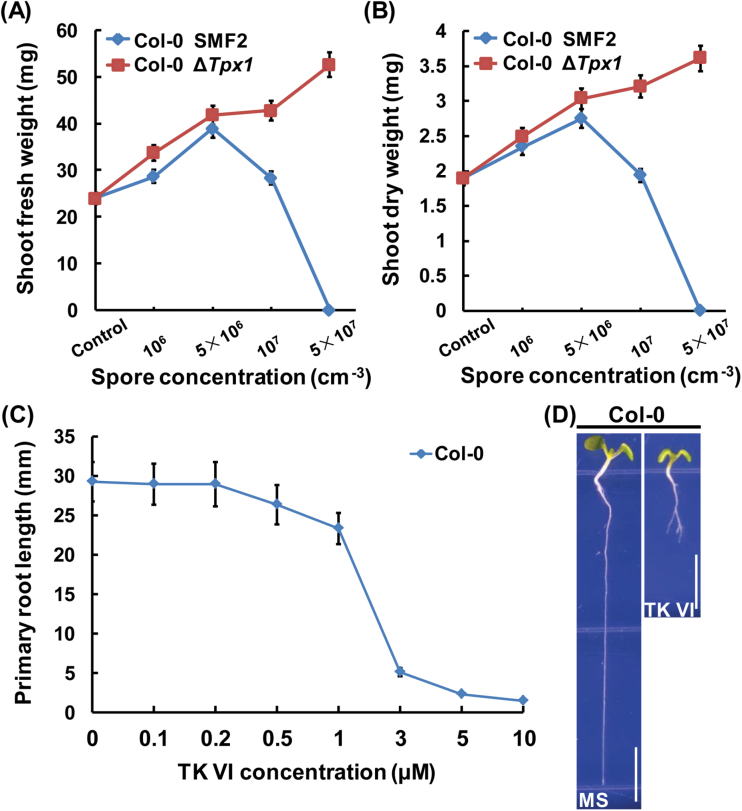
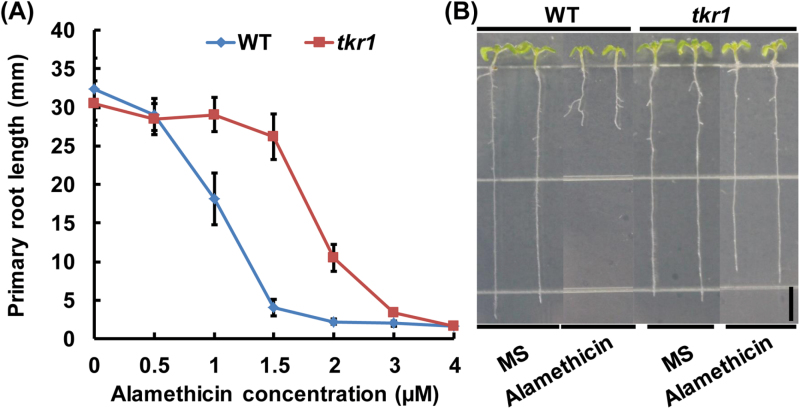
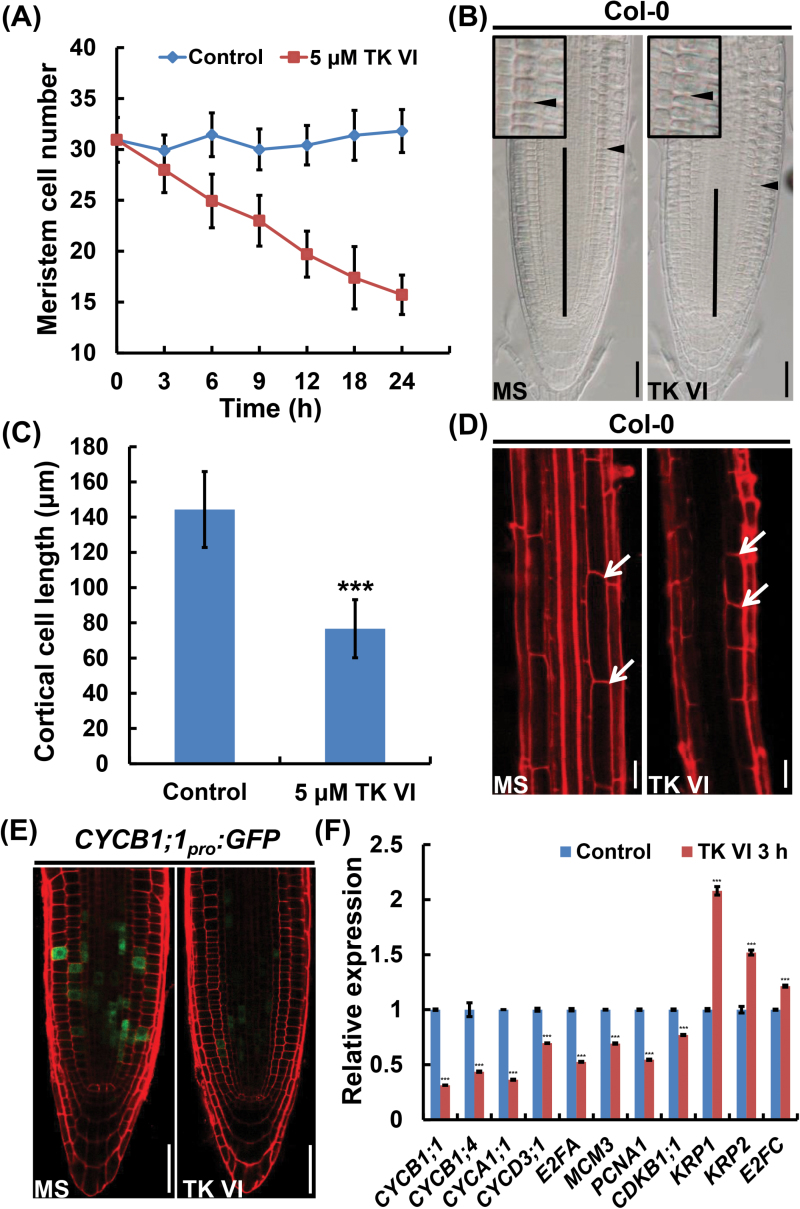
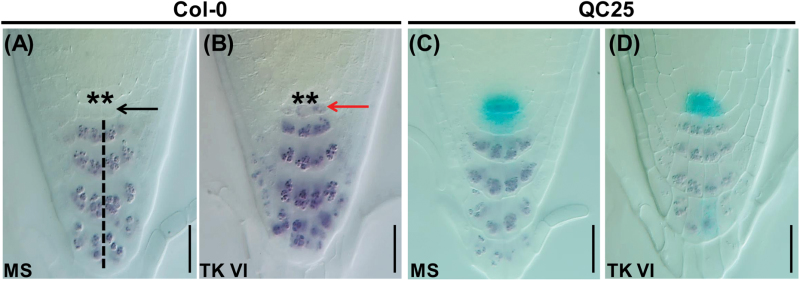
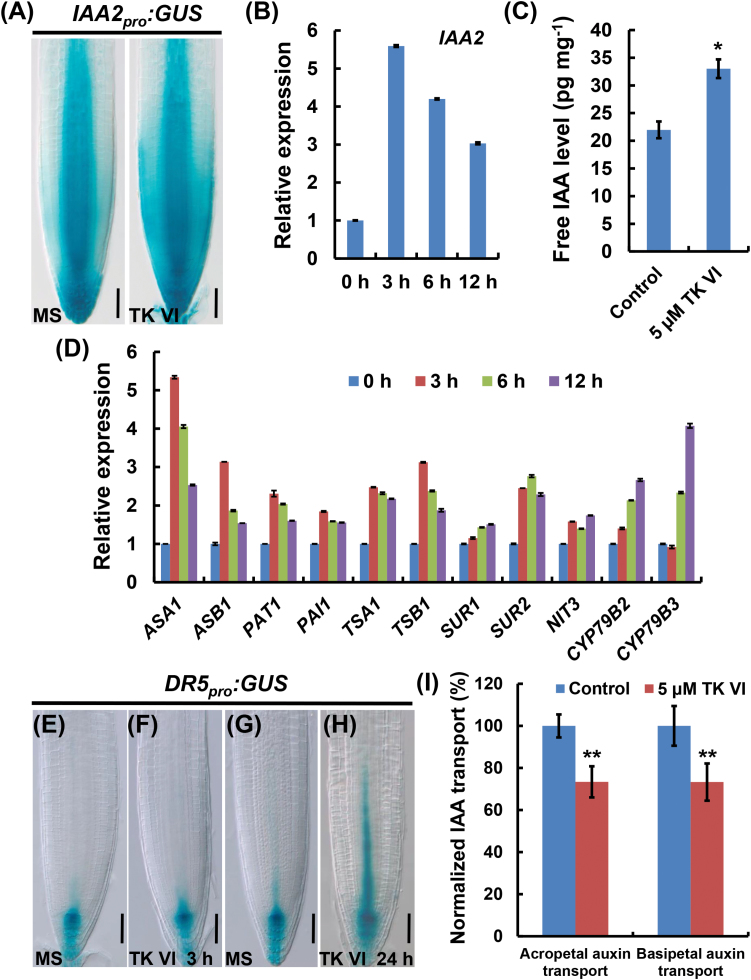
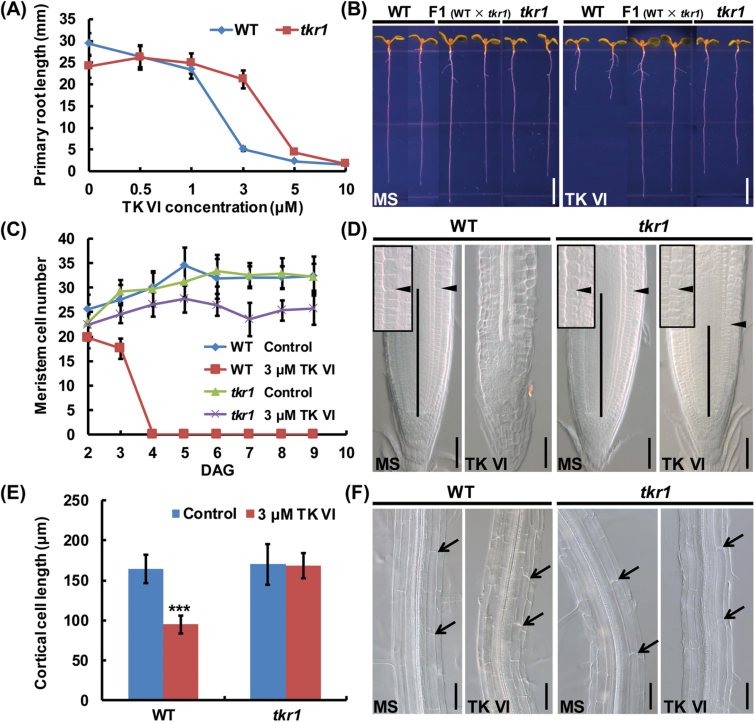
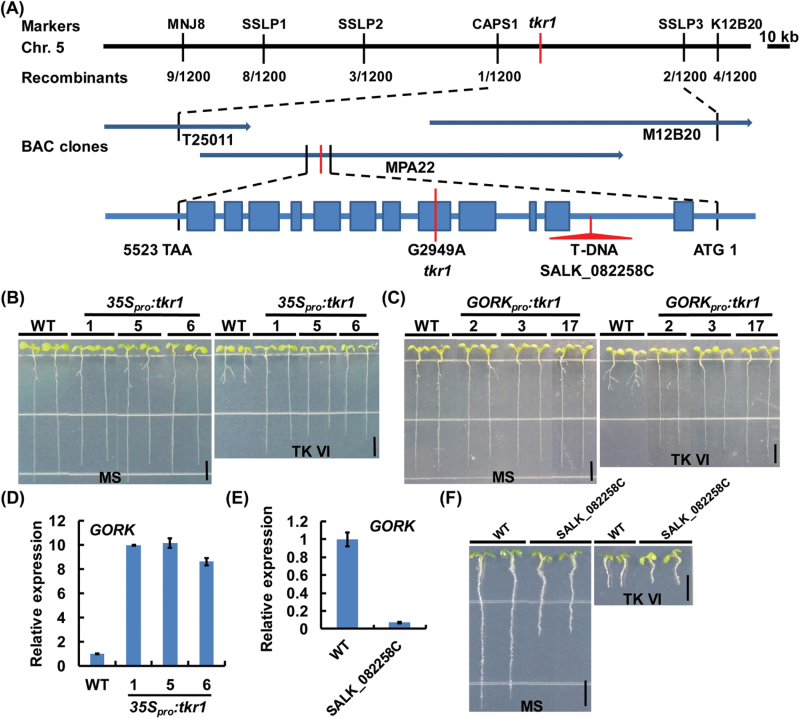
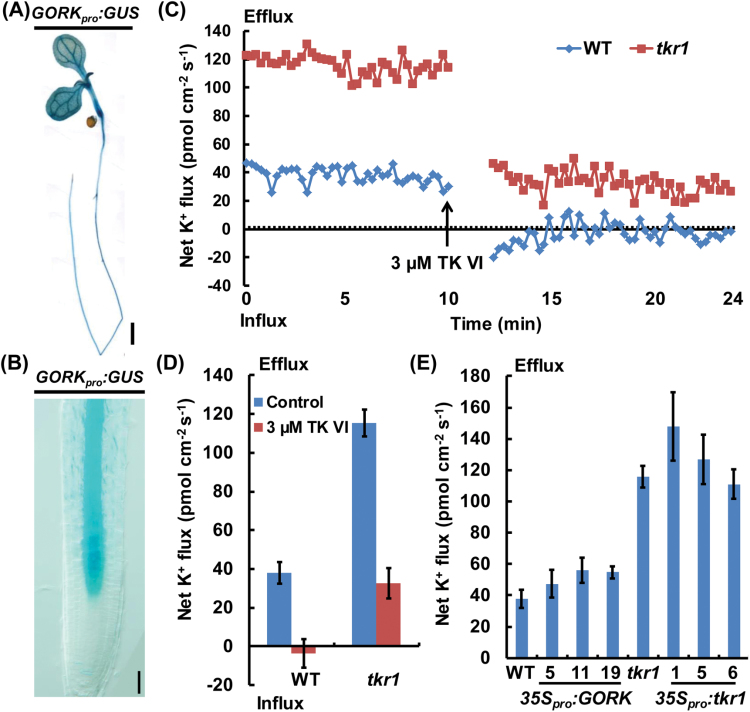
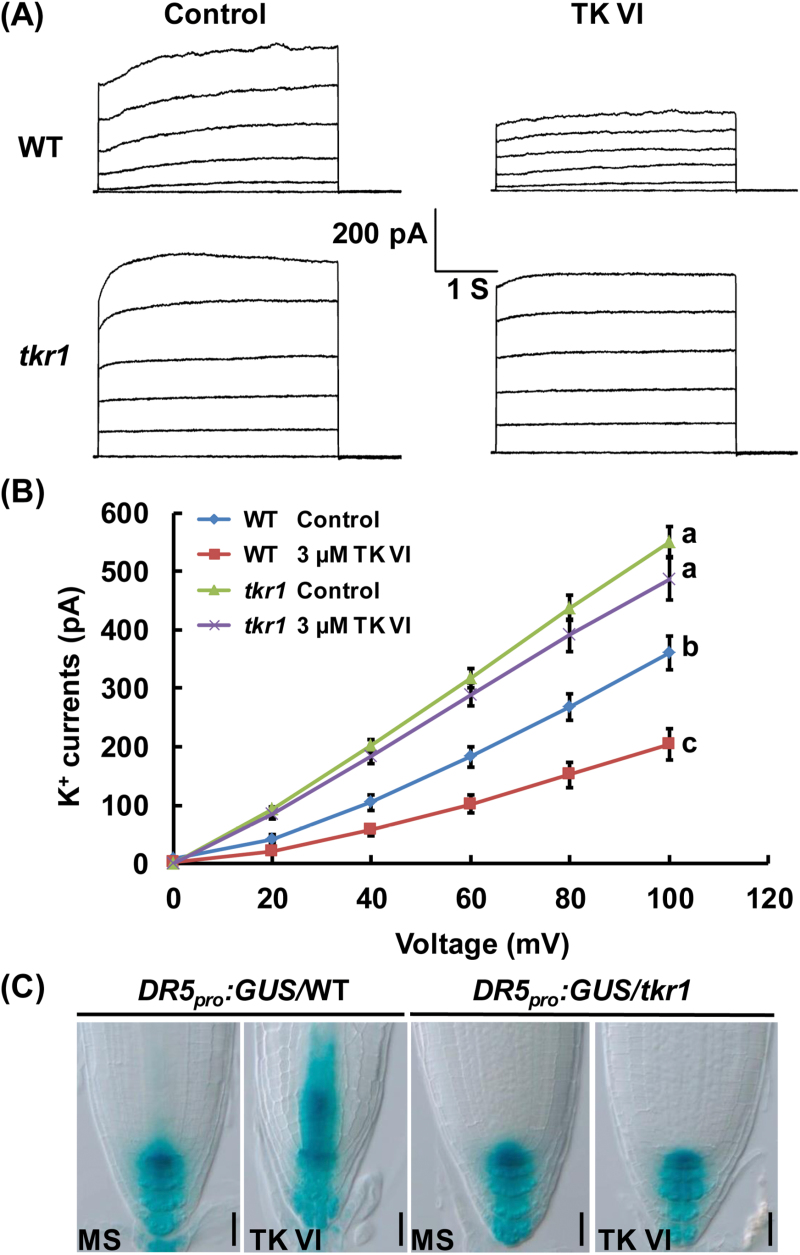
Trichoderma spp. are well known biocontrol agents that produce a variety of antibiotics. Peptaibols are a class of linear peptide antibiotics mainly produced by Trichoderma Alamethicin, the most studied peptaibol, is reported as toxic to plants at certain concentrations, while the mechanisms involved are unclear. We illustrated the toxic mechanisms of peptaibols by studying the growth-inhibitory effect of Trichokonin VI (TK VI), a peptaibol from Trichoderma longibrachiatum SMF2, on Arabidopsis primary roots. TK VI inhibited root growth by suppressing cell division and cell elongation, and disrupting root stem cell niche maintenance. TK VI increased auxin content and disrupted auxin response gradients in root tips. Further, we screened the Arabidopsis TK VI-resistant mutant tkr1. tkr1 harbors a point mutation in GORK, which encodes gated outwardly rectifying K(+)channel proteins. This mutation alleviated TK VI-induced suppression of K(+)efflux in roots, thereby stabilizing the auxin gradient. The tkr1 mutant also resisted the phytotoxicity of alamethicin. Our results indicate that GORK channels play a key role in peptaibol-plant interaction and that there is an inter-relationship between GORK channels and maintenance of auxin homeostasis. The cellular and molecular insight into the peptaibol-induced inhibition of plant root growth advances our understanding of Trichoderma-plant interactions.
木霉菌是众所周知的生物防治剂,可产生多种抗生素。短杆菌肽是一类主要由木霉菌产生的线性肽抗生素。最常被研究的短杆菌肽A,据报道在一定浓度下对植物有毒,但其涉及的机制尚不清楚。我们通过研究来自长枝木霉SMF2的一种短杆菌肽——木霉菌素VI(TK VI)对拟南芥初生根的生长抑制作用,阐明了短杆菌肽的毒性机制。TK VI通过抑制细胞分裂和细胞伸长以及破坏根干细胞龛的维持来抑制根的生长。TK VI增加了生长素含量并破坏了根尖的生长素反应梯度。此外,我们筛选出了拟南芥TK VI抗性突变体tkr1。tkr1在编码向外整流钾离子通道蛋白的GORK中存在一个点突变。该突变减轻了TK VI诱导的根中钾离子外流的抑制,从而稳定了生长素梯度。tkr1突变体也抵抗了短杆菌肽A的植物毒性。我们的结果表明,GORK通道在短杆菌肽与植物的相互作用中起关键作用,并且GORK通道与生长素稳态的维持之间存在相互关系。对短杆菌肽诱导的植物根生长抑制的细胞和分子层面的深入了解,增进了我们对木霉菌与植物相互作用的理解。