Department of Biology, Lund University, Sölvegatan 35B, 223 62, Lund, Sweden.
Present Address: Botany Department, Faculty of Science, Sohag University, Sohag, 82524, Egypt.
BMC Plant Biol. 2018 Aug 10;18(1):165. doi: 10.1186/s12870-018-1370-x.
Trichoderma fungi live in the soil rhizosphere and are beneficial for plant growth and pathogen resistance. Several species and strains are currently used worldwide in co-cultivation with crops as a biocontrol alternative to chemical pesticides even though little is known about the exact mechanisms of the beneficial interaction. We earlier found alamethicin, a peptide antibiotic secreted by Trichoderma, to efficiently permeabilise cultured tobacco cells. However, pre-treatment with Trichoderma cellulase made the cells resistant to subsequent alamethicin, suggesting a potential mechanism for plant tolerance to Trichoderma, needed for mutualistic symbiosis.
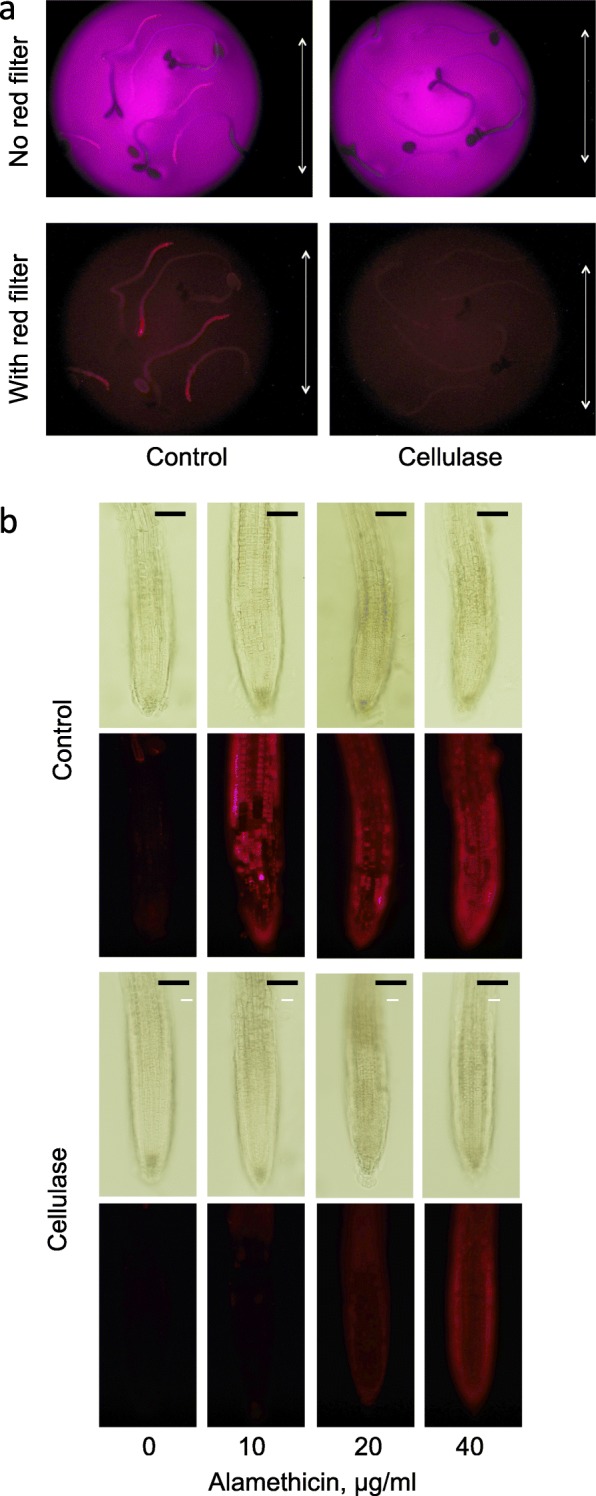
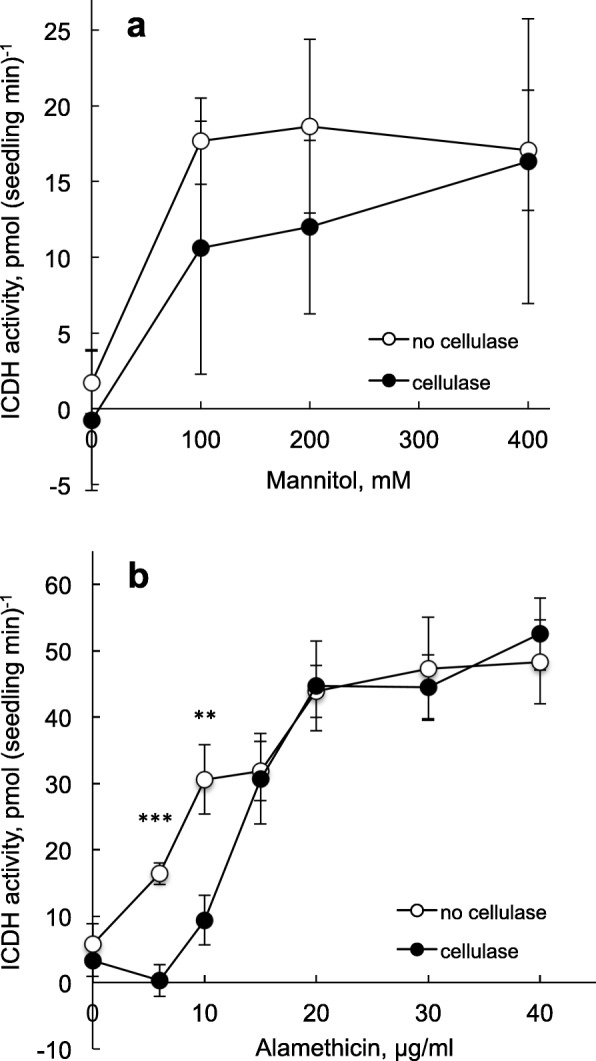
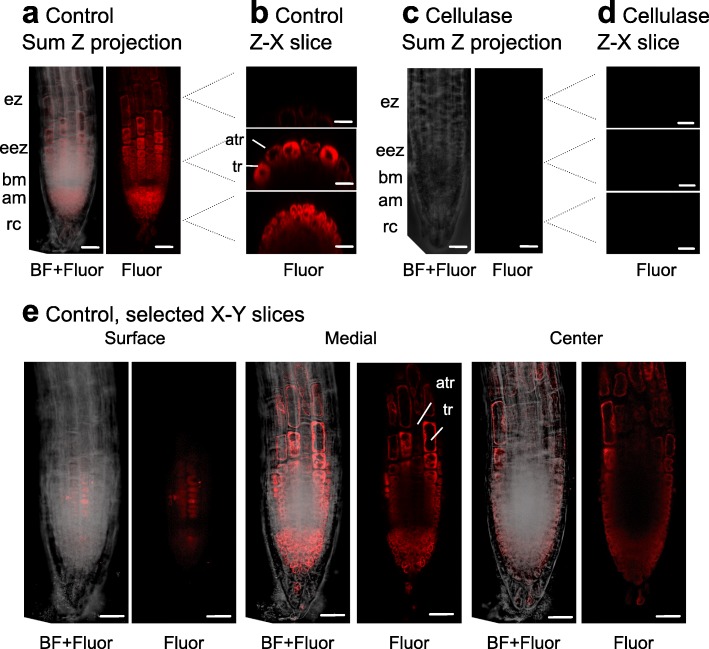
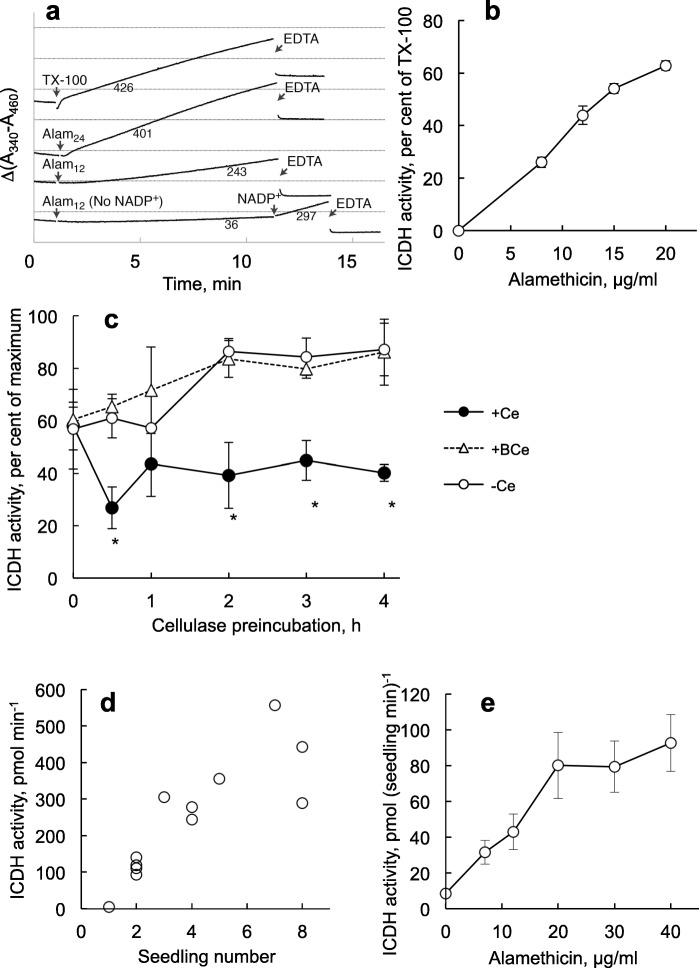
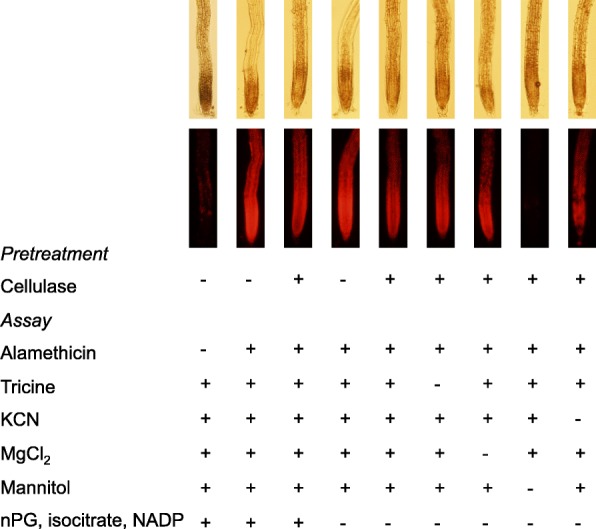
We here investigated intact sterile-grown Arabidopsis thaliana seedlings germinated in water or growth medium. These could be permeabilised by alamethicin but not if pretreated with cellulase. By following the fluorescence from the membrane-impermeable DNA-binding probe propidium iodide, we found alamethicin to mainly permeabilise root tips, especially the apical meristem and epidermis cells, but not the root cap and basal meristem cells nor cortex cells. Alamethicin permeabilisation and cellulase-induced resistance were confirmed by developing a quantitative in situ assay based on NADP-isocitrate dehydrogenase accessibility. The combined assays also showed that hyperosmotic treatment after the cellulase pretreatment abolished the induced cellulase resistance.
We here conclude the presence of cell-specific alamethicin permeabilisation, and cellulase-induced resistance to it, in root tip apical meristem and epidermis of the model organism A. thaliana. We suggest that contact between the plasma membrane and the cell wall is needed for the resistance to remain. Our results indicate a potential mode for the plant to avoid negative effects of alamethicin on plant growth and localises the point of potential damage and response. The results also open up for identification of plant genetic components essential for beneficial effects from Trichoderma on plants.
木霉真菌生活在土壤根际,有利于植物生长和抵御病原体。目前,全球有几个物种和菌株与作物共培养,作为化学农药的生物防治替代品,尽管人们对有益相互作用的确切机制知之甚少。我们之前发现,木霉分泌的肽类抗生素灰绿霉素能够有效地透化培养的烟草细胞。然而,用木霉纤维素酶预处理会使细胞对随后的灰绿霉素产生抗性,这表明植物对木霉的耐受性是共生所必需的,这种耐受性可能是一种潜在的机制。
我们在这里研究了在水中或生长培养基中萌发的无菌生长的拟南芥幼苗的完整植株。这些幼苗可以被灰绿霉素透化,但如果先用纤维素酶预处理则不行。通过跟踪膜不透性 DNA 结合探针碘化丙啶的荧光,我们发现灰绿霉素主要透化根尖,特别是顶端分生组织和表皮细胞,但不能透化根冠和基分生组织细胞以及皮层细胞。灰绿霉素透化和纤维素酶诱导的抗性通过开发基于 NADP-异柠檬酸脱氢酶可及性的定量原位测定得到了证实。联合测定还表明,在纤维素酶预处理后进行高渗处理会消除诱导的纤维素酶抗性。
我们在这里得出结论,在模式生物拟南芥的根尖顶端分生组织和表皮中存在细胞特异性的灰绿霉素透化,以及对其的纤维素酶诱导抗性。我们认为,抵抗需要质膜与细胞壁之间的接触。我们的结果表明,植物有一种潜在的模式可以避免灰绿霉素对植物生长的负面影响,并定位潜在的损伤和反应点。研究结果还为鉴定对植物有益的木霉效应所必需的植物遗传成分开辟了道路。