Wang Jun-Tao, Jiao Peng, Zhou Yun, Liu Qian
Department of Nephrology, The First People's Hospital of Shangqiu, Shangqiu, Henan, China (mainland).
Department of Emergency, The First People's Hospital of Shangqiu, Shangqiu, Henan, China (mainland).
Med Sci Monit. 2016 Feb 11;22:454-9. doi: 10.12659/msm.897076.
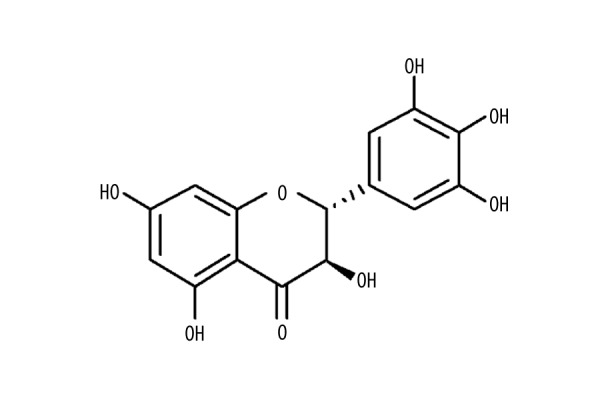
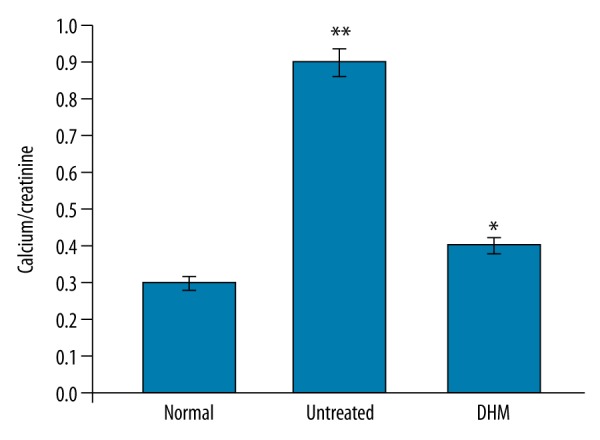
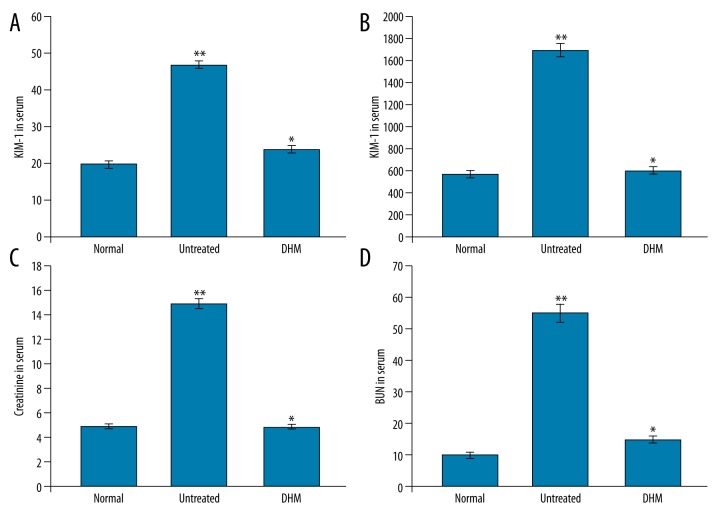
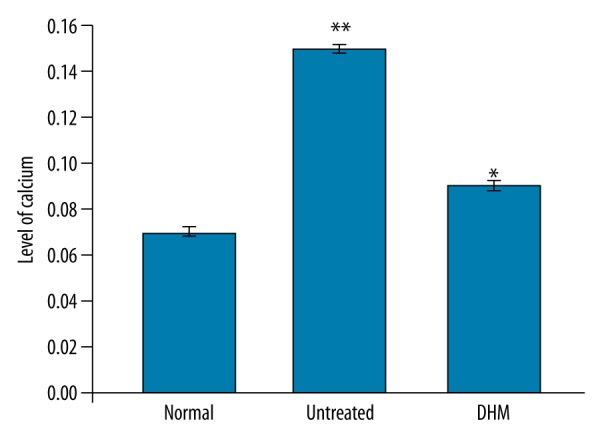
BACKGROUND The present study investigated the effect of dihydromyricetin (DHM) on lipopolysaccharide (LPS)-induced acute kidney injury in a rat model. MATERIAL AND METHODS Kidney injury was induced in male Sprague-Dawley rats by injection of LPS through the tail vein. The rats were treated with 5 µg/kg body weight DHM within 12 h of the LPS administration. The urine of the rats was collected over a period of 48 h for determination of calcium and creatinine concentrations. Blood urea nitrogen in the serum was analyzed using a BC-2800 Vet Animal Auto Biochemistry Analyzer. On day 3 after treatment, the rats were sacrificed to extract the kidneys. RESULTS Treatment of the endotoxemia rats with DHM caused a significant (P<0.05) decrease in the level of kidney injury molecule‑1 and blood urea nitrogen. DHM treatment significantly (P<0.05) decreased the level of calcium in the kidney tissues compared to those of the untreated endotoxemia rats. The level of malonaldehyde (MDA) in the kidney tissues was significantly reduced in the endotoxemia rats by DHM treatment. The results from immunohistochemistry reveled a significant decrease in the expression of osteopontin (OPN) and CD44 levels. The endotoxemia rats showed significantly higher levels of TUNEL-positive stained nuclei compared to the normal controls. However, treatment of the endotoxemia rats with DHM resulted in a significant decrease in the population of TUNEL-positive cells. CONCLUSIONS DHM may be a promising candidate for the treatment of acute kidney injury.
背景 本研究在大鼠模型中探究了二氢杨梅素(DHM)对脂多糖(LPS)诱导的急性肾损伤的影响。
材料与方法 通过尾静脉注射LPS诱导雄性Sprague-Dawley大鼠发生肾损伤。在给予LPS后12小时内,用5μg/kg体重的DHM对大鼠进行治疗。在48小时内收集大鼠尿液,以测定钙和肌酐浓度。使用BC-2800 Vet动物自动生化分析仪分析血清中的血尿素氮。治疗后第3天,处死大鼠以提取肾脏。
结果 用DHM治疗内毒素血症大鼠可使肾损伤分子-1水平和血尿素氮显著(P<0.05)降低。与未治疗的内毒素血症大鼠相比,DHM治疗显著(P<0.05)降低了肾组织中的钙水平。DHM治疗使内毒素血症大鼠肾组织中的丙二醛(MDA)水平显著降低。免疫组织化学结果显示骨桥蛋白(OPN)表达和CD44水平显著降低。与正常对照组相比,内毒素血症大鼠TUNEL阳性染色细胞核水平显著更高。然而,用DHM治疗内毒素血症大鼠导致TUNEL阳性细胞数量显著减少。
结论 DHM可能是治疗急性肾损伤的一个有前景的候选药物。