Henriques-Alves Aron M, Queiroz Claudio M
Brain Institute, Federal University of Rio Grande do Norte Natal, Brazil.
Front Behav Neurosci. 2016 Feb 3;9:364. doi: 10.3389/fnbeh.2015.00364. eCollection 2015.
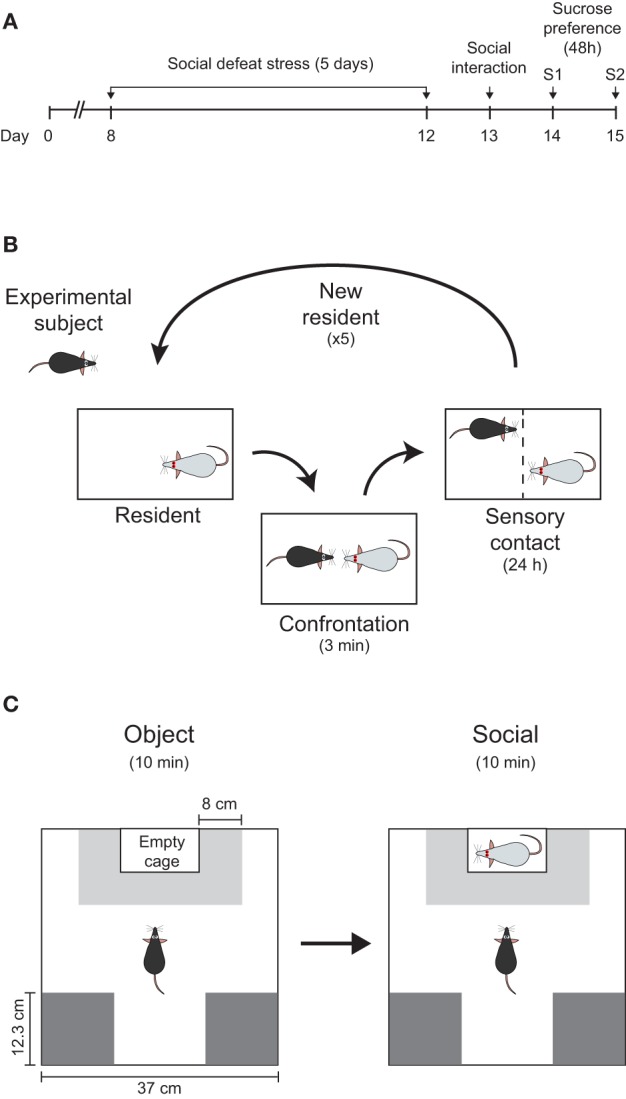
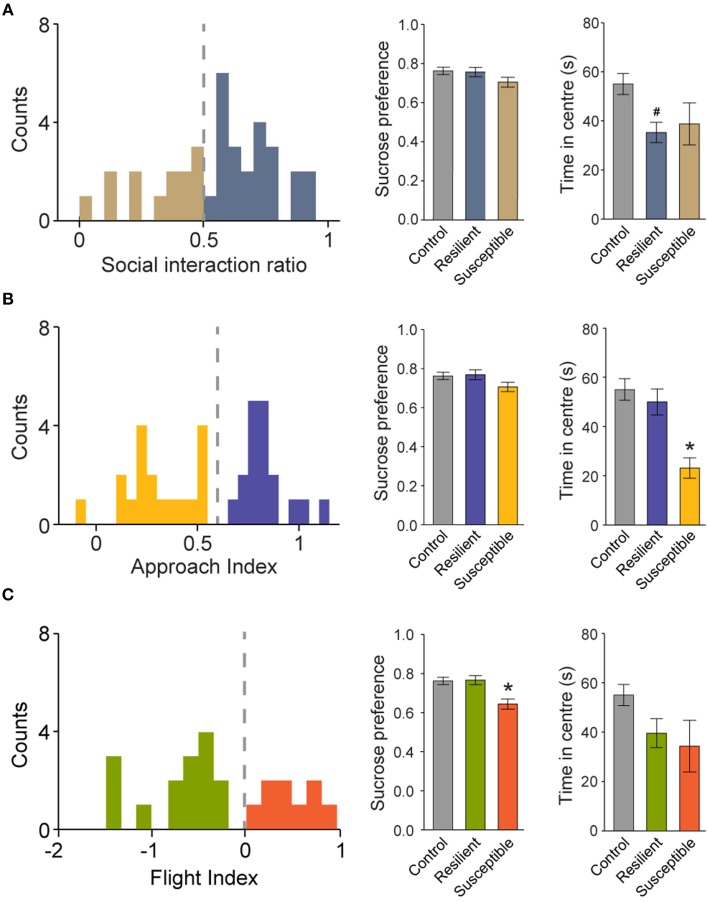
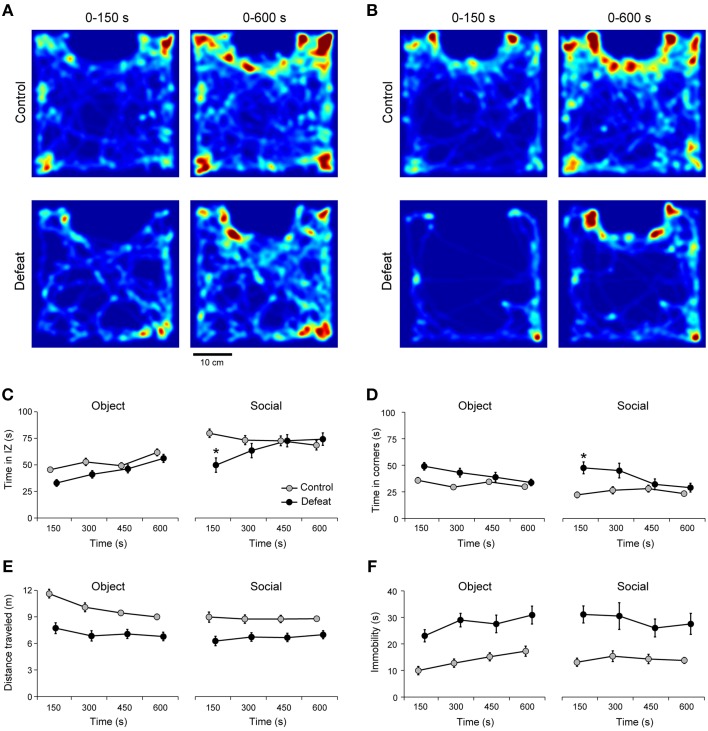
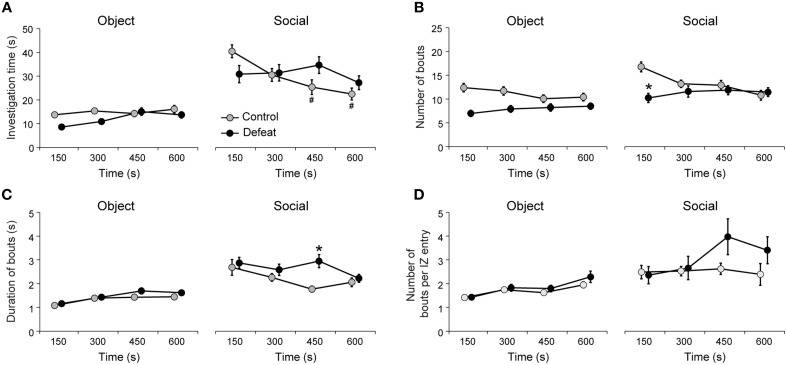
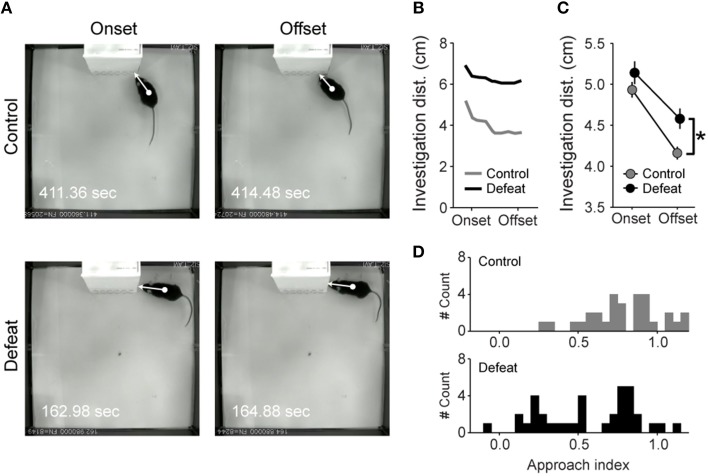
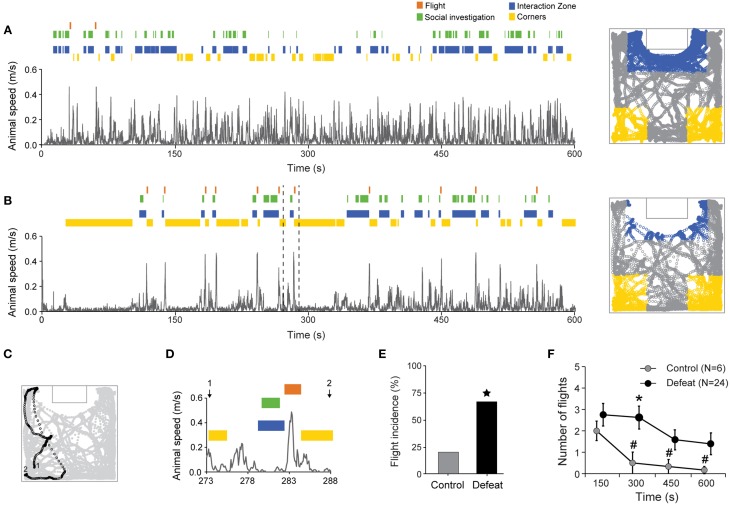
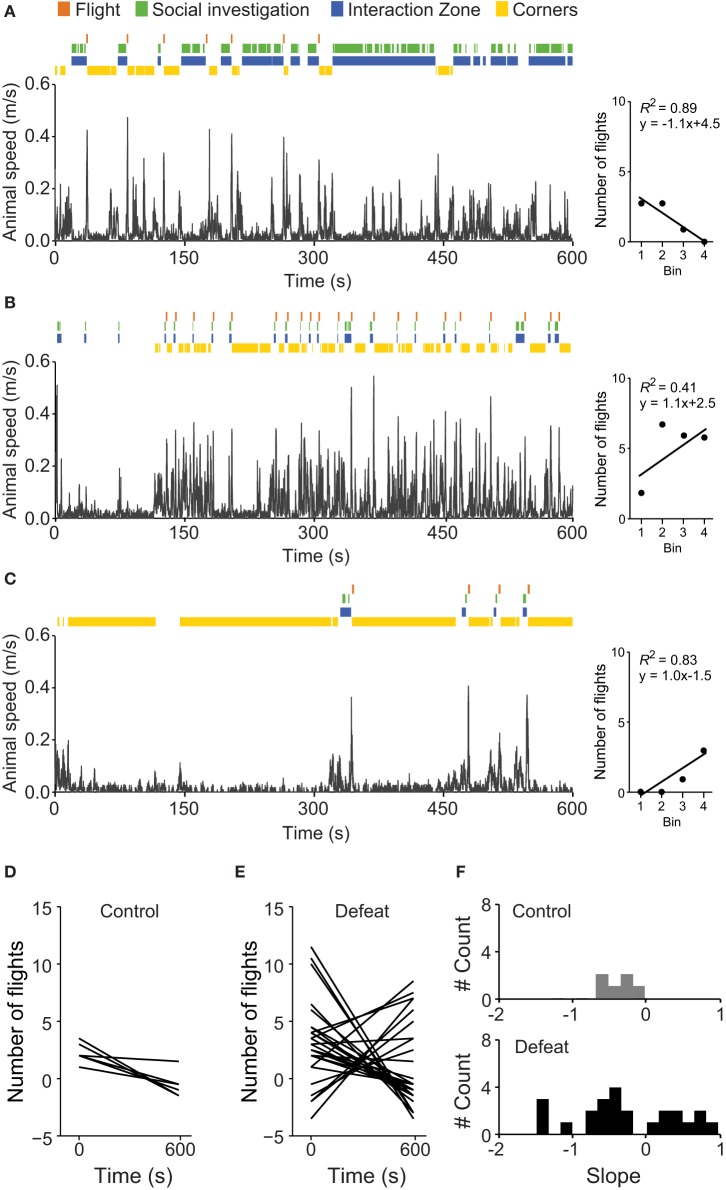
In rodents, repeated exposure to unavoidable aggression followed by sustained sensory treat can lead to prolonged social aversion. The chronic social defeat stress model explores that phenomenon and it has been used as an animal model for human depression. However, some authors have questioned whether confounding effects may arise as the model also boosts anxiety-related behaviors. Despite its wide acceptance, most studies extract limited information from the behavior of the defeated animal. Often, the normalized occupancy around the social stimulus, the interaction zone, is taken as an index of depression. We hypothesized that this parameter is insufficient to fully characterize the behavioral consequences of this form of stress. Using an ethological approach, we showed that repeated social defeat delayed the expression of social investigation in long (10 min) sessions of social interaction. Also, the incidence of defensive behaviors, including stretched-attend posture and high speed retreats, was significantly higher in defeated mice in comparison to controls. Interestingly, a subpopulation of defeated mice showed recurrent and non-habituating stretched-attend posture and persistent flights during the entire session. Two indexes were created based on defensive behaviors to show that only recurrent flights correlates with sucrose intake. Together, the present study corroborates the idea that this model of social stress can precipitate a myriad of behaviors not readily disentangled. We propose that long sessions (>150 s) and detailed ethological evaluation during social interaction tests are necessary to provide enough information to correctly classify defeated animals in terms of resilience and susceptibility to social defeat stress.
在啮齿动物中,反复暴露于无法避免的攻击行为后持续接受感官刺激会导致长期的社交厌恶。慢性社会挫败应激模型探究了这一现象,并且已被用作人类抑郁症的动物模型。然而,一些作者质疑该模型是否会产生混杂效应,因为它还会增强与焦虑相关的行为。尽管该模型被广泛接受,但大多数研究从被击败动物的行为中获取的信息有限。通常,将社交刺激周围(即互动区域)的归一化占有率作为抑郁症的指标。我们假设这个参数不足以全面表征这种应激形式的行为后果。通过行为学方法,我们发现反复的社会挫败会延迟在长时间(10分钟)社交互动中社交探究行为的表现。此外,与对照组相比,被击败小鼠的防御行为发生率显著更高,包括伸展注意姿势和高速撤退。有趣的是,一部分被击败的小鼠在整个实验过程中表现出反复出现且不产生习惯化的伸展注意姿势和持续的逃窜行为。基于防御行为创建了两个指标,结果表明只有反复逃窜行为与蔗糖摄入量相关。总之,本研究证实了这样一种观点,即这种社会应激模型会引发一系列难以轻易区分的行为。我们建议在社交互动测试中采用长时间(>150秒)且详细的行为学评估,以便提供足够信息,从而根据对社会挫败应激的恢复力和易感性对被击败动物进行正确分类。