Neumann Bettina, Wu Haijia, Hackmann Alexandra, Krebber Heike
Abteilung für Molekulare Genetik, Institut für Mikrobiologie und Genetik, Göttinger Zentrum für Molekulare Biowissenschaften (GZMB), Georg-August Universität Göttingen, Germany.
PLoS One. 2016 Feb 12;11(2):e0149571. doi: 10.1371/journal.pone.0149571. eCollection 2016.
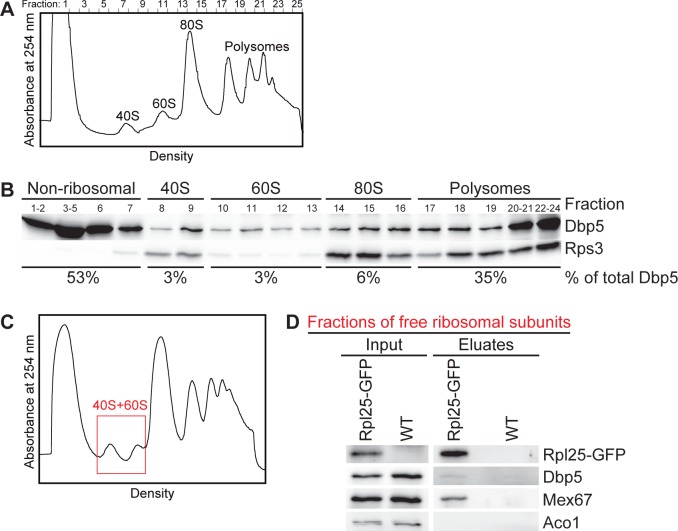
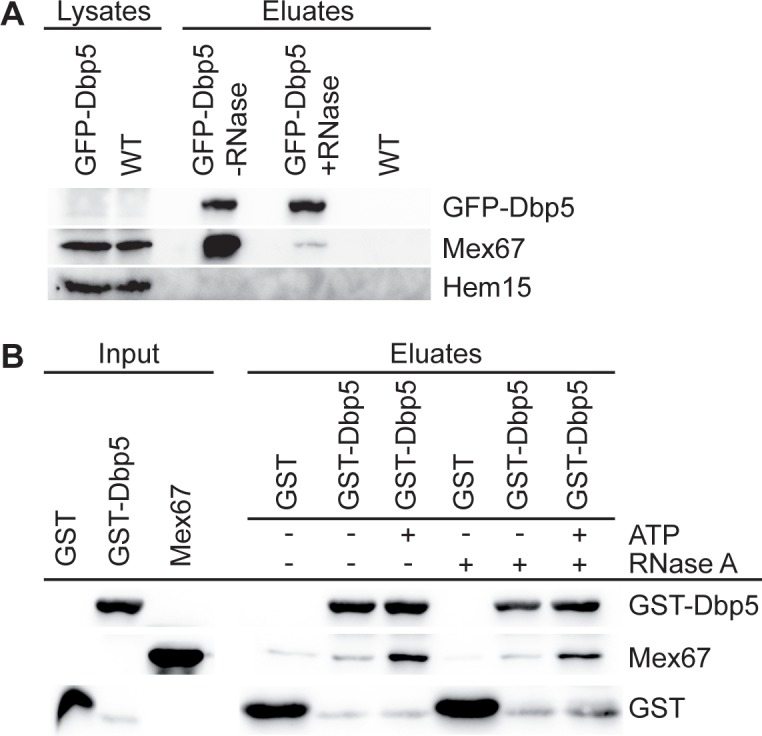
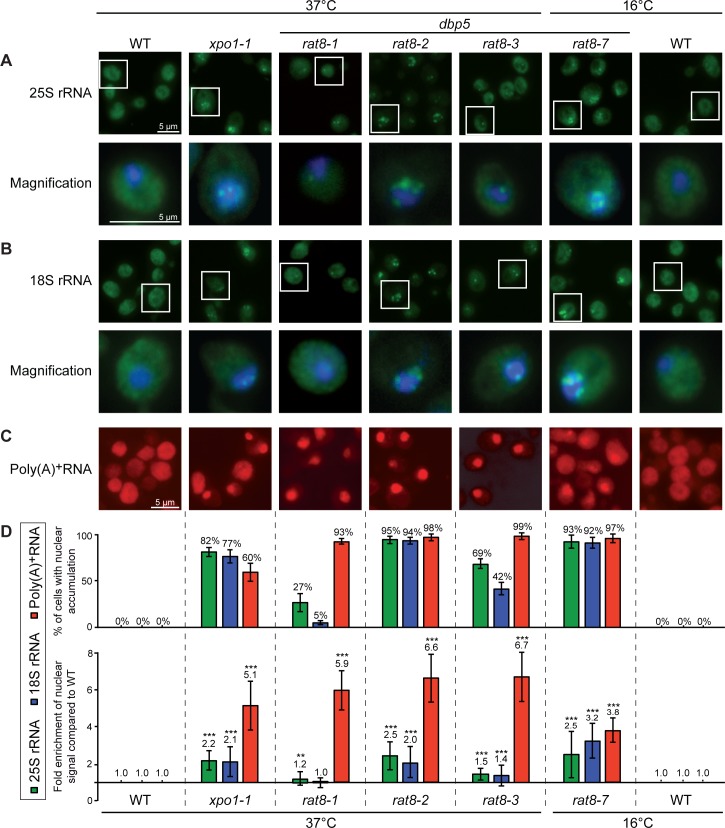
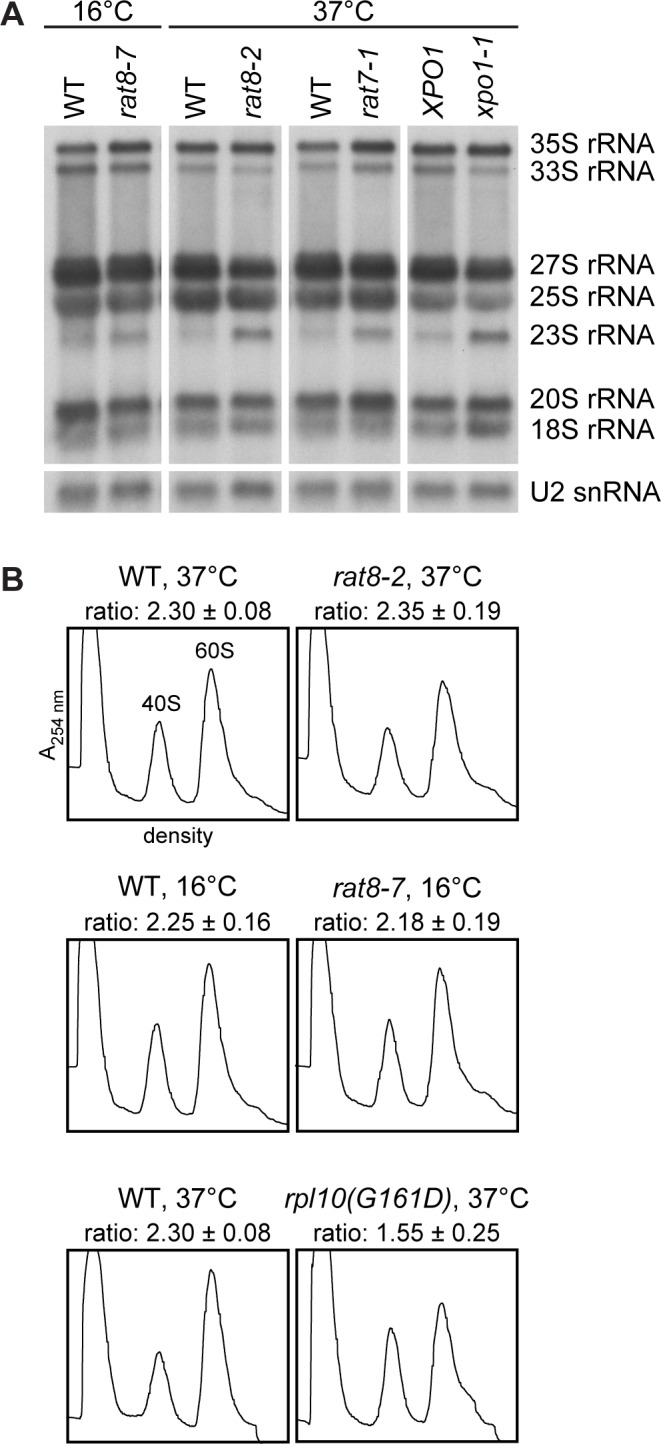
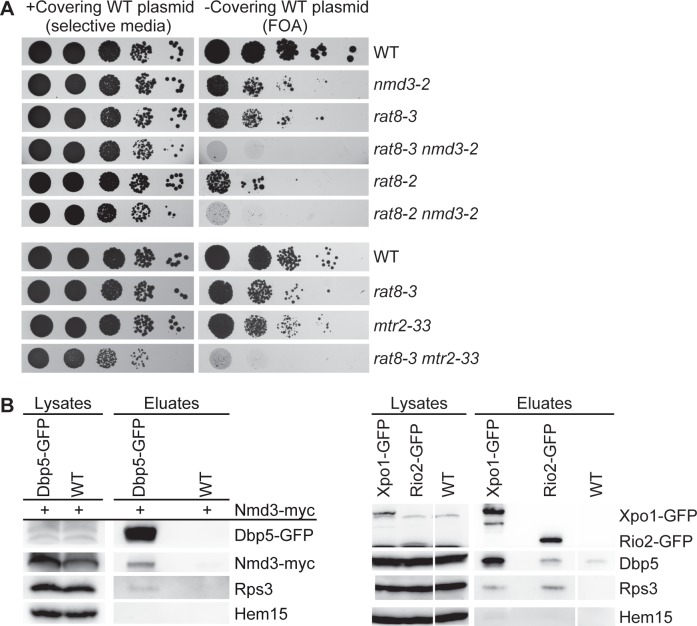
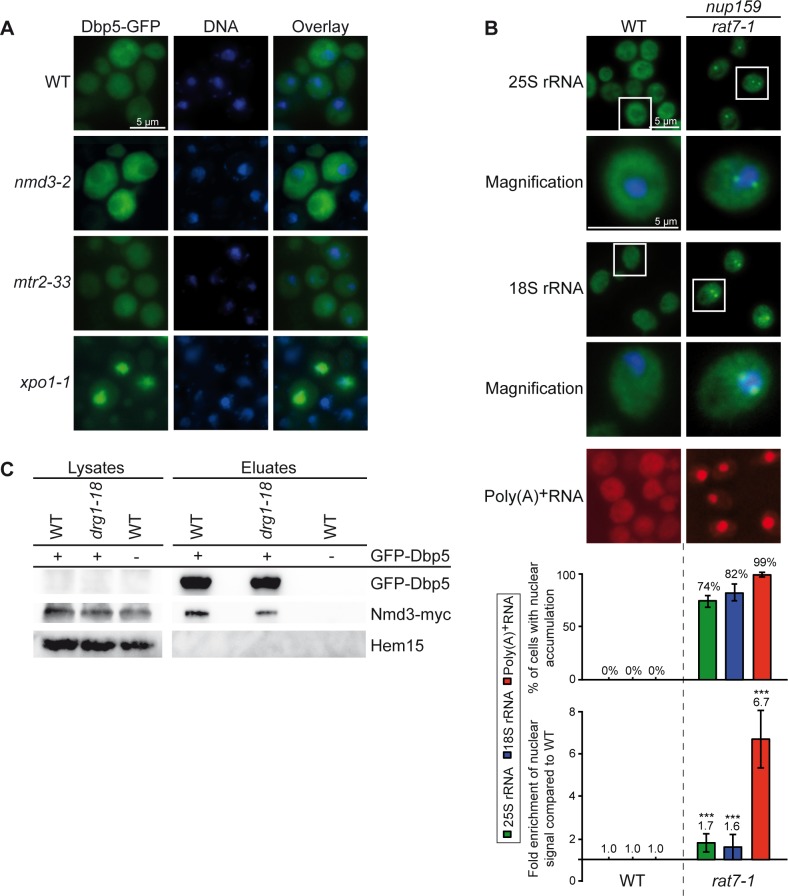
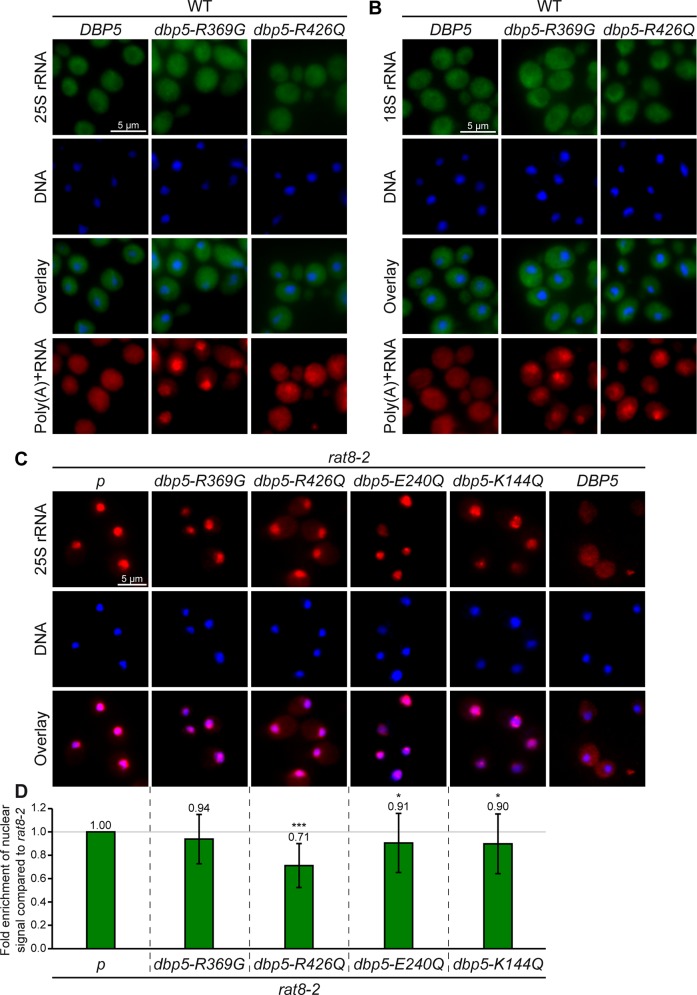
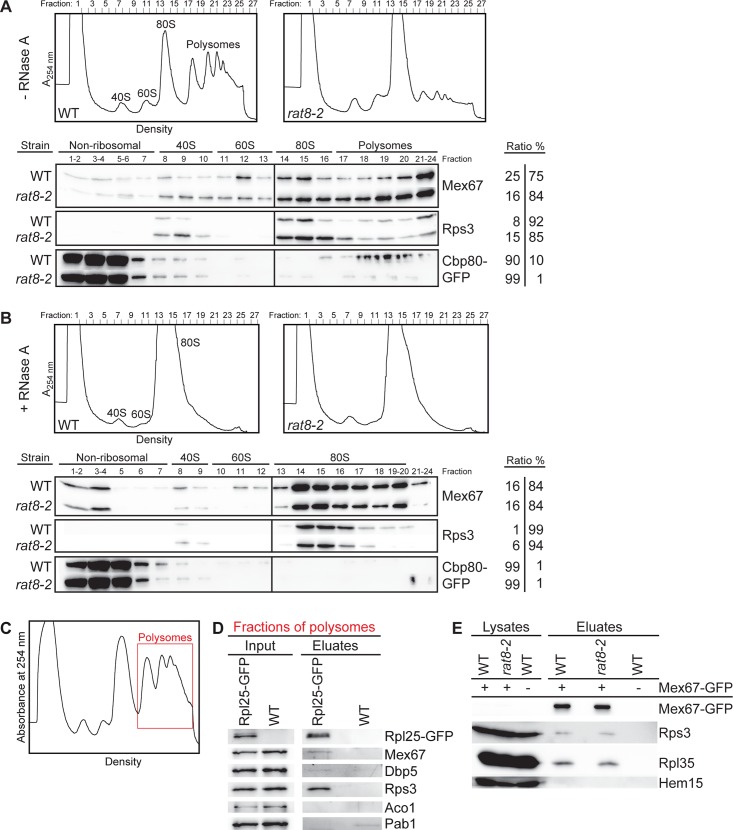
The DEAD-box RNA-helicase Dbp5/Rat8 is known for its function in nuclear mRNA export, where it displaces the export receptor Mex67 from the mRNA at the cytoplasmic side of the nuclear pore complex (NPC). Here we show that Dbp5 is also required for the nuclear export of both pre-ribosomal subunits. Yeast temperature-sensitive dbp5 mutants accumulate both ribosomal particles in their nuclei. Furthermore, Dbp5 genetically and physically interacts with known ribosomal transport factors such as Nmd3. Similar to mRNA export we show that also for ribosomal transport Dbp5 is required at the cytoplasmic side of the NPC. However, unlike its role in mRNA export, Dbp5 does not seem to undergo its ATPase cycle for this function, as ATPase-deficient dbp5 mutants that selectively inhibit mRNA export do not affect ribosomal transport. Furthermore, mutants of GLE1, the ATPase stimulating factor of Dbp5, show no major ribosomal export defects. Consequently, while Dbp5 uses its ATPase cycle to displace the export receptor Mex67 from the translocated mRNAs, Mex67 remains bound to ribosomal subunits upon transit to the cytoplasm, where it is detectable on translating ribosomes. Therefore, we propose a model, in which Dbp5 supports ribosomal transport by capturing ribosomal subunits upon their cytoplasmic appearance at the NPC, possibly by binding export factors such as Mex67. Thus, our findings reveal that although different ribonucleoparticles, mRNAs and pre-ribosomal subunits, use shared export factors, they utilize different transport mechanisms.
DEAD-box RNA解旋酶Dbp5/Rat8因其在核mRNA输出中的功能而闻名,在核孔复合体(NPC)的细胞质侧,它将输出受体Mex67从mRNA上置换下来。在这里,我们表明Dbp5对于核糖体亚基前体的核输出也是必需的。酵母温度敏感型dbp5突变体在其细胞核中积累了两种核糖体颗粒。此外,Dbp5在遗传和物理上与已知的核糖体转运因子如Nmd3相互作用。与mRNA输出类似,我们表明对于核糖体转运,Dbp5在NPC的细胞质侧也是必需的。然而,与它在mRNA输出中的作用不同,Dbp5似乎并没有为了这个功能而经历其ATP酶循环,因为选择性抑制mRNA输出的ATP酶缺陷型dbp5突变体并不影响核糖体转运。此外,Dbp5的ATP酶刺激因子GLE1的突变体没有显示出主要的核糖体输出缺陷。因此,虽然Dbp5利用其ATP酶循环从转运的mRNA上置换输出受体Mex67,但Mex67在转运到细胞质时仍然与核糖体亚基结合,在正在翻译的核糖体上可以检测到它。因此,我们提出了一个模型,其中Dbp5通过在核糖体亚基出现在NPC细胞质侧时捕获它们来支持核糖体转运,可能是通过结合诸如Mex67这样的输出因子。因此,我们的发现揭示了虽然不同的核糖核蛋白颗粒、mRNA和核糖体亚基前体使用共享的输出因子,但它们利用不同的转运机制。