Jumbe Marsden Emilia, Wa Somwe Somwe, Chabala Chishala, Soriano Joan B, Vallès Cesar Picado, Anchochea Julio
Pendleton Family Practice, P.O. Box 38049, Lusaka, Zambia.
Department of Paediatrics and Child Health, University Teaching Hospital, School of Medicine, University of Zambia, Lusaka, Zambia.
BMC Pulm Med. 2016 Feb 12;16:33. doi: 10.1186/s12890-016-0195-3.
Zambia is currently experiencing an epidemiological transition, from communicable to non-communicable diseases. The annual rate of physician-diagnosed asthma is estimated at 3 %. However, the general public's knowledge of asthma symptoms and signs, and their perception of asthma remain unknown. A survey was conducted aiming to determine knowledge and perceptions of asthma among Zambians.
Adults and adolescents attending four clinics in the capital, Lusaka, were surveyed using a standardized questionnaire from July 2011 to March 2012.
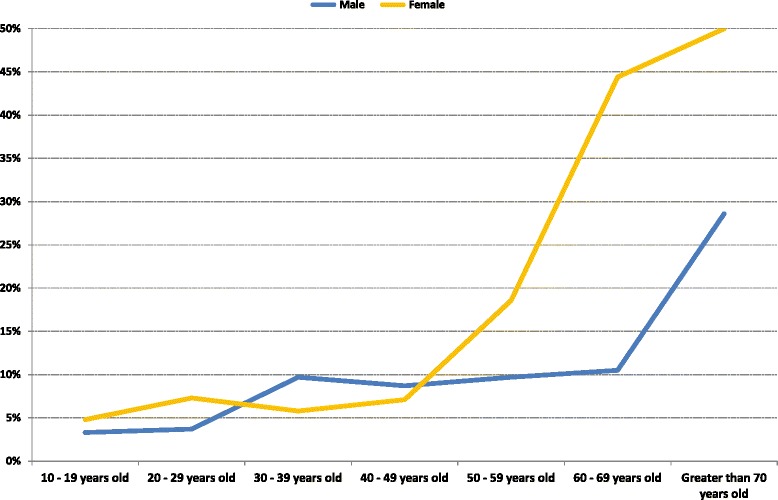
Data from 1,540 participants (mean age 30.7 years, 65% female) were collected. Most patients (74%) were living in low-cost housing. One hundred and sixteen (7.6%) participants reported either a medical diagnosis of asthma or currently taking asthma medications. The most frequent asthma symptoms reported were wheezing (88%), and waking up at night with either shortness of breath (85%), chest tightness (85%), or cough (67%). Medications used to treat asthma were mostly oral short-acting beta-agonists (SABA) (59%), inhaled SABA (30.2%) and antibiotics (29.8%). Inhaled steroids were only used by 16.4% while less than 1% were on long-acting beta-agonists (LABA). Many misconceptions were identified among the entire surveyed population with only 54.7% believing hospitalisations are not preventable, 54.7% believing asthma symptoms can be prevented with the right medications and 37% believing inhalers are addictive. Nearly 60% thought that people with asthma cannot exercise or play hard. Significantly more individuals with asthma compared to those without thought tablets are better than inhalers for the treatment of asthma (46% vs 30%).
We conclude that knowledge on asthma is poor in Zambia, where there remains many misconceptions on asthma and its management.
赞比亚目前正经历从传染病向非传染病的流行病学转变。据估计,医生诊断出的哮喘年发病率为3%。然而,公众对哮喘症状和体征的了解以及他们对哮喘的认知情况仍不为人知。开展了一项调查,旨在确定赞比亚人对哮喘的了解和认知。
2011年7月至2012年3月期间,使用标准化问卷对在首都卢萨卡的四家诊所就诊的成人和青少年进行了调查。
收集了1540名参与者(平均年龄30.7岁,65%为女性)的数据。大多数患者(74%)居住在低成本住房中。116名(7.6%)参与者报告有哮喘的医学诊断或目前正在服用哮喘药物。报告的最常见哮喘症状是喘息(88%),以及夜间因呼吸急促(85%)、胸闷(85%)或咳嗽(67%)而醒来。用于治疗哮喘的药物主要是口服短效β-激动剂(SABA)(59%)、吸入性SABA(30.2%)和抗生素(29.8%)。只有16.4%的人使用吸入性类固醇,而使用长效β-激动剂(LABA)的不到1%。在整个被调查人群中发现了许多误解,只有54.7%的人认为住院不可预防,54.7%的人认为正确用药可预防哮喘症状,37%的人认为吸入器会上瘾。近60%的人认为哮喘患者不能运动或剧烈玩耍。与没有哮喘的人相比,明显更多有哮喘的人认为片剂比吸入器更适合治疗哮喘(46%对30%)。
我们得出结论,赞比亚对哮喘的了解较差,在哮喘及其管理方面仍存在许多误解。