Fabris L, Berton S, Citron F, D'Andrea S, Segatto I, Nicoloso M S, Massarut S, Armenia J, Zafarana G, Rossi S, Ivan C, Perin T, Vaidya J S, Avanzo M, Roncadin M, Schiappacassi M, Bristow R G, Calin G, Baldassarre G, Belletti B
Division of Experimental Oncology 2, Department of Translational Research, CRO Aviano, National Cancer Institute, Aviano, Italy.
Princess Margaret Cancer Centre, Departments of Radiation Oncology and Medical Biophysics, University of Toronto, Toronto, Ontario, Canada.
Oncogene. 2016 Sep 15;35(37):4914-26. doi: 10.1038/onc.2016.23. Epub 2016 Feb 15.
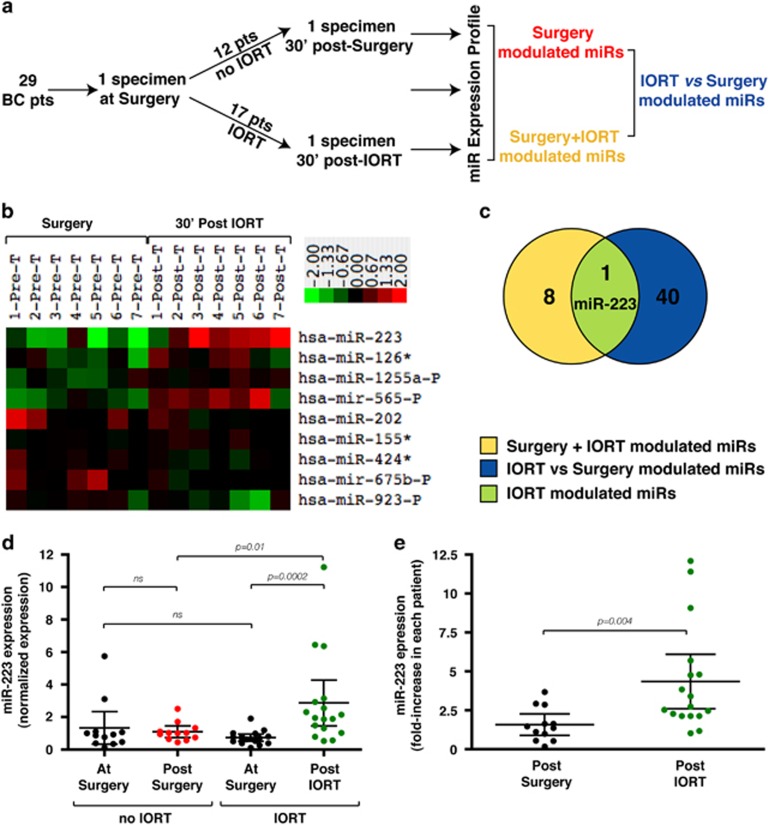
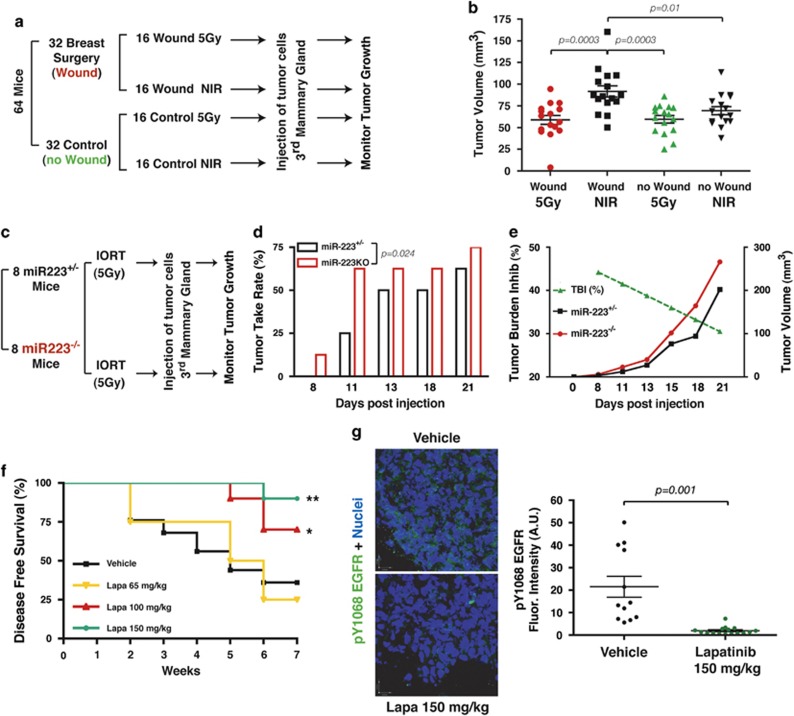
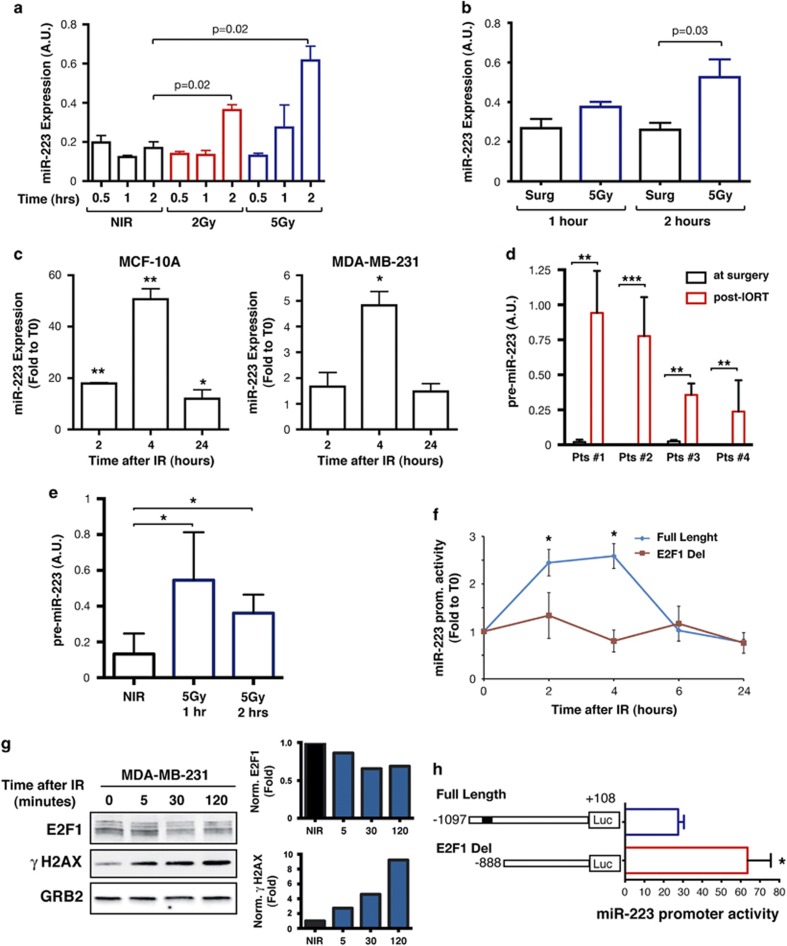
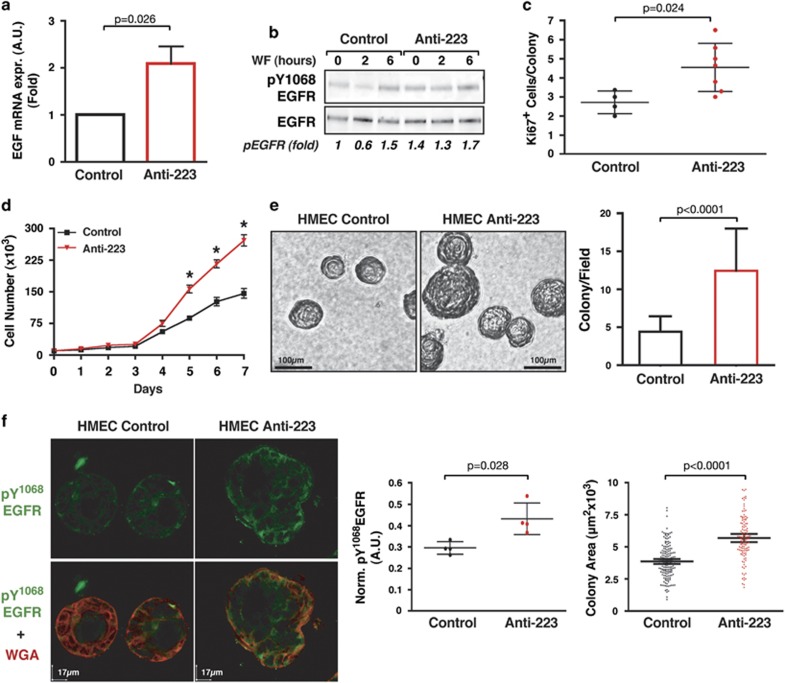
In breast cancer (BC) patients, local recurrences often arise in proximity of the surgical scar, suggesting that response to surgery may have a causative role. Radiotherapy (RT) after lumpectomy significantly reduces the risk of recurrence. We investigated the direct effects of surgery and of RT delivered intraoperatively (IORT), by collecting irradiated and non-irradiated breast tissues from BC patients, after tumor removal. These breast tissue specimens have been profiled for their microRNA (miR) expression, in search of differentially expressed miR among patients treated or not with IORT. Our results demonstrate that IORT elicits effects that go beyond the direct killing of residual tumor cells. IORT altered the wound response, inducing the expression of miR-223 in the peri-tumoral breast tissue. miR-223 downregulated the local expression of epidermal growth factor (EGF), leading to decreased activation of EGF receptor (EGFR) on target cells and, eventually, dampening a positive EGF-EGFR autocrine/paracrine stimulation loop induced by the post-surgical wound-healing response. Accordingly, both RT-induced miR-223 and peri-operative inhibition of EGFR efficiently prevented BC cell growth and reduced recurrence formation in mouse models of BC. Our study uncovers unknown effects of RT delivered on a wounded tissue and prompts to the use of anti-EGFR treatments, in a peri-operative treatment schedule, aimed to timely treat BC patients and restrain recurrence formation.
在乳腺癌(BC)患者中,局部复发常出现在手术瘢痕附近,这表明对手术的反应可能起了致病作用。保乳手术后进行放疗(RT)可显著降低复发风险。我们通过收集BC患者肿瘤切除后接受照射和未接受照射的乳腺组织,研究了手术及术中放疗(IORT)的直接作用。对这些乳腺组织标本进行了微小RNA(miR)表达谱分析,以寻找接受或未接受IORT治疗患者中差异表达的miR。我们的结果表明,IORT产生的效应超出了直接杀死残留肿瘤细胞的范围。IORT改变了伤口反应,诱导肿瘤周围乳腺组织中miR-223的表达。miR-223下调了表皮生长因子(EGF)的局部表达,导致靶细胞上EGF受体(EGFR)的激活减少,并最终减弱了手术伤口愈合反应诱导的正向EGF-EGFR自分泌/旁分泌刺激环。因此,放疗诱导的miR-223和围手术期对EGFR的抑制均能有效阻止BC细胞生长,并减少BC小鼠模型中的复发形成。我们的研究揭示了对受伤组织进行放疗的未知效应,并促使在围手术期治疗方案中使用抗EGFR治疗,旨在及时治疗BC患者并抑制复发形成。