Anh Ji-Won, Park Ji-Man, Chun Youn-Sic, Kim Miae, Kim Minji
Department of Orthodontics, Graduate School of Clinical Dentistry, Ewha Womans University, Seoul, Korea.
Department of Prosthodontics and Dental Research Institute, Seoul National University Gwanak Dental Hospital, Seoul, Korea.
Korean J Orthod. 2016 Jan;46(1):3-12. doi: 10.4041/kjod.2016.46.1.3. Epub 2016 Jan 25.
The purpose of this study was to compare the precision of three-dimensional (3D) images acquired using iTero® (Align Technology Inc., San Jose, CA, USA) and Trios® (3Shape Dental Systems, Copenhagen, Denmark) digital intraoral scanners, and to evaluate the effects of the severity of tooth irregularities and scanning sequence on precision.
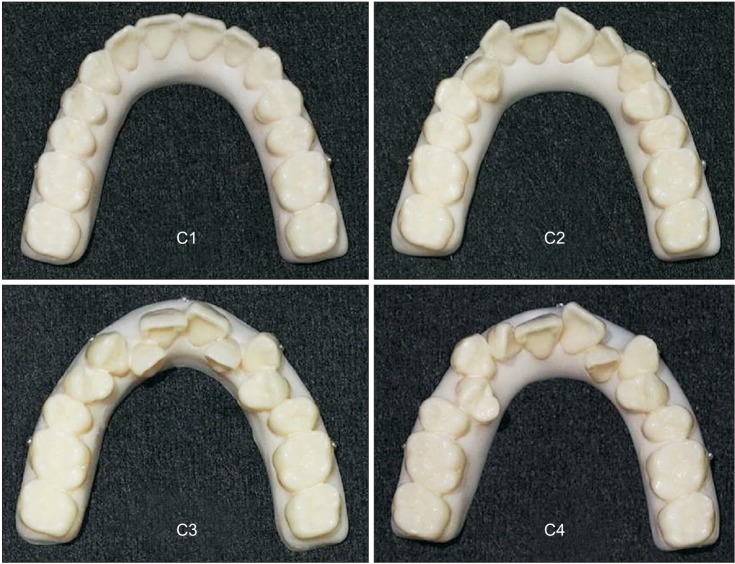
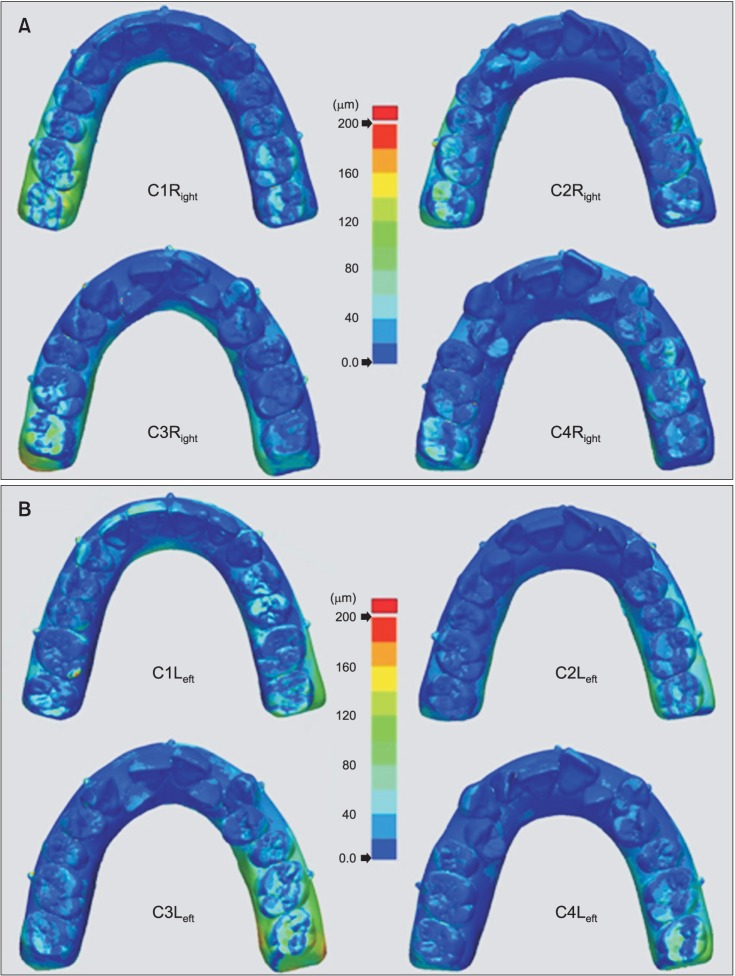
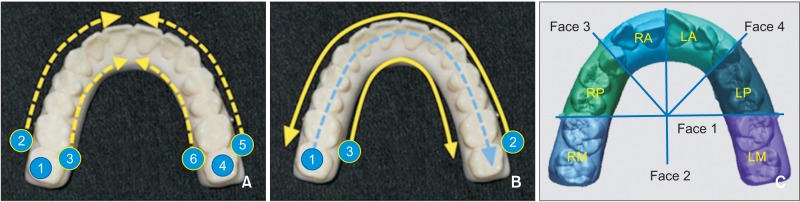
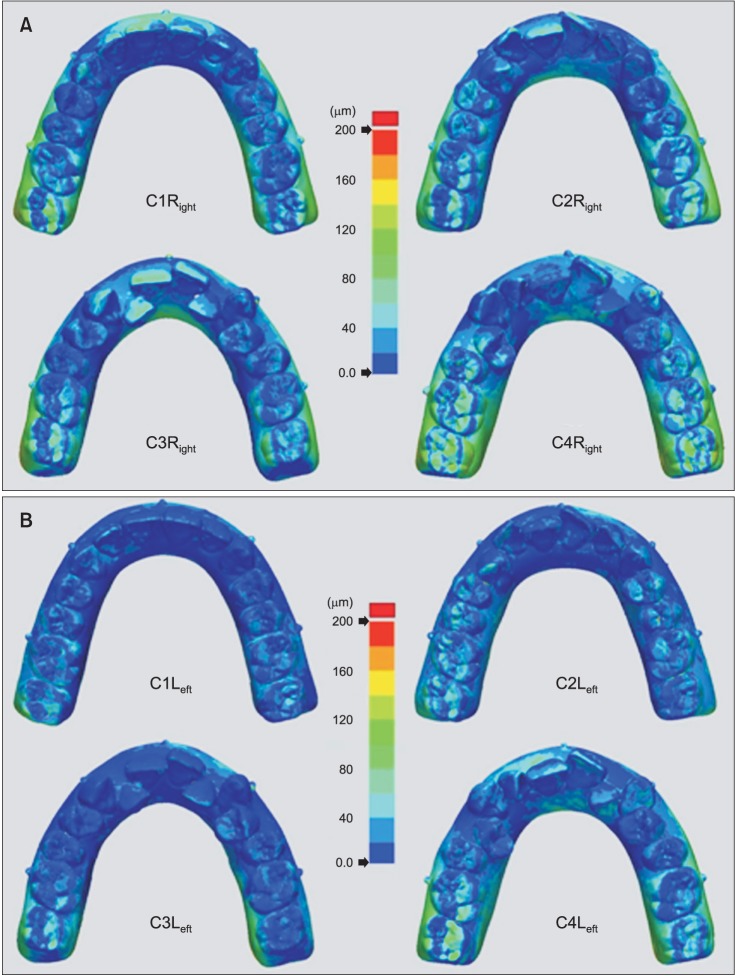
Dental arch models were fabricated with differing degrees of tooth irregularity and divided into 2 groups based on scanning sequence. To assess their precision, images were superimposed and an optimized superimposition algorithm was employed to measure any 3D deviation. The t-test, paired t-test, and one-way ANOVA were performed (p < 0.05) for statistical analysis.
The iTero® and Trios® systems showed no statistically significant difference in precision among models with differing degrees of tooth irregularity. However, there were statistically significant differences in the precision of the 2 scanners when the starting points of scanning were different. The iTero® scanner (mean deviation, 29.84 ± 12.08 µm) proved to be less precise than the Trios® scanner (22.17 ± 4.47 µm).
The precision of 3D images differed according to the degree of tooth irregularity, scanning sequence, and scanner type. However, from a clinical standpoint, both scanners were highly accurate regardless of the degree of tooth irregularity.
本研究旨在比较使用iTero®(美国加利福尼亚州圣何塞市Align Technology公司)和Trios®(丹麦哥本哈根3Shape Dental Systems公司)数字口内扫描仪获取的三维(3D)图像的精度,并评估牙齿不规则程度和扫描顺序对精度的影响。
制作具有不同程度牙齿不规则的牙弓模型,并根据扫描顺序分为2组。为评估其精度,将图像进行叠加,并采用优化的叠加算法测量任何三维偏差。进行t检验、配对t检验和单因素方差分析(p<0.05)用于统计分析。
iTero®和Trios®系统在不同程度牙齿不规则的模型之间精度无统计学显著差异。然而,当扫描起点不同时,两种扫描仪的精度存在统计学显著差异。iTero®扫描仪(平均偏差,29.84±12.08µm)被证明比Trios®扫描仪(22.17±4.47µm)精度更低。
三维图像的精度因牙齿不规则程度、扫描顺序和扫描仪类型而异。然而,从临床角度来看,无论牙齿不规则程度如何,两种扫描仪都具有高度准确性。