Gupta Yask, Möller Steffen, Witte Mareike, Belheouane Meriem, Sezin Tanya, Hirose Misa, Vorobyev Artem, Niesar Felix, Bischof Julia, Ludwig Ralf J, Zillikens Detlef, Sadik Christian D, Restle Tobias, Häsler Robert, Baines John F, Ibrahim Saleh M
Lübeck Institute of Experimental Dermatology, University of Lübeck, Lübeck, Germany.
Max Planck Institute for Evolutionary Biology, Plön, Germany and Institute for Experimental Medicine, University of Kiel, Kiel, Germany.
BMC Genomics. 2016 Feb 16;17:112. doi: 10.1186/s12864-016-2455-2.
MicroRNAs (miRNAs) are small endogenous non-coding RNAs that control genes at post-transcriptional level. They are essential for development and tissue differentiation, and such altered miRNA expression patterns are linked to the pathogenesis of inflammation and cancer. There is evidence that miRNA expression is genetically controlled similar to the transcription of protein-coding genes and previous studies identified quantitative trait loci (QTL) for miRNA expression in the liver. So far, little attention has been paid to miRNA expression in the skin. Moreover, epistatic control of miRNA expression remains unknown. In this study, we characterize genetic regulation of cutaneous miRNA and their correlation with skin inflammation using a previously established murine autoimmune-prone advanced intercross line.
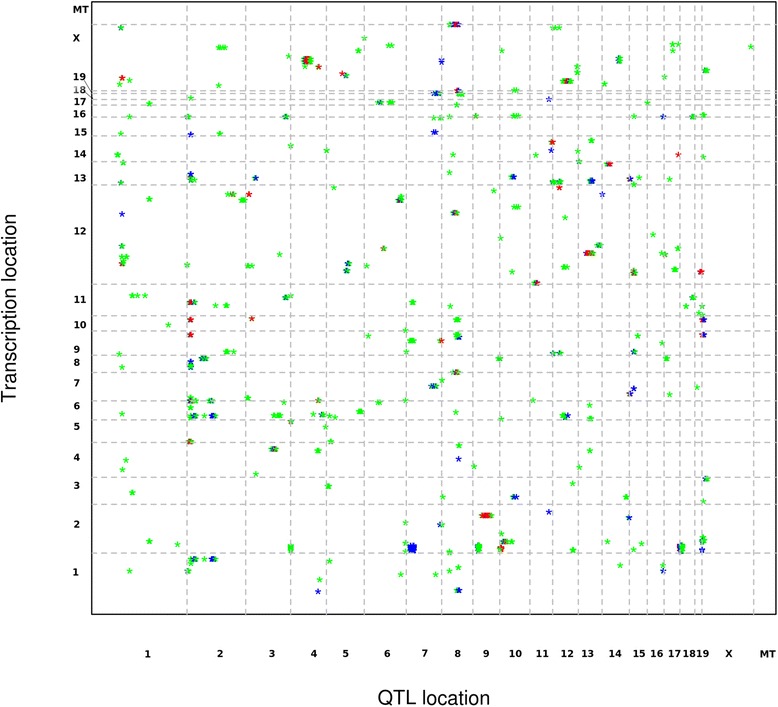
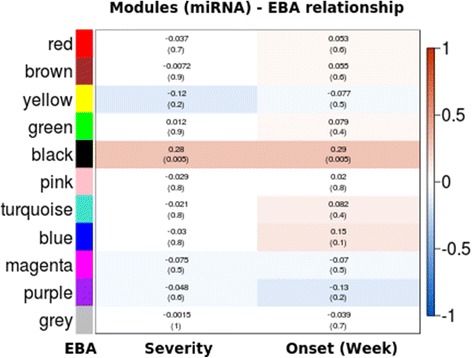
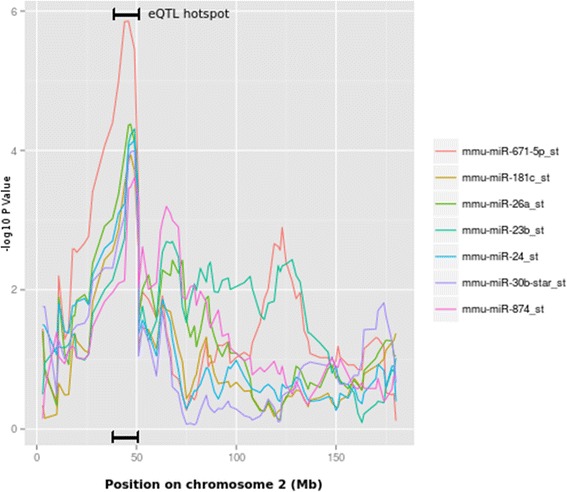
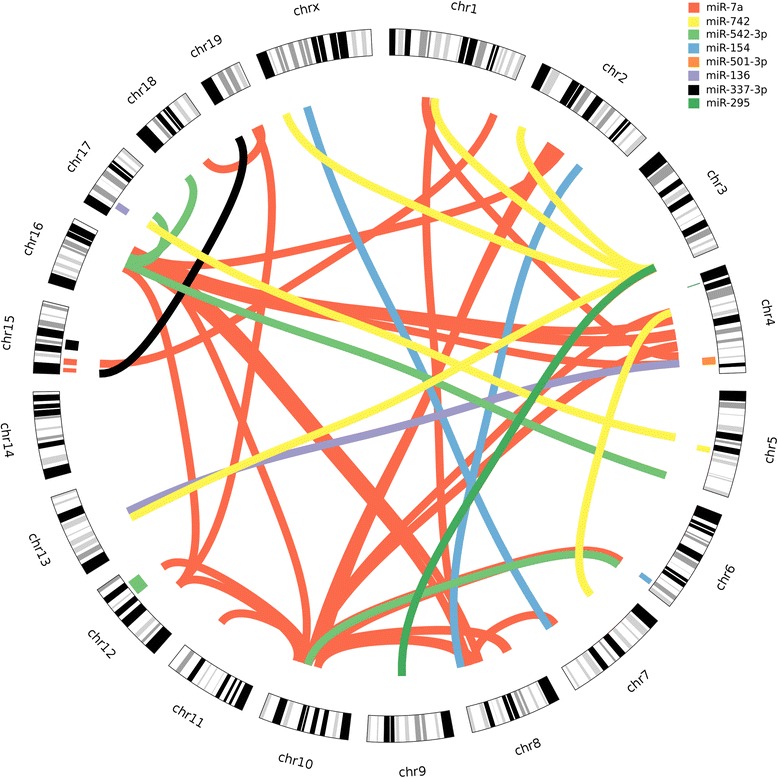
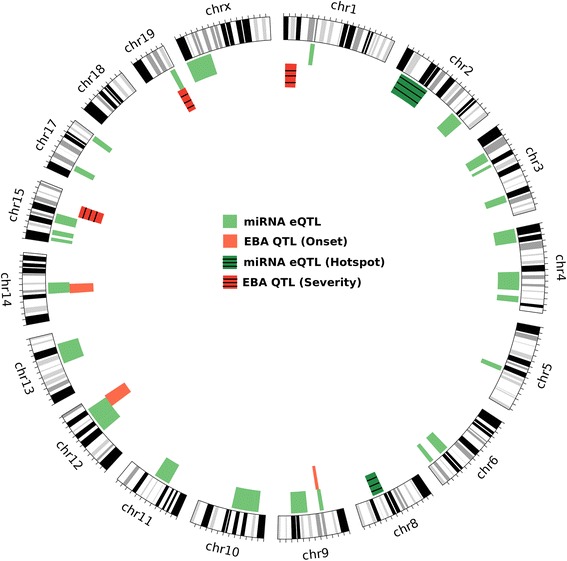
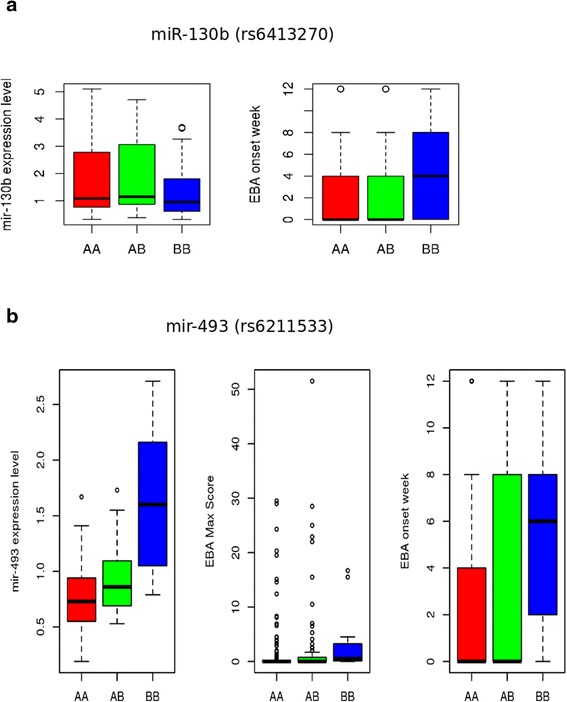
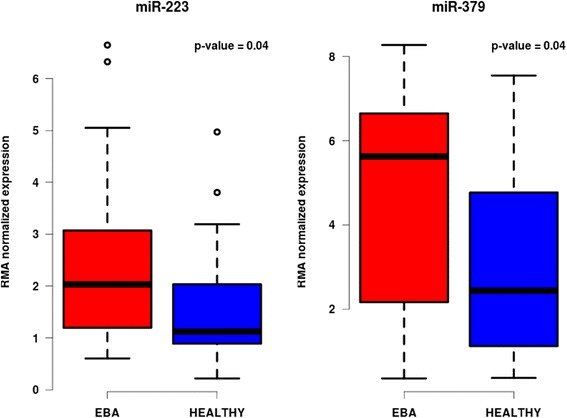
We identified in silico 42 eQTL controlling the expression of 38 cutaneous miRNAs and furthermore found two chromosomal hot-spots on chromosomes 2 and 8 that control the expression of multiple miRNAs. Moreover, for 8 miRNAs an interacting effect from pairs of SNPs was observed. Combining the constraints on genes from the statistical interaction of their loci and further using curated protein interaction networks, the number of candidate genes for association of miRNAs was reduced to a set of several genes. A cluster analysis identified miR-379 and miR-223 to be associated with EBA severity/onset, where miR-379 was observed to be associated to loci on chromosome 6.
The murine advanced intercross line allowed us to identify the genetic loci regulating multiple miRNA in skin. The recurrence of trans-eQTL and epistasis suggest that cutaneous miRNAs are regulated by yet an unexplored complex gene networks. Further, using co-expression analysis of miRNA expression levels we showed that multiple miRNA contribute to multiple pathways that might be involved in pathogenesis of autoimmune skin blistering disease. Specifically, we provide evidence that miRNA such as miR-223 and miR-379 may play critical role in disease progression and severity.
微小RNA(miRNA)是一类小的内源性非编码RNA,可在转录后水平调控基因。它们对于发育和组织分化至关重要,而这种miRNA表达模式的改变与炎症和癌症的发病机制相关。有证据表明,miRNA表达受遗传控制,类似于蛋白质编码基因的转录,并且先前的研究已确定了肝脏中miRNA表达的数量性状位点(QTL)。到目前为止,皮肤中miRNA的表达很少受到关注。此外,miRNA表达的上位性控制仍不清楚。在本研究中,我们使用先前建立的易患自身免疫的小鼠高级杂交系,对皮肤miRNA的遗传调控及其与皮肤炎症的相关性进行了表征。
我们通过计算机分析鉴定出42个eQTL,可控制38种皮肤miRNA的表达,此外还在2号和8号染色体上发现了两个染色体热点,可控制多种miRNA的表达。此外,对于8种miRNA,观察到SNP对之间的相互作用。结合来自其基因座统计相互作用对基因的限制,并进一步使用经过整理的蛋白质相互作用网络,将与miRNA相关的候选基因数量减少到一组几个基因。聚类分析确定miR-379和miR-223与EBA严重程度/发病相关,其中观察到miR-379与6号染色体上的基因座相关。
小鼠高级杂交系使我们能够鉴定出调节皮肤中多种miRNA的遗传位点。反式eQTL和上位性的重现表明,皮肤miRNA受尚未探索的复杂基因网络调控。此外,通过对miRNA表达水平进行共表达分析,我们表明多种miRNA参与了可能与自身免疫性皮肤水疱病发病机制有关的多种途径。具体而言,我们提供证据表明,诸如miR-223和miR-379之类的miRNA可能在疾病进展和严重程度中起关键作用。