Montagner Alexandra, Korecka Agata, Polizzi Arnaud, Lippi Yannick, Blum Yuna, Canlet Cécile, Tremblay-Franco Marie, Gautier-Stein Amandine, Burcelin Rémy, Yen Yi-Chun, Je Hyunsoo Shawn, Al-Asmakh Maha, Mithieux Gilles, Arulampalam Velmurugesan, Lagarrigue Sandrine, Guillou Hervé, Pettersson Sven, Wahli Walter
INRA ToxAlim, UMR1331, Chemin de Tournefeuille, Toulouse Cedex, France.
Department of Microbiology, Tumor and Cell Biology (MTC), Karolinska Institutet, Stockholm, Sweden.
Sci Rep. 2016 Feb 16;6:20127. doi: 10.1038/srep20127.
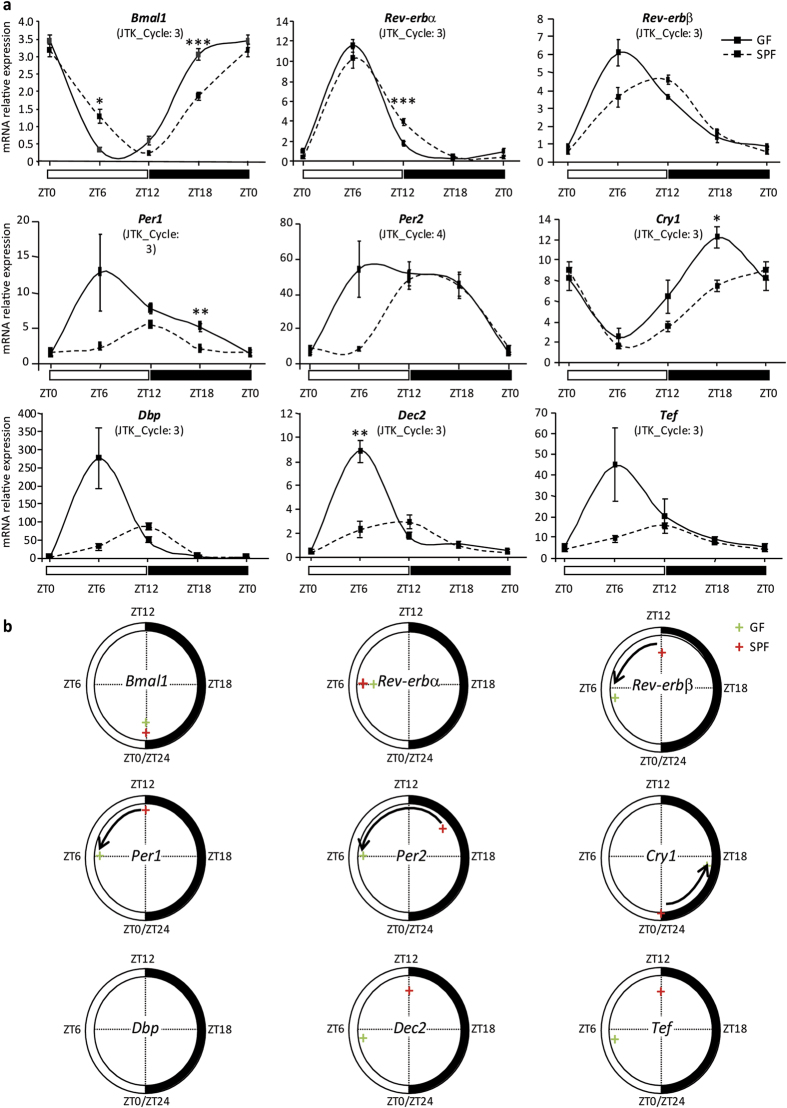
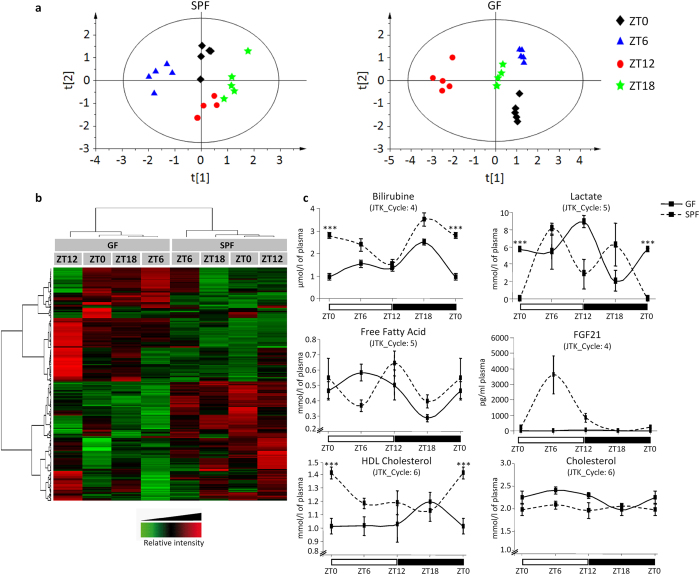
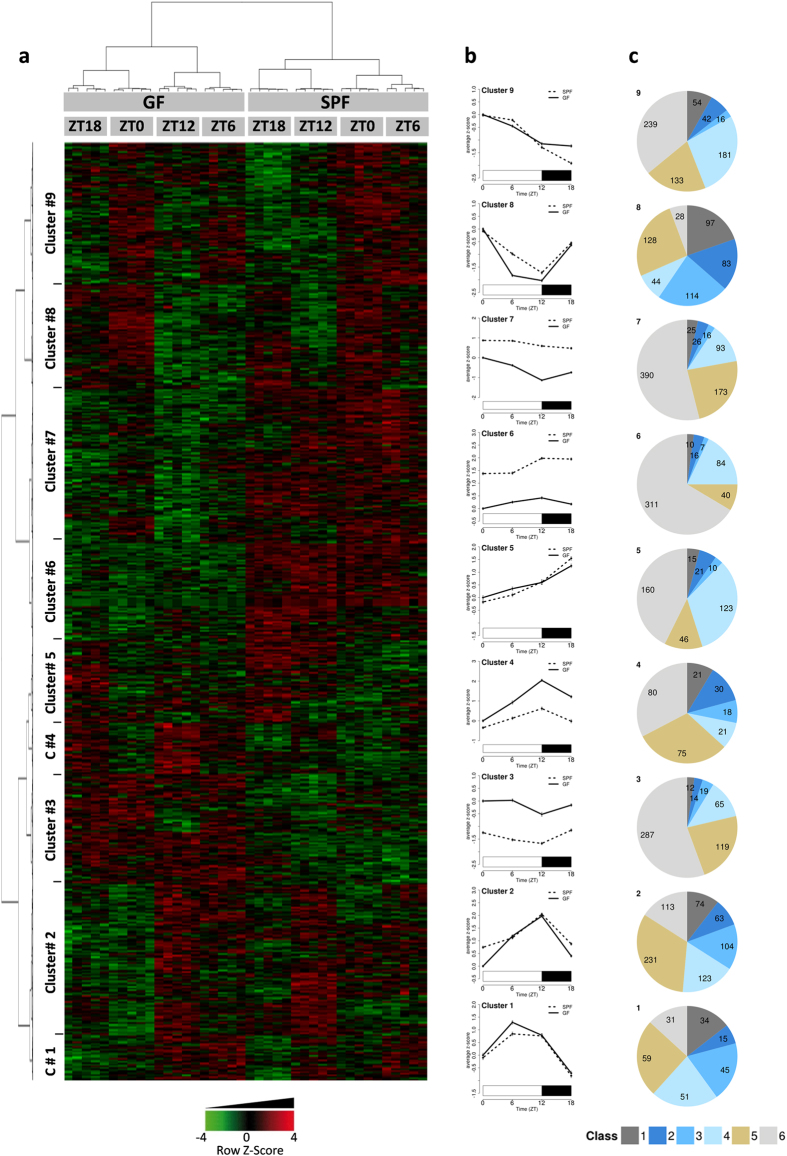
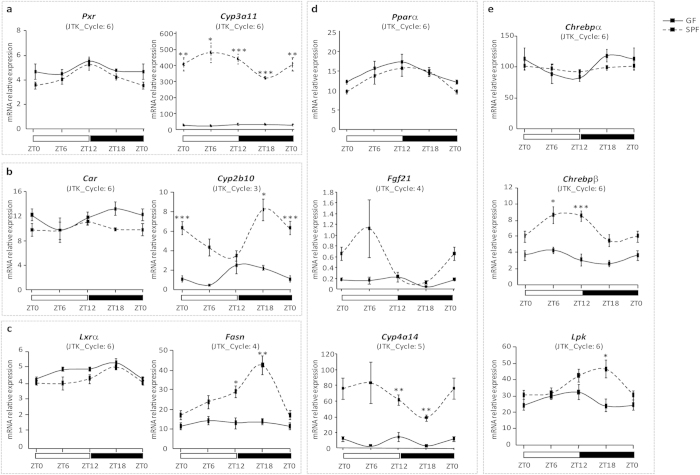
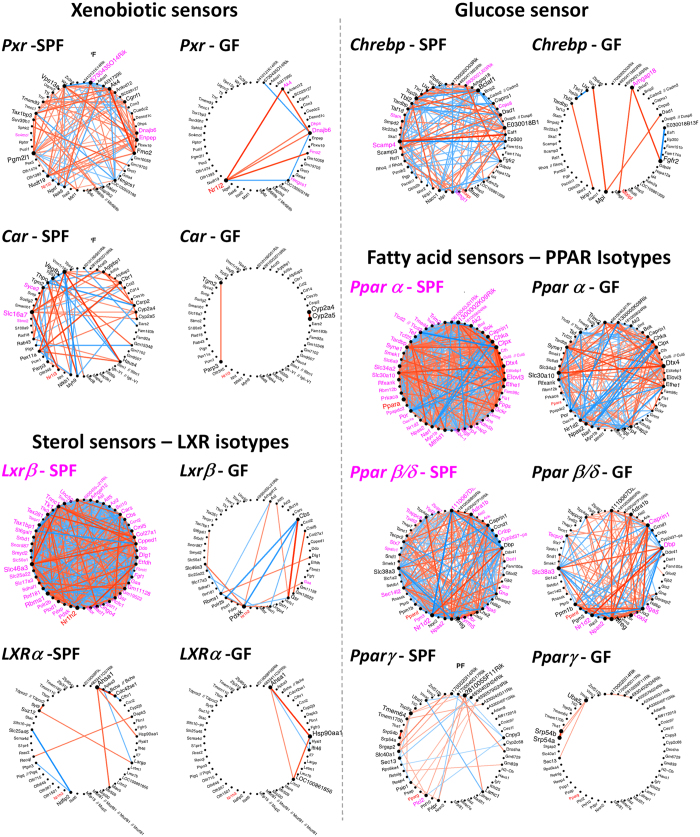
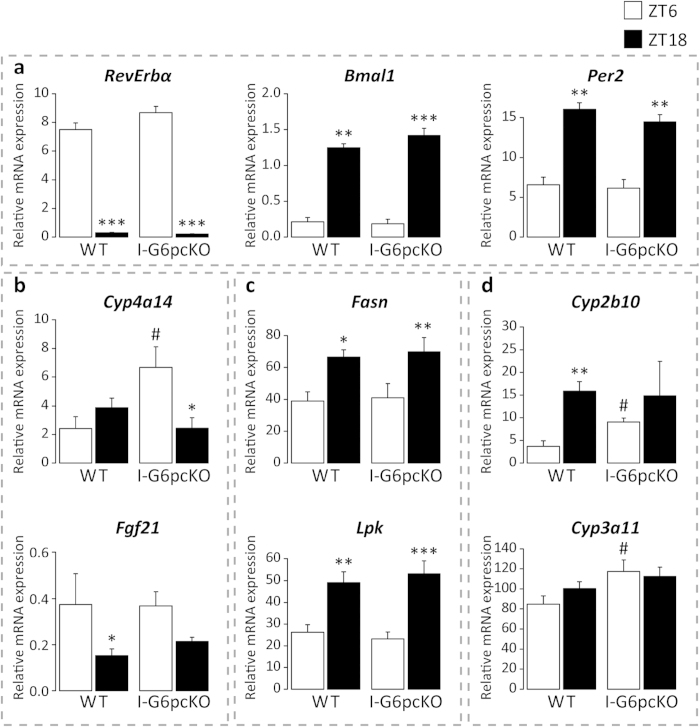
The liver is a key organ of metabolic homeostasis with functions that oscillate in response to food intake. Although liver and gut microbiome crosstalk has been reported, microbiome-mediated effects on peripheral circadian clocks and their output genes are less well known. Here, we report that germ-free (GF) mice display altered daily oscillation of clock gene expression with a concomitant change in the expression of clock output regulators. Mice exposed to microbes typically exhibit characterized activities of nuclear receptors, some of which (PPARα, LXRβ) regulate specific liver gene expression networks, but these activities are profoundly changed in GF mice. These alterations in microbiome-sensitive gene expression patterns are associated with daily alterations in lipid, glucose, and xenobiotic metabolism, protein turnover, and redox balance, as revealed by hepatic metabolome analyses. Moreover, at the systemic level, daily changes in the abundance of biomarkers such as HDL cholesterol, free fatty acids, FGF21, bilirubin, and lactate depend on the microbiome. Altogether, our results indicate that the microbiome is required for integration of liver clock oscillations that tune output activators and their effectors, thereby regulating metabolic gene expression for optimal liver function.
肝脏是代谢稳态的关键器官,其功能会随着食物摄入而发生振荡。尽管已有报道称肝脏与肠道微生物群存在相互作用,但微生物群对外周生物钟及其输出基因的影响却鲜为人知。在此,我们报告无菌(GF)小鼠的生物钟基因表达的每日振荡发生改变,同时生物钟输出调节因子的表达也发生了变化。暴露于微生物的小鼠通常表现出核受体的特征性活性,其中一些(PPARα、LXRβ)调节特定的肝脏基因表达网络,但这些活性在GF小鼠中发生了深刻变化。肝脏代谢组分析显示,这些微生物群敏感基因表达模式的改变与脂质、葡萄糖和外源性物质代谢、蛋白质周转以及氧化还原平衡的每日变化有关。此外,在系统水平上,诸如高密度脂蛋白胆固醇、游离脂肪酸、FGF21、胆红素和乳酸等生物标志物丰度的每日变化取决于微生物群。总之,我们的结果表明,微生物群是整合肝脏生物钟振荡所必需的,肝脏生物钟振荡可调节输出激活因子及其效应器,从而调节代谢基因表达以实现最佳肝脏功能。