Department of Medicine and.
Committee on Molecular Metabolism and Nutrition, The University of Chicago, Chicago, Illinois, USA.
J Clin Invest. 2023 Sep 15;133(18):e162515. doi: 10.1172/JCI162515.
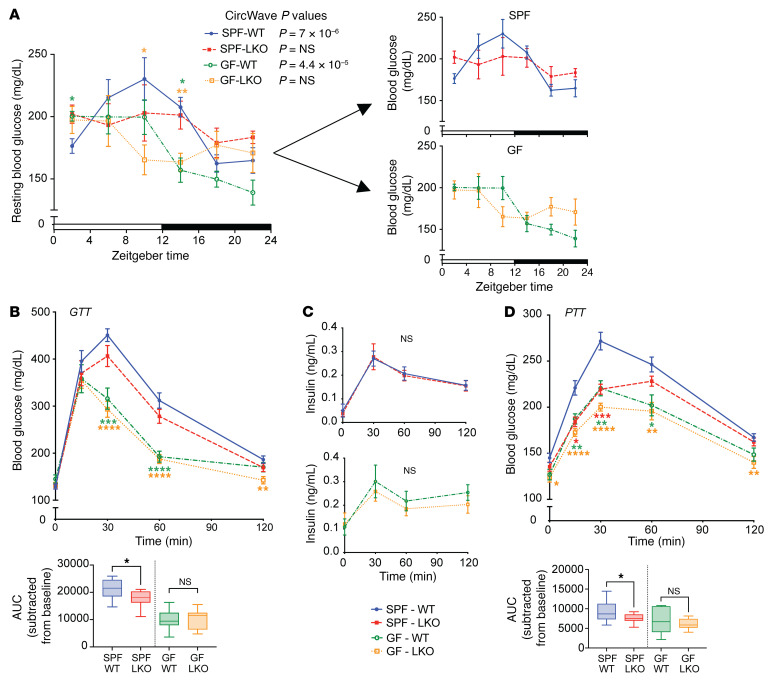
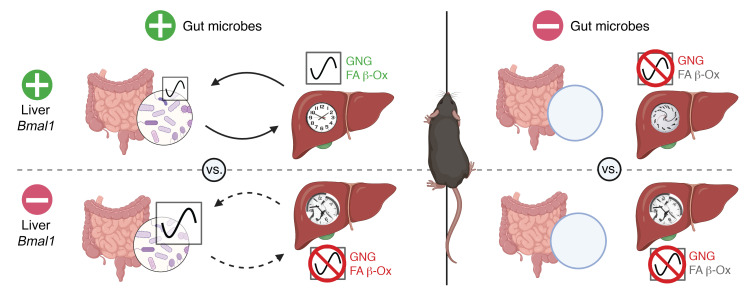
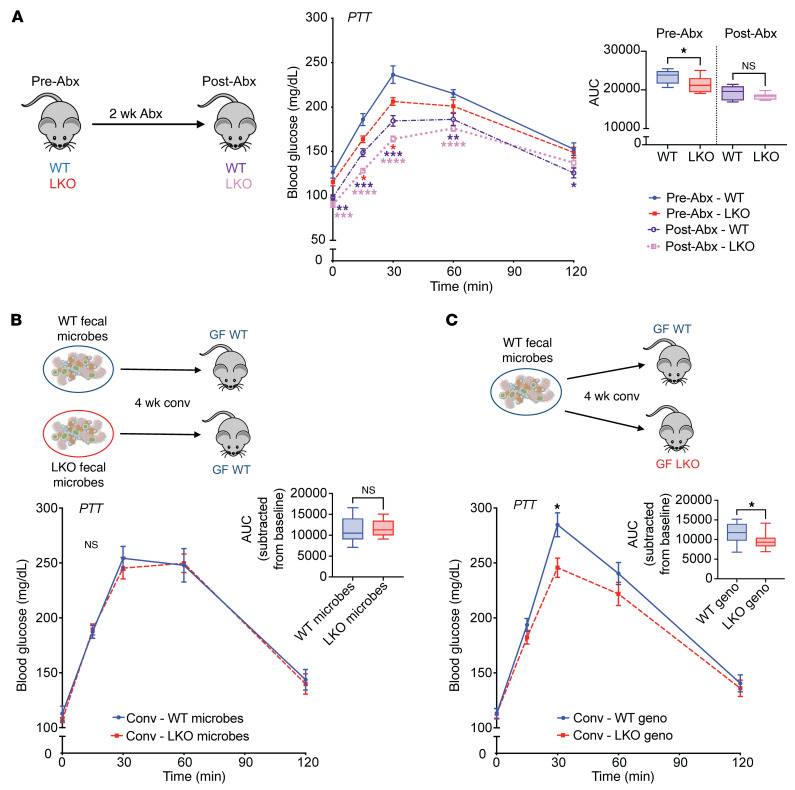
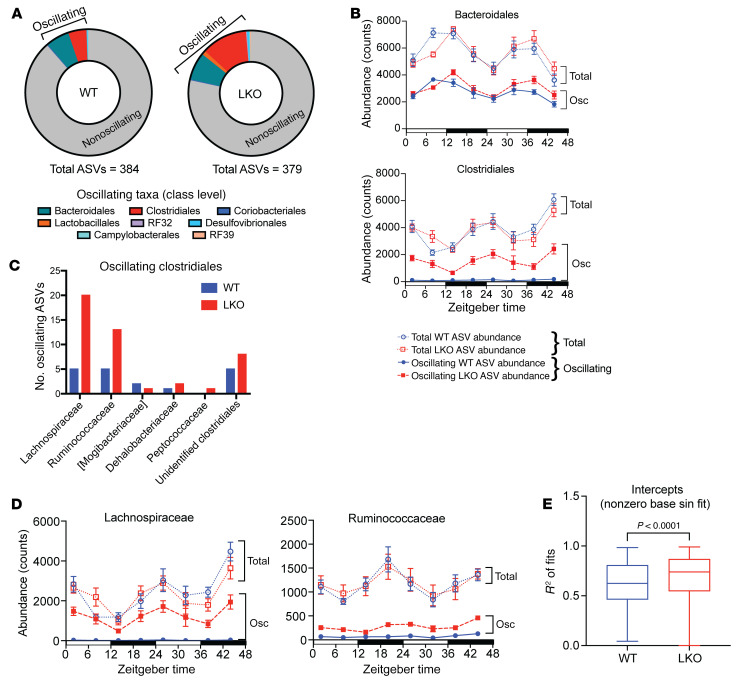
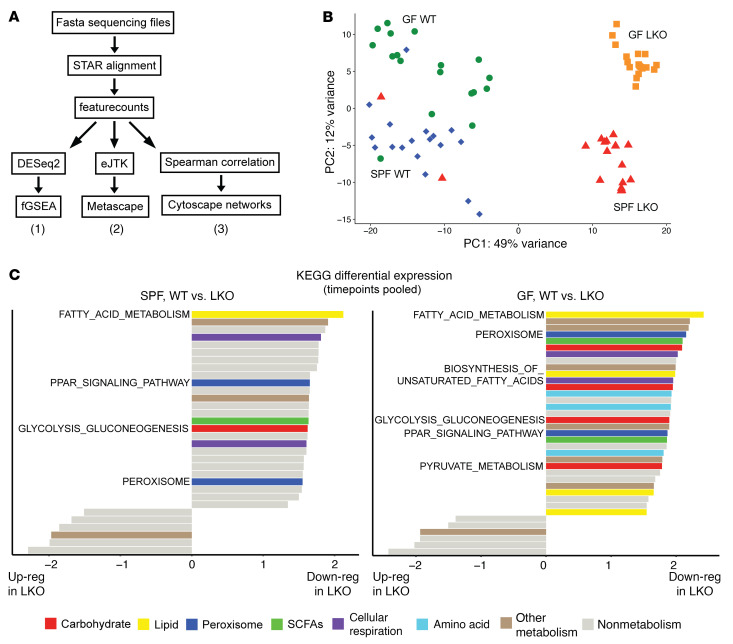
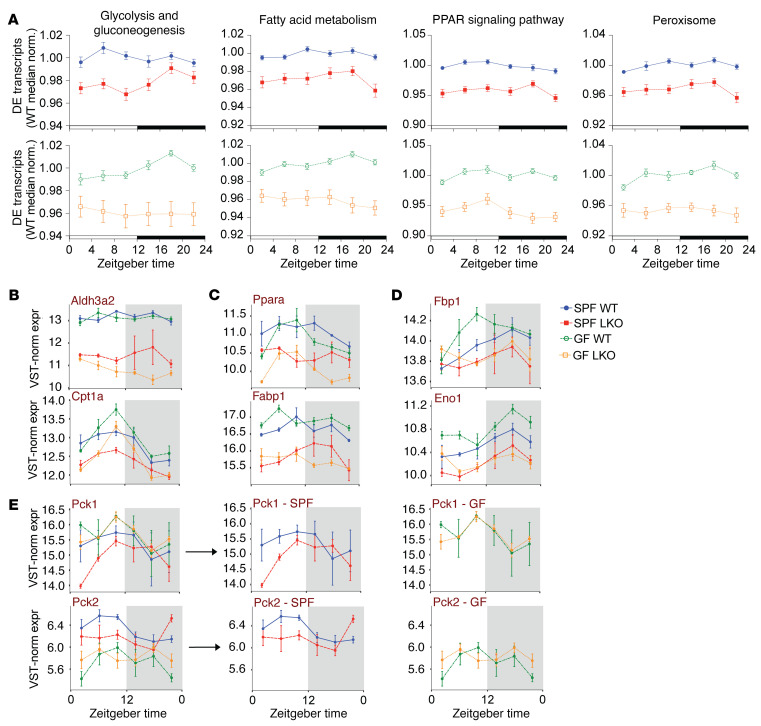
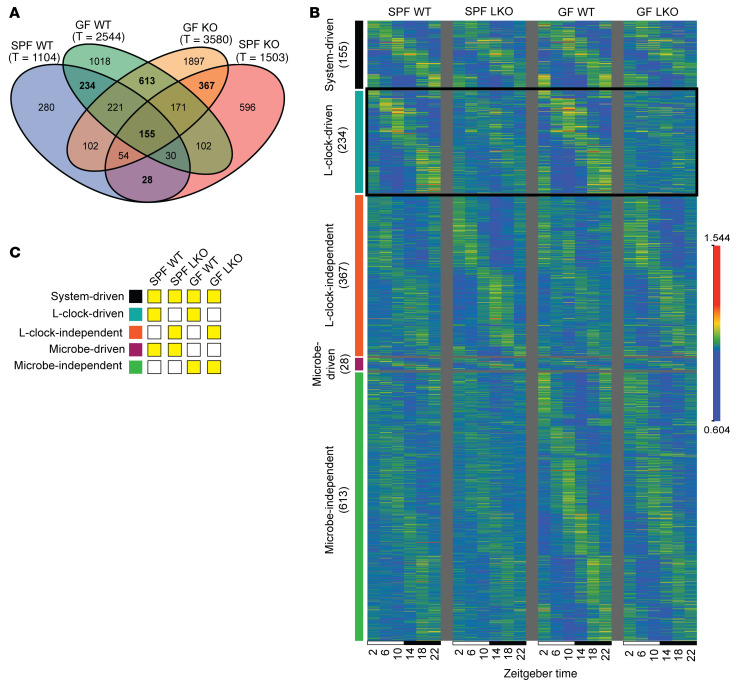
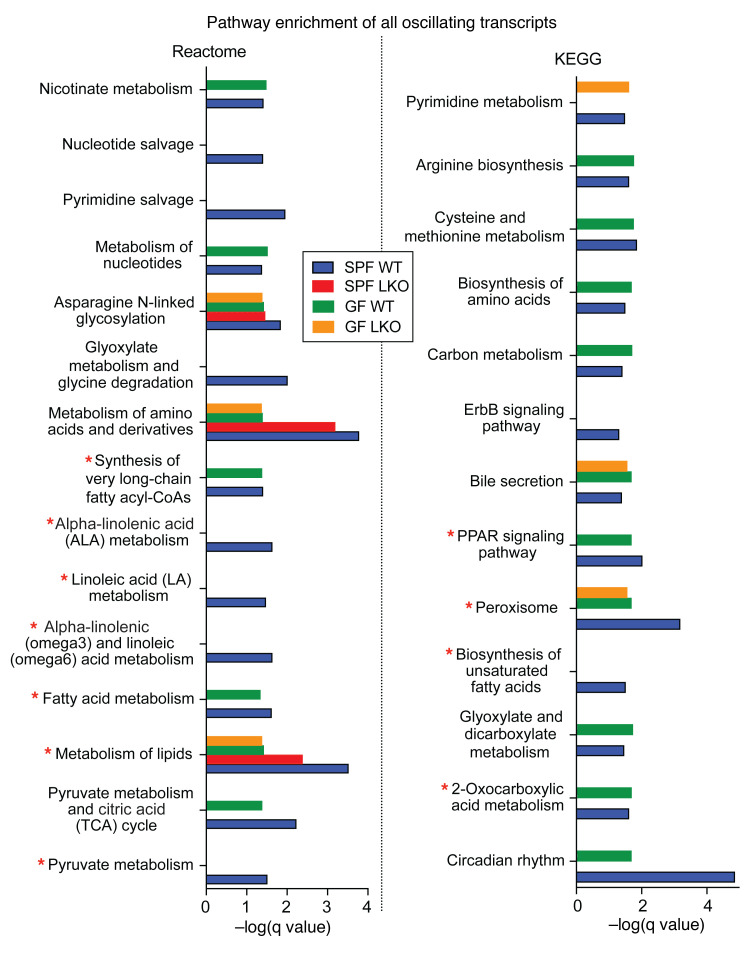
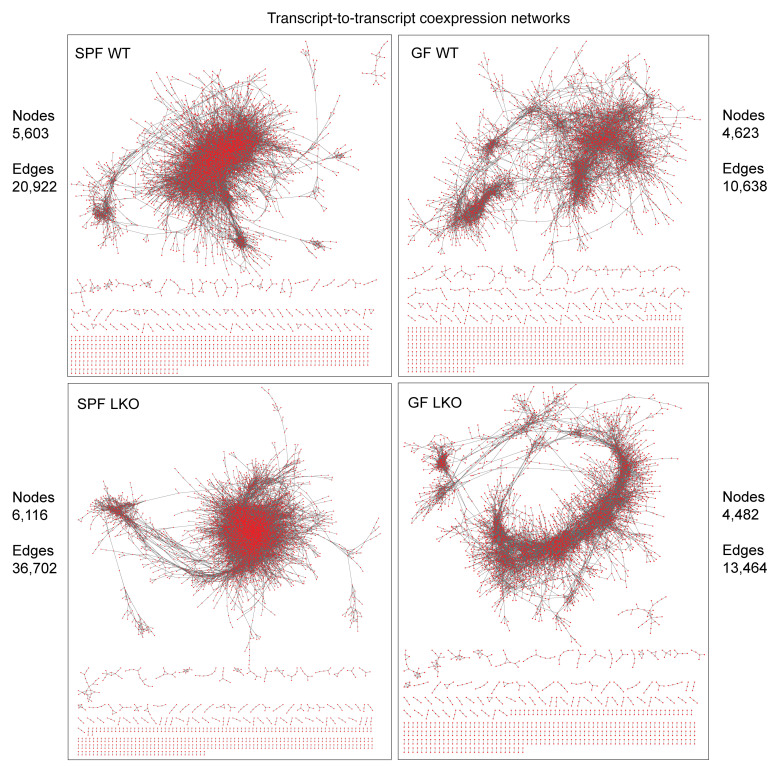
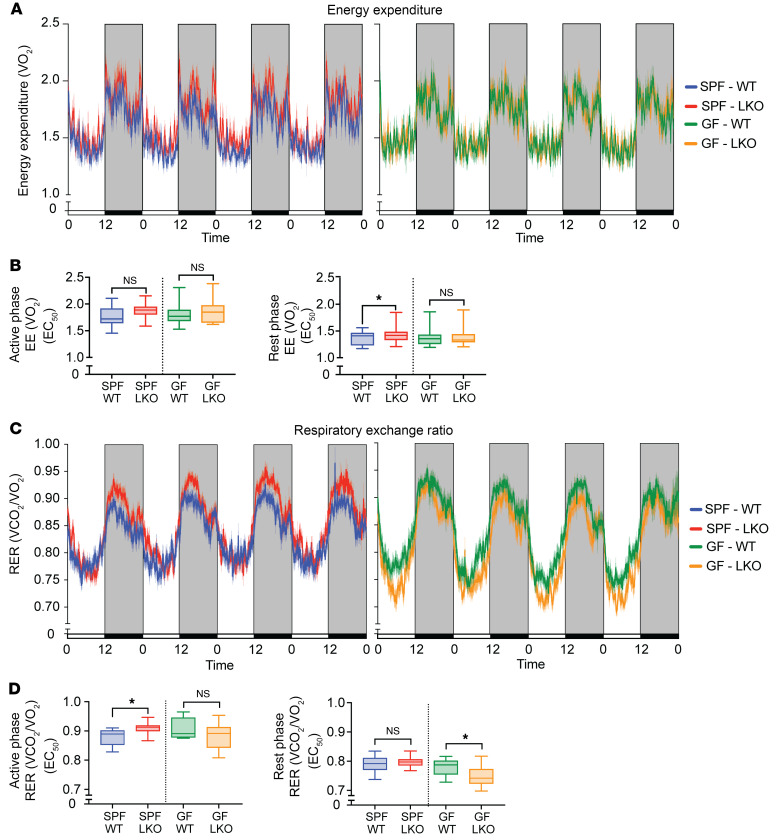
Circadian rhythms govern glucose homeostasis, and their dysregulation leads to complex metabolic diseases. Gut microbes exhibit diurnal rhythms that influence host circadian networks and metabolic processes, yet underlying mechanisms remain elusive. Here, we showed hierarchical, bidirectional communication among the liver circadian clock, gut microbes, and glucose homeostasis in mice. To assess this relationship, we utilized mice with liver-specific deletion of the core circadian clock gene Bmal1 via Albumin-cre maintained in either conventional or germ-free housing conditions. The liver clock, but not the forebrain clock, required gut microbes to drive glucose clearance and gluconeogenesis. Liver clock dysfunctionality expanded proportions and abundances of oscillating microbial features by 2-fold relative to that in controls. The liver clock was the primary driver of differential and rhythmic hepatic expression of glucose and fatty acid metabolic pathways. Absent the liver clock, gut microbes provided secondary cues that dampened these rhythms, resulting in reduced lipid fuel utilization relative to carbohydrates. All together, the liver clock transduced signals from gut microbes that were necessary for regulating glucose and lipid metabolism and meeting energy demands over 24 hours.
昼夜节律控制着葡萄糖的动态平衡,其失调会导致复杂的代谢性疾病。肠道微生物表现出昼夜节律,影响宿主昼夜节律网络和代谢过程,但潜在的机制仍不清楚。在这里,我们展示了小鼠肝脏生物钟、肠道微生物和葡萄糖动态平衡之间的分层、双向通讯。为了评估这种关系,我们利用 Alb 基因启动子 Cre 重组酶在常规或无菌条件下特异性敲除核心生物钟基因 Bmal1 的小鼠。肝脏时钟,而不是前脑时钟,需要肠道微生物来驱动葡萄糖清除和糖异生。与对照组相比,肝脏时钟功能障碍导致振荡微生物特征的比例和丰度增加了两倍。肝脏时钟是调节葡萄糖和脂肪酸代谢途径的肝脏差异和节律性表达的主要驱动因素。没有肝脏时钟,肠道微生物提供了次要线索,抑制了这些节律,导致与碳水化合物相比,脂质燃料的利用率降低。总的来说,肝脏时钟从肠道微生物中传递信号,这些信号对于调节葡萄糖和脂质代谢以及满足 24 小时的能量需求是必要的。