Hecht Vivian C, Sullivan Lucas B, Kimmerling Robert J, Kim Dong-Hwee, Hosios Aaron M, Stockslager Max A, Stevens Mark M, Kang Joon Ho, Wirtz Denis, Vander Heiden Matthew G, Manalis Scott R
Department of Biological Engineering, Massachusetts Institute of Technology, Cambridge, MA 02139 Koch Institute for Integrative Cancer Research, Massachusetts Institute of Technology, Cambridge, MA 02139.
Koch Institute for Integrative Cancer Research, Massachusetts Institute of Technology, Cambridge, MA 02139 Department of Biology, Massachusetts Institute of Technology, Cambridge, MA 02139.
J Cell Biol. 2016 Feb 15;212(4):439-47. doi: 10.1083/jcb.201506118.
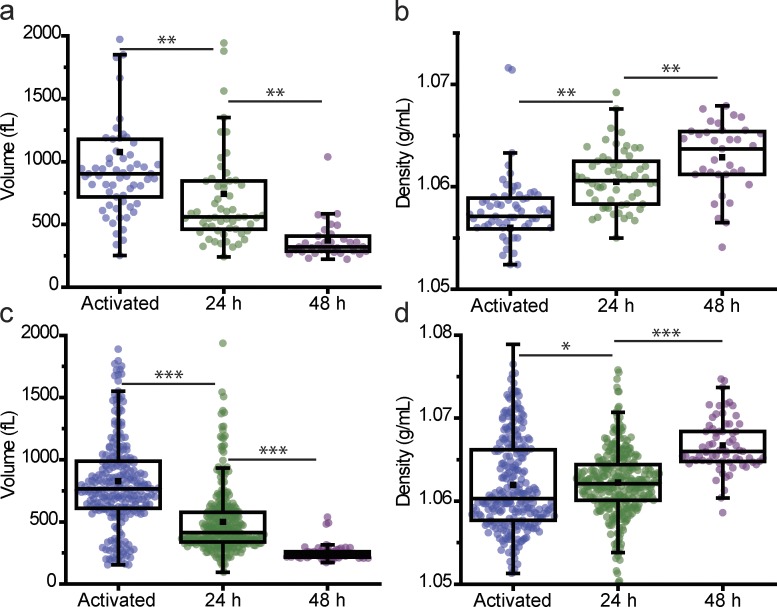
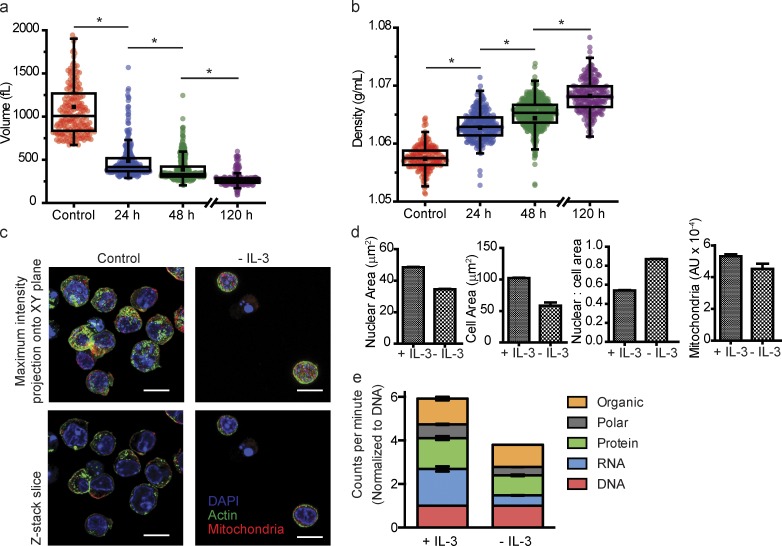
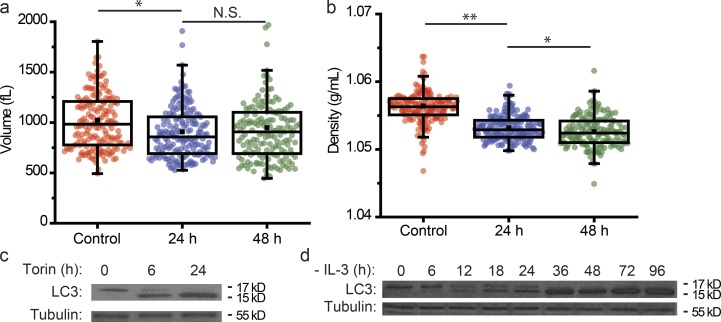
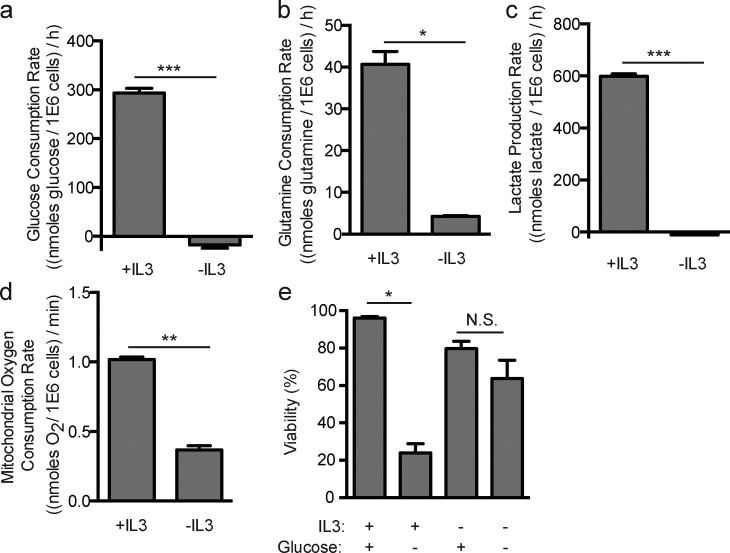
Cytokine regulation of lymphocyte growth and proliferation is essential for matching nutrient consumption with cell state. Here, we examine how cellular biophysical changes that occur immediately after growth factor depletion promote adaptation to reduced nutrient uptake. After growth factor withdrawal, nutrient uptake decreases, leading to apoptosis. Bcl-xL expression prevents cell death, with autophagy facilitating long-term cell survival. However, autophagy induction is slow relative to the reduction of nutrient uptake, suggesting that cells must engage additional adaptive mechanisms to respond initially to growth factor depletion. We describe an acute biophysical response to growth factor withdrawal, characterized by a simultaneous decrease in cell volume and increase in cell density, which occurs before autophagy initiation and is observed in both FL5.12 Bcl-xL cells depleted of IL-3 and primary CD8(+) T cells depleted of IL-2 that are differentiating toward memory cells. The response reduces cell surface area to minimize energy expenditure while conserving biomass, suggesting that the biophysical properties of cells can be regulated to promote survival under conditions of nutrient stress.
细胞因子对淋巴细胞生长和增殖的调节对于使营养物质消耗与细胞状态相匹配至关重要。在此,我们研究生长因子耗竭后立即发生的细胞生物物理变化如何促进对营养物质摄取减少的适应。生长因子撤除后,营养物质摄取减少,导致细胞凋亡。Bcl-xL表达可防止细胞死亡,自噬促进细胞长期存活。然而,相对于营养物质摄取的减少,自噬诱导较为缓慢,这表明细胞必须采用额外的适应性机制来最初应对生长因子耗竭。我们描述了对生长因子撤除的一种急性生物物理反应,其特征是细胞体积同时减小和细胞密度增加,这发生在自噬启动之前,并且在缺乏IL-3的FL5.12 Bcl-xL细胞和缺乏IL-2且正分化为记忆细胞的原代CD8(+) T细胞中均有观察到。这种反应减少细胞表面积以在保存生物量的同时将能量消耗降至最低,表明细胞的生物物理特性可被调节以在营养应激条件下促进存活。