Nirmaladevi D, Venkataramana M, Srivastava Rakesh K, Uppalapati S R, Gupta Vijai Kumar, Yli-Mattila T, Clement Tsui K M, Srinivas C, Niranjana S R, Chandra Nayaka S
Department of Microbiology and Biotechnology, Jnanabarathi Campus, Bangalore University, Bangalore, Karnataka, India.
DRDO-BU-CLS, Barathiar University Campus, Coimbatore, Tamil Nadu, India.
Sci Rep. 2016 Feb 17;6:21367. doi: 10.1038/srep21367.
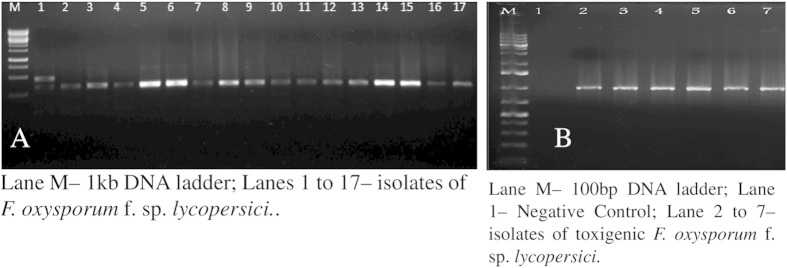
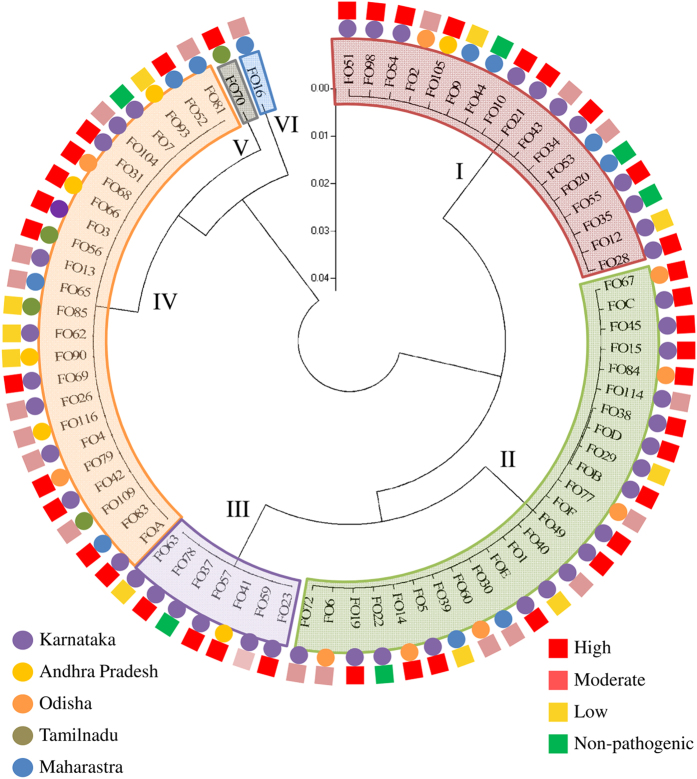
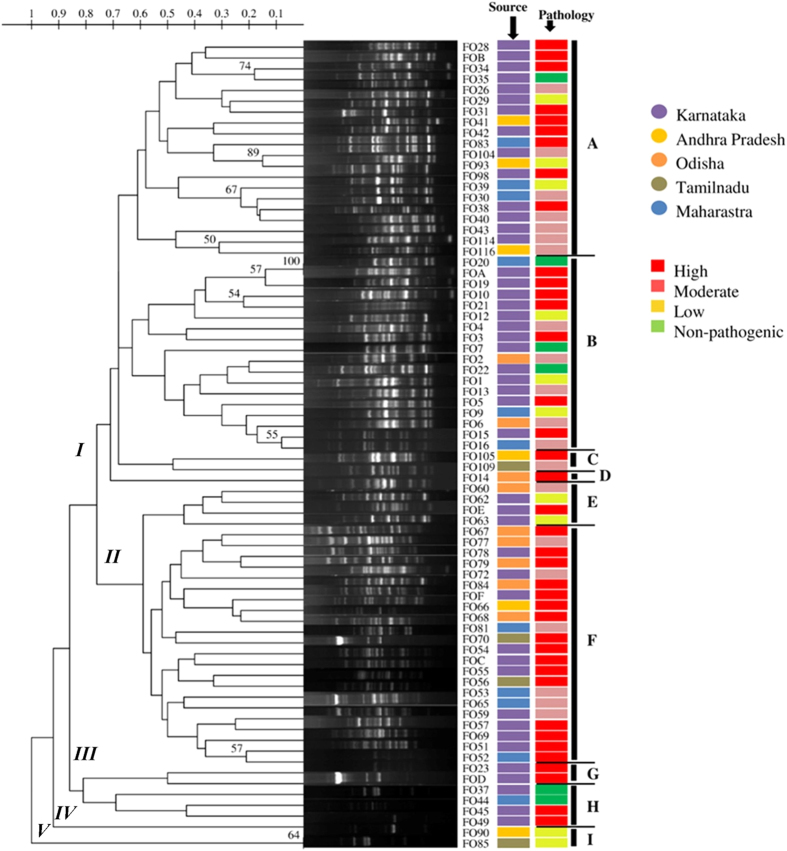
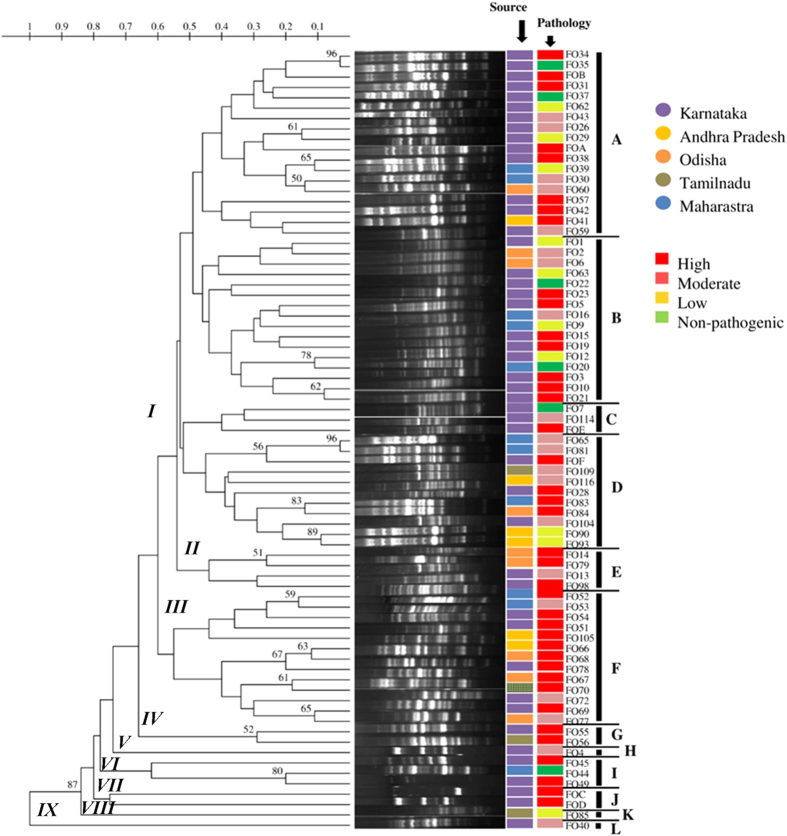
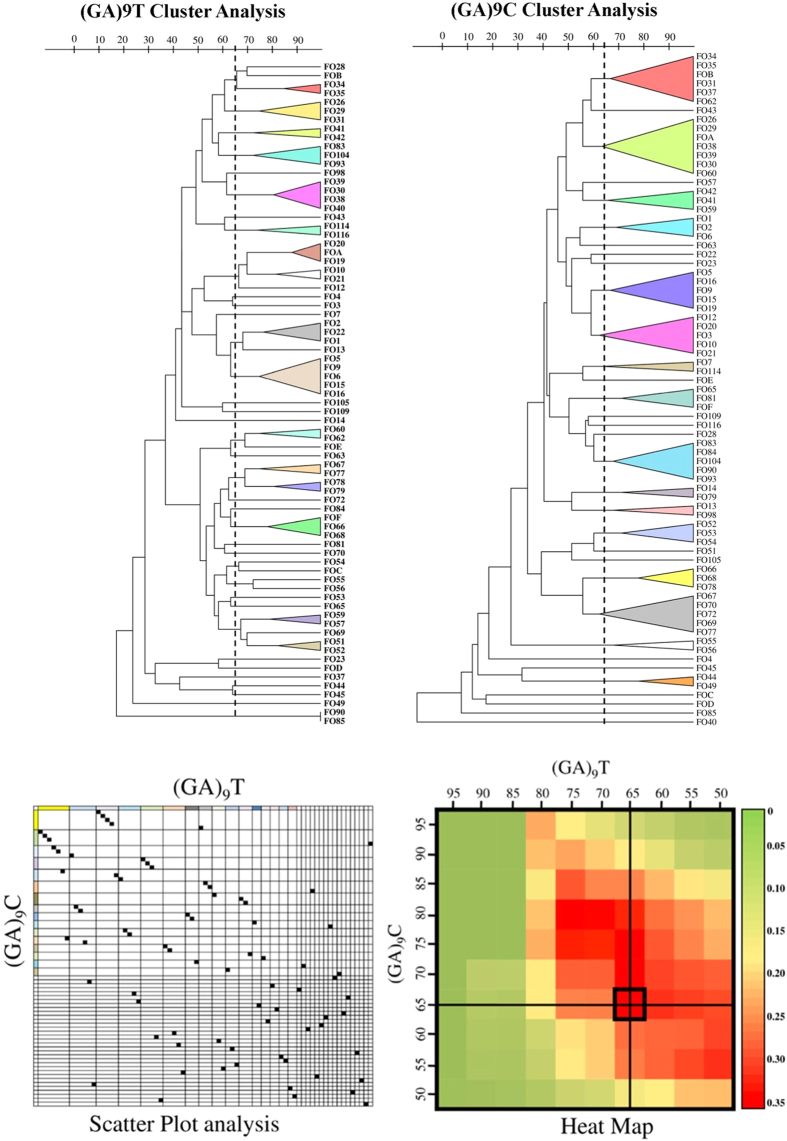
The present study aimed at the molecular characterization of pathogenic and non pathogenic F. oxysporum f. sp. lycopersici strains isolated from tomato. The causal agent isolated from symptomatic plants and soil samples was identified based on morphological and molecular analyses. Pathogenicity testing of 69 strains on five susceptible tomato varieties showed 45% of the strains were highly virulent and 30% were moderately virulent. Molecular analysis based on the fingerprints obtained through ISSR indicated the presence of wide genetic diversity among the strains. Phylogenetic analysis based on ITS sequences showed the presence of at least four evolutionary lineages of the pathogen. The clustering of F. oxysporum with non pathogenic isolates and with the members of other formae speciales indicated polyphyletic origin of F. oxysporum f. sp. lycopersici. Further analysis revealed intraspecies variability and nucleotide insertions or deletions in the ITS region among the strains in the study and the observed variations were found to be clade specific. The high genetic diversity in the pathogen population demands for development of effective resistance breeding programs in tomato. Among the pathogenic strains tested, toxigenic strains harbored the Fum1 gene clearly indicating that the strains infecting tomato crops have the potential to produce Fumonisin.
本研究旨在对从番茄中分离出的致病和非致病尖孢镰刀菌番茄专化型菌株进行分子特征分析。根据形态学和分子分析对从有症状的植株和土壤样本中分离出的病原菌进行鉴定。对69个菌株在五个易感番茄品种上进行致病性测试,结果显示45%的菌株具有高毒力,30%的菌株具有中等毒力。基于通过ISSR获得的指纹图谱进行的分子分析表明,这些菌株之间存在广泛的遗传多样性。基于ITS序列的系统发育分析表明,该病原菌至少存在四个进化谱系。尖孢镰刀菌与非致病分离株以及其他专化型成员的聚类表明尖孢镰刀菌番茄专化型具有多系起源。进一步分析揭示了本研究中菌株之间在ITS区域存在种内变异性以及核苷酸插入或缺失,并且观察到的变异具有分支特异性。病原菌群体中的高遗传多样性要求在番茄中开展有效的抗性育种计划。在所测试的致病菌株中,产毒菌株携带Fum1基因,这清楚地表明感染番茄作物的菌株具有产生伏马毒素的潜力。