Rodriguez-Roche Rosmari, Blanc Hervé, Bordería Antonio V, Díaz Gisell, Henningsson Rasmus, Gonzalez Daniel, Santana Emidalys, Alvarez Mayling, Castro Osvaldo, Fontes Magnus, Vignuzzi Marco, Guzman Maria G
Virology Department, Pedro Kouri Institute of Tropical Medicine, PAHO/WHO Collaborating Center for the Study of Dengue and Its Vector, Havana, Cuba
Institut Pasteur, Viral Populations and Pathogenesis Unit, CNRS UMR 3569, Paris, France.
J Virol. 2016 Apr 14;90(9):4320-4333. doi: 10.1128/JVI.02647-15. Print 2016 May.
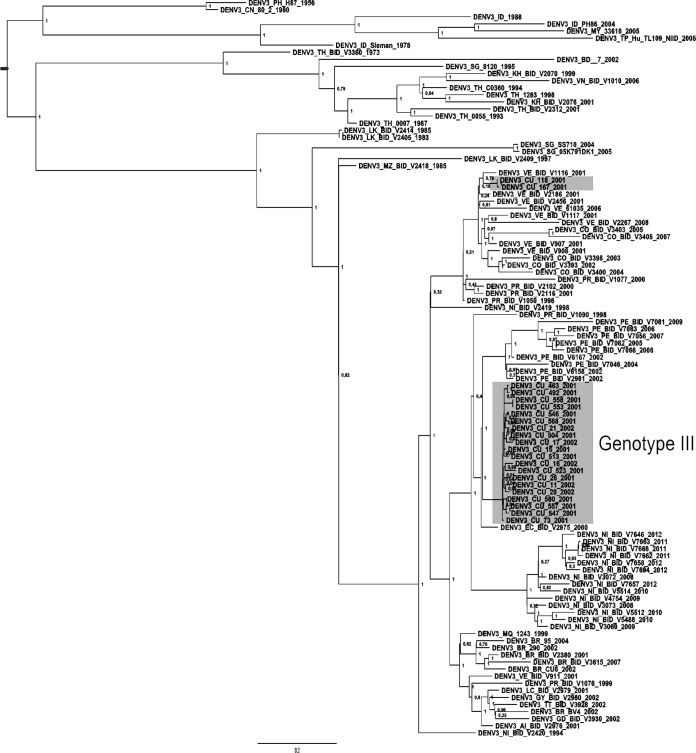
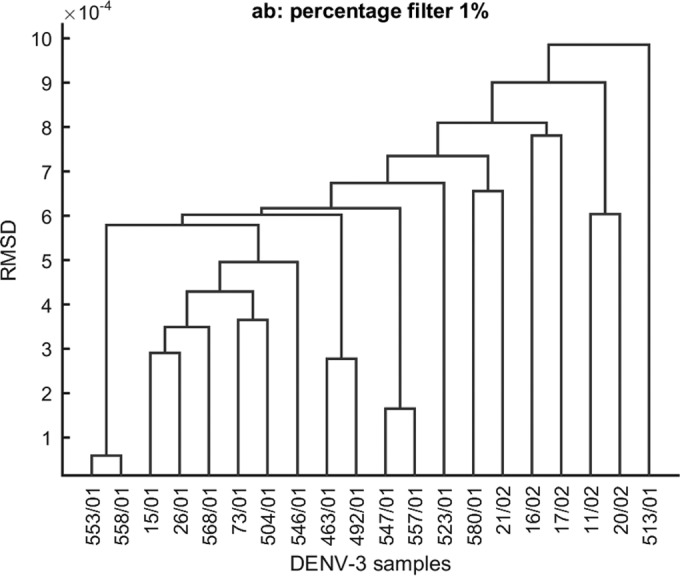
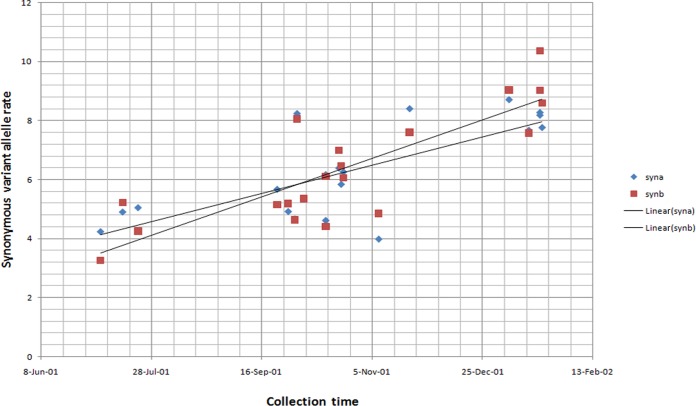
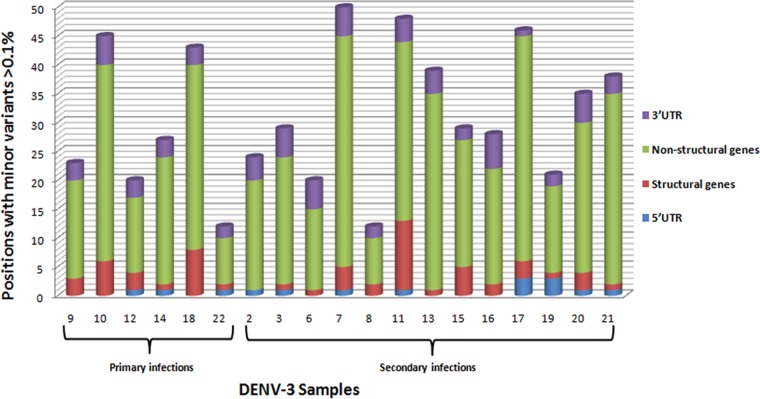
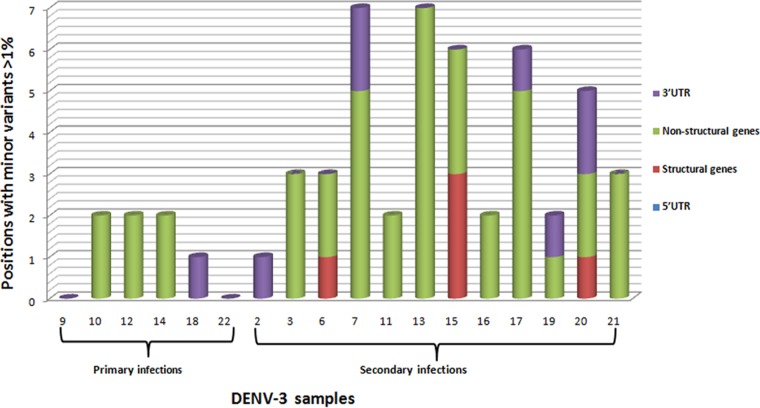
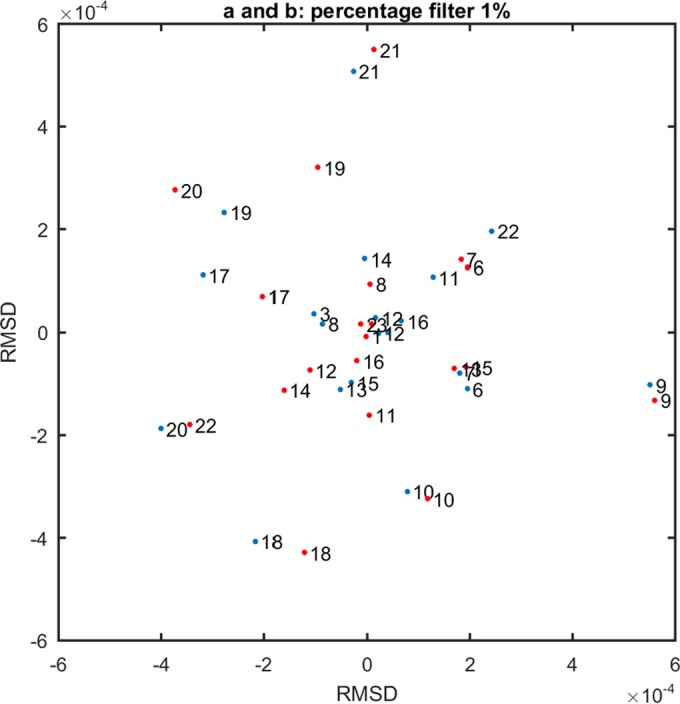
During the dengue virus type 3 (DENV-3) epidemic that occurred in Havana in 2001 to 2002, severe disease was associated with the infection sequence DENV-1 followed by DENV-3 (DENV-1/DENV-3), while the sequence DENV-2/DENV-3 was associated with mild/asymptomatic infections. To determine the role of the virus in the increasing severity demonstrated during the epidemic, serum samples collected at different time points were studied. A total of 22 full-length sequences were obtained using a deep-sequencing approach. Bayesian phylogenetic analysis of consensus sequences revealed that two DENV-3 lineages were circulating in Havana at that time, both grouped within genotype III. The predominant lineage is closely related to Peruvian and Ecuadorian strains, while the minor lineage is related to Venezuelan strains. According to consensus sequences, relatively few nonsynonymous mutations were observed; only one was fixed during the epidemic at position 4380 in the NS2B gene. Intrahost genetic analysis indicated that a significant minor population was selected and became predominant toward the end of the epidemic. In conclusion, greater variability was detected during the epidemic's progression in terms of significant minority variants, particularly in the nonstructural genes. An increasing trend of genetic diversity toward the end of the epidemic was observed only for synonymous variant allele rates, with higher variability in secondary cases. Remarkably, significant intrahost genetic variation was demonstrated within the same patient during the course of secondary infection with DENV-1/DENV-3, including changes in the structural proteins premembrane (PrM) and envelope (E). Therefore, the dynamic of evolving viral populations in the context of heterotypic antibodies could be related to the increasing clinical severity observed during the epidemic.
Based on the evidence that DENV fitness is context dependent, our research has focused on the study of viral factors associated with intraepidemic increasing severity in a unique epidemiological setting. Here, we investigated the intrahost genetic diversity in acute human samples collected at different time points during the DENV-3 epidemic that occurred in Cuba in 2001 to 2002 using a deep-sequencing approach. We concluded that greater variability in significant minor populations occurred as the epidemic progressed, particularly in the nonstructural genes, with higher variability observed in secondary infection cases. Remarkably, for the first time significant intrahost genetic variation was demonstrated within the same patient during the course of secondary infection with DENV-1/DENV-3, including changes in structural proteins. These findings indicate that high-resolution approaches are needed to unravel molecular mechanisms involved in dengue pathogenesis.
在2001年至2002年哈瓦那发生的登革热3型病毒(DENV - 3)疫情期间,严重疾病与先感染DENV - 1后感染DENV - 3的感染顺序(DENV - 1/DENV - 3)相关,而DENV - 2/DENV - 3顺序与轻度/无症状感染相关。为确定病毒在疫情期间所表现出的严重程度增加中所起的作用,对在不同时间点采集的血清样本进行了研究。使用深度测序方法共获得了22个全长序列。对共有序列进行的贝叶斯系统发育分析表明,当时在哈瓦那有两个DENV - 3谱系在传播,二者均归为基因型III。主要谱系与秘鲁和厄瓜多尔毒株密切相关,而次要谱系与委内瑞拉毒株相关。根据共有序列,观察到相对较少的非同义突变;在疫情期间只有一个非同义突变在NS2B基因的4380位固定下来。宿主内基因分析表明,一个显著的次要群体被选择出来,并在疫情接近尾声时成为优势群体。总之,在疫情进展过程中,在显著的少数变异体方面检测到了更大的变异性,特别是在非结构基因中。仅在同义变异等位基因频率方面观察到疫情接近尾声时遗传多样性有增加趋势,继发感染病例中的变异性更高。值得注意的是,在DENV - 1/DENV - 3继发感染过程中,同一患者体内出现了显著的宿主内基因变异,包括结构蛋白前膜(PrM)和包膜(E)的变化。因此,在异型抗体背景下不断演变的病毒群体动态可能与疫情期间观察到的临床严重程度增加有关。
基于登革病毒适应性取决于环境的证据,我们的研究聚焦于在独特的流行病学背景下研究与疫情期间严重程度增加相关的病毒因素。在此,我们使用深度测序方法调查了2001年至2002年古巴发生的DENV - 3疫情期间在不同时间点采集的急性人类样本中的宿主内遗传多样性。我们得出结论,随着疫情进展,显著的少数群体中出现了更大的变异性,特别是在非结构基因中,继发感染病例中的变异性更高。值得注意的是,首次在DENV - 1/DENV - 3继发感染过程中同一患者体内证明了显著的宿主内基因变异,包括结构蛋白的变化。这些发现表明需要高分辨率方法来揭示登革热发病机制中涉及的分子机制。