Tarkin Jason M, Dweck Marc R, Evans Nicholas R, Takx Richard A P, Brown Adam J, Tawakol Ahmed, Fayad Zahi A, Rudd James H F
From the Division of Cardiovascular Medicine, University of Cambridge, Cambridge, UK (J.M.T., A.J.B., J.H.F.R.); Department of Clinical Neuroscience, University of Cambridge, Cambridge, UK (N.R.E.); Centre for Cardiovascular Science, University of Edinburgh, Edinburgh, United Kingdom (M.R.D); Cardiac MR PET CT Program, Massachusetts General Hospital and Harvard Medical School, Boston, MA (R.A.P.T., A.T.); Imaging Sciences Laboratories, Translational and Molecular Imaging Institute, Icahn School of Medicine at Mount Sinai, NY (Z.A.F., M.R.D.); and Department of Cardiology, Zena and Michael A. Wiener Cardiovascular Institute, Icahn School of Medicine at Mount Sinai, NY (Z.A.F.).
Circ Res. 2016 Feb 19;118(4):750-69. doi: 10.1161/CIRCRESAHA.115.306247.
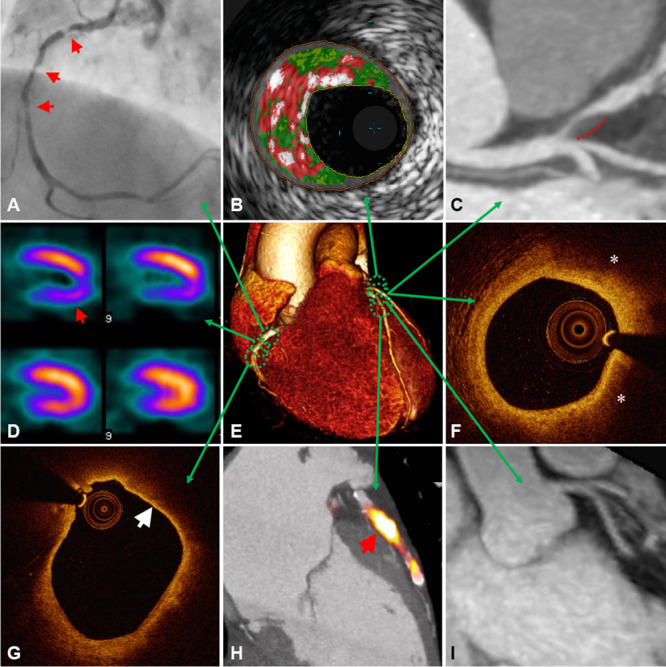
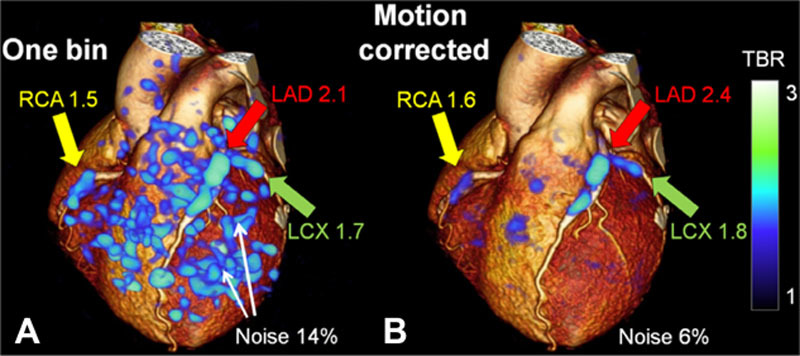
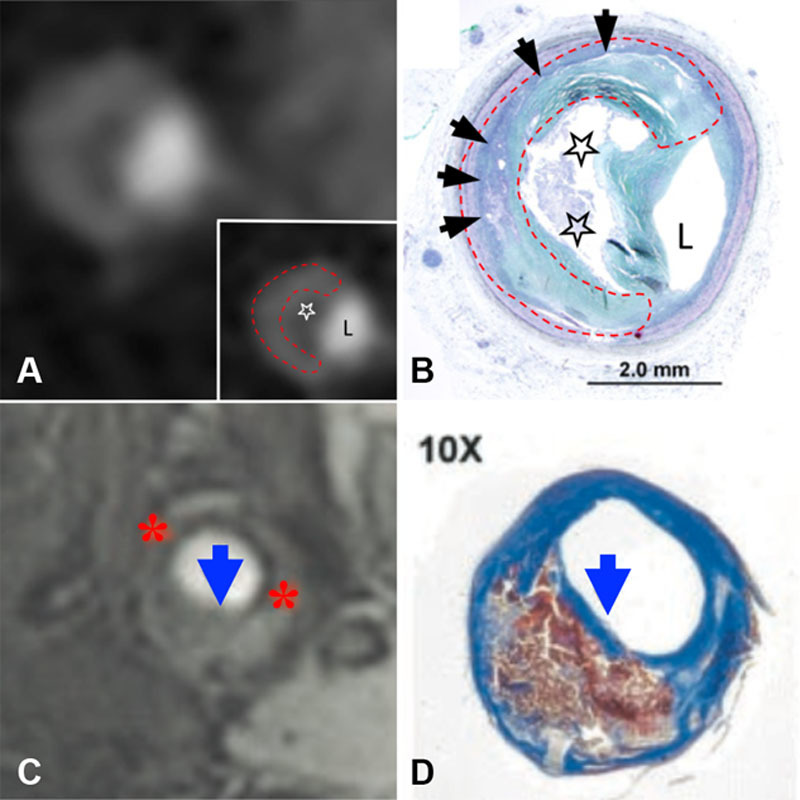
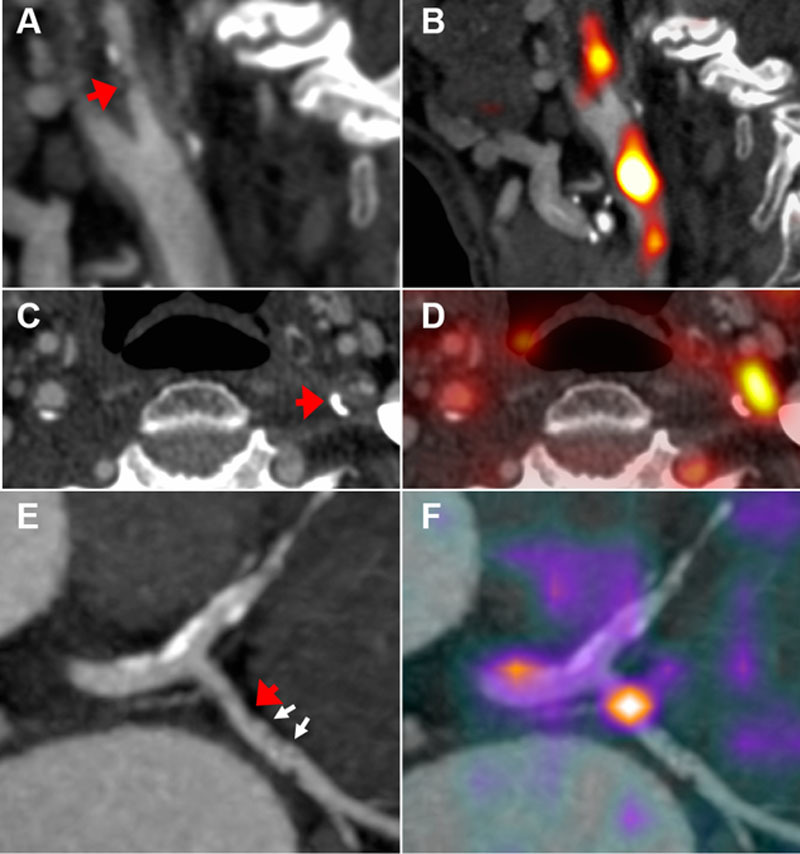
Advances in atherosclerosis imaging technology and research have provided a range of diagnostic tools to characterize high-risk plaque in vivo; however, these important vascular imaging methods additionally promise great scientific and translational applications beyond this quest. When combined with conventional anatomic- and hemodynamic-based assessments of disease severity, cross-sectional multimodal imaging incorporating molecular probes and other novel noninvasive techniques can add detailed interrogation of plaque composition, activity, and overall disease burden. In the catheterization laboratory, intravascular imaging provides unparalleled access to the world beneath the plaque surface, allowing tissue characterization and measurement of cap thickness with micrometer spatial resolution. Atherosclerosis imaging captures key data that reveal snapshots into underlying biology, which can test our understanding of fundamental research questions and shape our approach toward patient management. Imaging can also be used to quantify response to therapeutic interventions and ultimately help predict cardiovascular risk. Although there are undeniable barriers to clinical translation, many of these hold-ups might soon be surpassed by rapidly evolving innovations to improve image acquisition, coregistration, motion correction, and reduce radiation exposure. This article provides a comprehensive review of current and experimental atherosclerosis imaging methods and their uses in research and potential for translation to the clinic.
动脉粥样硬化成像技术与研究的进展已提供了一系列用于在体内表征高危斑块的诊断工具;然而,这些重要的血管成像方法在这一探索之外还具有巨大的科学及转化应用前景。当与基于传统解剖学和血流动力学的疾病严重程度评估相结合时,包含分子探针及其他新型非侵入性技术的横断面多模态成像能够对斑块成分、活性及整体疾病负担进行更详细的探究。在导管室中,血管内成像能够无比清晰地观察斑块表面之下的情况,实现组织特征分析并以微米级空间分辨率测量帽厚度。动脉粥样硬化成像获取的关键数据揭示了潜在生物学过程的瞬间,可检验我们对基础研究问题的理解,并塑造我们对患者管理的方法。成像还可用于量化对治疗干预的反应,并最终有助于预测心血管风险。尽管临床转化存在不可否认的障碍,但其中许多障碍可能很快会被快速发展的创新所超越,这些创新旨在改善图像采集、配准、运动校正并减少辐射暴露。本文全面综述了当前及实验性动脉粥样硬化成像方法及其在研究中的应用以及向临床转化的潜力。