Dumat Blaise, Larsen Anders Foller, Wilhelmsson L Marcus
Chalmers University of Technology, Department of Chemistry and Chemical Engineering, Chemistry and Biochemistry, SE-41296 Göteborg, Sweden.
Chalmers University of Technology, Department of Chemistry and Chemical Engineering, Chemistry and Biochemistry, SE-41296 Göteborg, Sweden
Nucleic Acids Res. 2016 Jun 20;44(11):e101. doi: 10.1093/nar/gkw114. Epub 2016 Feb 20.
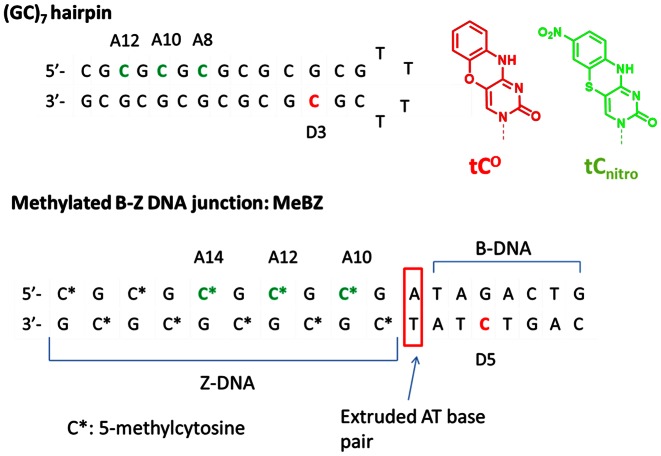
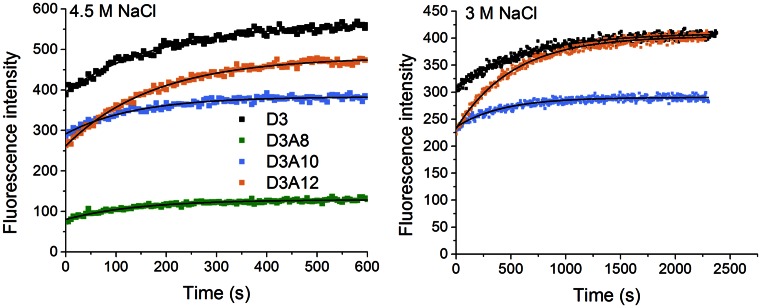
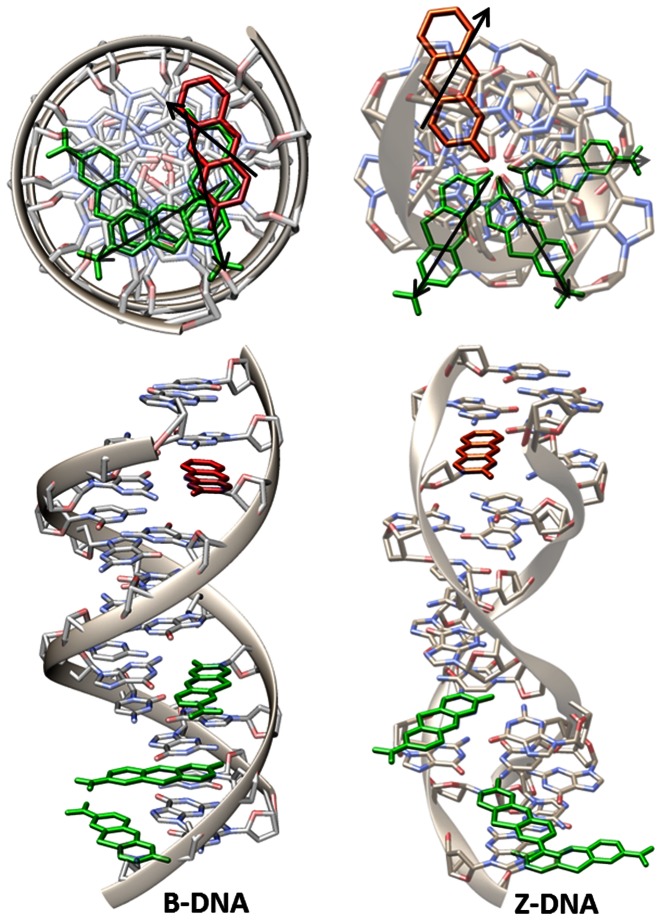
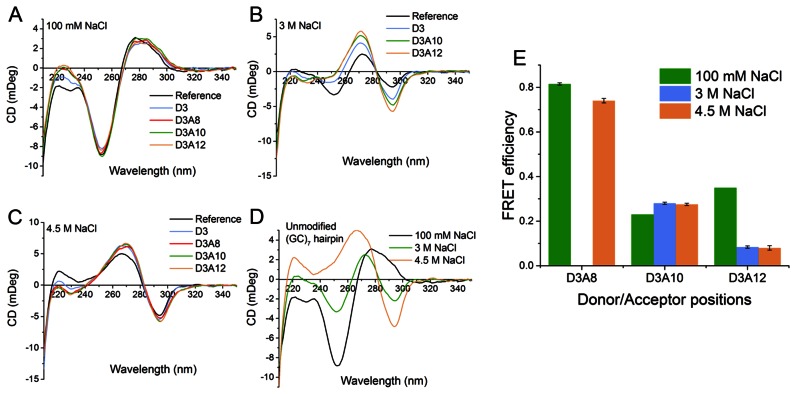
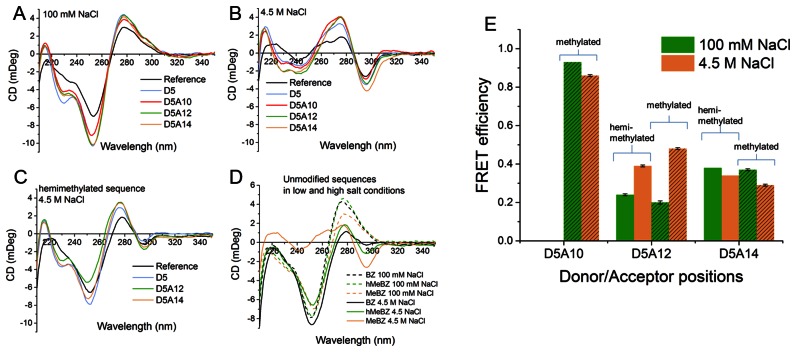
Herein, we report on the use of a tricyclic cytosine FRET pair, incorporated into DNA with different base pair separations, to study Z-DNA and B-Z DNA junctions. With its position inside the DNA structure, the FRET pair responds to a B- to Z-DNA transition with a distinct change in FRET efficiency for each donor/acceptor configuration allowing reliable structural probing. Moreover, we show how fluorescence spectroscopy and our cytosine analogues can be used to determine rate constants for the B- to Z-DNA transition mechanism. The modified cytosines have little influence on the transition and the FRET pair is thus an easily implemented and virtually non-perturbing fluorescence tool to study Z-DNA. This nucleobase analogue FRET pair represents a valuable addition to the limited number of fluorescence methods available to study Z-DNA and we suggest it will facilitate, for example, deciphering the B- to Z-DNA transition mechanism and investigating the interaction of DNA with Z-DNA binding proteins.
在此,我们报告了一种三环胞嘧啶荧光共振能量转移(FRET)对的应用,该对以不同的碱基对间距掺入DNA中,用于研究Z-DNA和B-Z DNA连接点。由于FRET对在DNA结构中的位置,对于每种供体/受体构型,它会随着从B-DNA到Z-DNA的转变,以FRET效率的明显变化做出响应,从而实现可靠的结构探测。此外,我们展示了荧光光谱和我们的胞嘧啶类似物如何用于确定从B-DNA到Z-DNA转变机制的速率常数。修饰后的胞嘧啶对转变影响很小,因此FRET对是一种易于实施且几乎无干扰的用于研究Z-DNA的荧光工具。这种核碱基类似物FRET对是对用于研究Z-DNA的有限数量荧光方法的有价值补充,我们认为它将有助于,例如,破译从B-DNA到Z-DNA的转变机制以及研究DNA与Z-DNA结合蛋白的相互作用。