Ma Liang, Chen Zehua, Huang Da Wei, Kutty Geetha, Ishihara Mayumi, Wang Honghui, Abouelleil Amr, Bishop Lisa, Davey Emma, Deng Rebecca, Deng Xilong, Fan Lin, Fantoni Giovanna, Fitzgerald Michael, Gogineni Emile, Goldberg Jonathan M, Handley Grace, Hu Xiaojun, Huber Charles, Jiao Xiaoli, Jones Kristine, Levin Joshua Z, Liu Yueqin, Macdonald Pendexter, Melnikov Alexandre, Raley Castle, Sassi Monica, Sherman Brad T, Song Xiaohong, Sykes Sean, Tran Bao, Walsh Laura, Xia Yun, Yang Jun, Young Sarah, Zeng Qiandong, Zheng Xin, Stephens Robert, Nusbaum Chad, Birren Bruce W, Azadi Parastoo, Lempicki Richard A, Cuomo Christina A, Kovacs Joseph A
Critical Care Medicine Department, NIH Clinical Center, National Institutes of Health, Building 10, Room 2C145, 10 Center Drive, Bethesda, Maryland 20892, USA.
Genome Sequencing and Analysis Program, Broad Institute of Harvard and Massachusetts Institute of Technology, Cambridge, Massachusetts 02142, USA.
Nat Commun. 2016 Feb 22;7:10740. doi: 10.1038/ncomms10740.
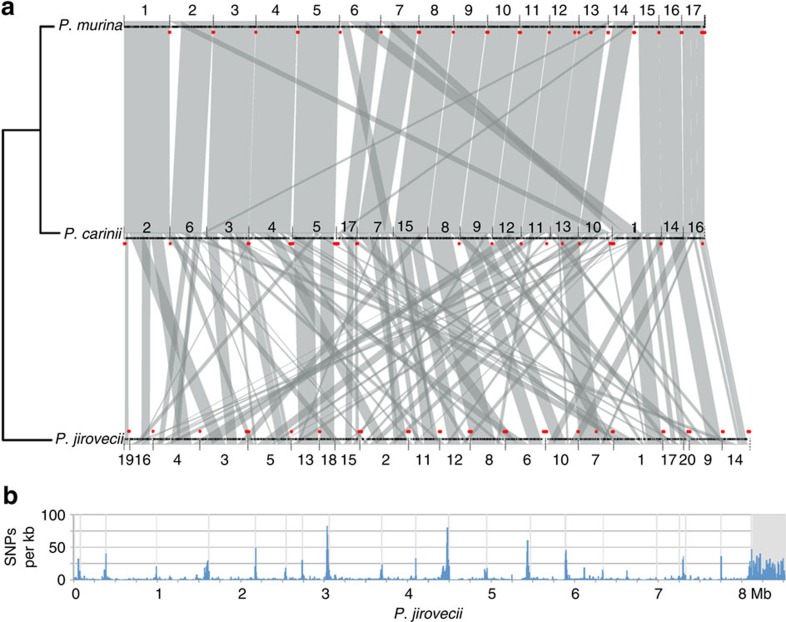
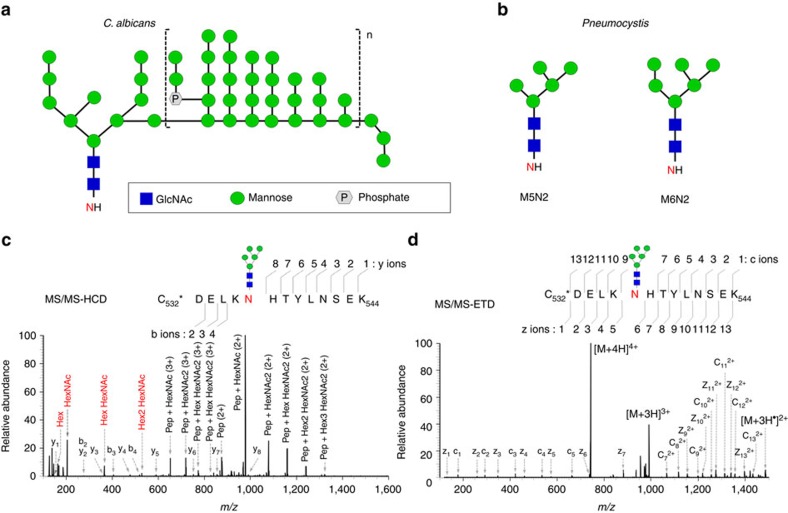
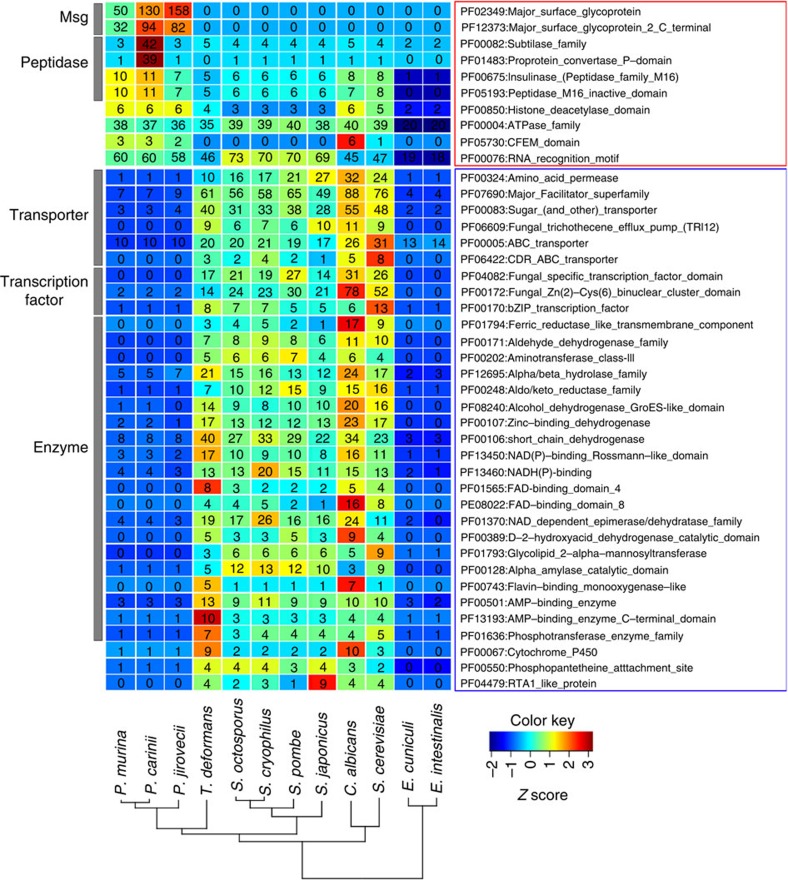
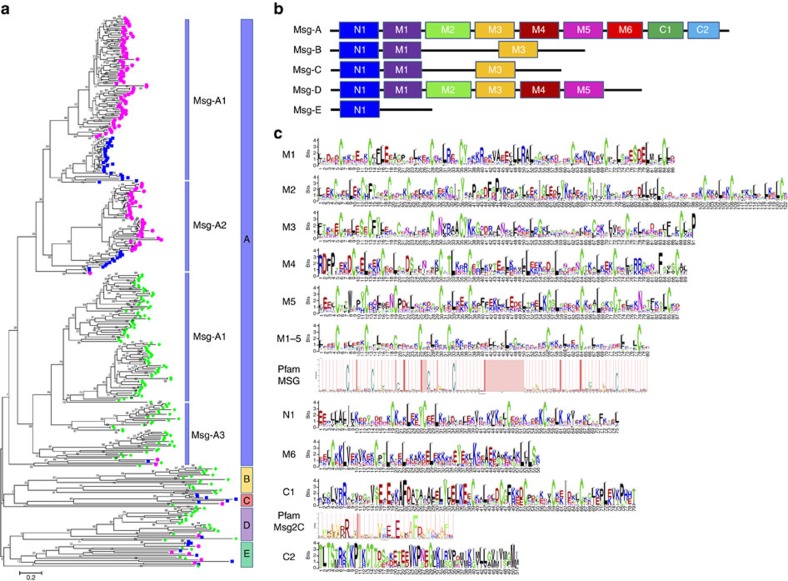
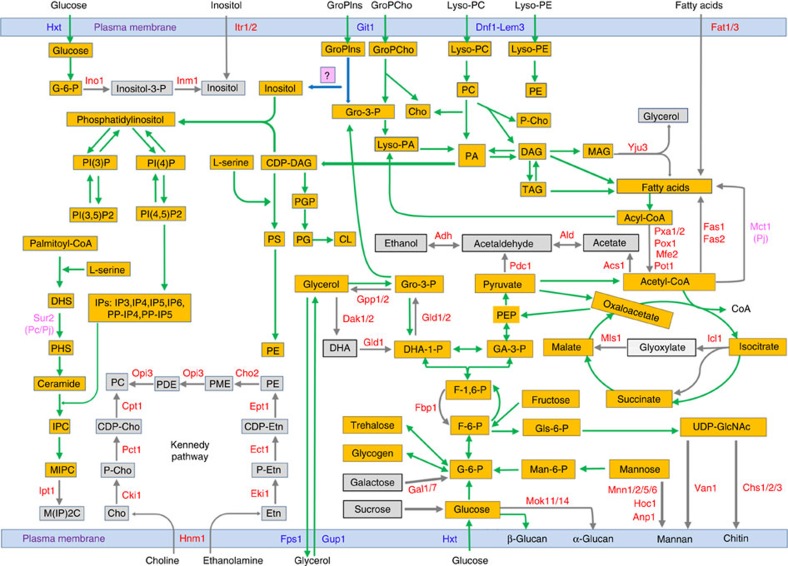
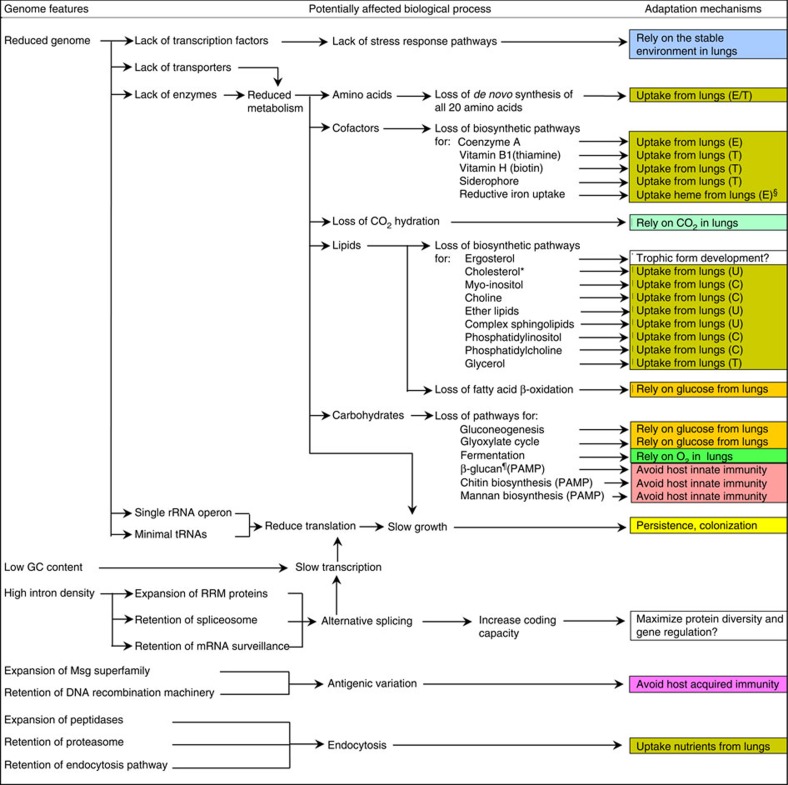
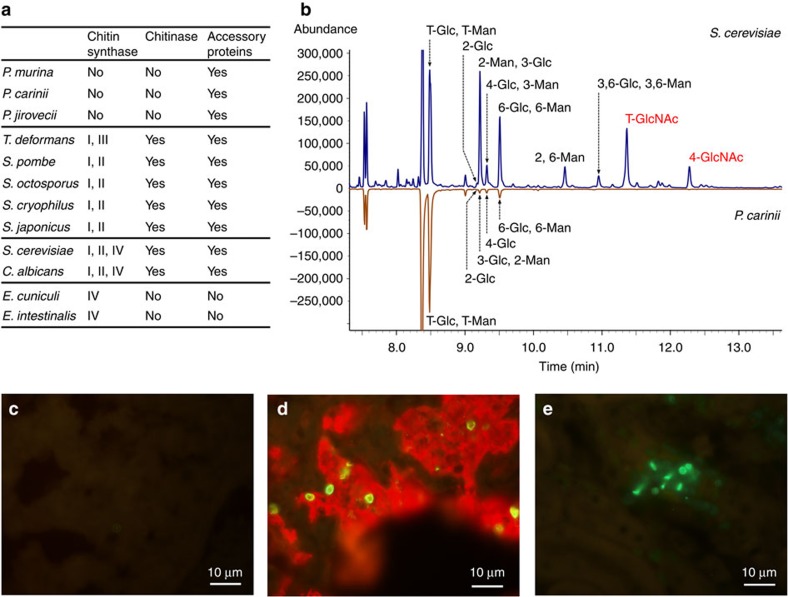
Pneumocystis jirovecii is a major cause of life-threatening pneumonia in immunosuppressed patients including transplant recipients and those with HIV/AIDS, yet surprisingly little is known about the biology of this fungal pathogen. Here we report near complete genome assemblies for three Pneumocystis species that infect humans, rats and mice. Pneumocystis genomes are highly compact relative to other fungi, with substantial reductions of ribosomal RNA genes, transporters, transcription factors and many metabolic pathways, but contain expansions of surface proteins, especially a unique and complex surface glycoprotein superfamily, as well as proteases and RNA processing proteins. Unexpectedly, the key fungal cell wall components chitin and outer chain N-mannans are absent, based on genome content and experimental validation. Our findings suggest that Pneumocystis has developed unique mechanisms of adaptation to life exclusively in mammalian hosts, including dependence on the lungs for gas and nutrients and highly efficient strategies to escape both host innate and acquired immune defenses.
耶氏肺孢子菌是包括移植受者以及感染HIV/AIDS者在内的免疫抑制患者发生危及生命的肺炎的主要病因,然而令人惊讶的是,对于这种真菌病原体的生物学特性却知之甚少。在此,我们报告了感染人类、大鼠和小鼠的三种肺孢子菌物种的近乎完整的基因组组装情况。相对于其他真菌,肺孢子菌的基因组高度紧凑,核糖体RNA基因、转运蛋白、转录因子及许多代谢途径大幅减少,但表面蛋白有所扩增,尤其是一个独特而复杂的表面糖蛋白超家族,以及蛋白酶和RNA加工蛋白。基于基因组内容和实验验证,出乎意料的是,关键的真菌细胞壁成分几丁质和外链N-甘露聚糖并不存在。我们的研究结果表明,肺孢子菌已经形成了独特的适应机制,专门在哺乳动物宿主体内生存,包括依赖肺部获取气体和营养,以及逃避宿主固有免疫和获得性免疫防御的高效策略。