Brzezicha-Cirocka Justyna, Grembecka Małgorzata, Szefer Piotr
Department of Food Sciences, Medical University of Gdansk, Al. Gen. J. Hallera 107, Gdansk, 80-416, Poland.
Environ Monit Assess. 2016 Mar;188(3):183. doi: 10.1007/s10661-016-5157-y. Epub 2016 Feb 22.
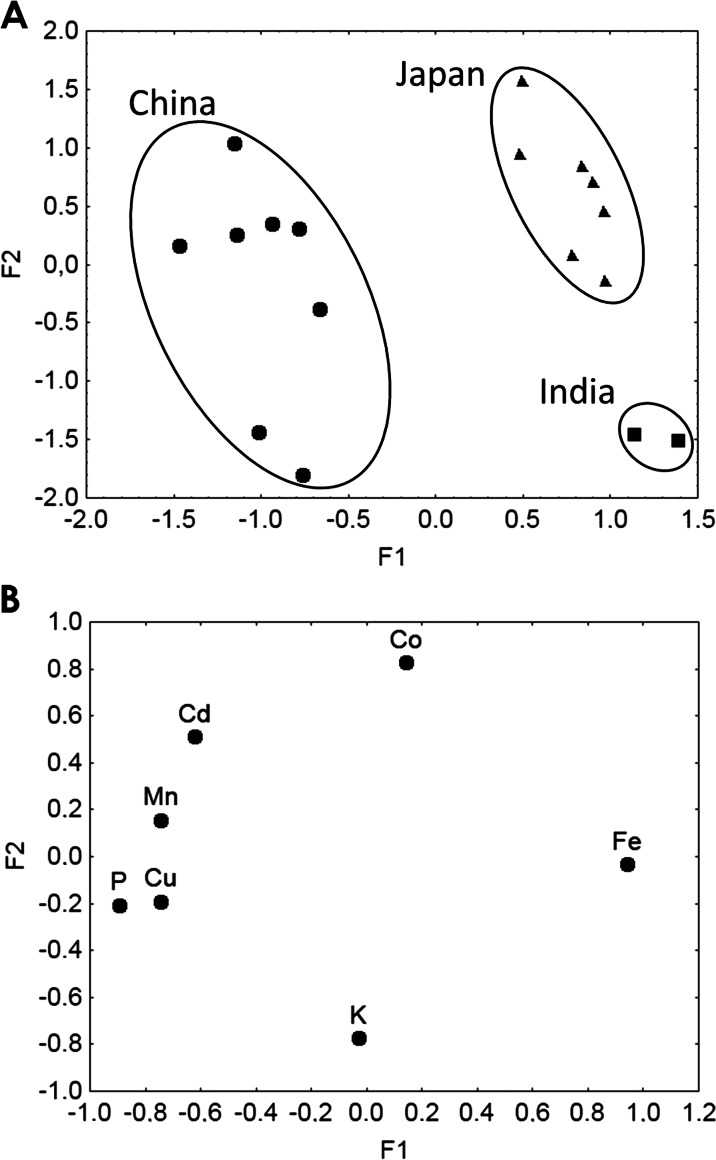
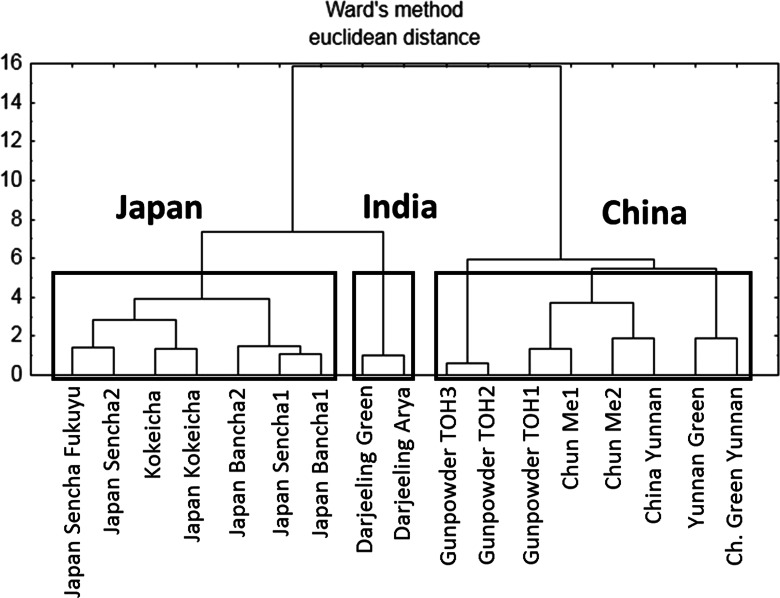
The present study measured the concentrations of toxic metals (Cd, Pb) and other elements (Ca, K, Mg, Na, P, Mn, Fe, Zn, Cu, Co, Cr, Ni) in tea leaves and their infusions. The total metal contents were determined by atomic absorption spectrometry. Phosphorus concentration was determined using an ultraviolet-visible spectrophotometer. Assessment of the mineral composition enabled determination of the leaching percentage and the risk of exceeding provisional tolerable weekly intake for Cd through daily tea consumption. The concentrations of bioelements were analyzed based on the recommended daily intake values for each. According to recently established standards, green tea was found to be a rich source of Mn. The average Pb and Cd levels in a 200-mL beverage were 0.002 and 0.003 mg, respectively. Indian teas had the highest percentage of Cd leaching (43.8%) and Chinese tea had the lowest (9.41%). Multivariate analysis techniques such as factor analysis and cluster analysis were used to differentiate samples according to geographical origin (China, India, or Japan). Potassium, P, Mn, Fe, Cu, Co, and Cd were effective descriptors for the identification of tea samples from China, India, and Japan.
本研究测定了茶叶及其冲泡液中有毒金属(镉、铅)和其他元素(钙、钾、镁、钠、磷、锰、铁、锌、铜、钴、铬、镍)的浓度。通过原子吸收光谱法测定总金属含量。使用紫外可见分光光度计测定磷浓度。对矿物质成分的评估能够确定浸出百分比以及通过每日饮茶摄入镉超过暂定每周耐受摄入量的风险。根据每种生物元素的推荐每日摄入量值分析其浓度。根据最近制定的标准,发现绿茶是锰的丰富来源。200毫升饮料中铅和镉的平均含量分别为0.002毫克和0.003毫克。印度茶叶的镉浸出率最高(43.8%),中国茶叶的镉浸出率最低(9.41%)。使用因子分析和聚类分析等多元分析技术根据地理来源(中国、印度或日本)对样品进行区分。钾、磷、锰、铁、铜、钴和镉是鉴别来自中国、印度和日本茶叶样品的有效描述符。