Lomazzi Marta, Jenkins Christopher, Borisch Bettina
World Federation of Public Health Associations, c/o Campus Biotech, University of Geneva, Geneva, Switzerland.
Institute of Global Health, c/o Campus Biotech, University of Geneva, Geneva, Switzerland;
Glob Health Action. 2016 Feb 18;9:28772. doi: 10.3402/gha.v9.28772. eCollection 2016.
Global public health today faces new challenges and is impacted by a range of actors from within and outside state boundaries. The diversity of the actors involved has created challenges and a complex environment that requires a new context-tailored global approach. The World Federation of Public Health Associations has embarked on a collaborative consultation with the World Health Organization to encourage a debate on how to adapt public health to its future role in global health.
A qualitative study was undertaken. High-level stakeholders from leading universities, multilateral organizations, and other institutions worldwide participated in the study. Inductive content analyses were performed.
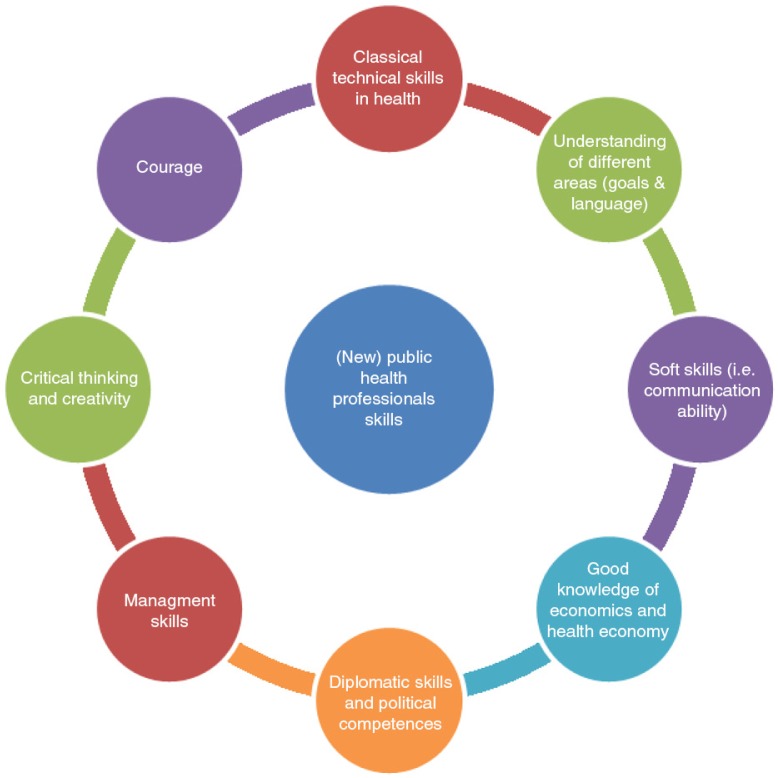
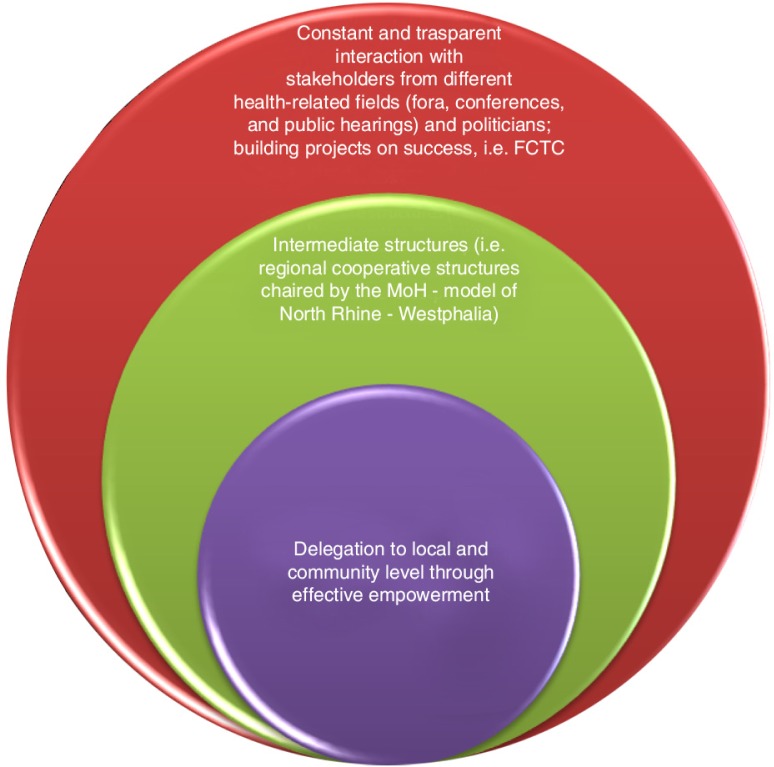
Stakeholders underscored that global public health today should tackle the political, commercial, economic, social, and environmental determinants of health and social inequalities. A multisectoral and holistic approach should be guaranteed, engaging public health in broad dialogues and a concerted decision-making process. The connection between neoliberal ideology and public health reforms should be taken into account. The WHO must show leadership and play a supervising and technical role. More and better data are required across many programmatic areas of public health. Resources should be allocated in a sustainable and accountable way. Public health professionals need new skills that should be provided by a collaborative global education system. A common framework context-tailored to influence governments has been evaluated as useful.
The study highlighted some of the main public health challenges currently under debate in the global arena, providing interesting ideas. A more inclusive integrated vision of global health in its complexity, shared and advocated for by all stakeholders involved in decision-making processes, is crucial. This vision represents the first step in innovating public health at the global level and should lead to a serious rethinking of education curricula to allow the next generation to engage within political contexts for restructuring global public health.
当今全球公共卫生面临新挑战,受到国内外一系列行为体的影响。相关行为体的多样性带来了挑战,营造了一个复杂的环境,这需要一种新的因地制宜的全球方法。公共卫生协会世界联合会已着手与世界卫生组织进行合作磋商,以推动就如何使公共卫生适应其在全球卫生领域的未来角色展开辩论。
开展了一项定性研究。来自全球顶尖大学、多边组织和其他机构的高级利益相关者参与了该研究。进行了归纳性内容分析。
利益相关者强调,当今全球公共卫生应应对健康和社会不平等的政治、商业、经济、社会及环境决定因素。应确保采取多部门和整体方法,让公共卫生参与广泛对话及协同决策过程。应考虑新自由主义意识形态与公共卫生改革之间的联系。世卫组织必须发挥领导作用,承担监督和技术职能。公共卫生的许多项目领域都需要更多、更好的数据。资源应以可持续且可问责的方式分配。公共卫生专业人员需要新技能,应由全球协作教育系统提供。一个因地制宜以影响各国政府的共同框架被认为很有用。
该研究突出了当前全球舞台上正在讨论的一些主要公共卫生挑战,提出了有趣的观点。所有参与决策过程的利益相关者共同分享并倡导的、对复杂的全球卫生更具包容性的综合愿景至关重要。这一愿景是在全球层面创新公共卫生的第一步,应促使人们认真反思教育课程,以使下一代能够在政治背景下参与全球公共卫生的重组。