Lau-Barraco Cathy, Braitman Abby L, Linden-Carmichael Ashley N, Stamates Amy L
Department of Psychology, Old Dominion University.
Exp Clin Psychopharmacol. 2016 Apr;24(2):100-9. doi: 10.1037/pha0000068. Epub 2016 Feb 22.
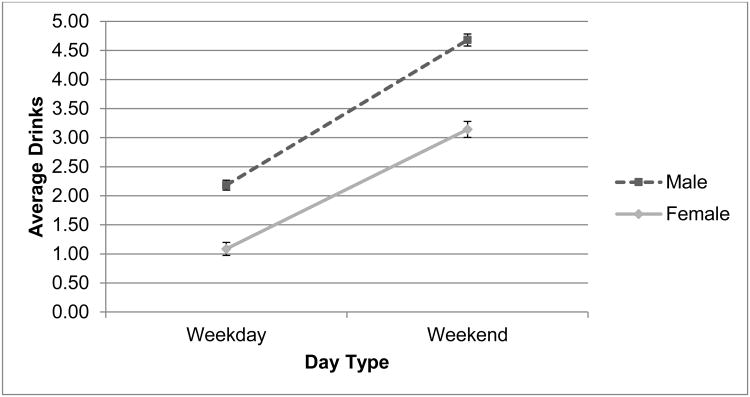
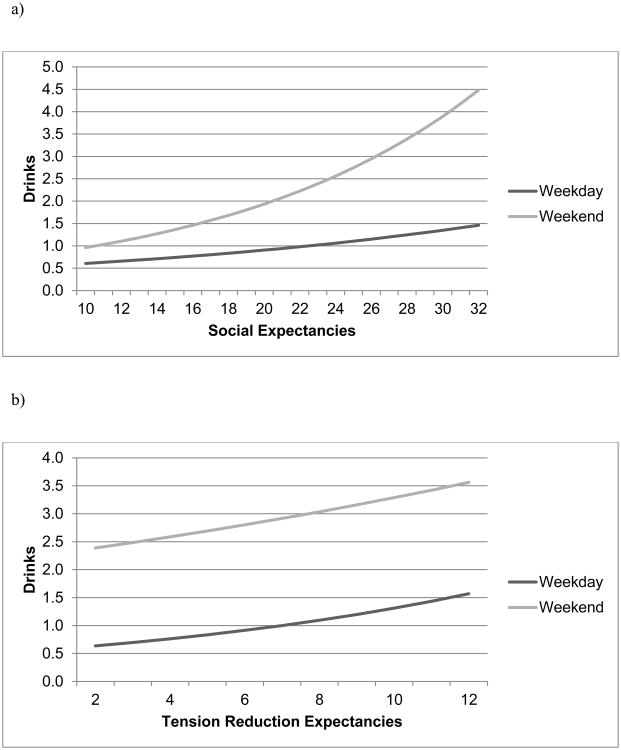
In the current investigation, we sought to examine "day-of-the-week" drinking of an at-risk sample of nonstudent emerging adults and whether specific factors are associated with differential drinking patterns. Our study aims were to (a) identify differences in weekday versus weekend drinking, and (b) examine specific expectancies (i.e., sociability, tension reduction) and demographic factors (e.g., age, sex) relating to weekend versus weekday drinking after controlling for harmful drinking and holiday drinking. Participants were heavy-drinking noncollege attenders recruited from the community (N = 238; 63.4% men, 35.7% women; M age = 21.92 years). They reported daily drinking for the previous 30 days and completed measures of harmful drinking, alcohol expectancies, and demographic information. Results showed that more drinks were consumed on the weekends (i.e., Thursday to Saturday) than weekdays, with 63% of drinks consumed on weekends. Multilevel modeling analyses indicated that weekday drinking was associated with tension-reduction expectancies, social expectancies, sex, and age. Weekend-drinking increases were related to social expectancies, but not tension-reduction expectancies. Our final model indicated that, after controlling for the effect of holiday drinking, the within-person weekday-weekend distinction explained 18% of the total variance. In general, our findings highlight the importance of alcohol expectancies and drinking contexts in understanding the drinking behaviors of nonstudents. The differential role of tension-reduction and social-facilitation expectancies on drinking throughout the week imply that different cognitive pathways are involved in weekday versus weekend drinking, and both types of expected alcohol effects should be targets of risk-reduction efforts with nonstudent drinkers.
在当前的调查中,我们试图研究非学生青年成人风险样本中的“一周中某天”饮酒情况,以及特定因素是否与不同的饮酒模式相关。我们的研究目标是:(a)确定工作日与周末饮酒的差异;(b)在控制有害饮酒和节日饮酒后,研究与周末和工作日饮酒相关的特定预期(即社交性、紧张缓解)和人口统计学因素(如年龄、性别)。参与者是从社区招募的重度饮酒非大学生(N = 238;男性占63.4%,女性占35.7%;平均年龄 = 21.92岁)。他们报告了过去30天的每日饮酒情况,并完成了有害饮酒、酒精预期和人口统计学信息的测量。结果显示,周末(即周四至周六)的饮酒量多于工作日,63%的饮酒量是在周末消耗的。多层次建模分析表明,工作日饮酒与紧张缓解预期、社交预期、性别和年龄有关。周末饮酒量的增加与社交预期有关,但与紧张缓解预期无关。我们的最终模型表明,在控制节日饮酒的影响后,个体内工作日与周末的差异解释了总方差的18%。总体而言,我们的研究结果凸显了酒精预期和饮酒环境在理解非学生饮酒行为方面的重要性。紧张缓解预期和社交促进预期在一周内饮酒中的不同作用意味着,工作日与周末饮酒涉及不同的认知途径,这两种预期的酒精效应都应成为非学生饮酒者降低风险努力的目标。