Alfonso-Parra Catalina, Ahmed-Braimah Yasir H, Degner Ethan C, Avila Frank W, Villarreal Susan M, Pleiss Jeffrey A, Wolfner Mariana F, Harrington Laura C
Department of Entomology, Cornell University, Ithaca, New York, United States of America.
Instituto Colombiano de Medicina Tropical - Universidad CES, Medellín, Colombia.
PLoS Negl Trop Dis. 2016 Feb 22;10(2):e0004451. doi: 10.1371/journal.pntd.0004451. eCollection 2016 Feb.
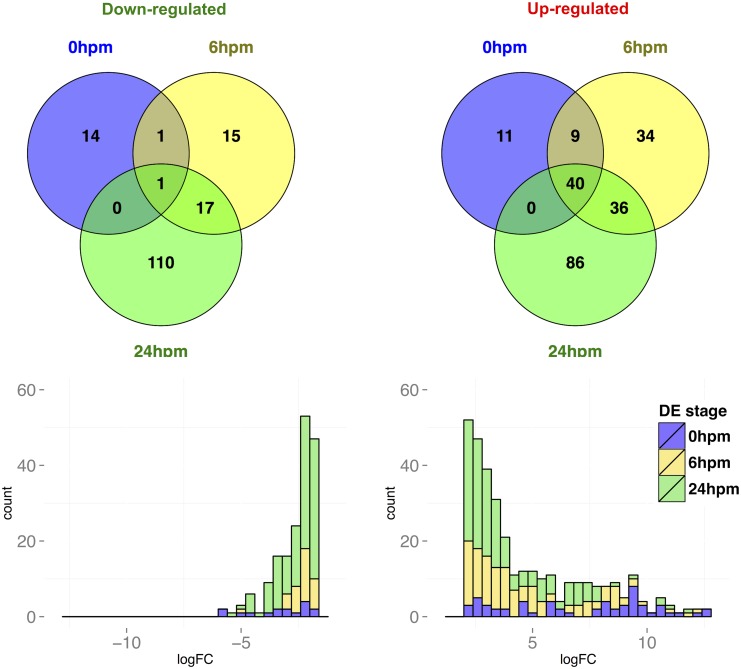
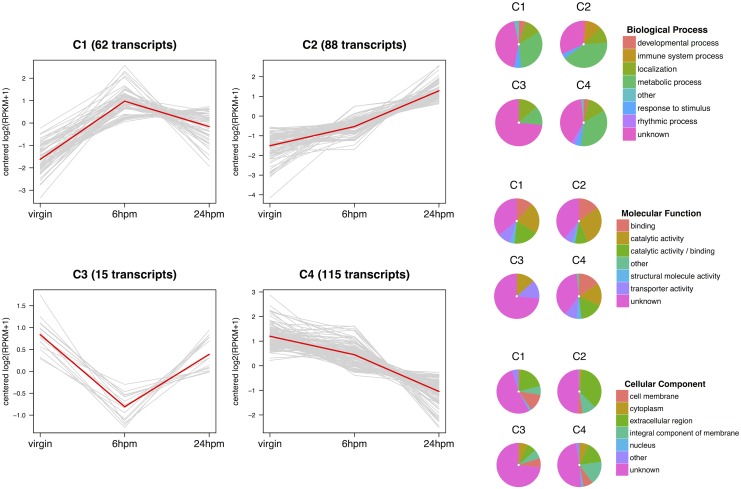
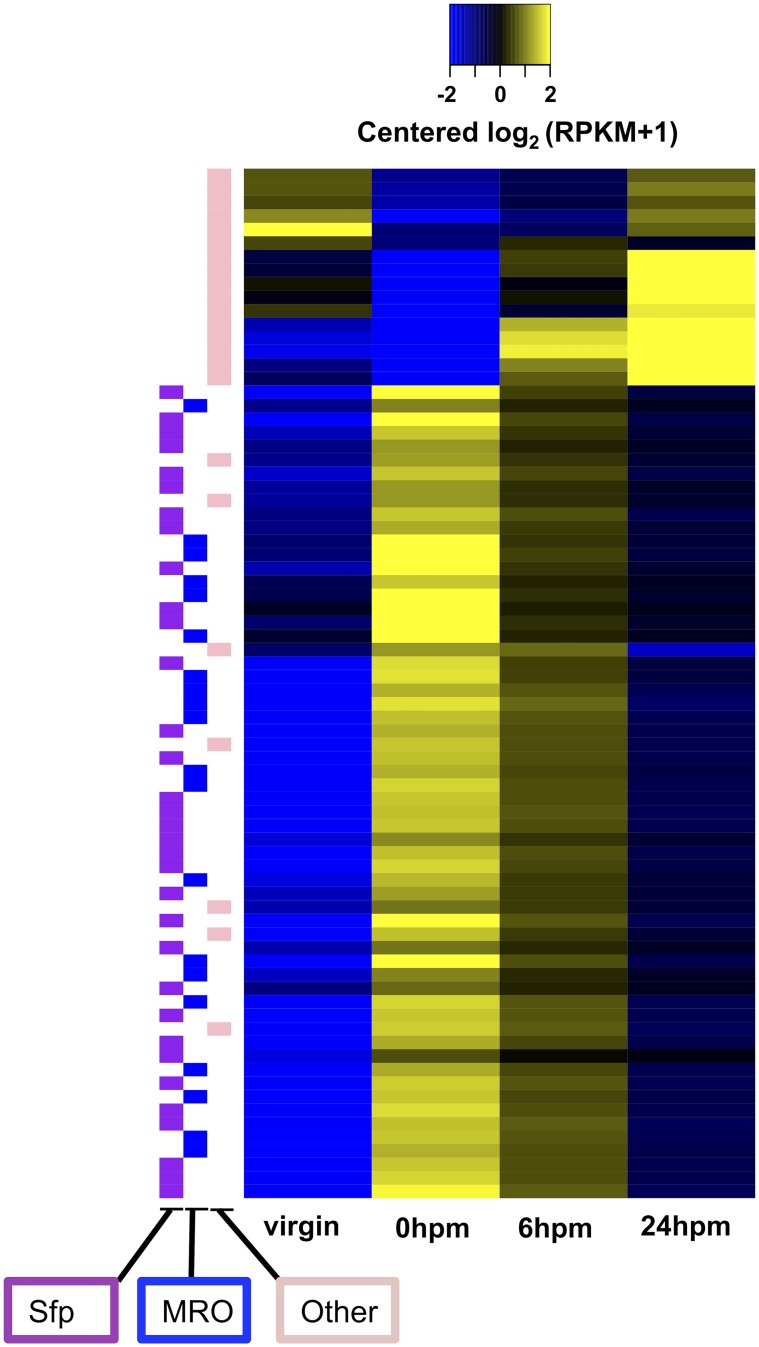
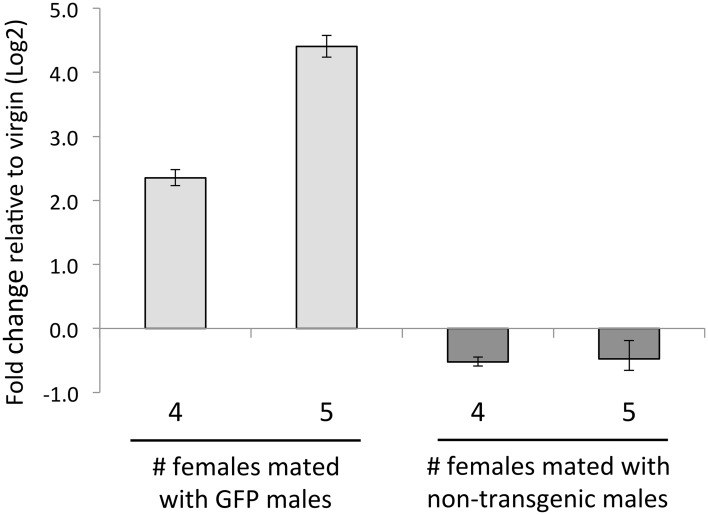
The Aedes aegypti mosquito is a significant public health threat, as it is the main vector of dengue and chikungunya viruses. Disease control efforts could be enhanced through reproductive manipulation of these vectors. Previous work has revealed a relationship between male seminal fluid proteins transferred to females during mating and female post-mating physiology and behavior. To better understand this interplay, we used short-read RNA sequencing to identify gene expression changes in the lower reproductive tract of females in response to mating. We characterized mRNA expression in virgin and mated females at 0, 6 and 24 hours post-mating (hpm) and identified 364 differentially abundant transcripts between mating status groups. Surprisingly, 60 transcripts were more abundant at 0 hpm compared to virgin females, suggesting transfer from males. Twenty of these encode known Ae. aegypti seminal fluid proteins. Transfer and detection of male accessory gland-derived mRNA in females at 0 hpm was confirmed by measurement of eGFP mRNA in females mated to eGFP-expressing males. In addition, 150 transcripts were up-regulated at 6 hpm and 24 hpm, while 130 transcripts were down-regulated at 6 hpm and 24 hpm. Gene Ontology (GO) enrichment analysis revealed that proteases, a protein class broadly known to play important roles in reproduction, were among the most enriched protein classes. RNAs associated with immune system and antimicrobial function were also up-regulated at 24 hpm. Collectively, our results suggest that copulation initiates broad transcriptome changes across the mosquito female reproductive tract, "priming" her for important subsequent processes of blood feeding, egg development and immune defense. Our transcriptome analysis provides a vital foundation for future studies of the consequences of mating on female biology and will aid studies seeking to identify specific gene families, molecules and pathways that support key reproductive processes in the female mosquito.
埃及伊蚊是对公众健康的重大威胁,因为它是登革热病毒和基孔肯雅病毒的主要传播媒介。通过对这些传播媒介进行生殖操控,可以加强疾病控制工作。先前的研究揭示了交配过程中雄性转移到雌性体内的精液蛋白与雌性交配后的生理和行为之间的关系。为了更好地理解这种相互作用,我们使用短读长RNA测序来鉴定雌性下生殖道中因交配而产生的基因表达变化。我们对未交配和交配后的雌性在交配后0小时、6小时和24小时的mRNA表达进行了表征,并确定了交配状态组之间364个差异丰富的转录本。令人惊讶的是,与未交配雌性相比,在交配后0小时有60个转录本更为丰富,这表明是从雄性转移而来。其中20个编码已知的埃及伊蚊精液蛋白。通过测量与表达绿色荧光蛋白(eGFP)的雄性交配的雌性体内的eGFP mRNA,证实了在交配后0小时雌性体内存在雄性附腺衍生的mRNA的转移和检测。此外,150个转录本在交配后6小时和24小时上调,而130个转录本在交配后6小时和24小时下调。基因本体(GO)富集分析表明,蛋白酶是一类在生殖中广泛发挥重要作用的蛋白质,是最富集的蛋白质类别之一。与免疫系统和抗菌功能相关的RNA在交配后24小时也上调。总体而言,我们的结果表明交配引发了雌性蚊子整个生殖道广泛的转录组变化,使其为随后重要的吸血、卵子发育和免疫防御过程做好“准备”。我们的转录组分析为未来研究交配对雌性生物学的影响提供了重要基础,并将有助于寻找识别支持雌性蚊子关键生殖过程的特定基因家族、分子和途径的研究。