Chay Andrew, Zamparo Ilaria, Koschinski Andreas, Zaccolo Manuela, Blackwell Kim T
Molecular Neuroscience Department, Krasnow Institute, George Mason University, Fairfax, Virginia, United States of America.
Venetian Institute of Molecular Medicine, Padova, Italy.
PLoS Comput Biol. 2016 Feb 22;12(2):e1004735. doi: 10.1371/journal.pcbi.1004735. eCollection 2016 Feb.
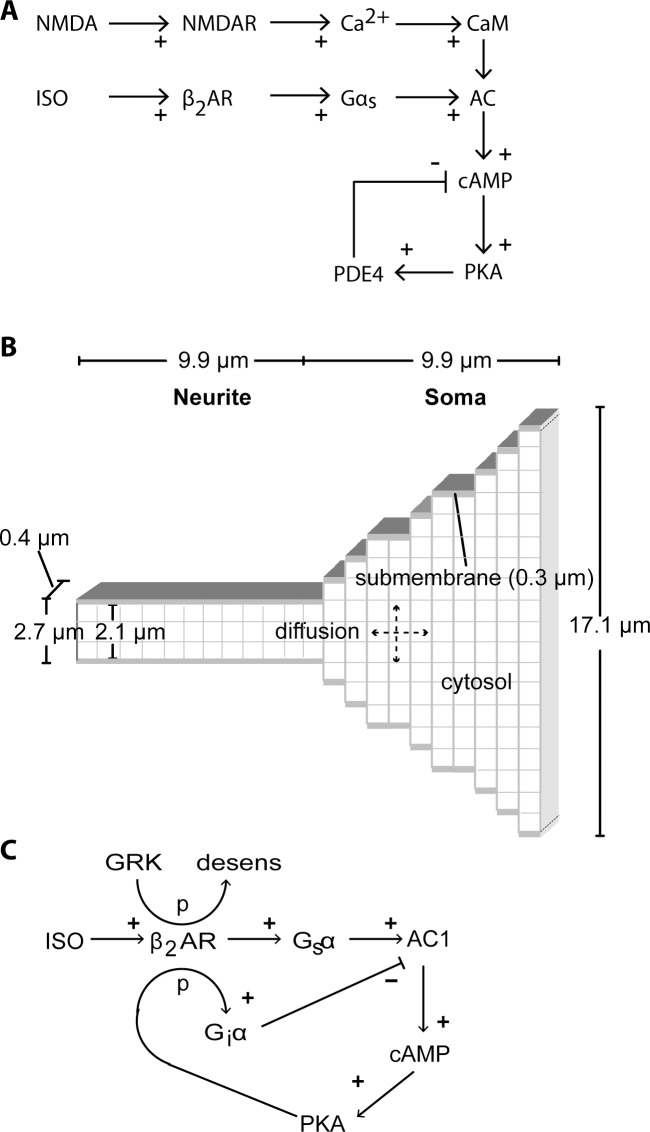
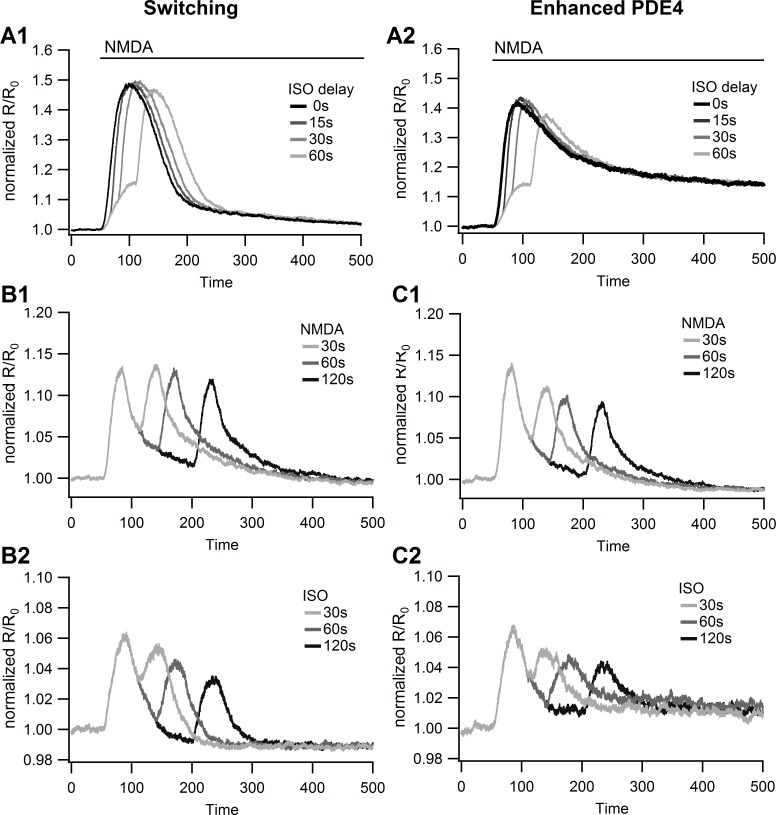
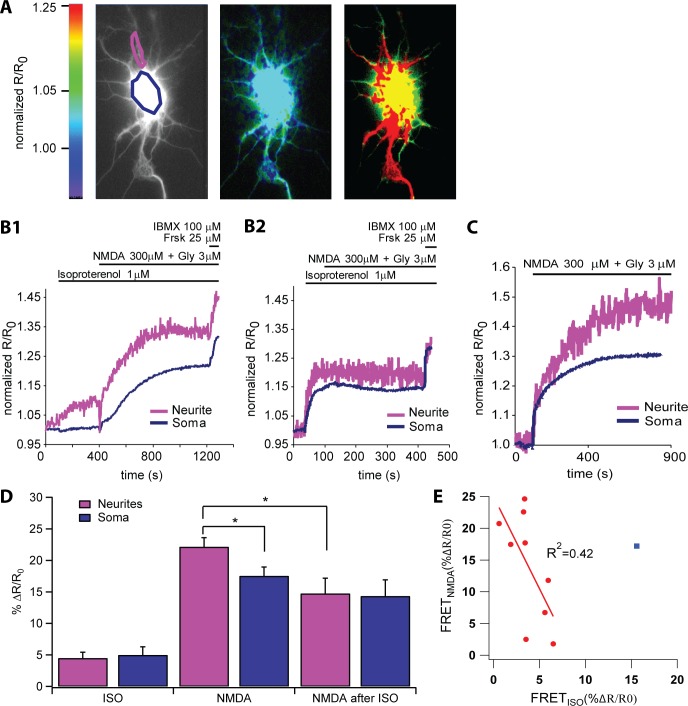
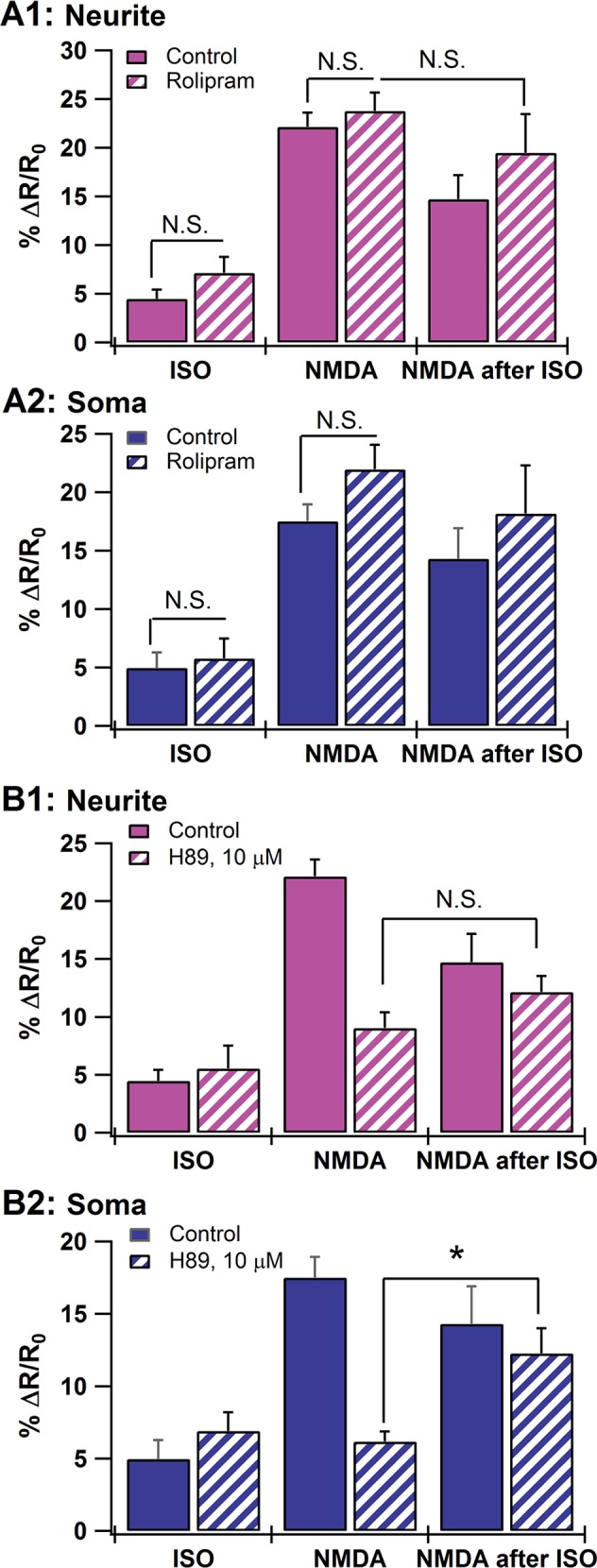
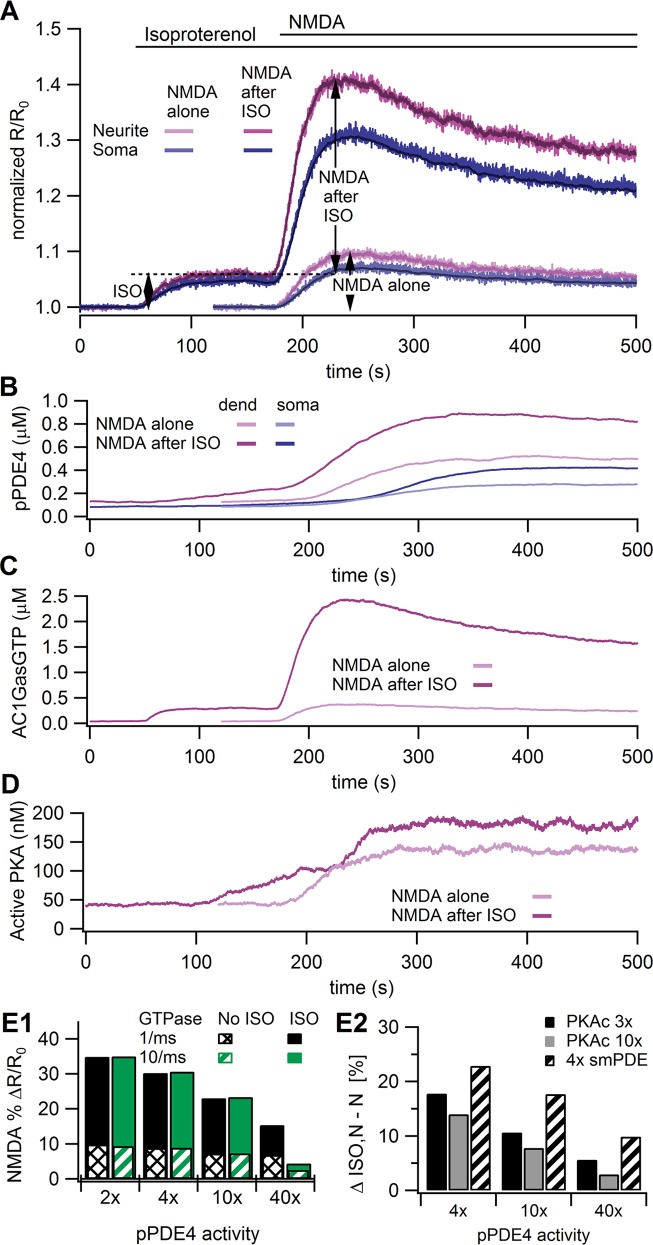
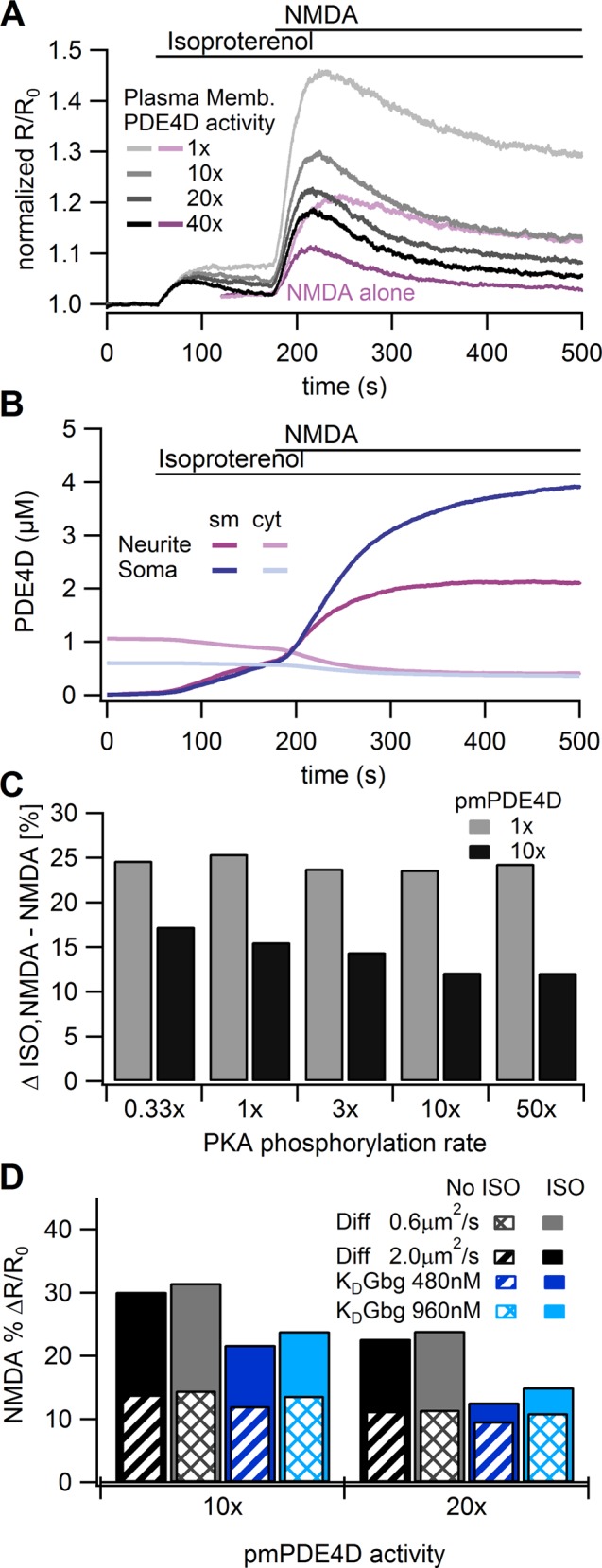
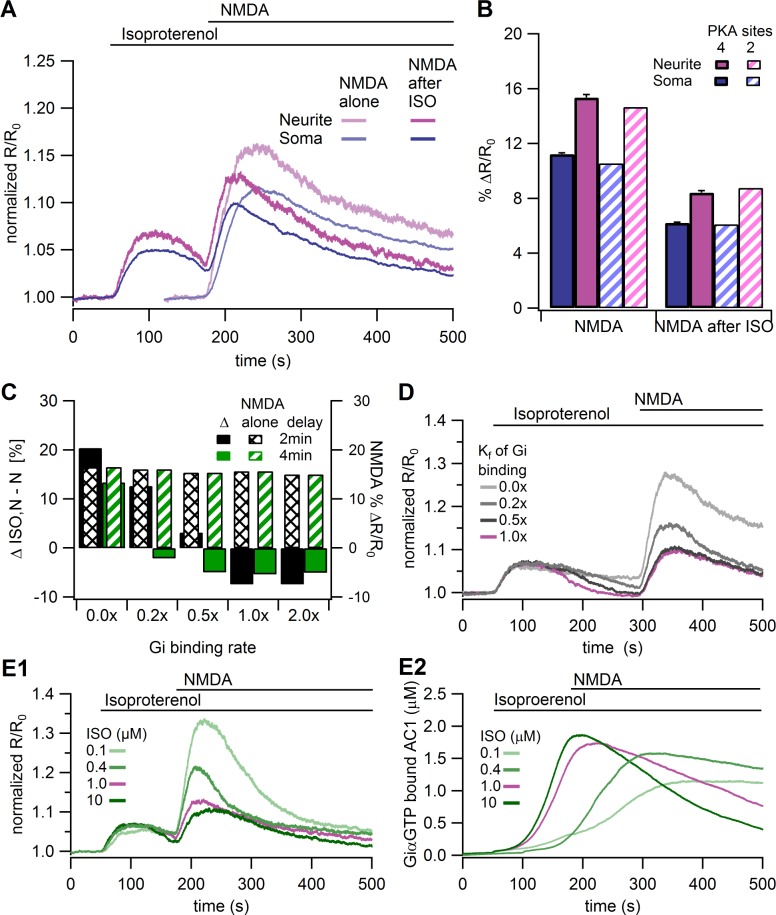
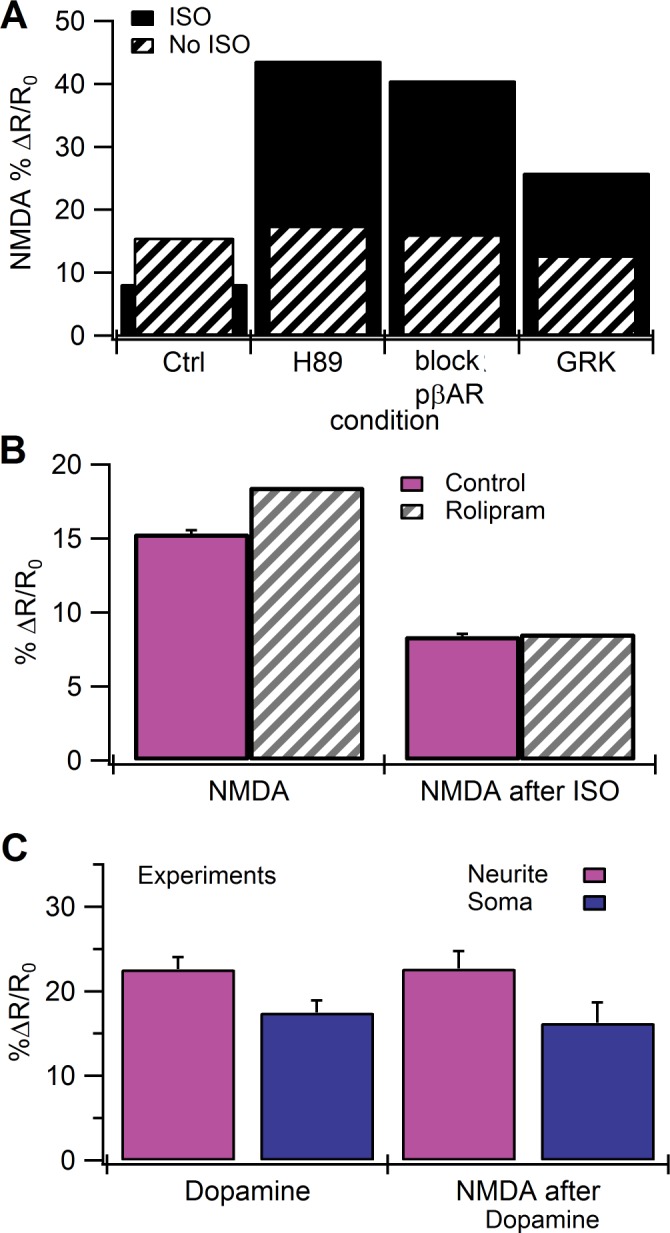
Norepinephrine, a neuromodulator that activates β-adrenergic receptors (βARs), facilitates learning and memory as well as the induction of synaptic plasticity in the hippocampus. Several forms of long-term potentiation (LTP) at the Schaffer collateral CA1 synapse require stimulation of both βARs and N-methyl-D-aspartate receptors (NMDARs). To understand the mechanisms mediating the interactions between βAR and NMDAR signaling pathways, we combined FRET imaging of cAMP in hippocampal neuron cultures with spatial mechanistic modeling of signaling pathways in the CA1 pyramidal neuron. Previous work implied that cAMP is synergistically produced in the presence of the βAR agonist isoproterenol and intracellular calcium. In contrast, we show that when application of isoproterenol precedes application of NMDA by several minutes, as is typical of βAR-facilitated LTP experiments, the average amplitude of the cAMP response to NMDA is attenuated compared with the response to NMDA alone. Models simulations suggest that, although the negative feedback loop formed by cAMP, cAMP-dependent protein kinase (PKA), and type 4 phosphodiesterase may be involved in attenuating the cAMP response to NMDA, it is insufficient to explain the range of experimental observations. Instead, attenuation of the cAMP response requires mechanisms upstream of adenylyl cyclase. Our model demonstrates that Gs-to-Gi switching due to PKA phosphorylation of βARs as well as Gi inhibition of type 1 adenylyl cyclase may underlie the experimental observations. This suggests that signaling by β-adrenergic receptors depends on temporal pattern of stimulation, and that switching may represent a novel mechanism for recruiting kinases involved in synaptic plasticity and memory.
去甲肾上腺素是一种激活β-肾上腺素能受体(βARs)的神经调质,可促进学习和记忆以及海马体中突触可塑性的诱导。在Schaffer侧支CA1突触处的几种形式的长时程增强(LTP)需要同时刺激βARs和N-甲基-D-天冬氨酸受体(NMDARs)。为了理解介导βAR和NMDAR信号通路之间相互作用的机制,我们将海马神经元培养物中cAMP的荧光共振能量转移(FRET)成像与CA1锥体神经元中信号通路的空间机制建模相结合。先前的研究表明,在βAR激动剂异丙肾上腺素和细胞内钙存在的情况下,cAMP会协同产生。相比之下,我们发现,当异丙肾上腺素的应用先于NMDA几分钟应用时,这是βAR促进的LTP实验的典型情况,与单独对NMDA的反应相比,对NMDA的cAMP反应的平均幅度会减弱。模型模拟表明,尽管由cAMP、cAMP依赖性蛋白激酶(PKA)和4型磷酸二酯酶形成的负反馈环可能参与减弱对NMDA的cAMP反应,但它不足以解释实验观察的范围。相反,cAMP反应的减弱需要腺苷酸环化酶上游的机制。我们的模型表明,由于βARs的PKA磷酸化导致的Gs到Gi转换以及Gi对1型腺苷酸环化酶的抑制可能是实验观察结果的基础。这表明β-肾上腺素能受体的信号传导取决于刺激的时间模式,并且这种转换可能代表了一种招募参与突触可塑性和记忆的激酶的新机制。