Xu Yan-Hong, Liao Yong-Cui, Zhang Zheng, Liu Juan, Sun Pei-Wen, Gao Zhi-Hui, Sui Chun, Wei Jian-He
Institute of Medicinal Plant Development, Chinese Academy of Medical Sciences &Peking Union Medical College, No. 151, Malianwa North Road, Haidian District, Beijing 100193, China.
Hainan Branch Institute of Medicinal Plant, Hainan Provincial Key Laboratory of Resources Conservation and Development of Southern Medicine, Chinese Academy of Medical Sciences &Peking Union Medical College, Wanning 571533, China.
Sci Rep. 2016 Feb 23;6:21843. doi: 10.1038/srep21843.
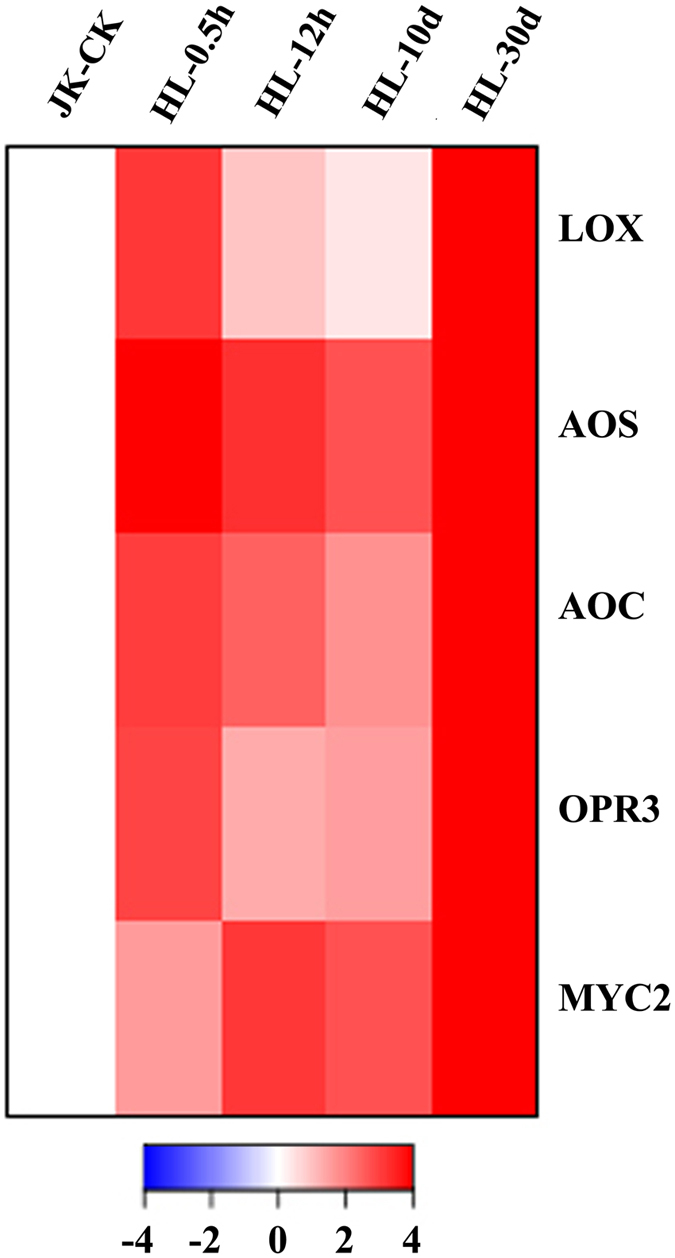
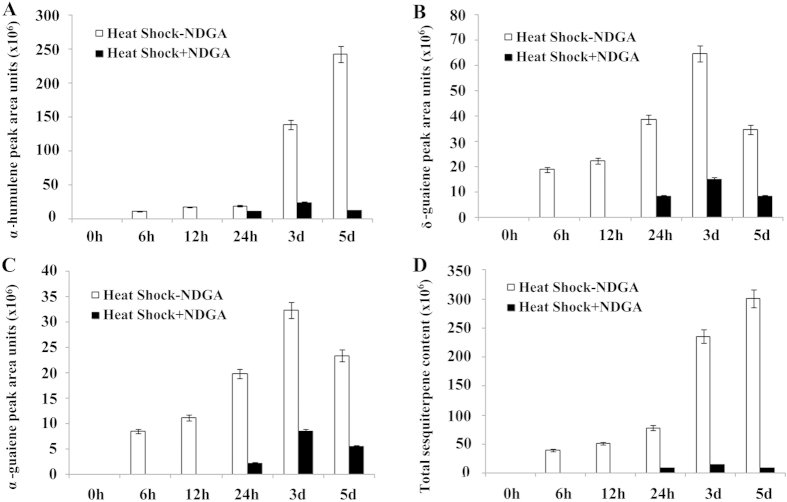
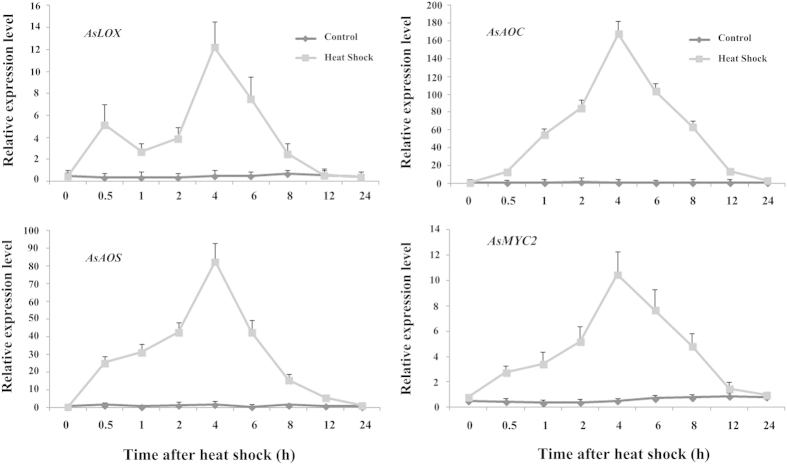
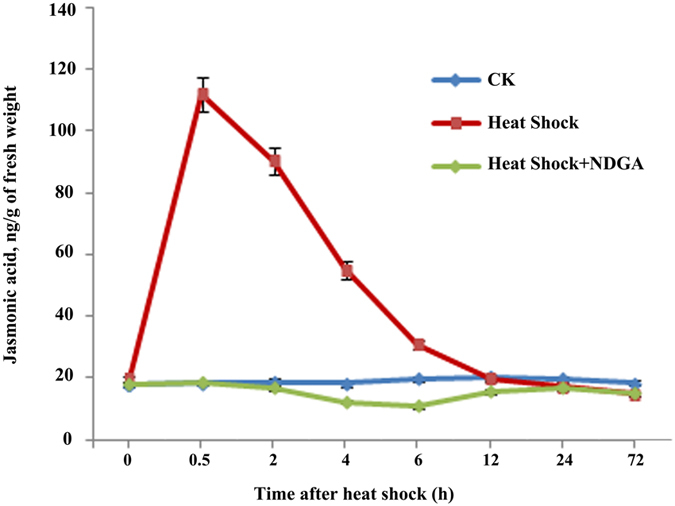
Agarwood, a highly valuable resinous and fragrant heartwood of Aquilaria plants, is widely used in traditional medicines, incense and perfume. Only when Aquilaria trees are wounded by external stimuli do they form agarwood sesquiterpene defensive compounds. Therefore, understanding the signaling pathway of wound-induced agarwood formation is important. Jasmonic acid (JA) is a well-characterized molecule that mediates a plant's defense response and secondary metabolism. However, little is known about the function of endogenous JA in agarwood sesquiterpene biosynthesis. Here, we report that heat shock can up-regulate the expression of genes in JA signaling pathway, induce JA production and the accumulation of agarwood sesquiterpene in A. sinensis cell suspension cultures. A specific inhibitor of JA, nordihydroguaiaretic acid (NDGA), could block the JA signaling pathway and reduce the accumulation of sesquiterpene compounds. Additionally, compared to SA and H2O2, exogenously supplied methyl jasmonate has the strongest stimulation effect on the production of sesquiterpene compounds. These results clearly demonstrate the central induction role of JA in heat-shock-induced sesquiterpene production in A. sinensis.
沉香是瑞香科植物中一种极具价值的含树脂且芳香的沉香木,广泛应用于传统医药、熏香和香水领域。只有当沉香树受到外界刺激而受伤时,它们才会形成沉香倍半萜防御化合物。因此,了解伤口诱导沉香形成的信号通路至关重要。茉莉酸(JA)是一种已被充分研究的分子,它介导植物的防御反应和次生代谢。然而,关于内源性JA在沉香倍半萜生物合成中的功能却知之甚少。在此,我们报道热激可上调JA信号通路中基因的表达,诱导JA的产生以及沉香倍半萜在白木香细胞悬浮培养物中的积累。JA的一种特异性抑制剂去甲二氢愈创木酸(NDGA)能够阻断JA信号通路并减少倍半萜化合物的积累。此外,与水杨酸(SA)和过氧化氢(H2O2)相比,外源施加茉莉酸甲酯对倍半萜化合物的产生具有最强的刺激作用。这些结果清楚地证明了JA在热激诱导白木香倍半萜产生过程中的核心诱导作用。