Mansouri Kamel, Abdelaziz Ahmed, Rybacka Aleksandra, Roncaglioni Alessandra, Tropsha Alexander, Varnek Alexandre, Zakharov Alexey, Worth Andrew, Richard Ann M, Grulke Christopher M, Trisciuzzi Daniela, Fourches Denis, Horvath Dragos, Benfenati Emilio, Muratov Eugene, Wedebye Eva Bay, Grisoni Francesca, Mangiatordi Giuseppe F, Incisivo Giuseppina M, Hong Huixiao, Ng Hui W, Tetko Igor V, Balabin Ilya, Kancherla Jayaram, Shen Jie, Burton Julien, Nicklaus Marc, Cassotti Matteo, Nikolov Nikolai G, Nicolotti Orazio, Andersson Patrik L, Zang Qingda, Politi Regina, Beger Richard D, Todeschini Roberto, Huang Ruili, Farag Sherif, Rosenberg Sine A, Slavov Svetoslav, Hu Xin, Judson Richard S
National Center for Computational Toxicology, U.S. Environmental Protection Agency, Research Triangle Park, North Carolina, USA.
Environ Health Perspect. 2016 Jul;124(7):1023-33. doi: 10.1289/ehp.1510267. Epub 2016 Feb 23.
Humans are exposed to thousands of man-made chemicals in the environment. Some chemicals mimic natural endocrine hormones and, thus, have the potential to be endocrine disruptors. Most of these chemicals have never been tested for their ability to interact with the estrogen receptor (ER). Risk assessors need tools to prioritize chemicals for evaluation in costly in vivo tests, for instance, within the U.S. EPA Endocrine Disruptor Screening Program.
We describe a large-scale modeling project called CERAPP (Collaborative Estrogen Receptor Activity Prediction Project) and demonstrate the efficacy of using predictive computational models trained on high-throughput screening data to evaluate thousands of chemicals for ER-related activity and prioritize them for further testing.
CERAPP combined multiple models developed in collaboration with 17 groups in the United States and Europe to predict ER activity of a common set of 32,464 chemical structures. Quantitative structure-activity relationship models and docking approaches were employed, mostly using a common training set of 1,677 chemical structures provided by the U.S. EPA, to build a total of 40 categorical and 8 continuous models for binding, agonist, and antagonist ER activity. All predictions were evaluated on a set of 7,522 chemicals curated from the literature. To overcome the limitations of single models, a consensus was built by weighting models on scores based on their evaluated accuracies.
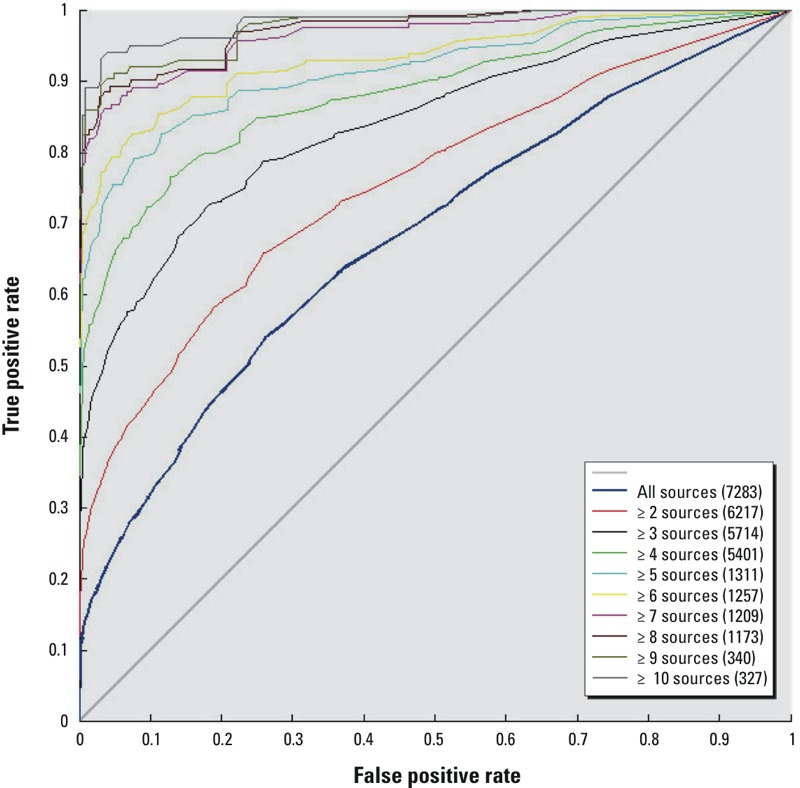
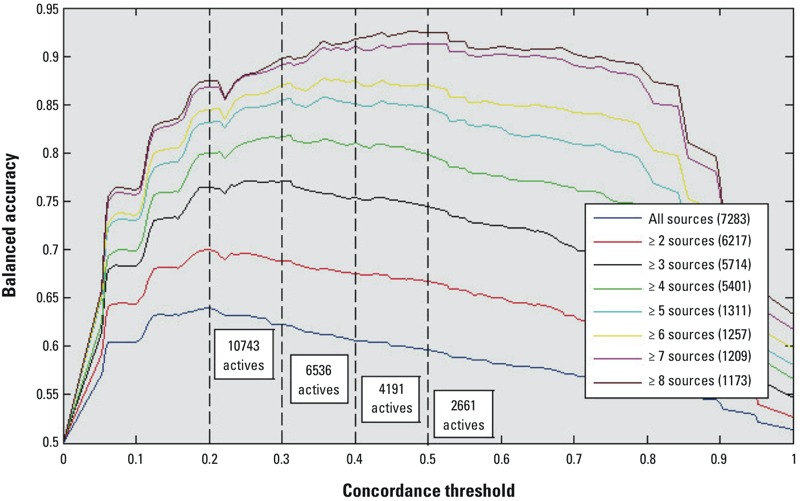
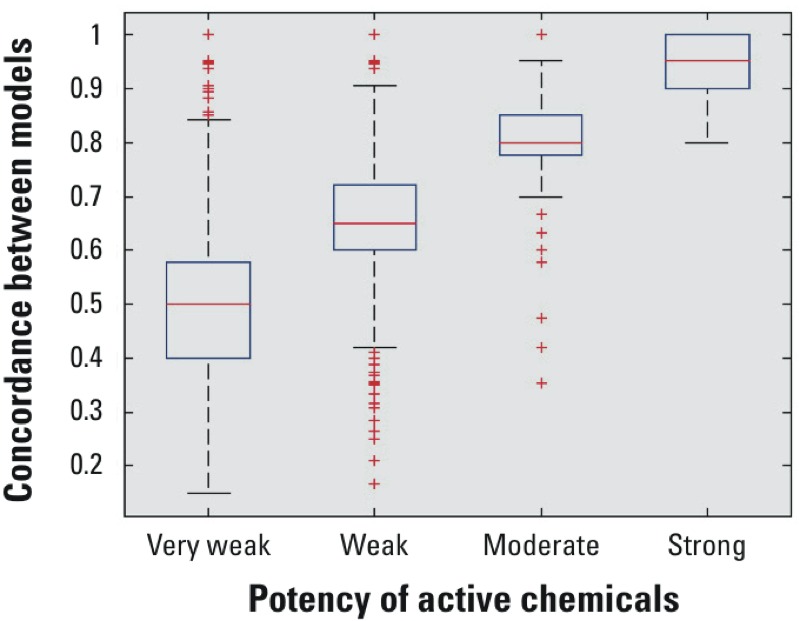
Individual model scores ranged from 0.69 to 0.85, showing high prediction reliabilities. Out of the 32,464 chemicals, the consensus model predicted 4,001 chemicals (12.3%) as high priority actives and 6,742 potential actives (20.8%) to be considered for further testing.
This project demonstrated the possibility to screen large libraries of chemicals using a consensus of different in silico approaches. This concept will be applied in future projects related to other end points.
Mansouri K, Abdelaziz A, Rybacka A, Roncaglioni A, Tropsha A, Varnek A, Zakharov A, Worth A, Richard AM, Grulke CM, Trisciuzzi D, Fourches D, Horvath D, Benfenati E, Muratov E, Wedebye EB, Grisoni F, Mangiatordi GF, Incisivo GM, Hong H, Ng HW, Tetko IV, Balabin I, Kancherla J, Shen J, Burton J, Nicklaus M, Cassotti M, Nikolov NG, Nicolotti O, Andersson PL, Zang Q, Politi R, Beger RD, Todeschini R, Huang R, Farag S, Rosenberg SA, Slavov S, Hu X, Judson RS. 2016.
Collaborative Estrogen Receptor Activity Prediction Project. Environ Health Perspect 124:1023-1033; http://dx.doi.org/10.1289/ehp.1510267.
人类在环境中接触到数千种人造化学物质。一些化学物质会模拟天然内分泌激素,因此有可能成为内分泌干扰物。这些化学物质中的大多数从未针对其与雌激素受体(ER)相互作用的能力进行过测试。风险评估人员需要工具来对化学物质进行优先级排序,以便在成本高昂的体内试验中进行评估,例如在美国环保署的内分泌干扰物筛选计划中。
我们描述了一个名为CERAPP(协作雌激素受体活性预测项目)的大规模建模项目,并展示了使用基于高通量筛选数据训练的预测计算模型来评估数千种化学物质的ER相关活性并对其进行进一步测试优先级排序的有效性。
CERAPP结合了与美国和欧洲17个小组合作开发的多个模型,以预测一组共32464种化学结构的ER活性。采用了定量构效关系模型和对接方法,主要使用美国环保署提供的一组1677种化学结构的通用训练集,构建了总共40个分类模型和8个连续模型,用于结合、激动剂和拮抗剂ER活性。所有预测均在从文献中挑选出的一组7522种化学物质上进行评估。为了克服单一模型的局限性,通过根据评估准确性对模型得分进行加权来建立共识。
单个模型得分在0.69至0.85之间,显示出较高的预测可靠性。在32464种化学物质中,共识模型预测4001种化学物质(12.3%)为高优先级活性物质,6742种潜在活性物质(20.8%)需要考虑进一步测试。
该项目证明了使用不同计算机模拟方法的共识来筛选大量化学物质库的可能性。这一概念将应用于未来与其他终点相关的项目。
Mansouri K, Abdelaziz A, Rybacka A, Roncaglioni A, Tropsha A, Varnek A, Zakharov A, Worth A, Richard AM, Grulke CM, Trisciuzzi D, Fourches D, Horvath D, Benfenati E, Muratov E, Wedebye EB, Grisoni F, Mangiatordi GF, Incisivo GM, Hong H, Ng HW, Tetko IV, Balabin I, Kancherla J, Shen J, Burton J, Nicklaus M, Cassotti M, Nikolov NG, Nicolotti O, Andersson PL, Zang Q, Politi R, Beger RD, Todeschini R, Huang R, Farag S, Rosenberg SA, Slavov S, Hu X, Judson RS. 2016.
协作雌激素受体活性预测项目。《环境健康展望》124:1023 - 1033;http://dx.doi.org/10.1289/ehp.1510267 。